Name/Title
Cup plateEntry/Object ID
2016.108.1Description
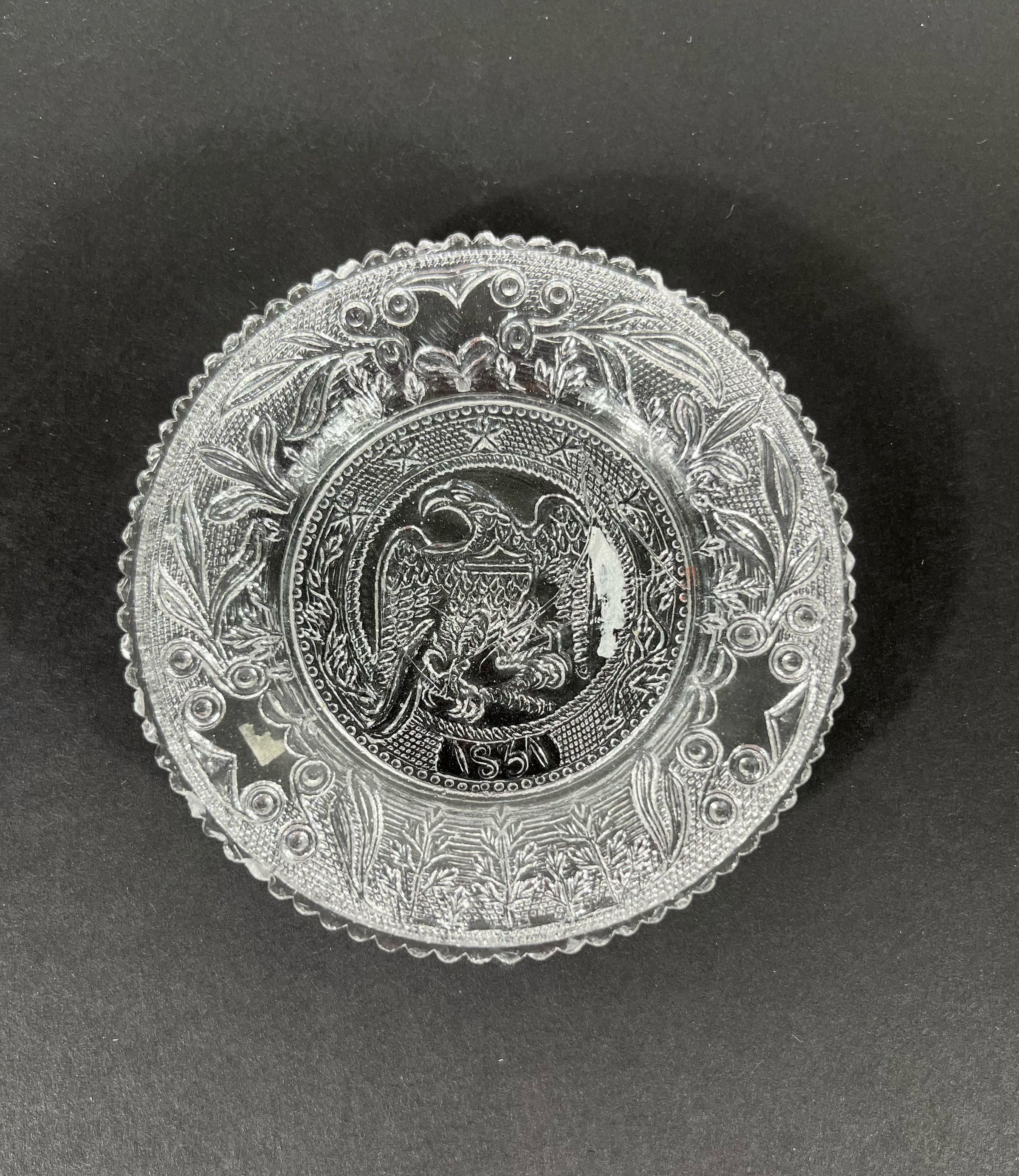
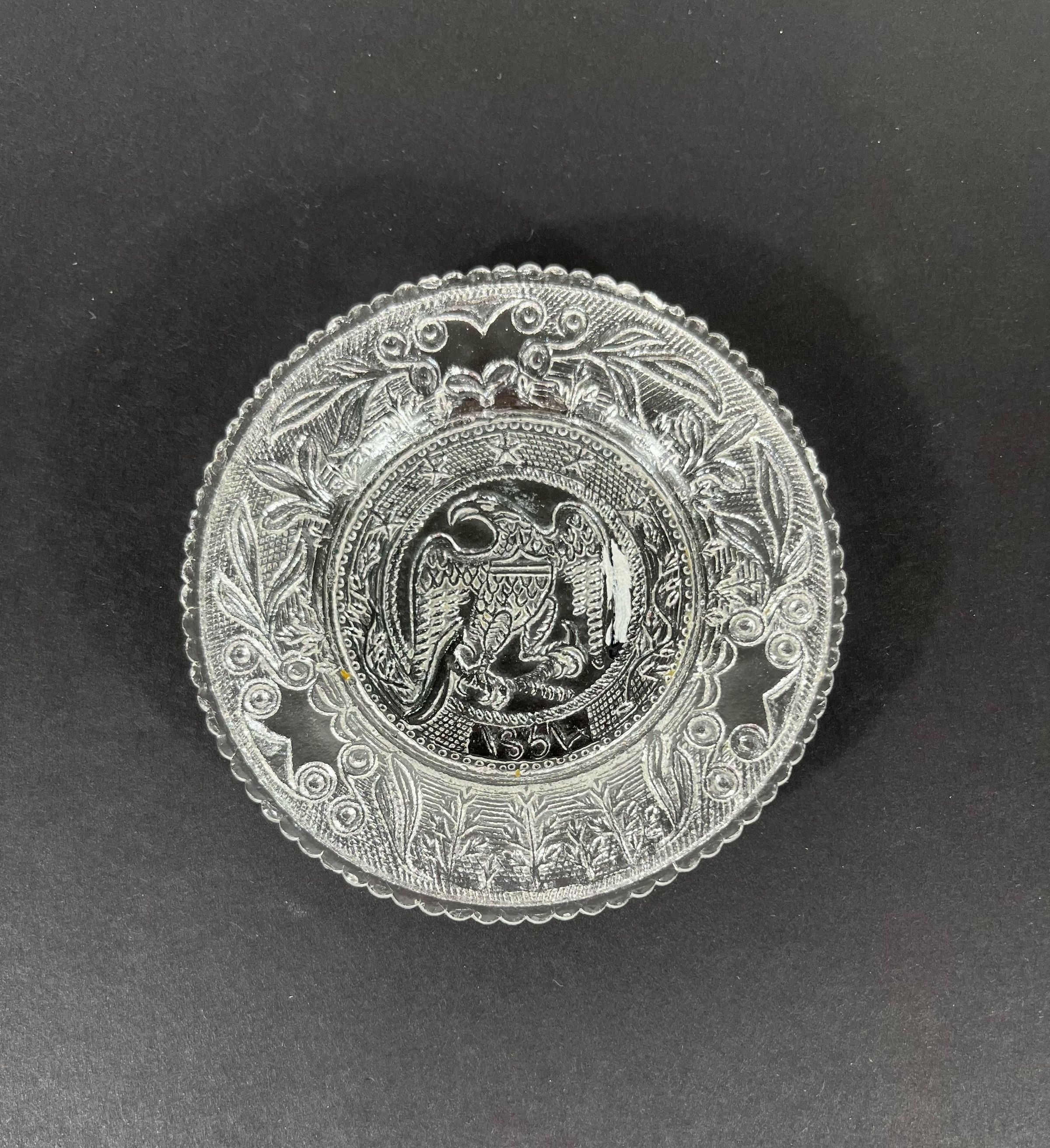
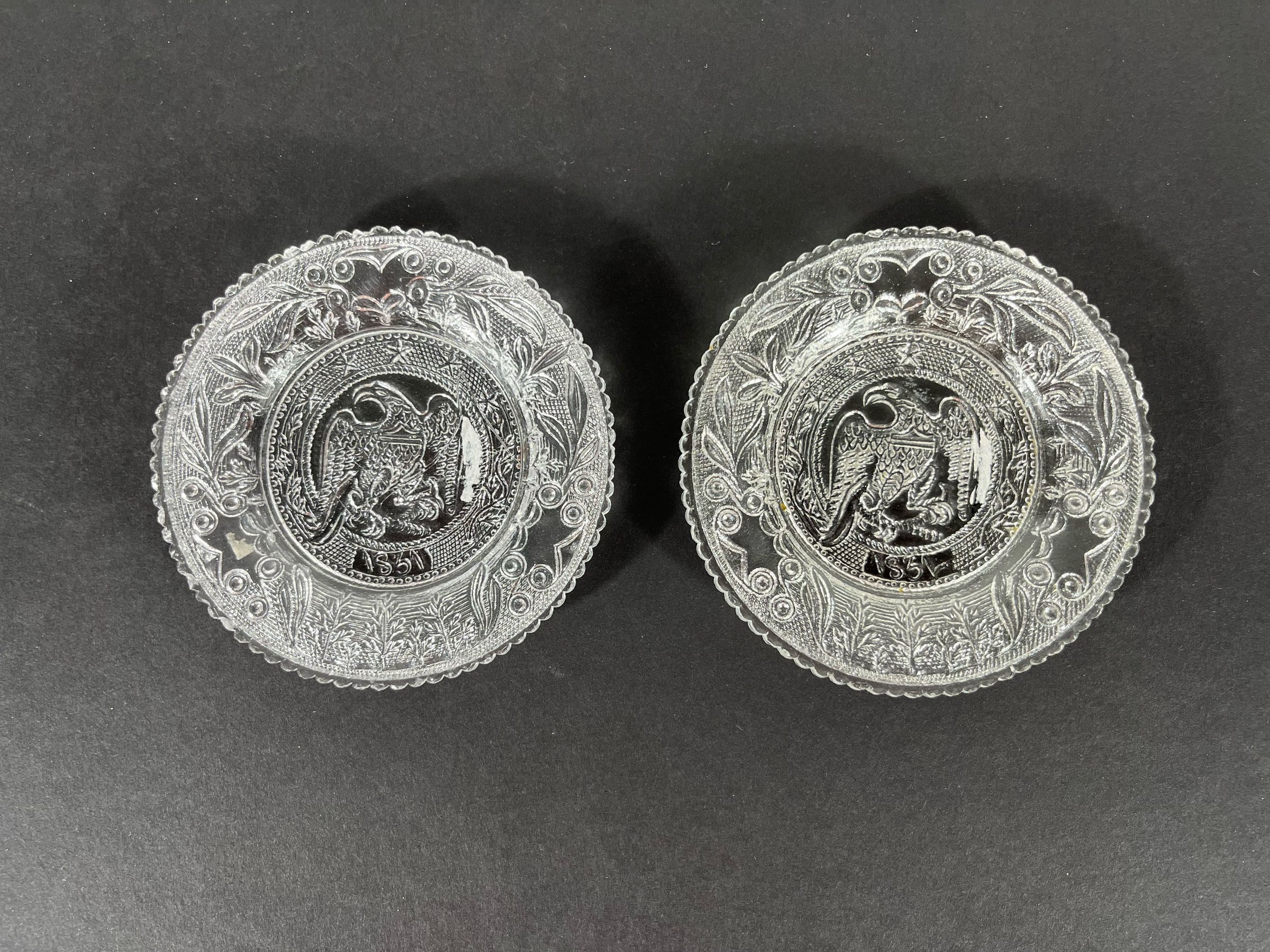
Two cup plates, pressed clear colorless glass. The central motif is that of an eagle on a branch, wings outstretched, and his head looking over his right shoulder. An inner border has five stars above the eagle, vines on each side, and "1831" in a reserve below the eagle. The outer border has a variety of leafy plants, fleur de lis, and three equally-spaced cartouches. The backgrounds are all stippled or cross-hatched. The rim is scalloped.Context
Molded into the design in a reserve below the eagle is the date “1831.” There were several major events that year which shaped American history and the cup plates could have been a response to any one of them. See more specific information under "interpretative label".Dimensions
Dimension Description
OverallHeight
1/2 inDiameter
3-1/2 inMaterial
clear colorless pressed glassInterpretative Labels
Label Type
Object LabelLabel
Cup Plates, circa 1831
Probably Boston & Sandwich Glass Company (active 1825-1888)
Sandwich, Massachusetts
Clear colorless pressed glass
2016.108.1
Molded into the design in a reserve below the eagle is the date “1831.” There were several major events that year which shaped American history and the cup plates could have been a response to any one of them. The most prominent was Nat Turner’s Rebellion in Southampton County, Virginia in August which was the bloodiest slave revolt in American history. It effectively ended the organized Southern abolitionist movement and deeply polarized the nation over the issue of slavery, setting a course toward the Civil War.
The previous January, William Lloyd Garrison published the first issue of The Liberator in Boston which became the most influential abolitionist newspaper in the United States.
In March, the U. S. Supreme Court ruled on the Cherokee Nation v. Georgia Supreme Court case regarding Native American sovereignty. The Cherokee Nation was determined to be a “domestic dependent nation” rather than a foreign state and therefore lacked the standing to sue the state of Georgia to stop the seizure of its lands.
Finally, James Monroe, the fifth President of the United States and the last of the Founding Fathers to serve as president, died on July 4, 1831. He was the third president to die on Independence Day, following John Adams and Thomas Jefferson in 1826.