Label Type
Cultural/Historical ContextLabel
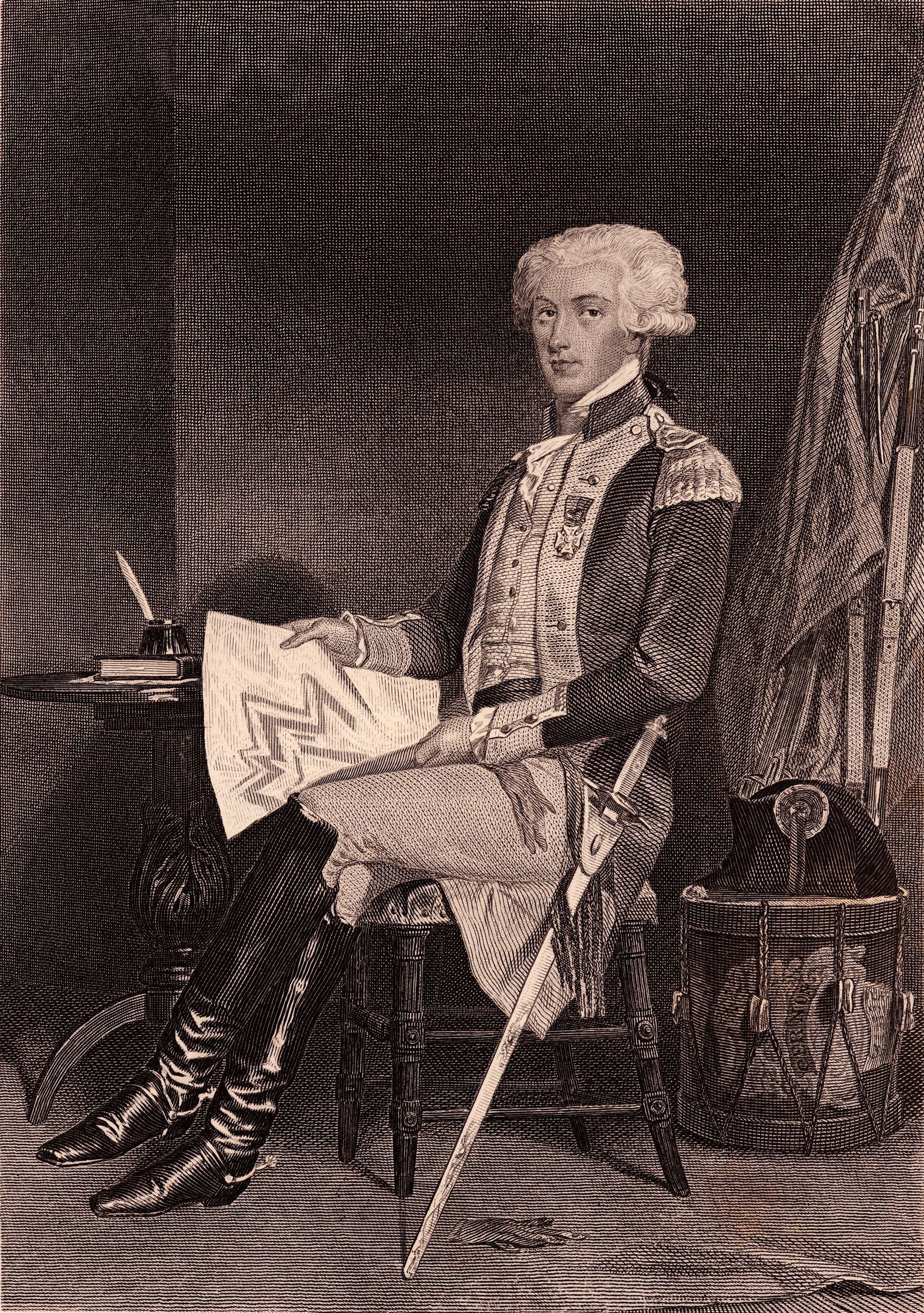
Marie-Joseph Paul Yves Roch Gilbert du Motier, the Marquis de Lafayette (1757-1834)
Lafayette was born into privilege and wealth in France. Commissioned as a French officer at the age of thirteen in 1771, he became interested in the American fight for independence and wanted to serve in the American army. King Louis XIV forbade French officers from serving, so Lafayette bought his own ship and set sail for America in 1777. Upon his arrival, he offered his services free of charge to Congress. Lafayette quickly became a trusted aide to Washington, fought at Brandywine and Monmouth, and played a key part in the final victory at Yorktown. After the war, he returned to France where he played a significant role in the French Revolution.
In 1824, Lafayette returned to America for a Grand Tour at President Monroe’s invitation. Welcomed in 24 states, his visit reignited patriotic fervor and cemented his legacy as a living link to the Revolutionary generation. Lafayette, at the time the last surviving Revolutionary War General, traveled 6,000 miles over 13 months, visiting major sites like Philadelphia, Yorktown, and Mount Vernon. When in Boston, Lafayette oversaw the laying of the cornerstone of the Bunker Hill Monument on June 17, 1825–the fiftieth anniversary of the battle. Over 200,000 people attended the ceremony.