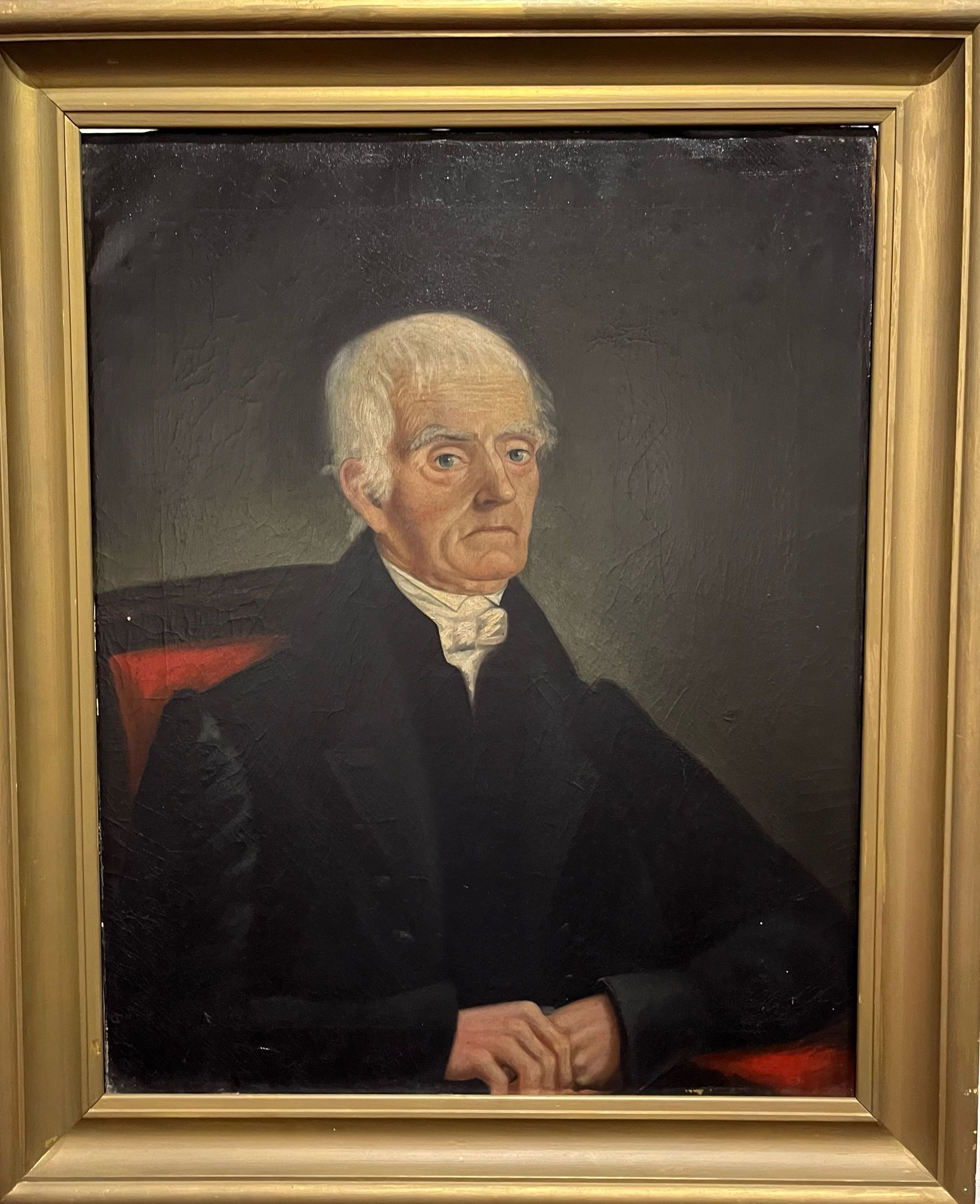
Label Type
Cultural/Historical ContextLabel
Lieutenant Joseph Leland (1756-1839)
Joseph Leland joined the fighting at the beginning of the war, rising through the ranks to become an officer. Originally from Grafton, Massachusetts, he marched to Boston with Captain Luke Drury’s company in response to the Lexington Alarm. Leland stayed on in Boston and participated in the Battle of Bunker Hill on June 17, 1775 and the siege of the city that followed. By 1777, Leland was with the Continental Army in New York. During the British retreat after the second Battle of Saratoga (Bemis Heights) in October 1777, he was wounded by a musket ball that passed through both of his thighs. After a period of recovery, Leland rejoined his regiment at Valley Forge and remained there through the harsh winter of 1777-1778. On June 28, 1778, Leland’s regiment was in the thick of the fight at Monmouth, New Jersey. Fought on one of the hottest days of the year—the temperature exceeded 100 degrees—many more soldiers died of heat exhaustion and sunstroke than from combat. This was the last major battle in the northern theater. Joseph Leland spent the remainder of the war stationed in New York and New Jersey and left the service with the rank of Lieutenant in September 1783.
After the war, Joseph Leland moved to Saco, where he became a prominent lumber merchant. In 1801, Leland had a stylish new home constructed on Main Street. Now known as Thornton Hall, the house was designed by noted builder/architect Bradbury Johnson, who was also responsible for the 1803 First Parish Congregational Church. Leland was also one of the original members of the Society of the Cincinnati, an organization founded by Continental Army officers to preserve the ideals of the Revolution.Label Type
Cultural/Historical Context