Name/Title
PitcherEntry/Object ID
2016.298.1Description
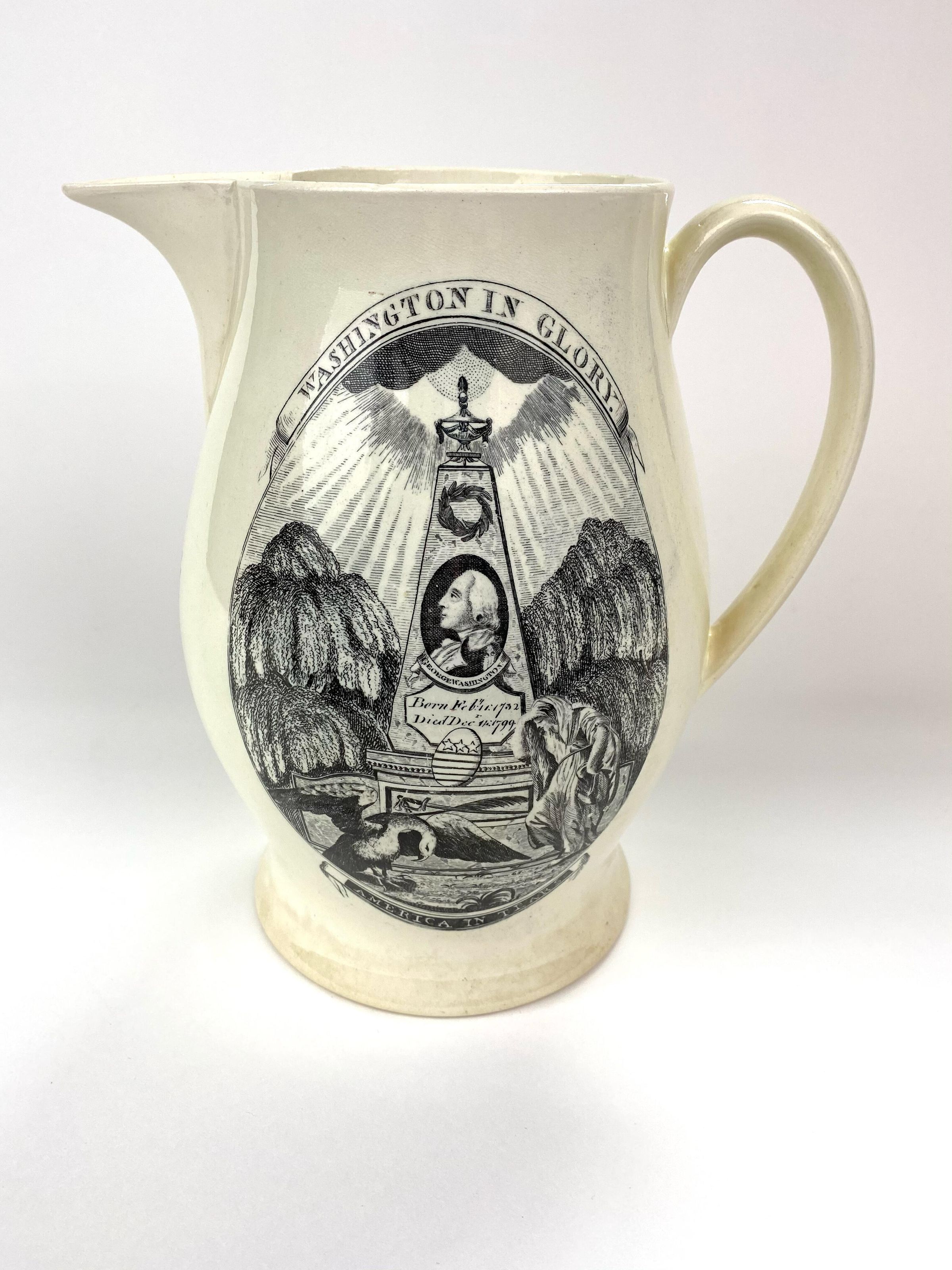
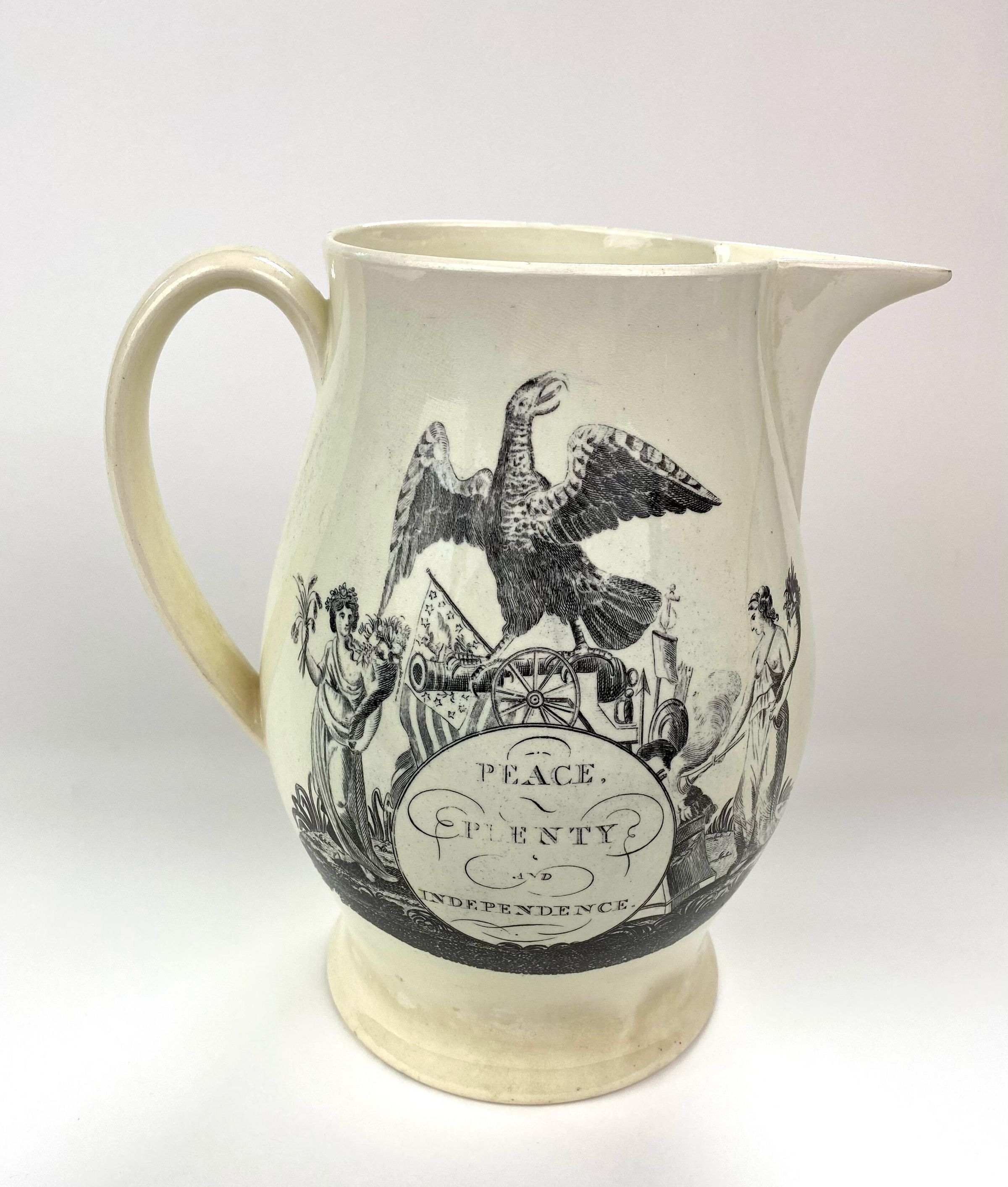
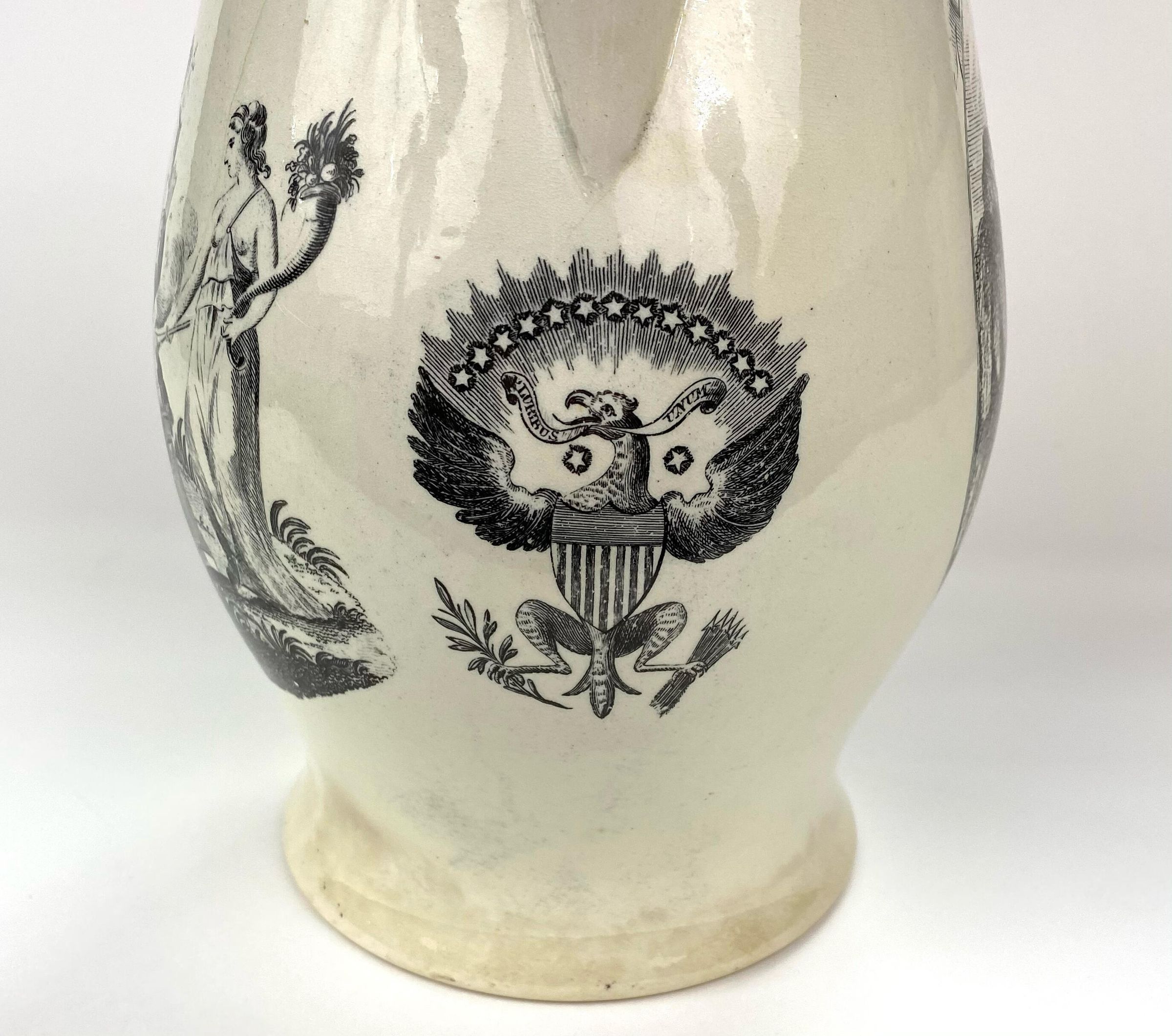
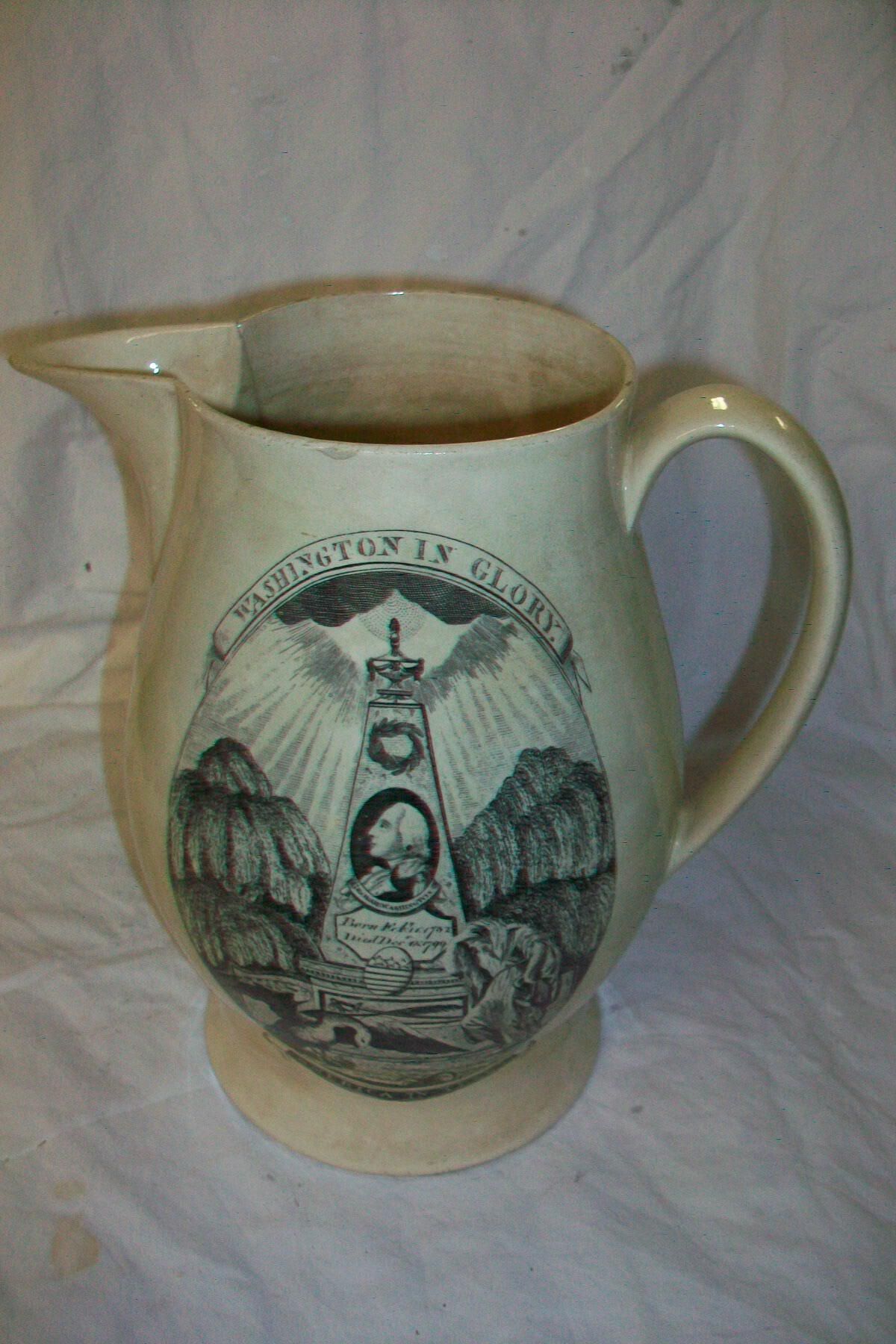
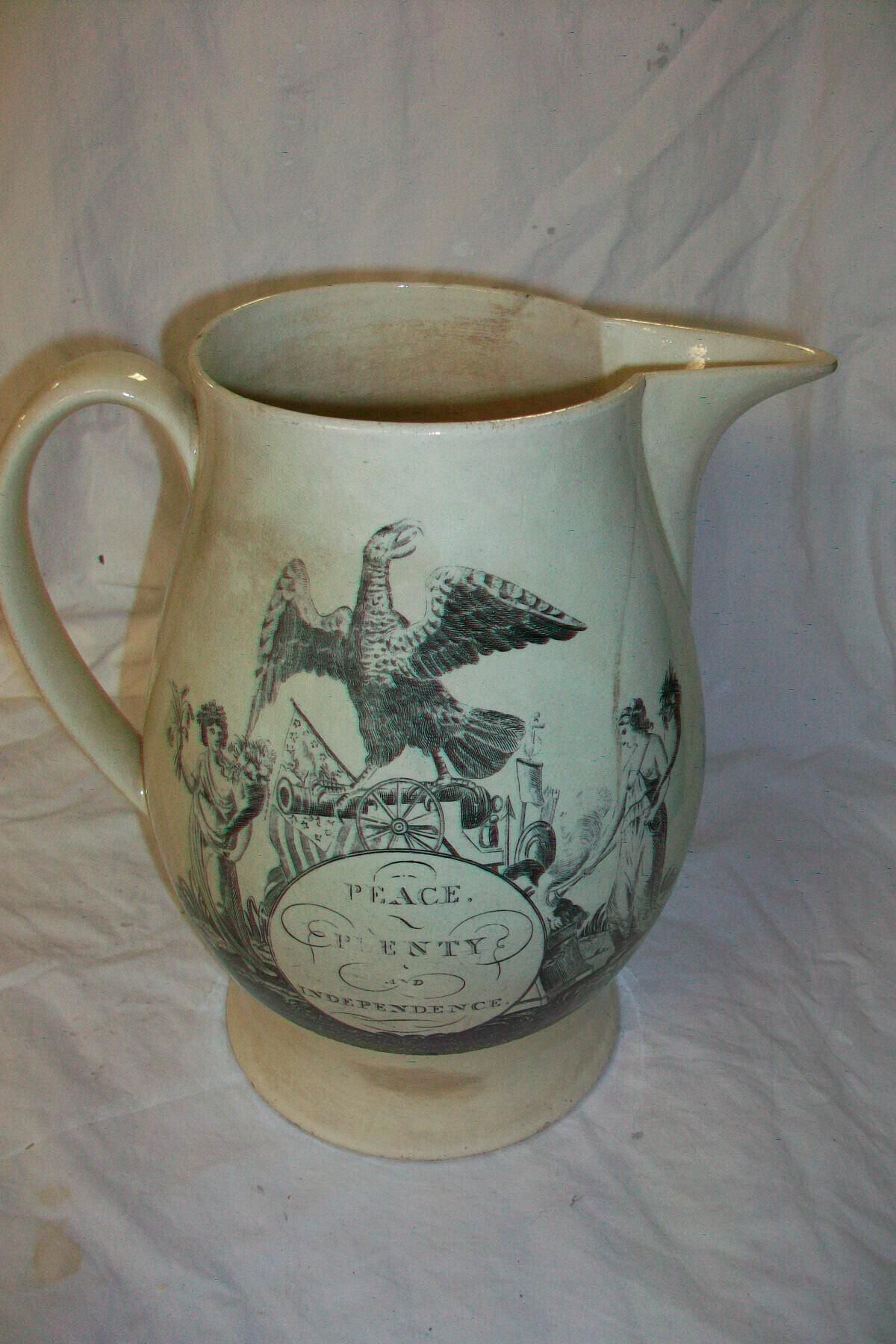
Creamware pitcher, probably made by the Herculaneum Pottery, Liverpool, England, ca. 1800-1810. Baluster shape with plain ear-shaped strap handle, sharp curved spout and flared foot. Printed in black on both sides as well as the typical Herculaneum mark with the eagle taken from the Great Seal of the United States under the spout, stars for the 13 original colonies in an arc above the eagle's head and stars for VT and KY on either side of the neck. The name of the pottery does not appear in a banner under the eagle. On one side is a print with "PEACE./ PLENTY/ AND/ INDEPENDENCE." in a medallion with scrollwork and figures of Plenty with a cornucopia and Peace destroying the tools of war. All is surmounted by an eagle, symbolizing America, standing on a cannon representing the military might that helped win independence. This print appears on pitchers at least as early as 1793-95 (see object file). On the other side is a memorial to George Washington with an oval portrait on an obelisk, over which is a laurel wreath and a funerary urn. Below the portrait are his life dates in a plaque, a shield and sword, and at the foot an eagle with outstretched wings and drooping head, and a figure in mourning. Above in a banner is WASHINGTON IN GLORY." and below on a black ground banner "AMERICA IN TEARS." The interior edge of the foot is beveled .
Might be 1891.97.1Context
The death of George Washington on 14 December 1799 aroused personal and civic expressions of deep sadness and mourning. Citizens were comforted by the sincere belief that their beloved Washington had ascended to immortal glory. The print on this pitcher showing the head of Washington on an obelisk, which points toward heaven symbolized by a radiant sky parting to receive him, is full of symbolism. From the urn at the top of the obelisk and a laurel wreath to Washington's death dates on the plaque below his head, and an eagle whose had droops in sadness coupled with a female figure representing America, funeral imagery is present throughout. Even the weeping willows served as early 19th-century motifs for mourning as seen in other forms such as needlework memorials.Dimensions
Height
9-1/4 inWidth
6-1/2 inDiameter
5-3/8 inDimension Notes
Diameter is of foot. Overall width from tip of spout to outside of handle is 8.750.Material
earthenware, creamware