Label Type
Cultural/Historical ContextLabel
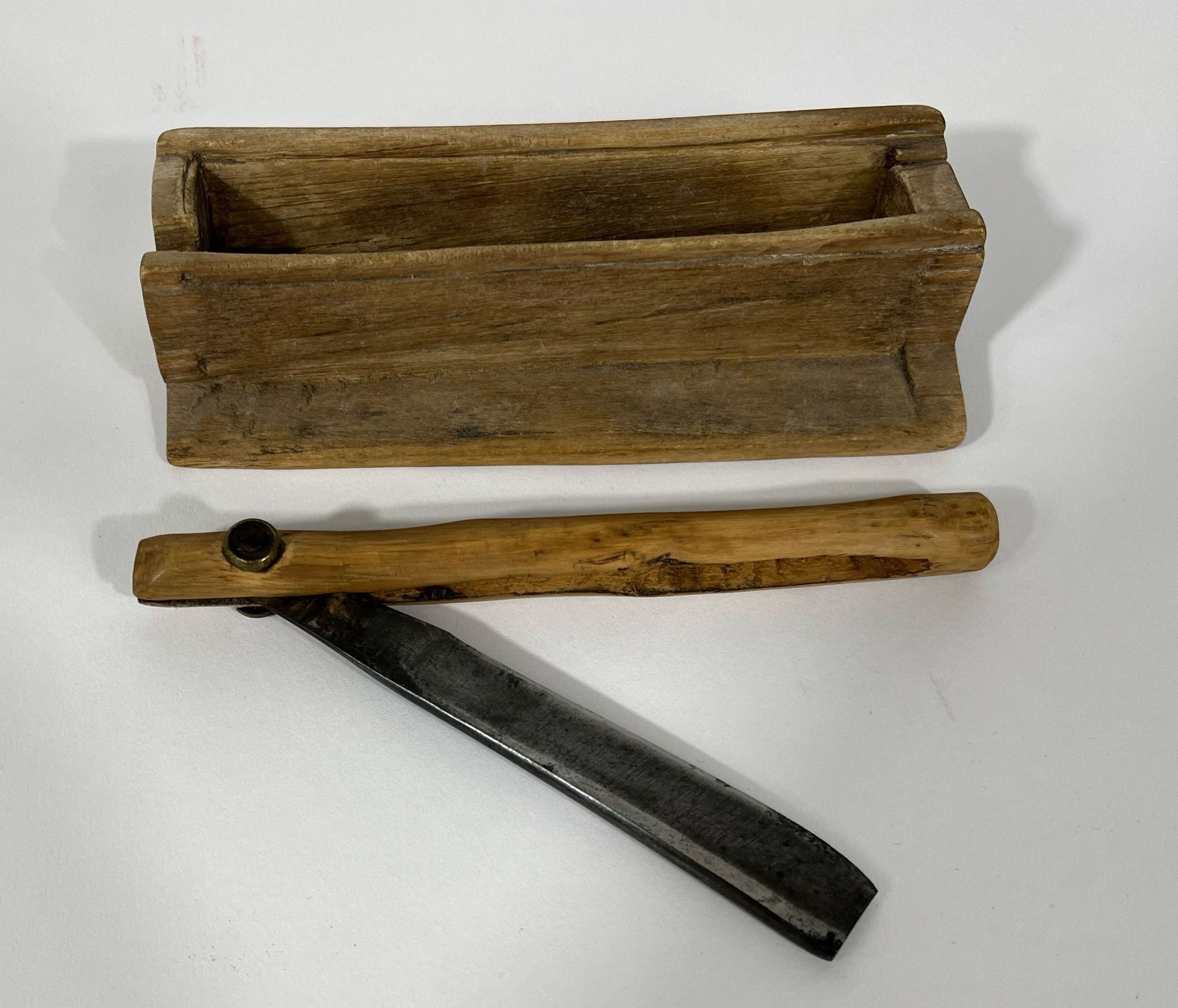
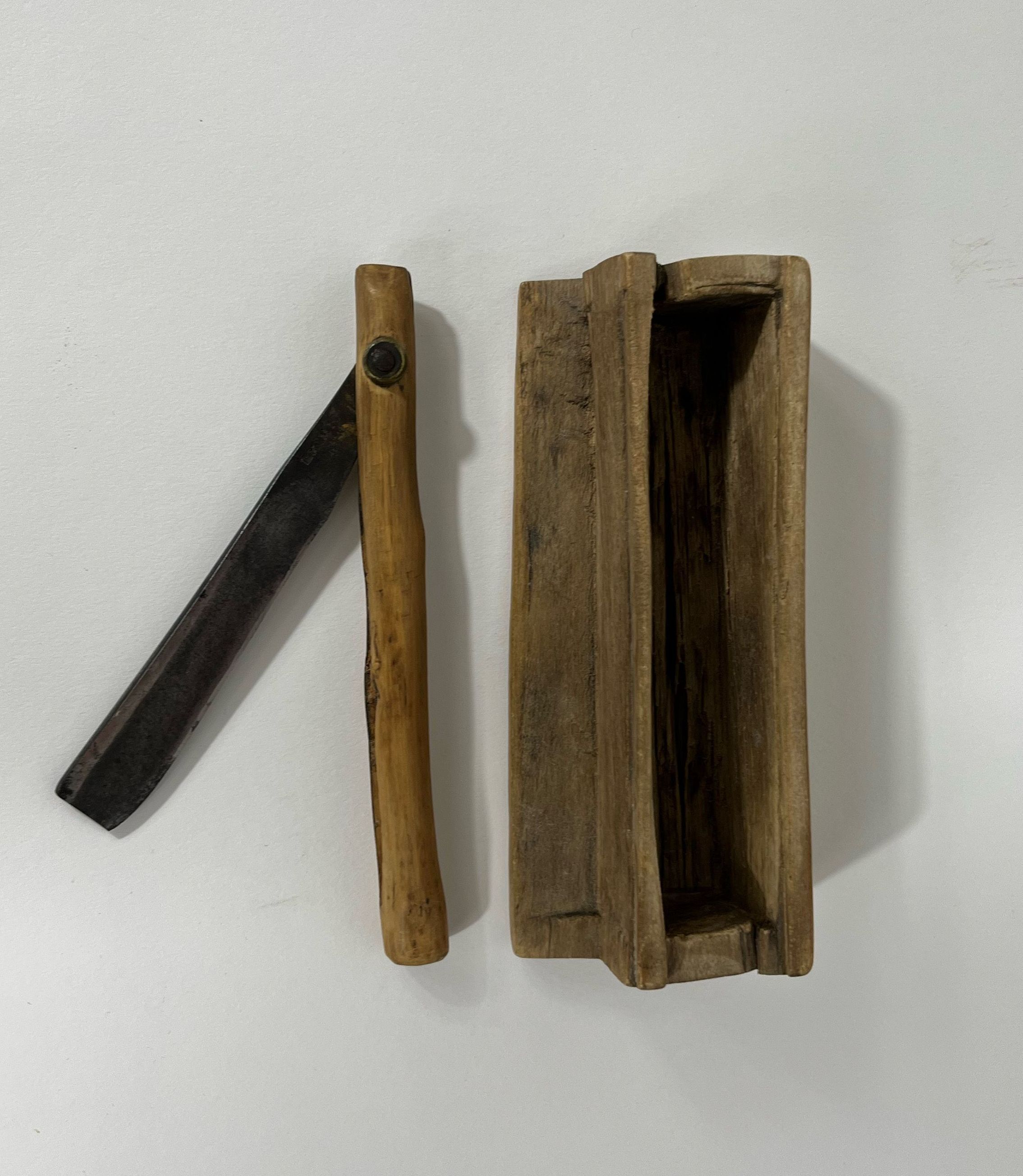
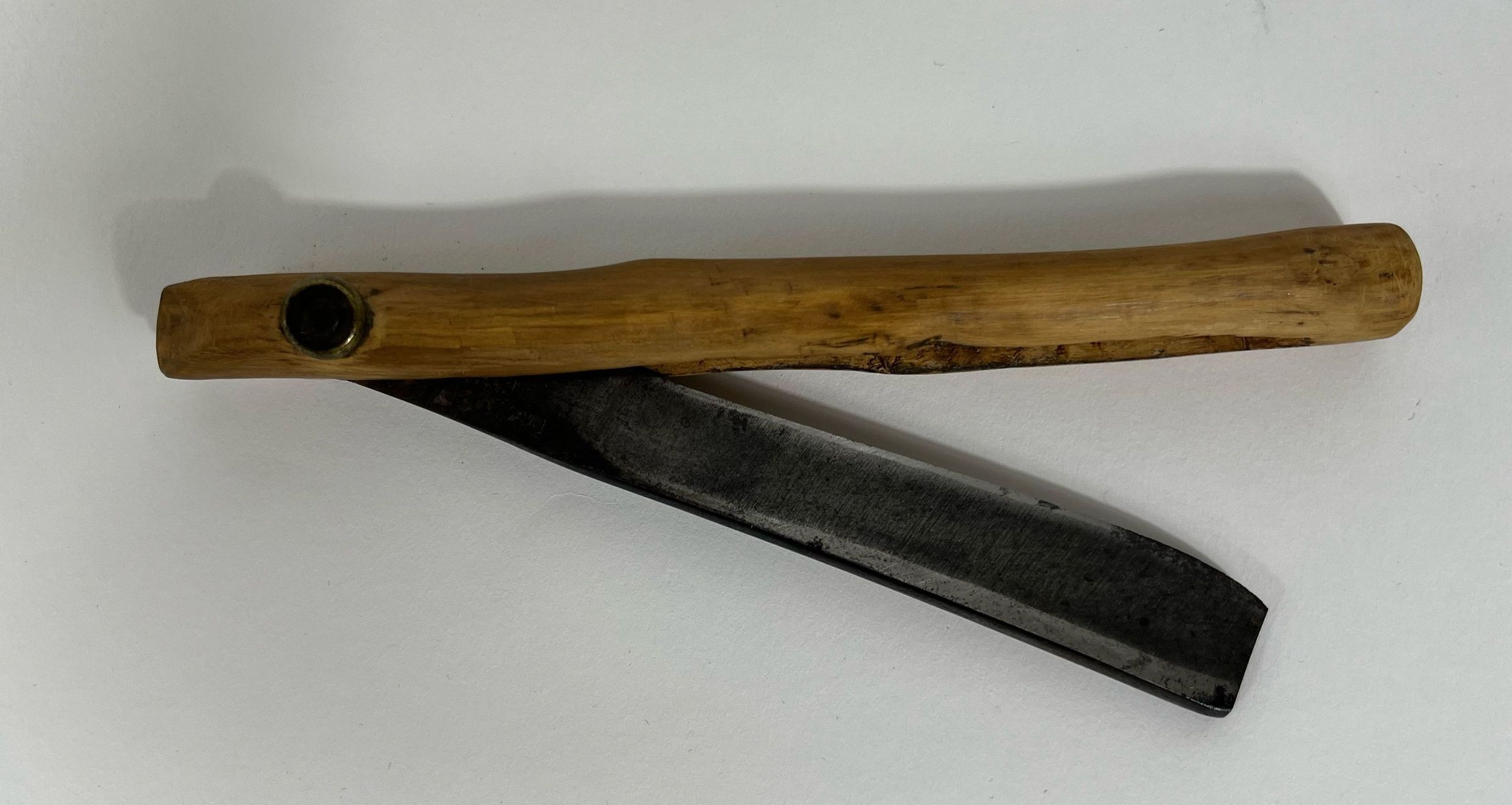
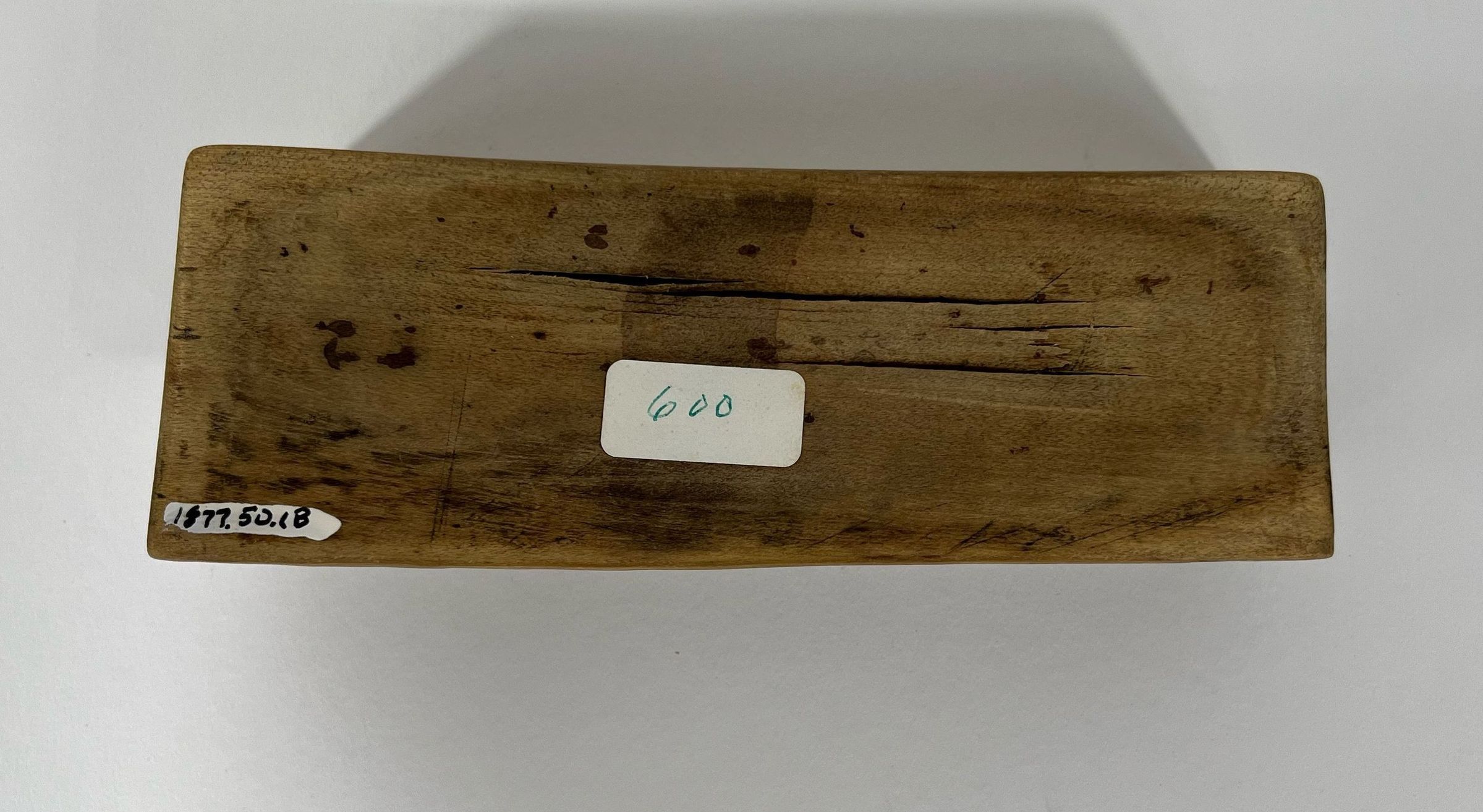
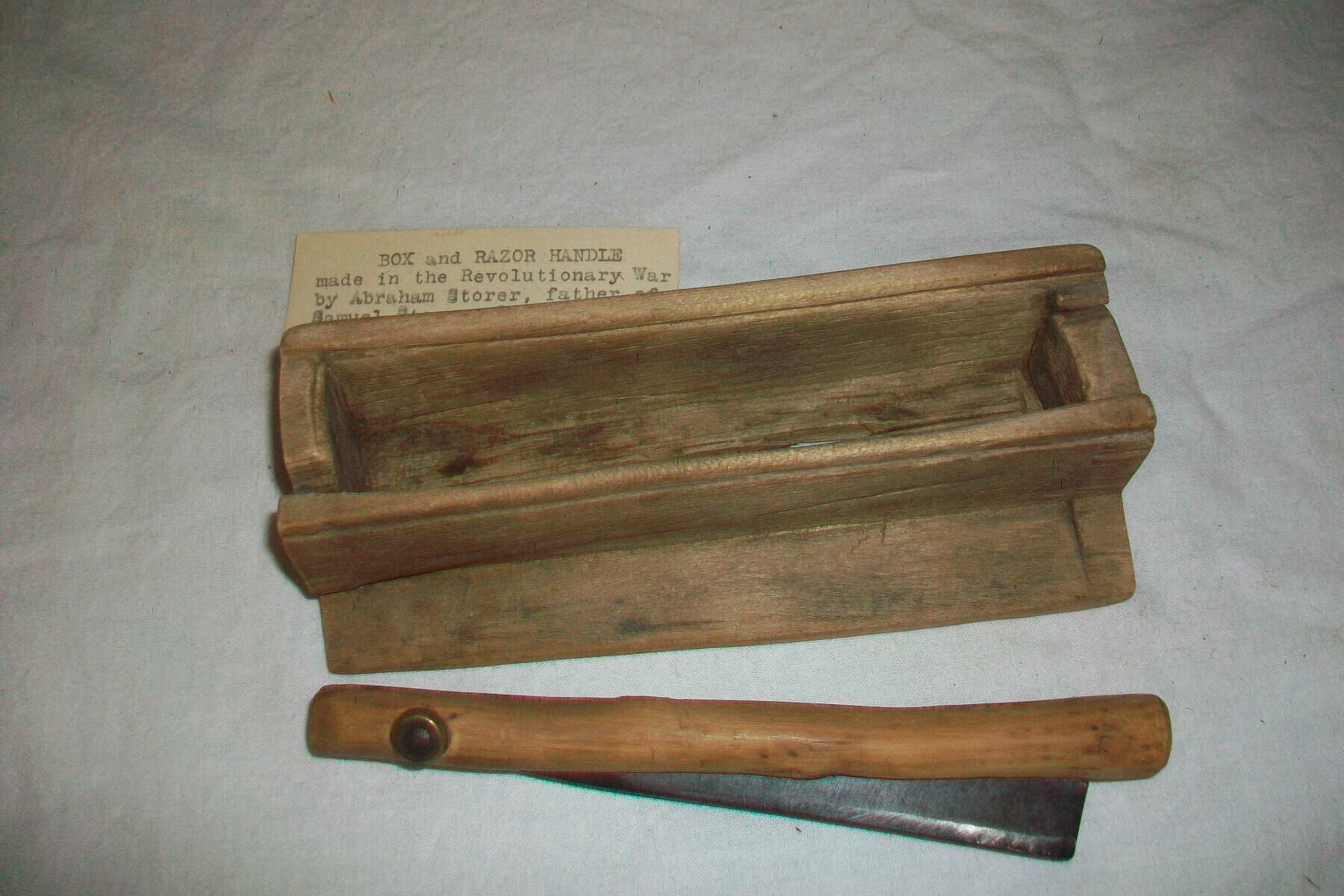
In 1877 Abraham Storer’s grandson Samuel C. Storer (1826-1880) donated this box to the York Institute (now Saco Museum). The Centennial celebrations of 1876 inspired a renewed appreciation for items associated with those who fought during the Revolutionary War, and many were donated to historical societies in the last decades of the 19th century. Abraham may have made these items during the long hours he spent during the siege of Boston. The box is carved from a single piece of pine and once probably had a sliding lid. The handle of the razor may be a replacement as the razor doesn’t actually fit within the box.Label Type
Cultural/Historical ContextLabel
Abraham Storer (1756-1837)
Abraham Storer was one of the minutemen from Wells who responded to the Lexington Alarm on April 19, 1775. His unit, commanded by Captain Noah Moulton Littlefield, marched toward Boston immediately after word of the fighting arrived. His initial service was for five days, but like many Maine soldiers, he returned home briefly to put his affairs in order before reenlisting for a longer term once the siege of Boston had begun. Storer next served in the 30th Regiment of Foot under Colonel James Scamman of Saco and fought with this unit at the Battle of Bunker Hill. Storer remained at Boston for three months and four days during one of the most intense periods of the siege, when the soldiers faced smallpox outbreaks and extreme supply shortages while blockading the British in Boston. At the end of that time, he returned home to Wells.