Small sword

Object/Artifact

-

Saco Museum

Name/Title

Small sword

Entry/Object ID

2016.469.1

Description

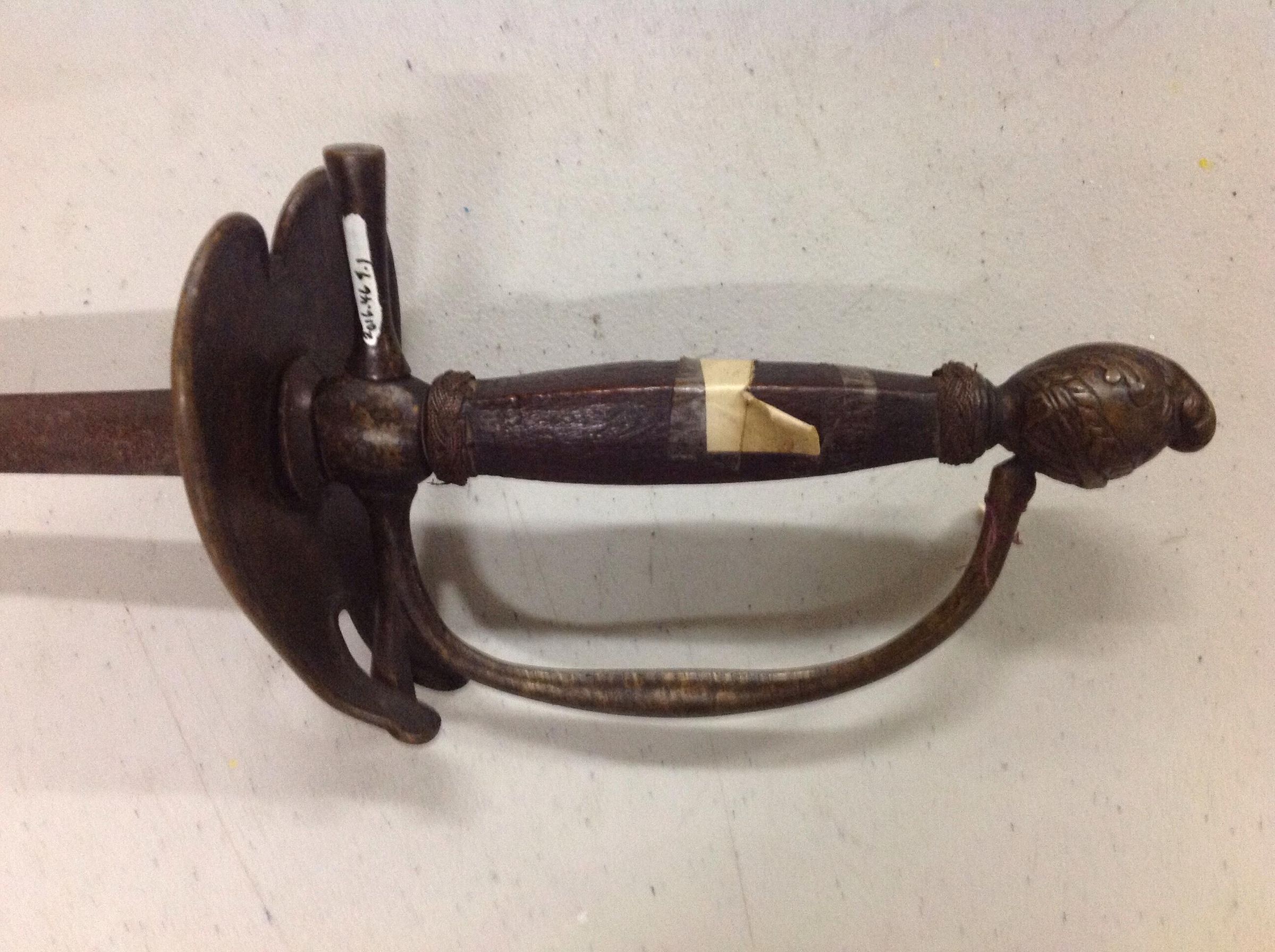
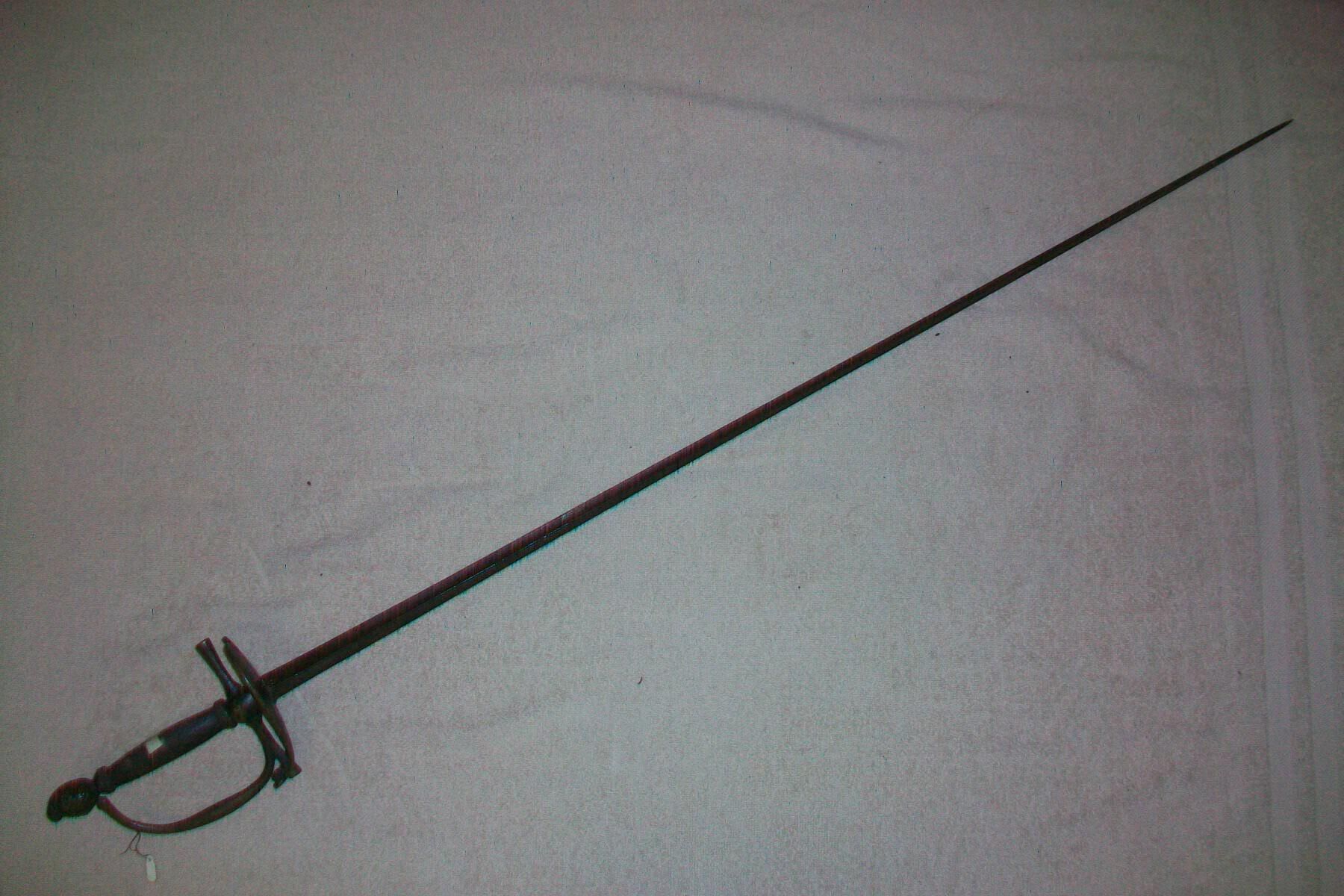
Small sword, no scabbard. Straight triangular blade. Brass hilt with helmet-shaped pommel, hilt otherwise undecorated. Wooden grip with braided wire decoration at top and bottom. The original covering for the grip is now missing.

Context

During the Revolutionary War there was no single standardized regulation sword for officers. Since officers were usually responsible for purchasing their own sidearms, a variety of styles were used depending on personal wealth and preference. Many officers chose to carry a small sword. The swords had narrow straight blades (usually 30-33” long) useful for thrusting and were used primarily for defense rather than heavy battlefield use.

Made/Created

Date made

1740 - 1760

Dimensions

Length

40 in

Dimension Notes

Blade length: 33.5" Blade sides .38, .38, .63 W Hilt 6.50 L X 4.13 W

Material

Steel, brass, Wood, wire

Interpretative Labels

Label Type

Cultural/Historical Context

Label

Captain Jeremiah Hill (1747-1820) In April 1775, Jeremiah Hill of Biddeford raised a militia company and marched to Cambridge to support the siege of Boston. He fought at the Battle of Bunker Hill as part of the 30th Regiment of Foot commanded by Colonel James Scamman of Saco. At the beginning of 1776, Hill, by now a Captain, was transferred to the 18th Regiment under Colonel Edmund Phinney. Hill’s regiment remained in Boston until after the British had evacuated the city, at which time it was transferred to Fort George, New York, a critical supply and communications center. In early 1777, the Continental army was reorganized and Hill was commissioned as a Captain in the 1st Massachusetts Regiment. However, he felt strongly that he had been unfairly passed over for promotion to Major and personally petitioned George Washington for a discharge in 1777. Hill resigned his commission on December 5, 1777 and returned to Maine.