Italian Landscape
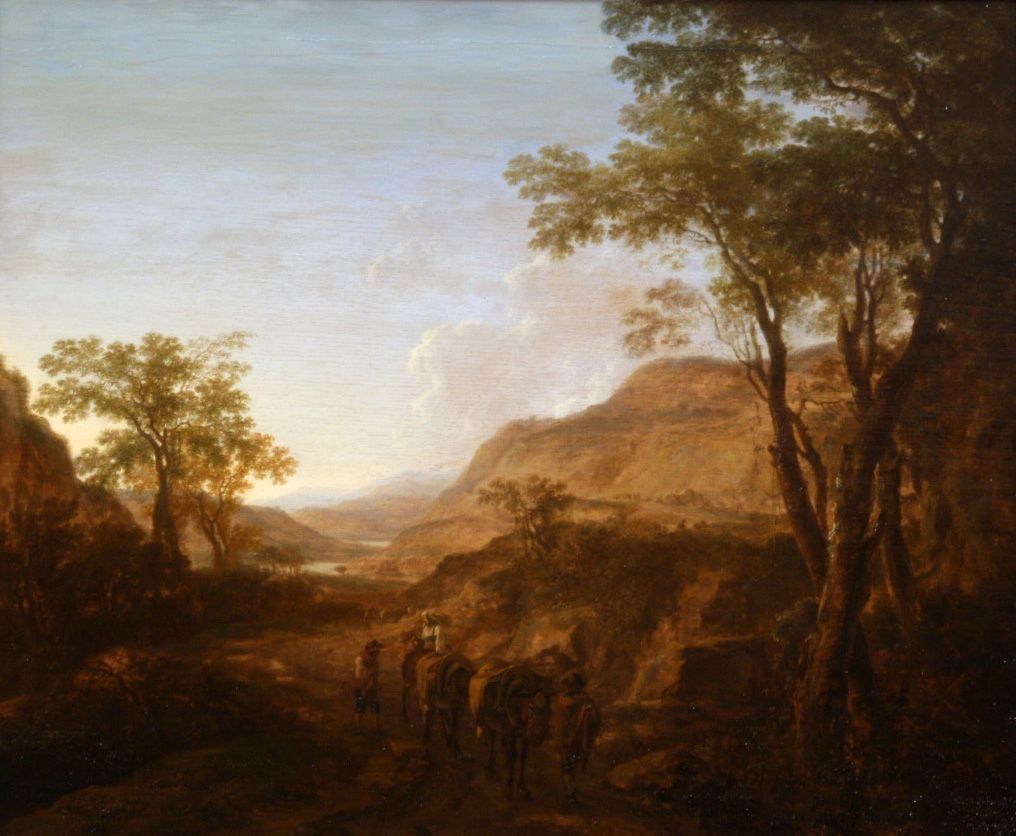
The painting depicts a serene landscape with a winding path leading through a mountainous terrain, where travelers on horseback are journeying under the shade of tall, lush trees. In the background, expansive hills stretch towards a gentle horizon, with a river cutting through the valley, reflecting the soft glow of the sky.
Name/Title
Italian LandscapeEntry/Object ID
1957.2.3Description
Landscape with tree on the right side, peasants lead horses up the road in the center, and mountains rise in the background.Type of Painting
PanelArtwork Details
Medium
OilCategory
Vault, Plants and Nature, Landscape, People
Made/Created
Artist
Jan BothDate made
1630 - 1652Dimensions
Dimension Description
image sizeHeight
22 inWidth
25-1/2 inDimension Description
frame sizeHeight
27-1/2 inWidth
31-5/8 inExhibitions
Loan @ Grand Rapids Art Museum - Dutch Masters from Grand Rapids Collections 1972
Dutch Masters from Michigan Collections - February 19 - March 19, 1976
Exhibition
Permanent Collection: Prince Conference Center, President's Dining Room - October 2002 - March 2004Notes
piece removed in 2003 when a large crack appeared.90 Years of Collecting - September 4–October 20, 2012 Center Art Gallery