Label
John Polka
c. 1930 - 2006
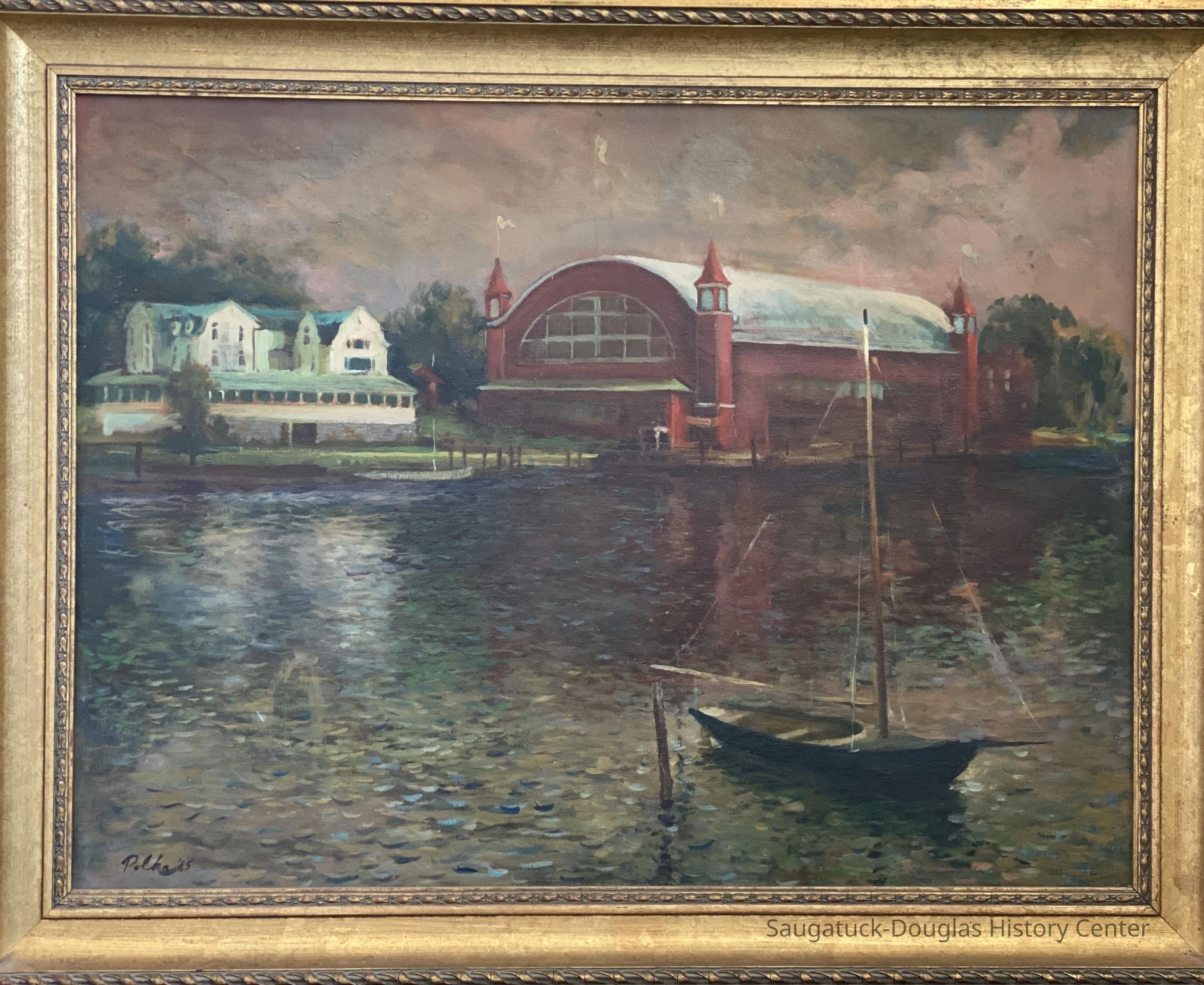
The Big Pavilion At Night
1965 | oil on canvas
Notes: John Polka studied both in Europe and, later, at Ox-Bow. In the 1960s, he opened a studio in Saugatuck, where he taught and painted landscapes and portraits of people and animals.
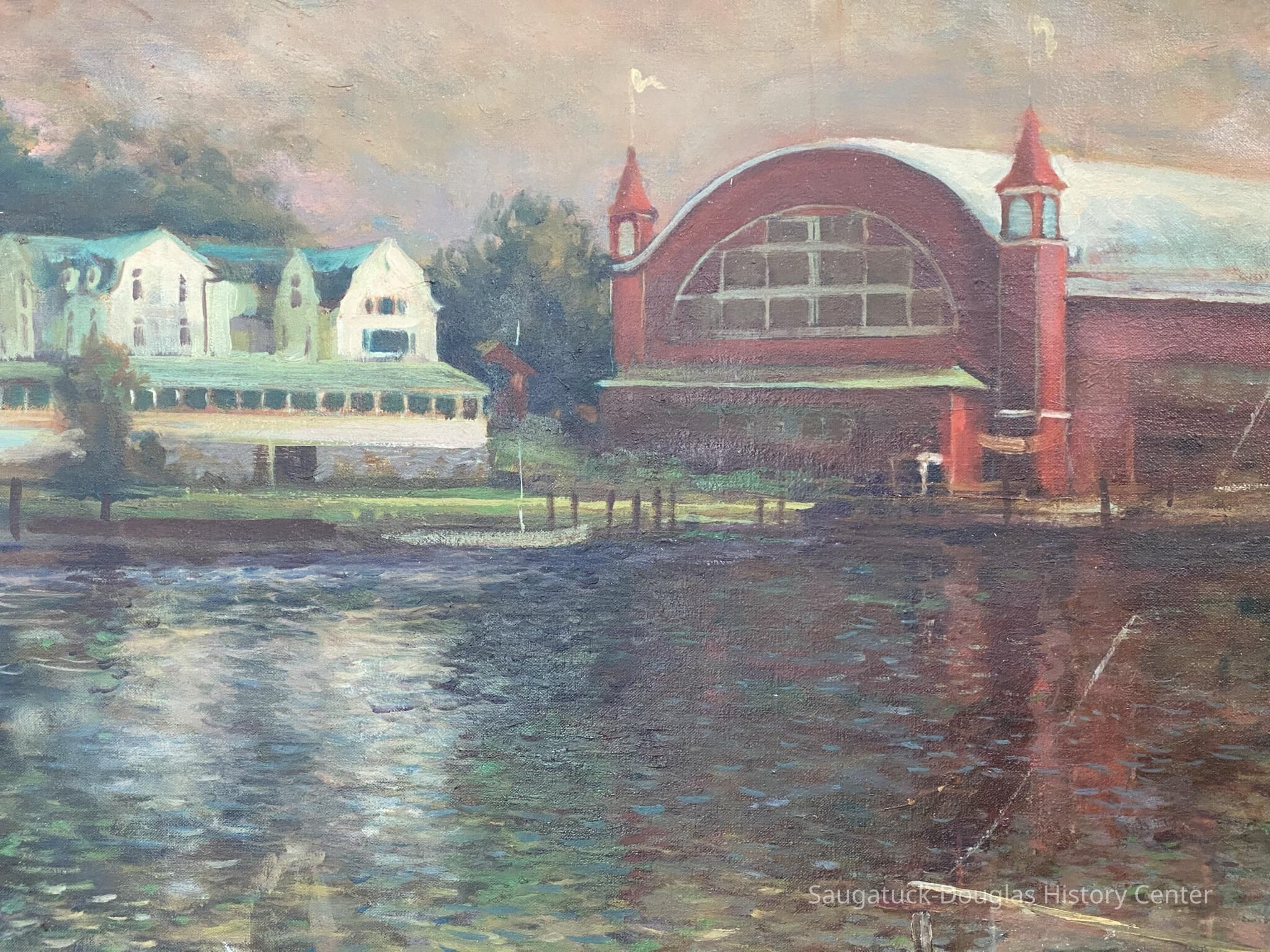
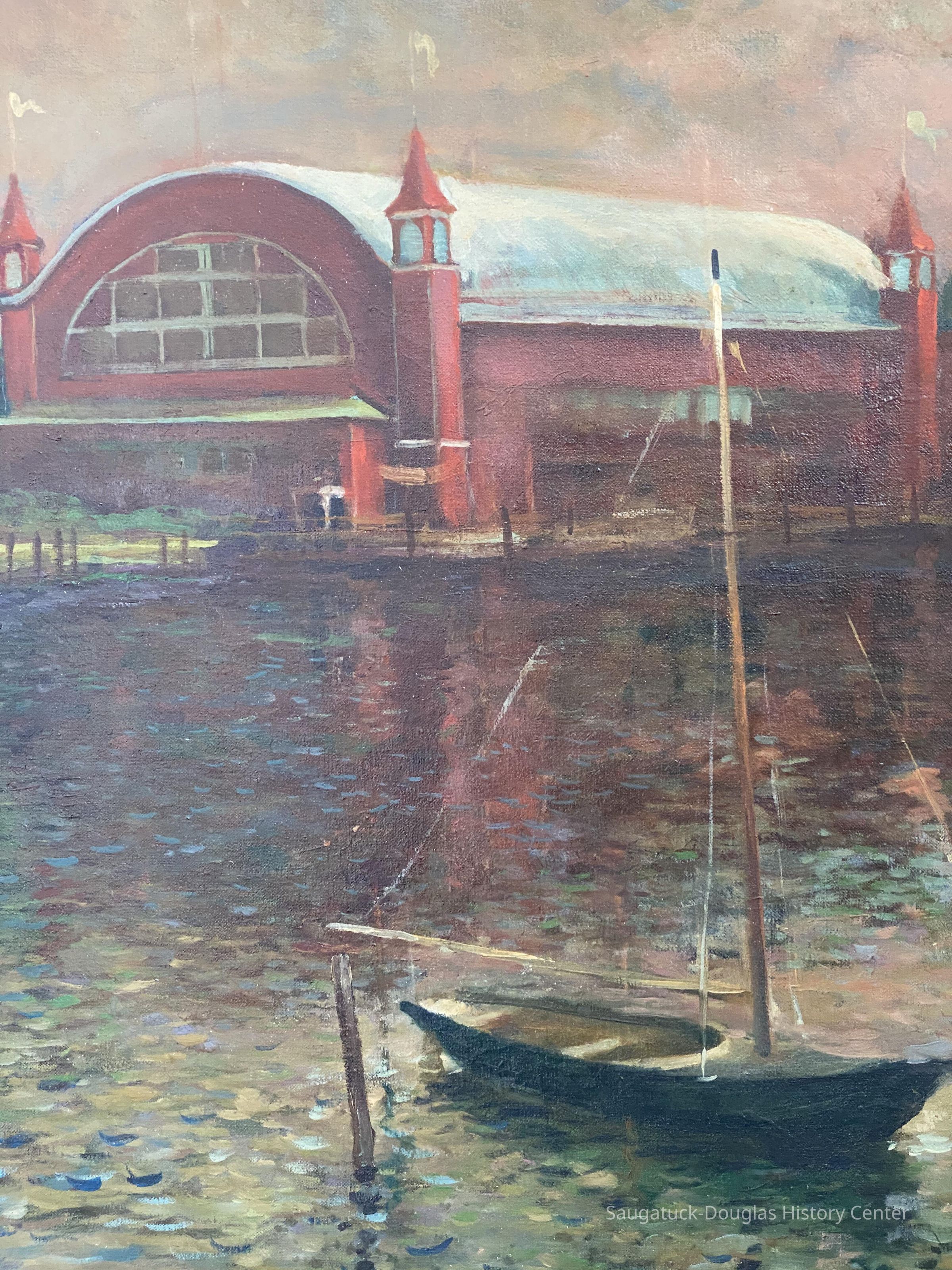
Polka did several versions of the Big Pavilion. This very moody view was painted five years after the pavilion burned. The viewer’s perception of the image changes as the light of the passing day moves across the room. The water seems to glow in front of the building capturing the lost splendor of Saugatuck’s great icon.
Collection: Saugatuck Douglas History Center
Gift of: Friends of the Art Collection
Accession: 2021.14.01Label
John Polka
c. 1930 - 2006
The Big Pavilion At Night
1965 | oil on canvas
Notes: American born, John Polka was raised in Germany. He studied both in Europe and, later, at the Ox-Bow Summer School of Painting. In the 1960s, he opened a studio in Saugatuck, where he taught and painted landscapes and portraits of people and animals.
Polka did several versions of the Big Pavilion. This very moody view was painted five years after the pavilion burned. The viewer’s perception of the image changes as the light of the passing day moves across the room. The water seems to glow in front of the building capturing the lost splendor of Saugatuck’s great icon.
Collection: Saugatuck Douglas History Center
Gift of: Friends of the Art Collection
Accession: 2021.14.01Label
From "Collecting the Lakeshore" 2025-2026 at the History Center main floor gallery
John Polka
1930-2006
The Big Pavilion and Coral Gables at Night
1965 | oil on canvas
Born in the United States, John Polka spent part of his childhood in Germany during the 1940s. He returned to graduate from Saugatuck High School and then studied in Europe, at the Ringling School of Art in Sarasota, Florida, and later, at the Ox-Bow Summer School of Painting. In the 1960s, he opened a studio in Saugatuck, where he taught and painted landscapes and portraits of people and animals.
Polka painted several versions of the Big Pavilion. This very moody view was painted five years after the pavilion burned in May of 1960. Its mysterious qualities may channel ideas of the collective unconscious from psychology popular in the visual arts in the post-World War Two era. Observe how your perception of the image changes as the light of the passing day moves across the room. The water seems to glow in front of the building capturing the lost splendor of Saugatuck’s great icon even sixty years after its untimely destruction.
Gift of the SDHC Friends of Art
Accession number 2021.14.01