Name/Title
Ancient Roads Project - Shelburne, VermontEntry/Object ID
2026.0.3Scope and Content
In 2006, Vermont passed Act 178, which laid out an ultimatum for town officials: officially recognize and catalogue your ancient roads, or they will be lost forever. If the roads were not properly marked and included on the official town map by July 1, 2015, they lost authority as a public throughway and ownership was assumed by the adjacent landowner.
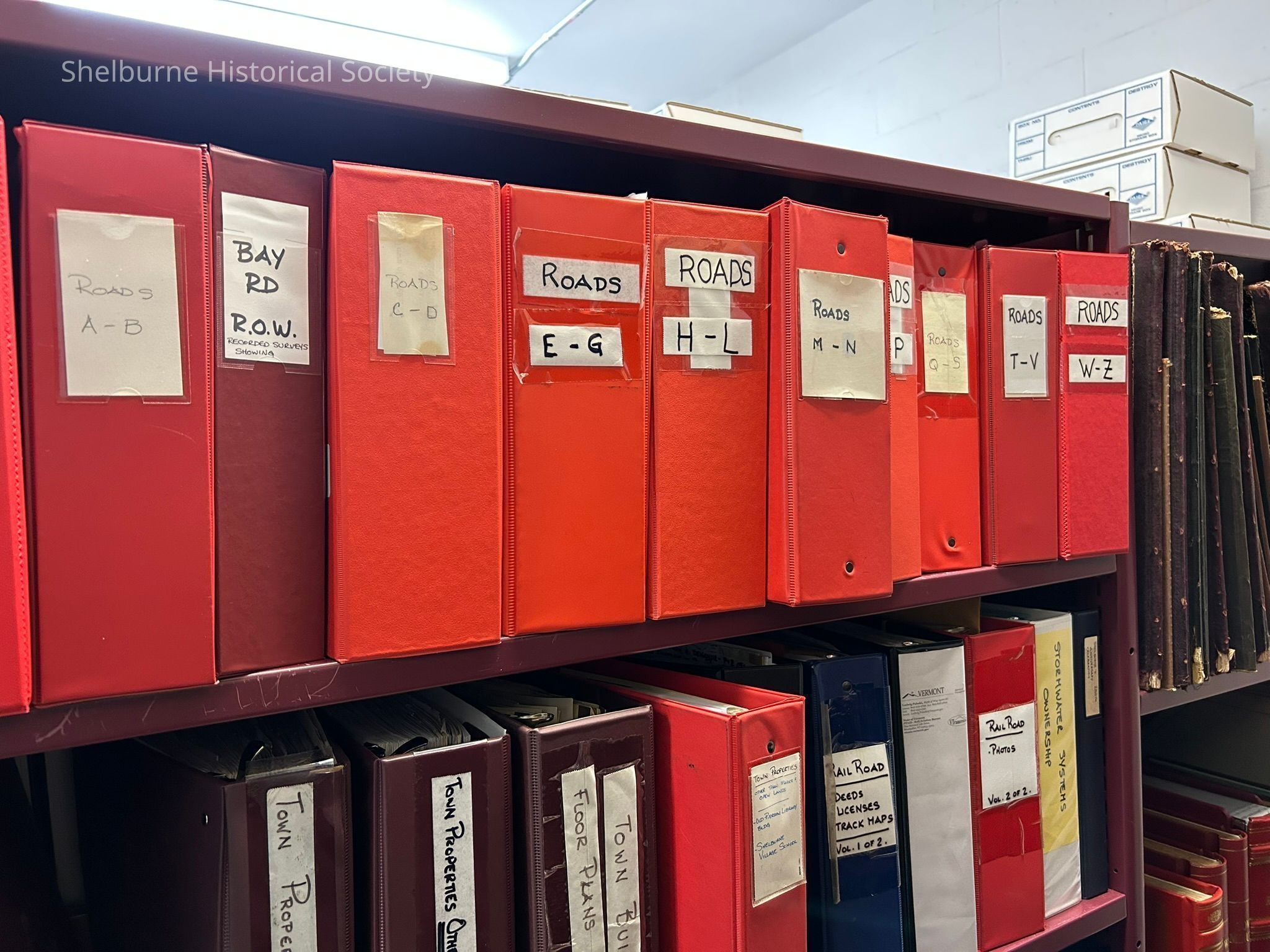
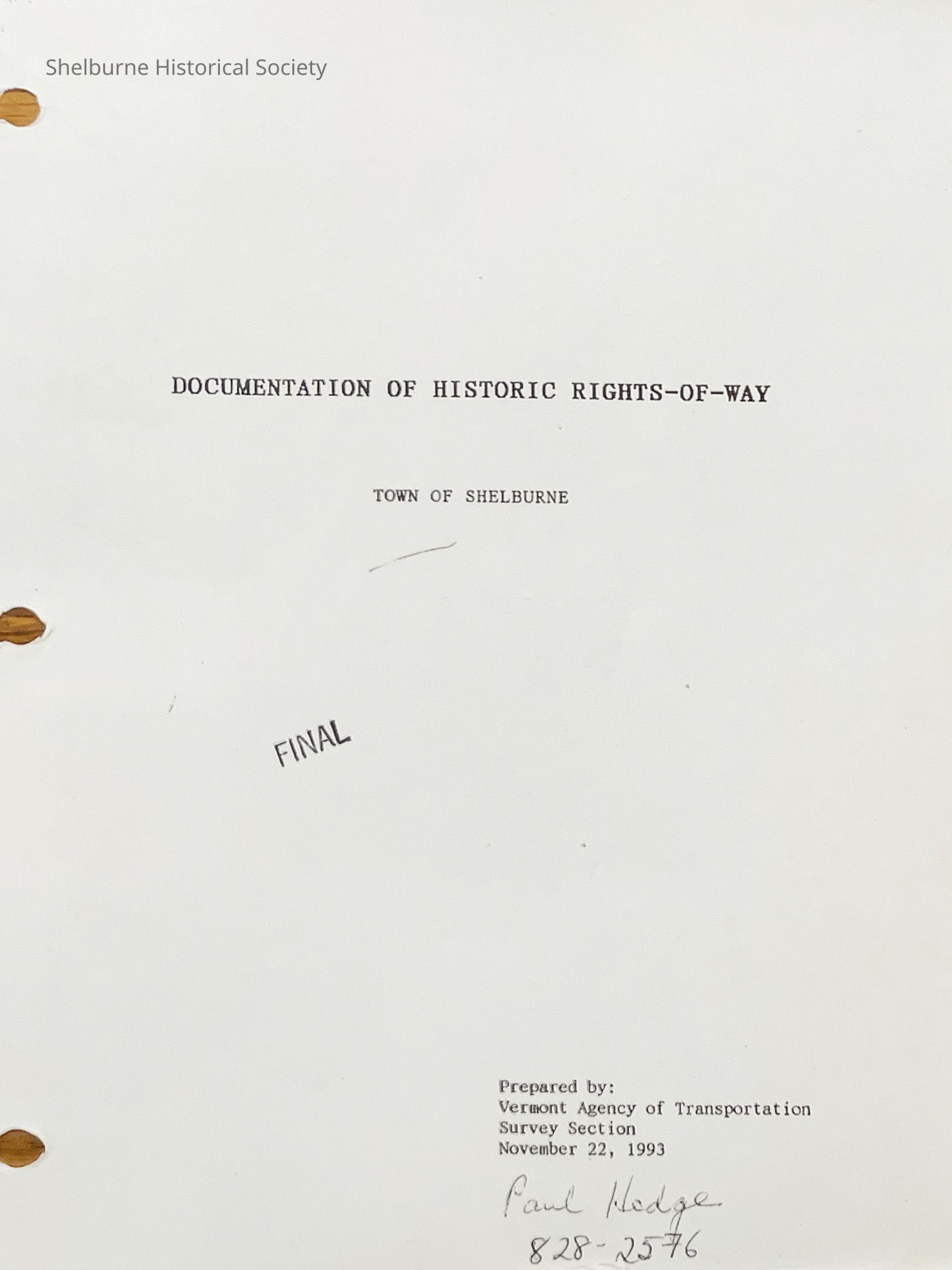
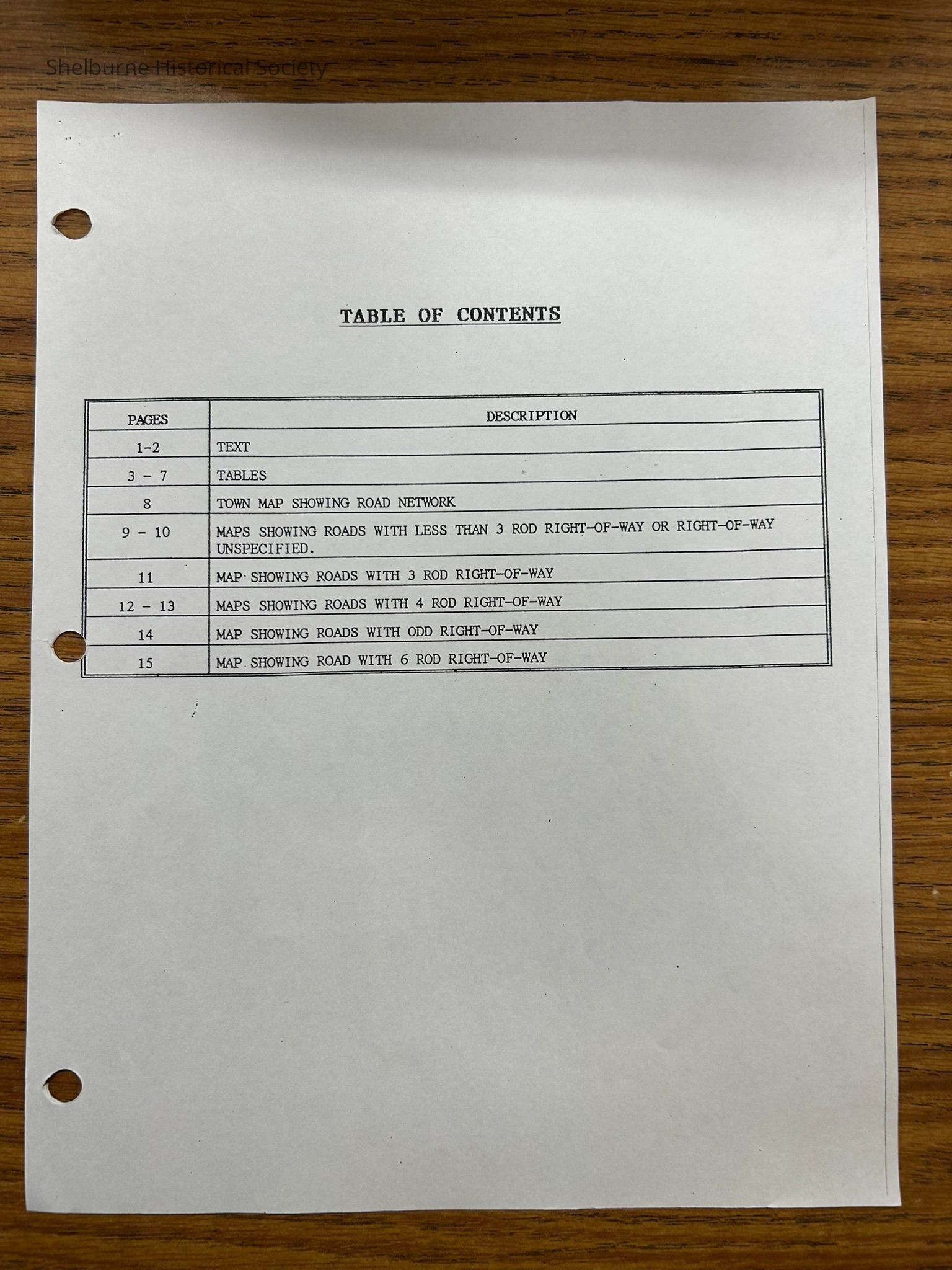
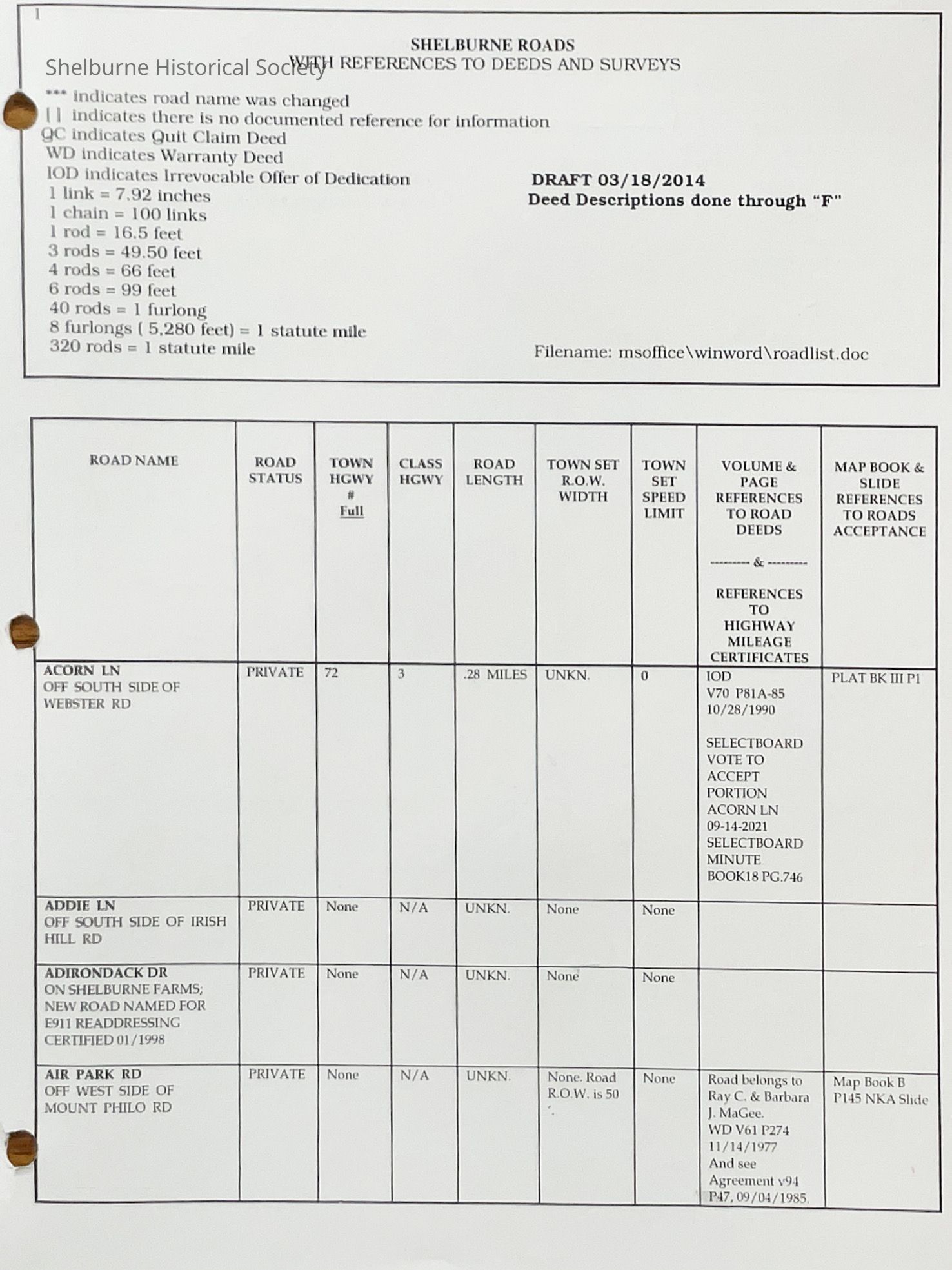
Shelburne completed this project and is recorded and details available in the Town Records Vault. The State of Vermont provided "Documentation of Historic Rights of Way" i.e. the State's records of Shelburne's Roads. Shelburne then undertook the task of finding all information they could about properties which referenced town roads. Of note is the term vendue, literally defined means 'a public sale'. If a landowner did not keep up with paying taxes, his property was sold at auction and was a way for other more wealthy landowners to increase their property wealth.
The web links below also provide VTrans sites which hold additional historical archives of Shelburne Road maps.Context
(Extract from 'Ancient Roads in Northern New England', Vermont Law Review, Goldward, Book 2, Volume 33, pp. 355-386) When the first white settlers arrived in Vermont in the mid-eighteenth century, the land was already delineated by travel routes. People traveled “to a neighbor’s dwelling, or the river or pond, or a neighboring village in another town, and they traveled over routes that were established before they arrived, by Native Americans, pioneers, and wanderers. Paths became trails; trails were widened and became roads.”29 In 1781, the Vermont legislature passed a highways act stating: “[A]ll roads heretofore laid out that are not surveyed by the compass within two years from the passing [of] this act, shall not be deemed lawful.”30 The language of the highways act applied not only to roads that had been built, but to any road that had been laid out. This language foreshadowed the problems we face today—namely that some roads were surveyed and made official but never actually built, leaving no physical evidence of their existence.
The records collected included all deeds that were adjacent to the individual roads in addition to other documentation including surveys, maps, census records.Lexicon
Nomenclature 4.0
Nomenclature Tertiary Object Term
Map, RoadNomenclature Secondary Object Term
MapNomenclature Primary Object Term
CartographNomenclature Sub-Class
Graphic DocumentsNomenclature Sub-Class
Government RecordsNomenclature Class
Documentary ObjectsNomenclature Category
Category 08: Communication ObjectsCopyright
Type of License
Copright Statement - In CopyrightCopyright Holder
Town of ShelburneCreated By
Boucher, DavidCreate Date
November 5, 2025Updated By
Boucher, DavidUpdate Date
November 11, 2025