Name/Title
Stations of the Cross (14 paintings)Entry/Object ID
2025.6.3Description
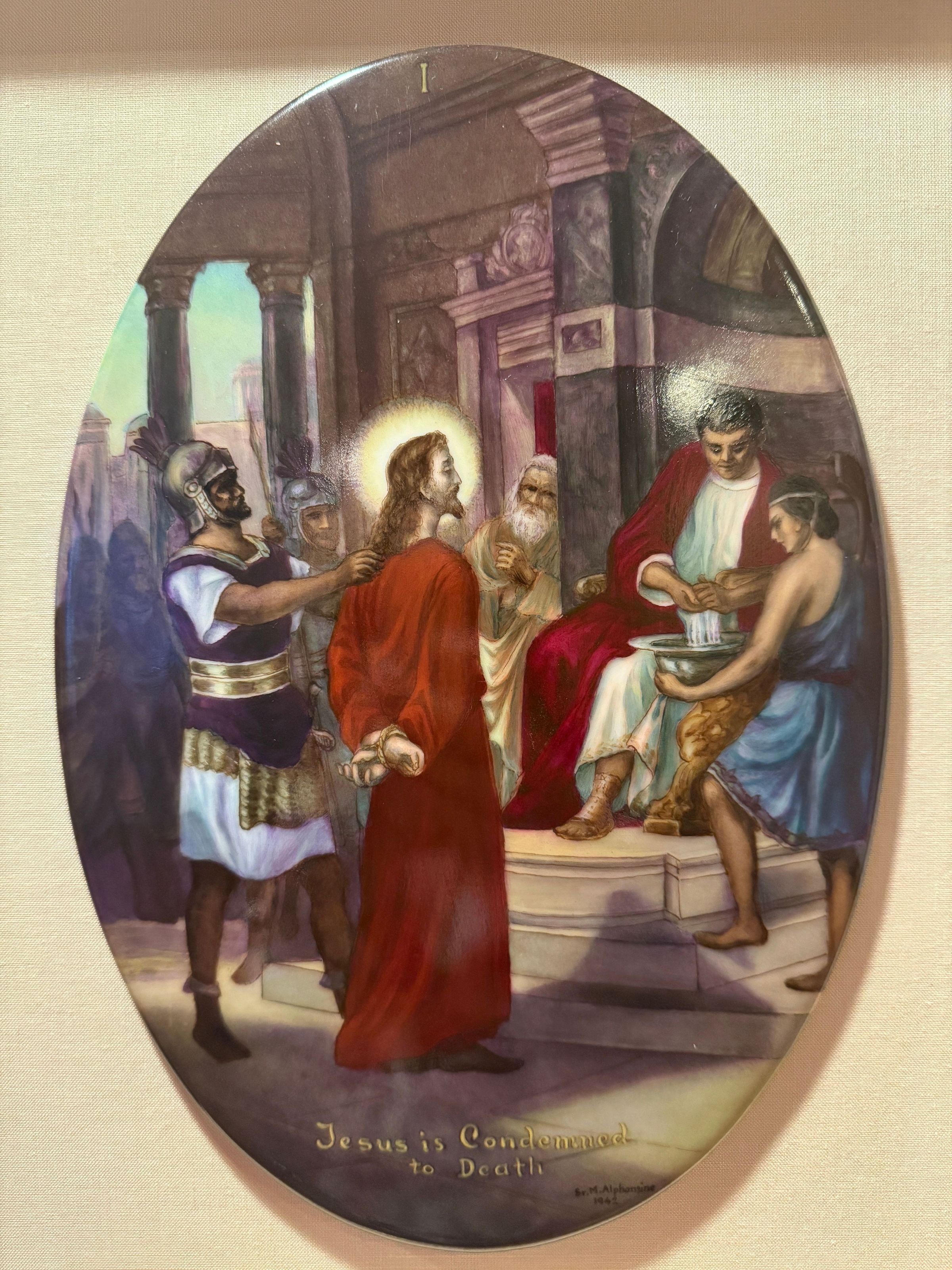
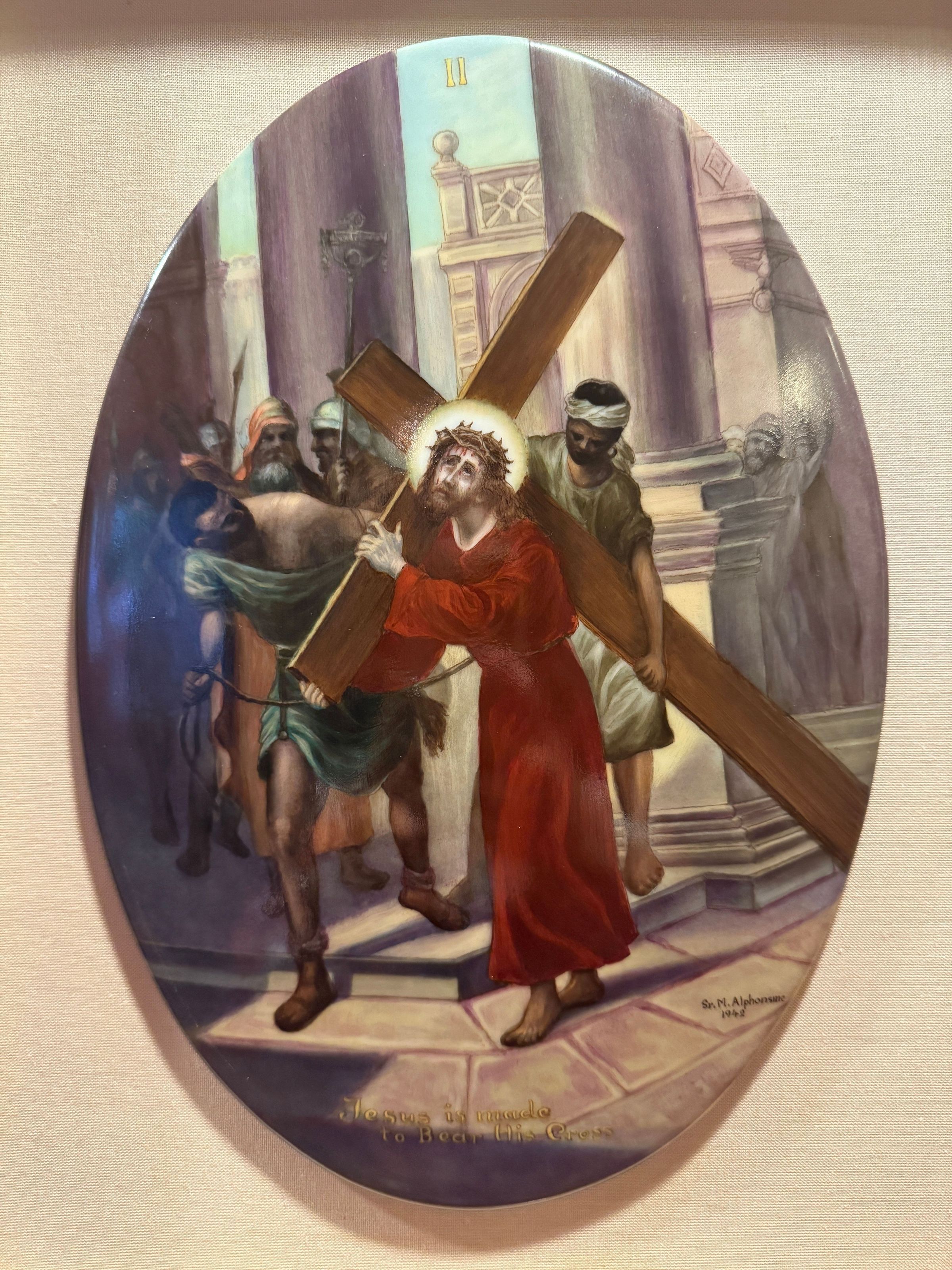
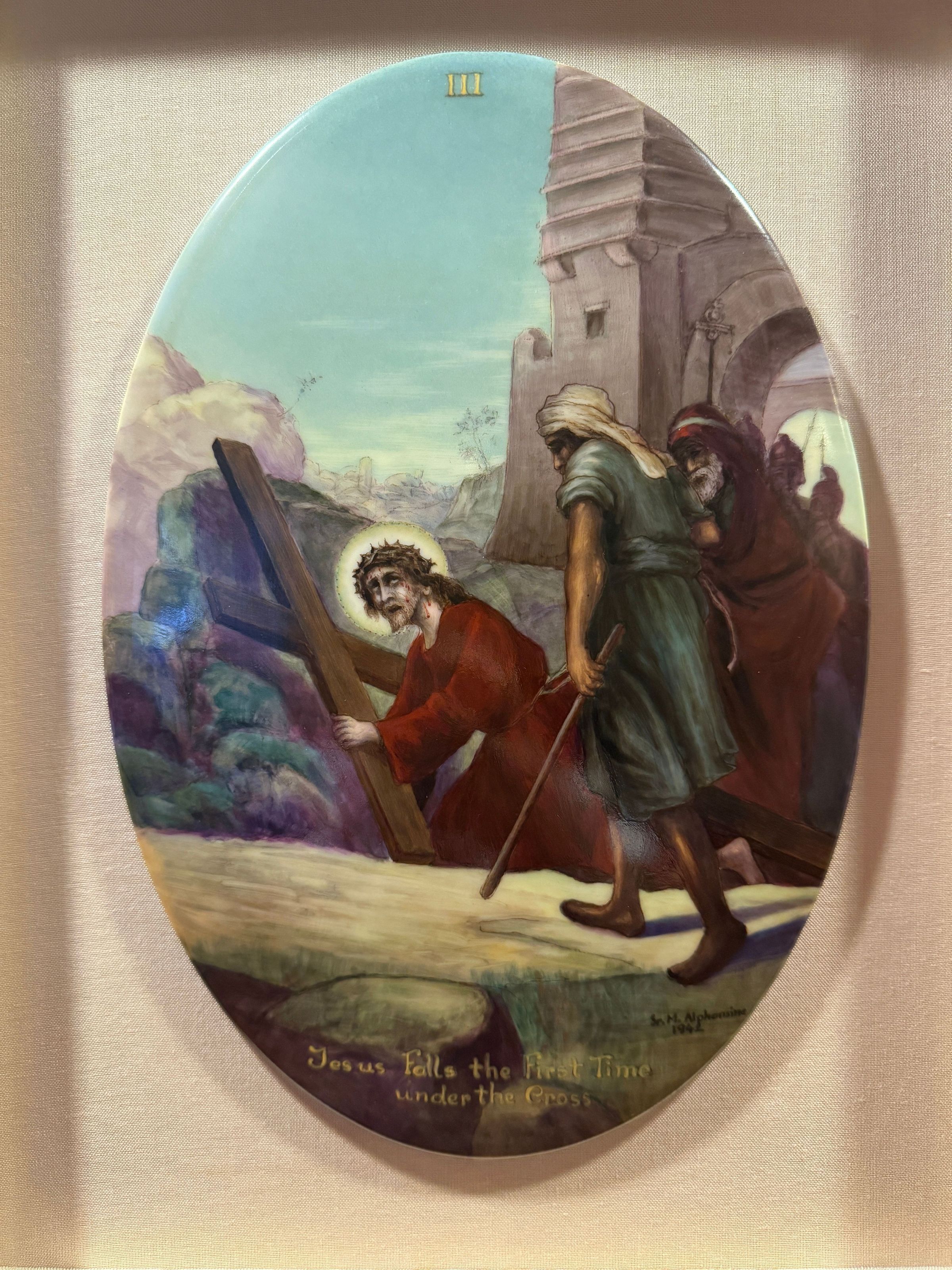
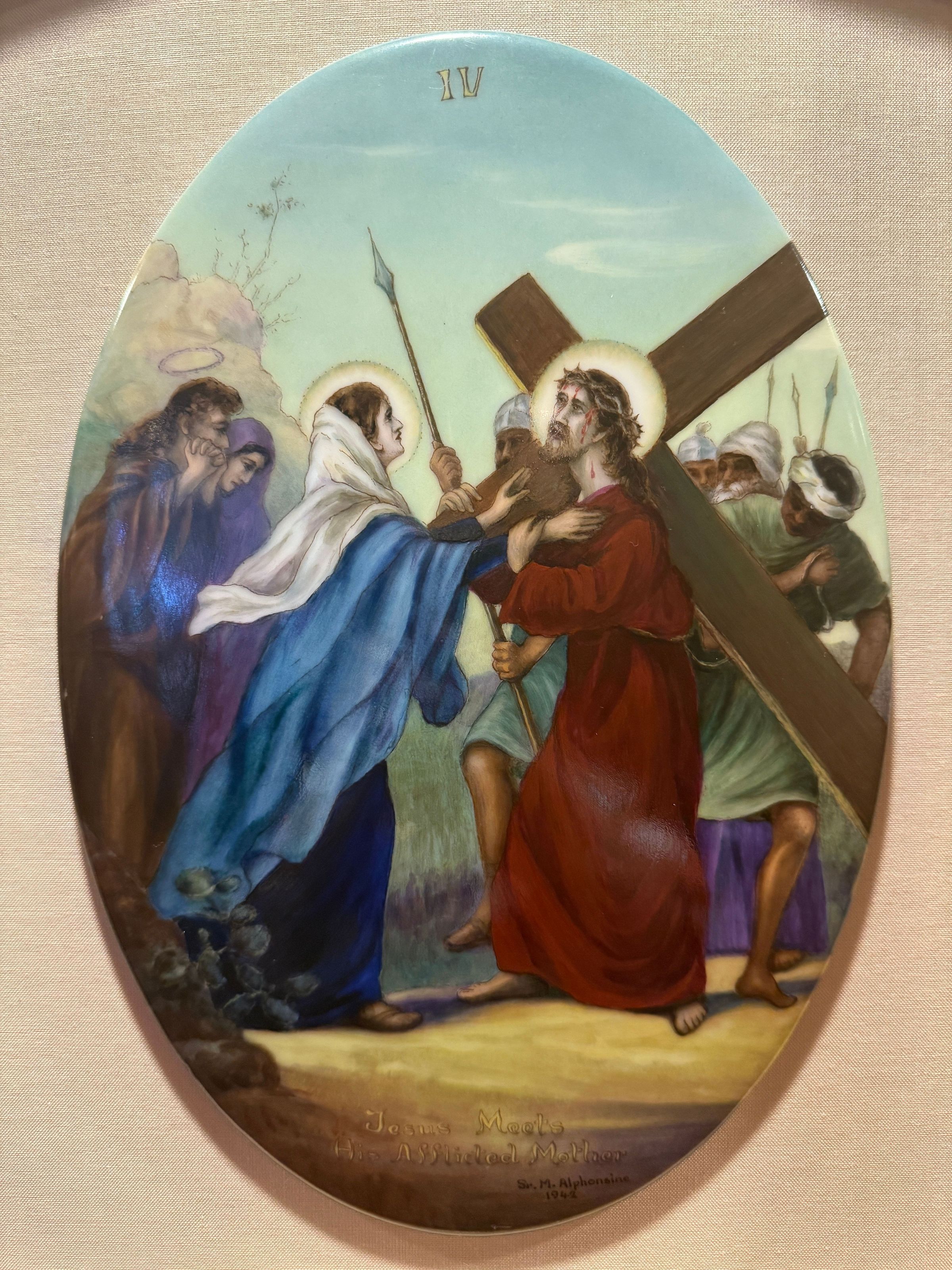
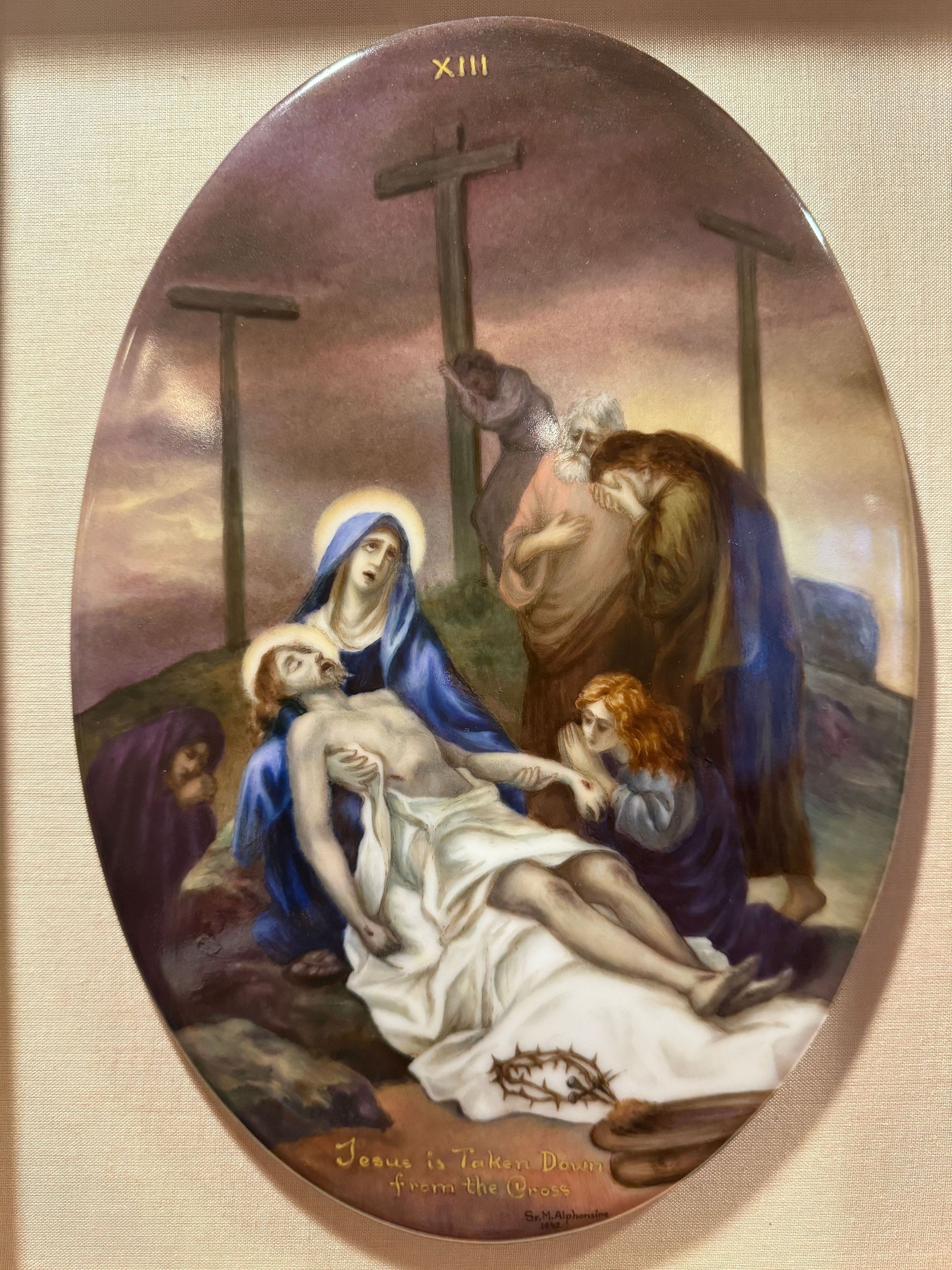
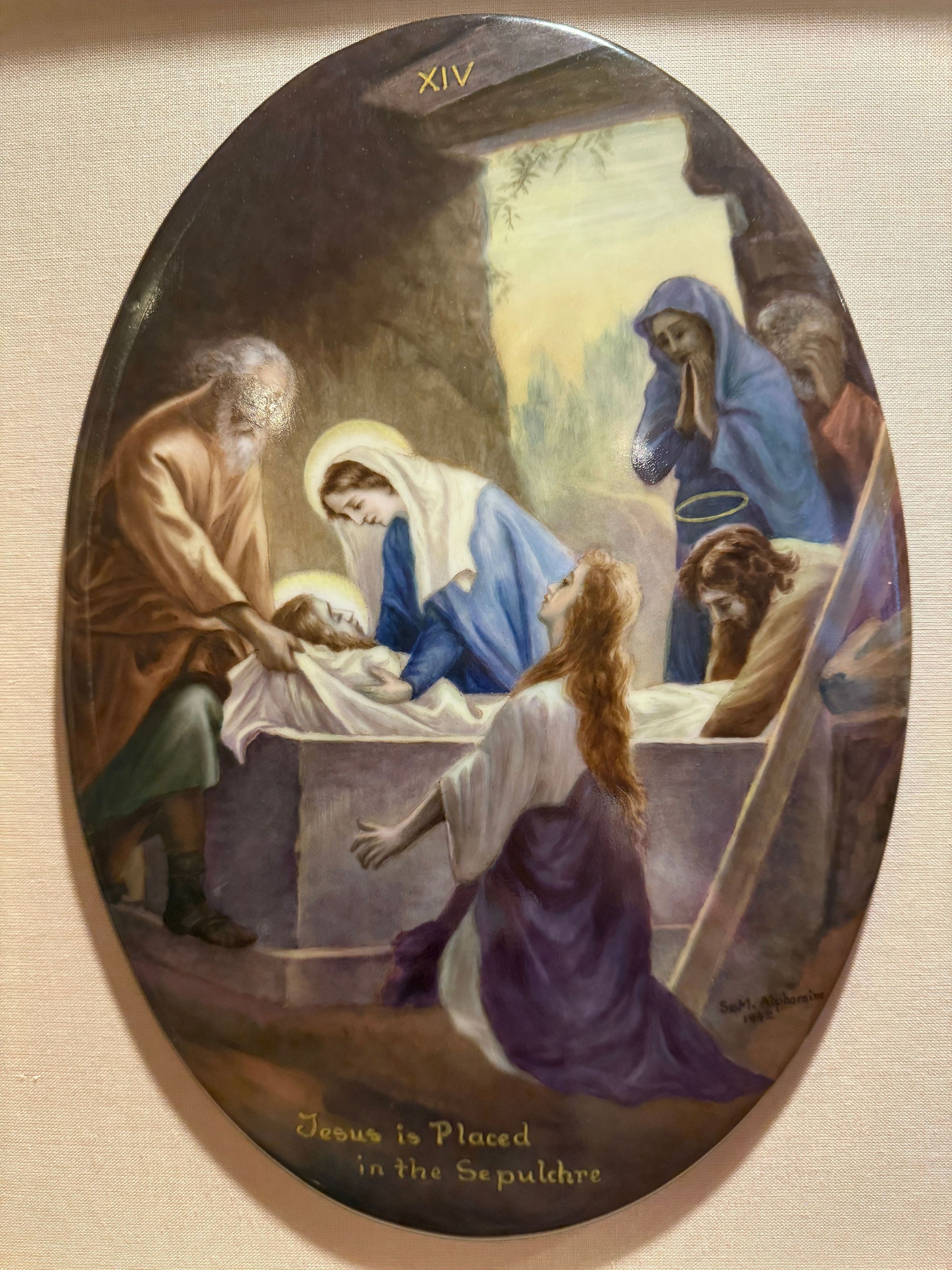
Title [assigned by artist]: Stations of the Cross
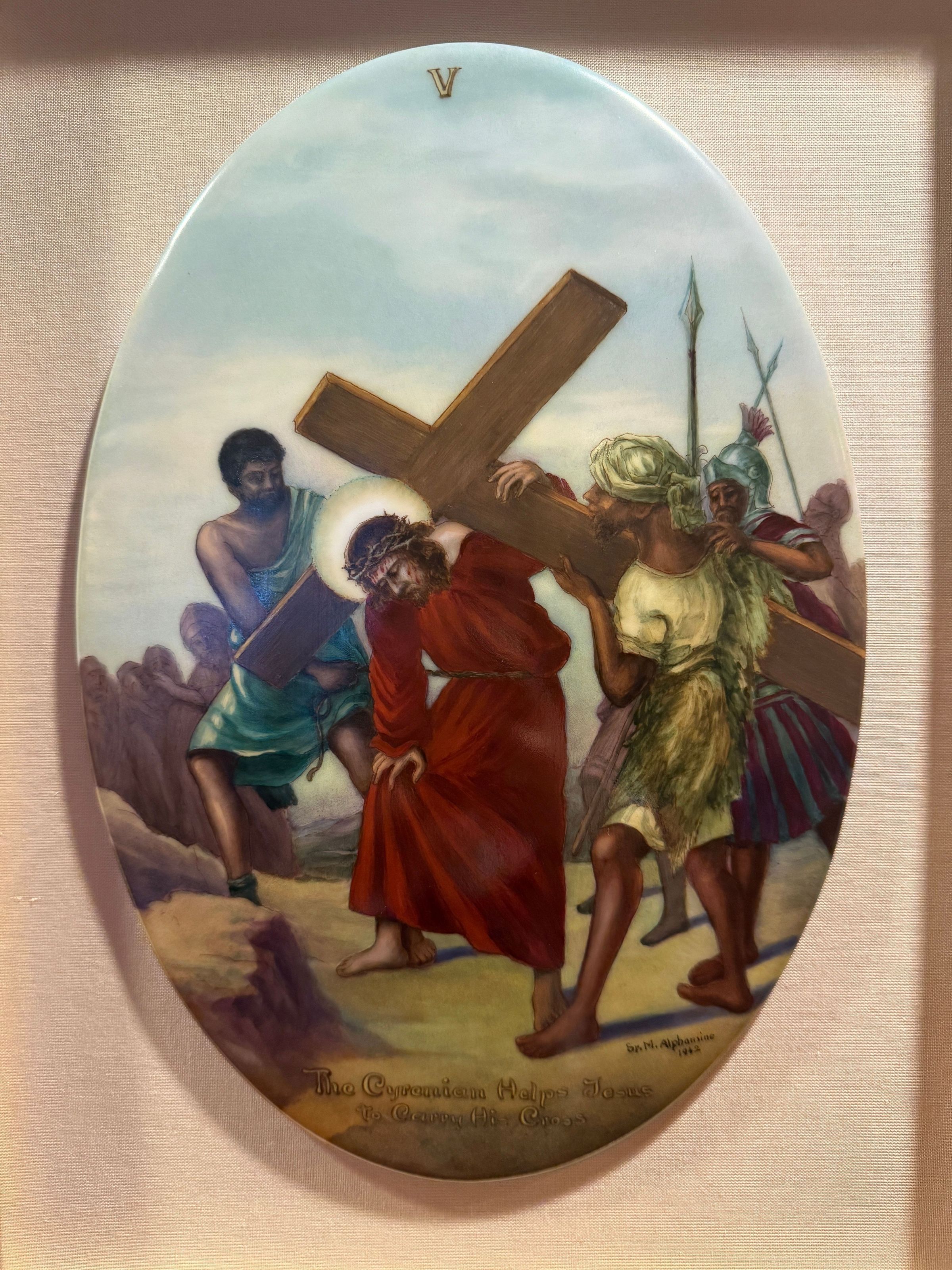
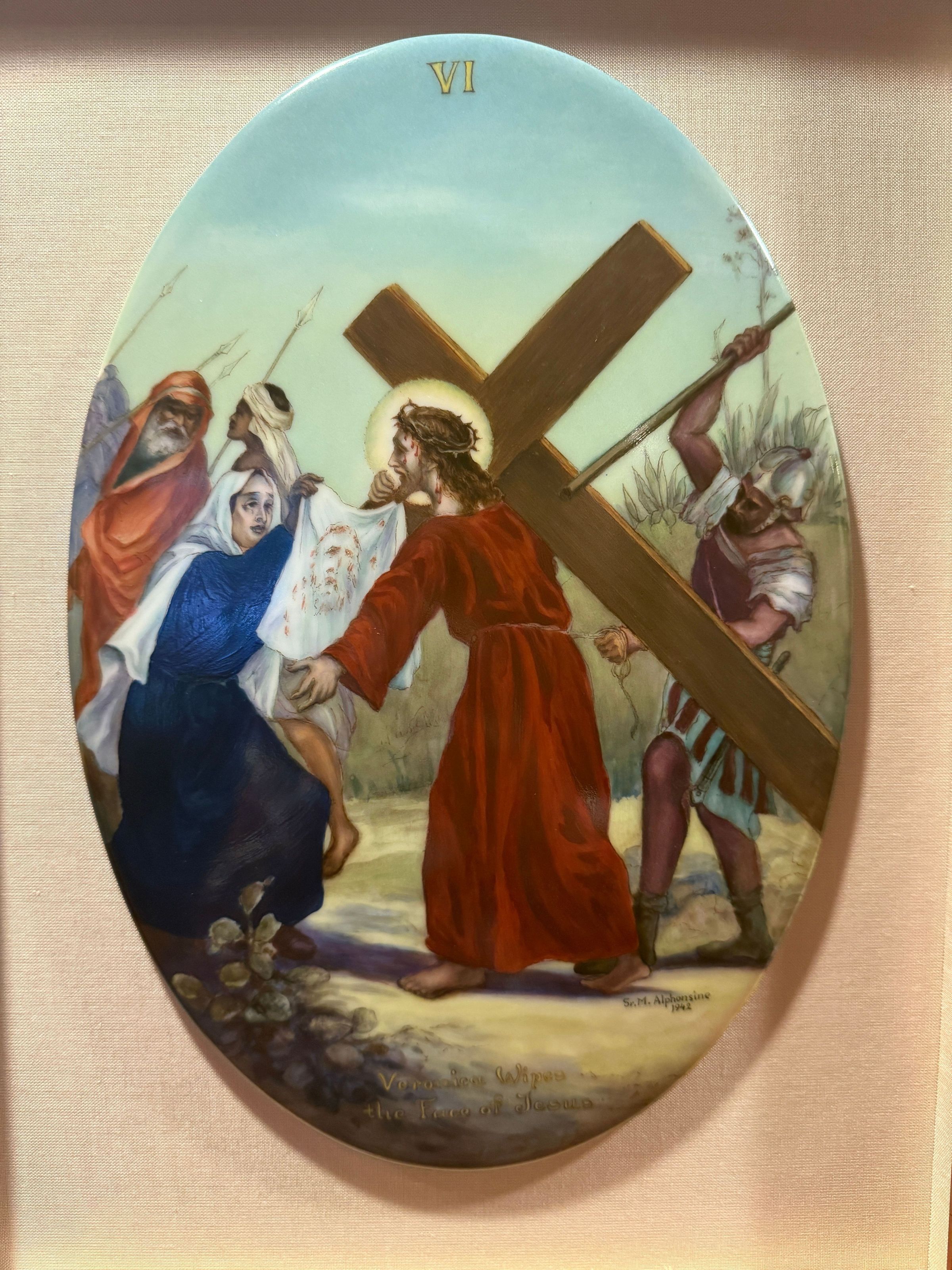
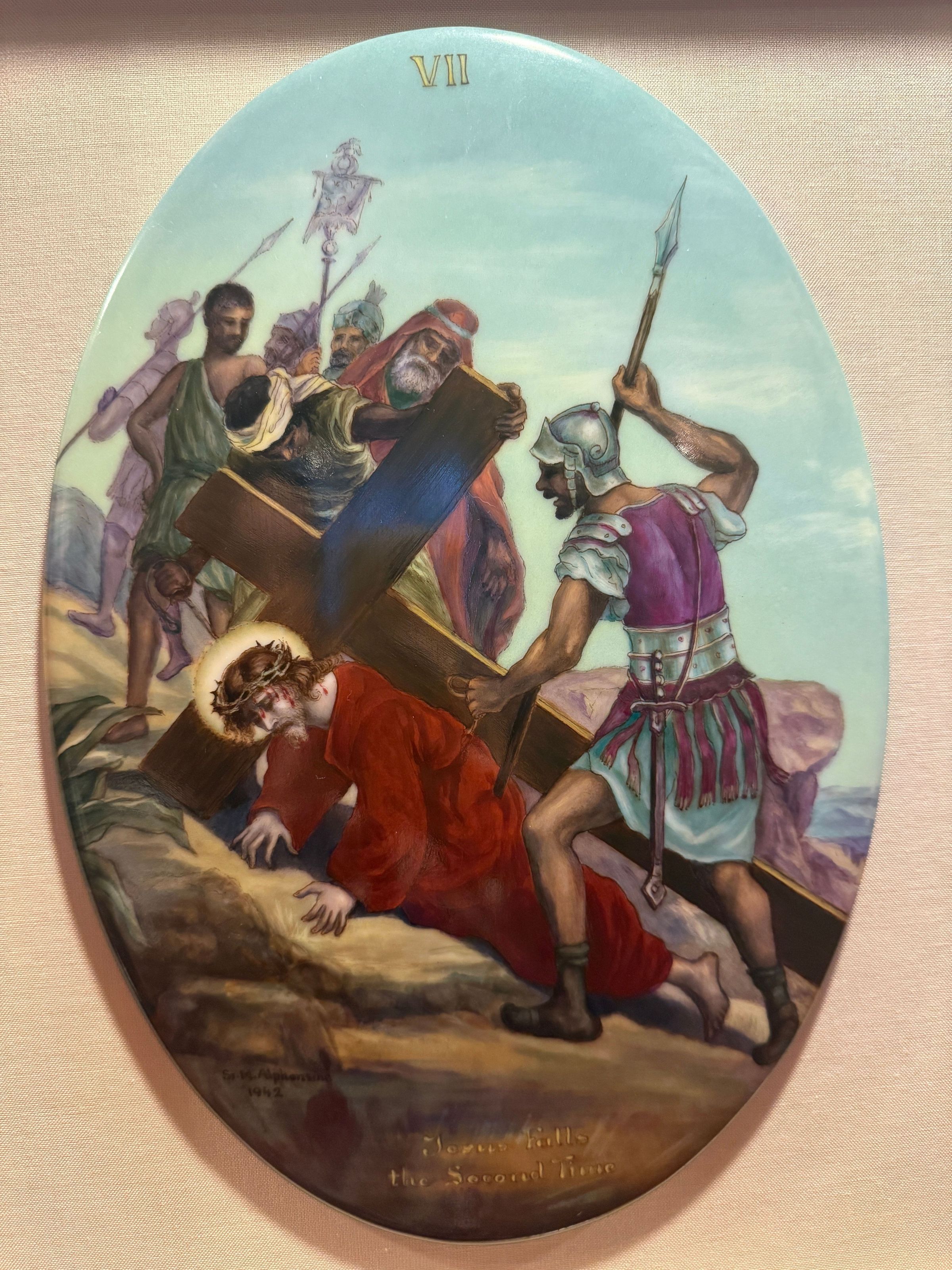
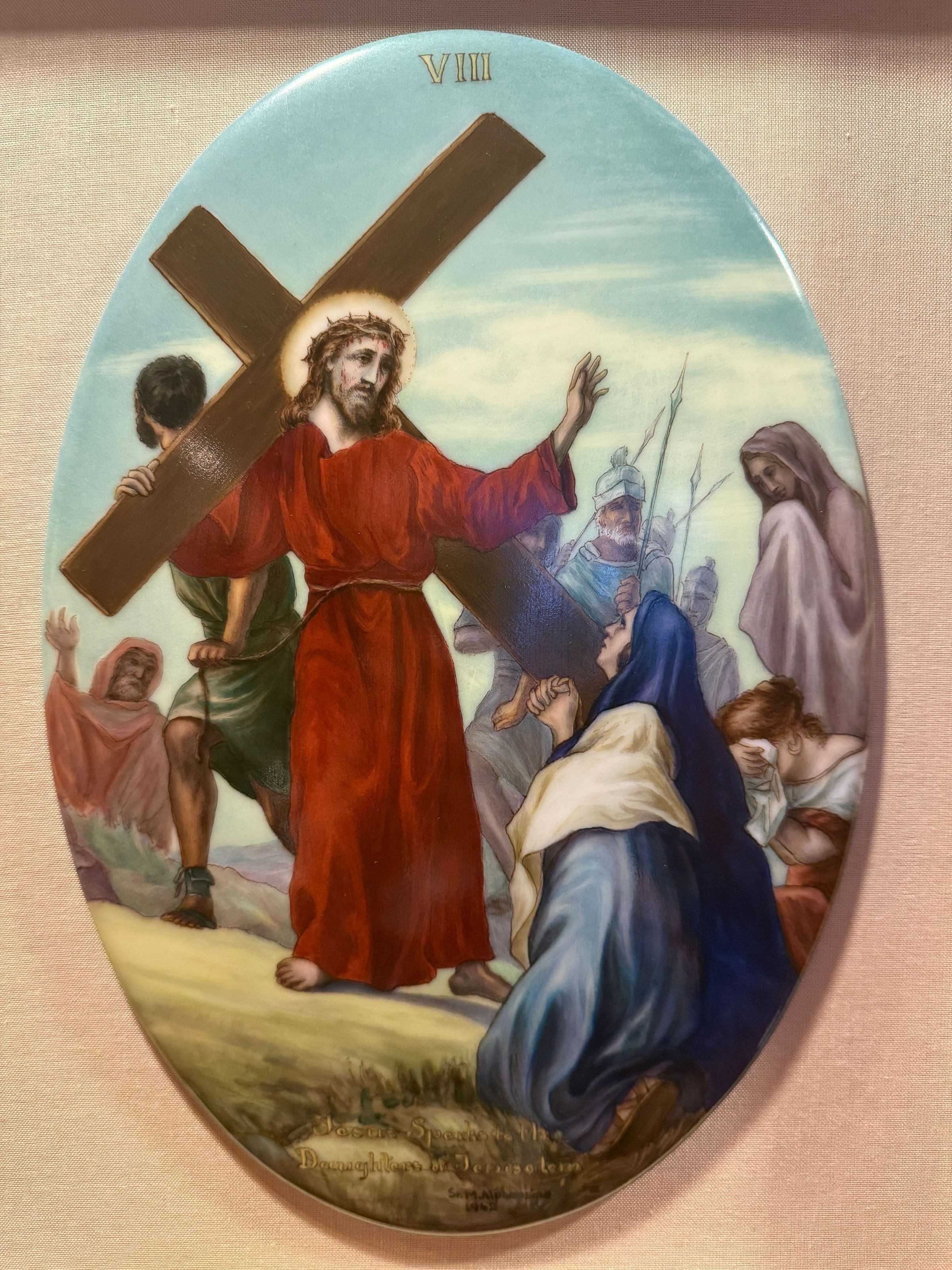
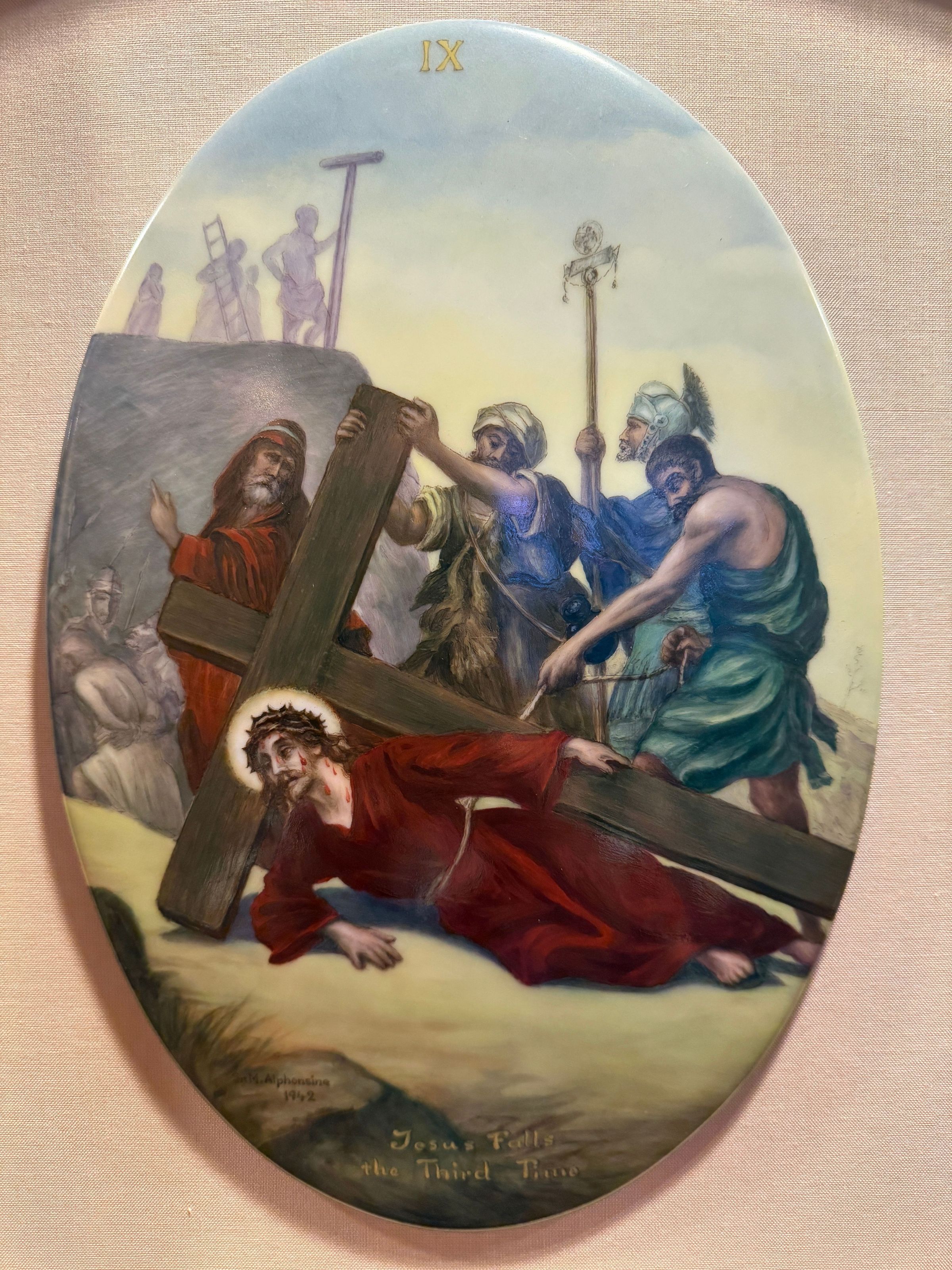
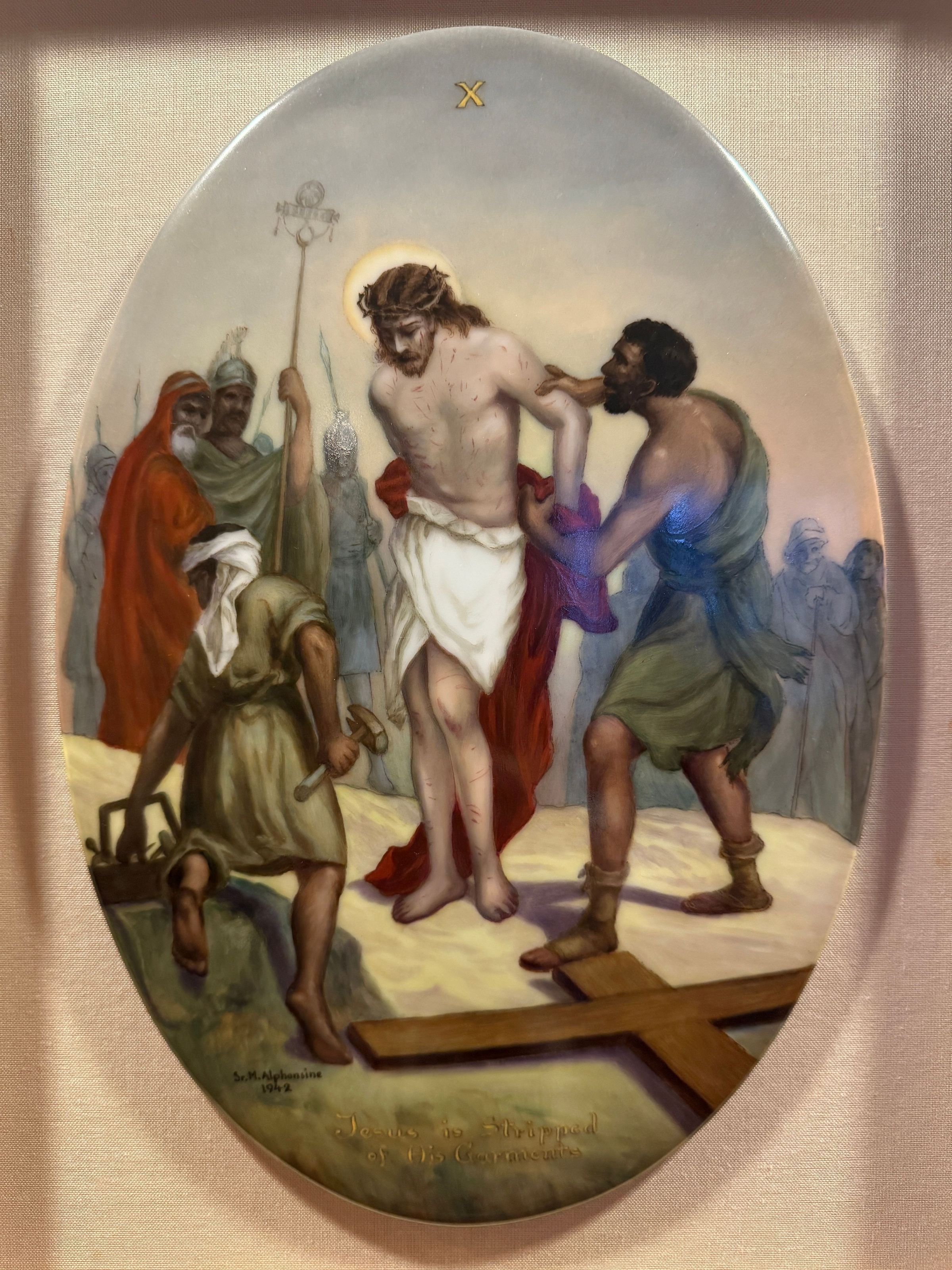
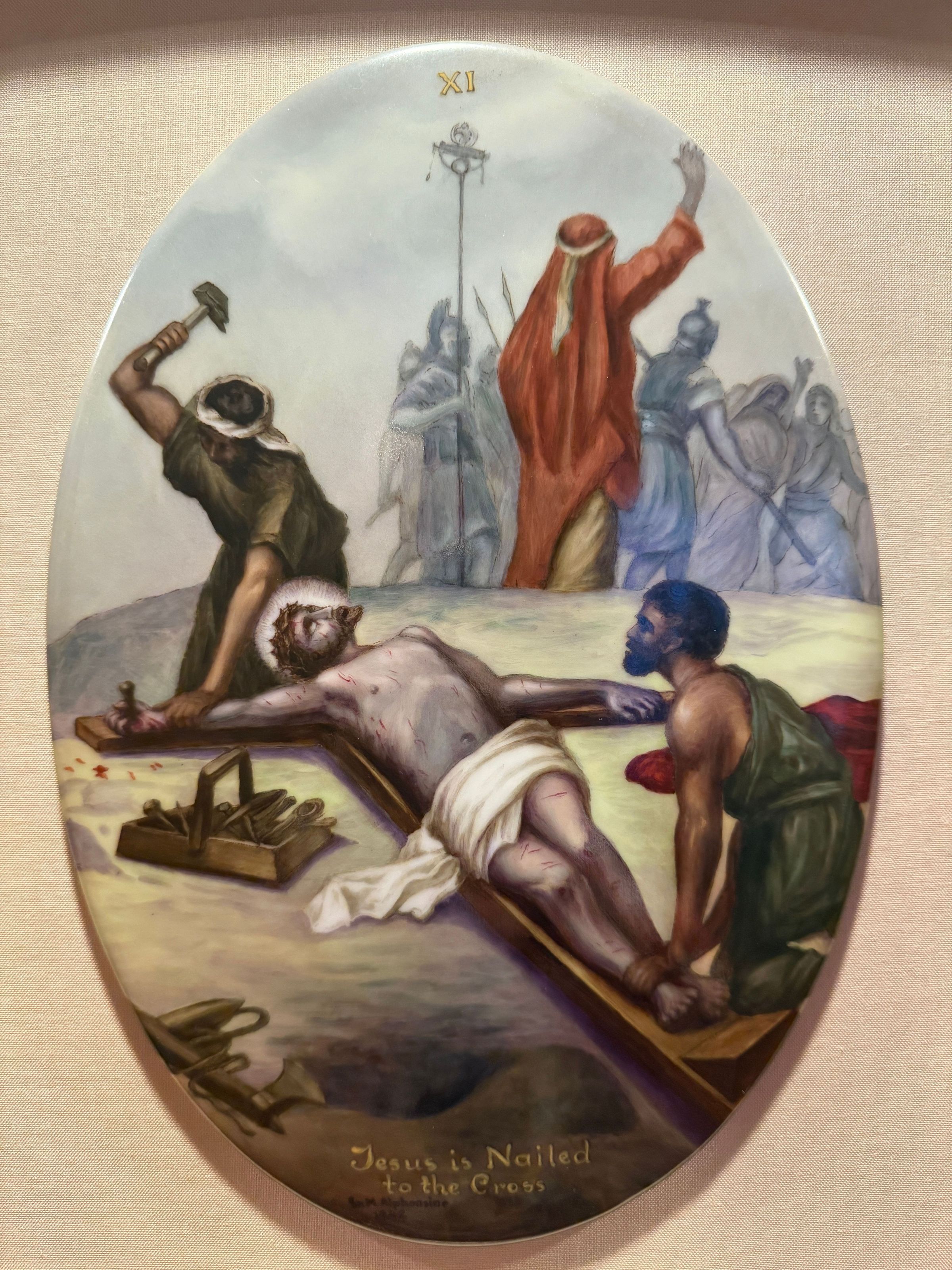
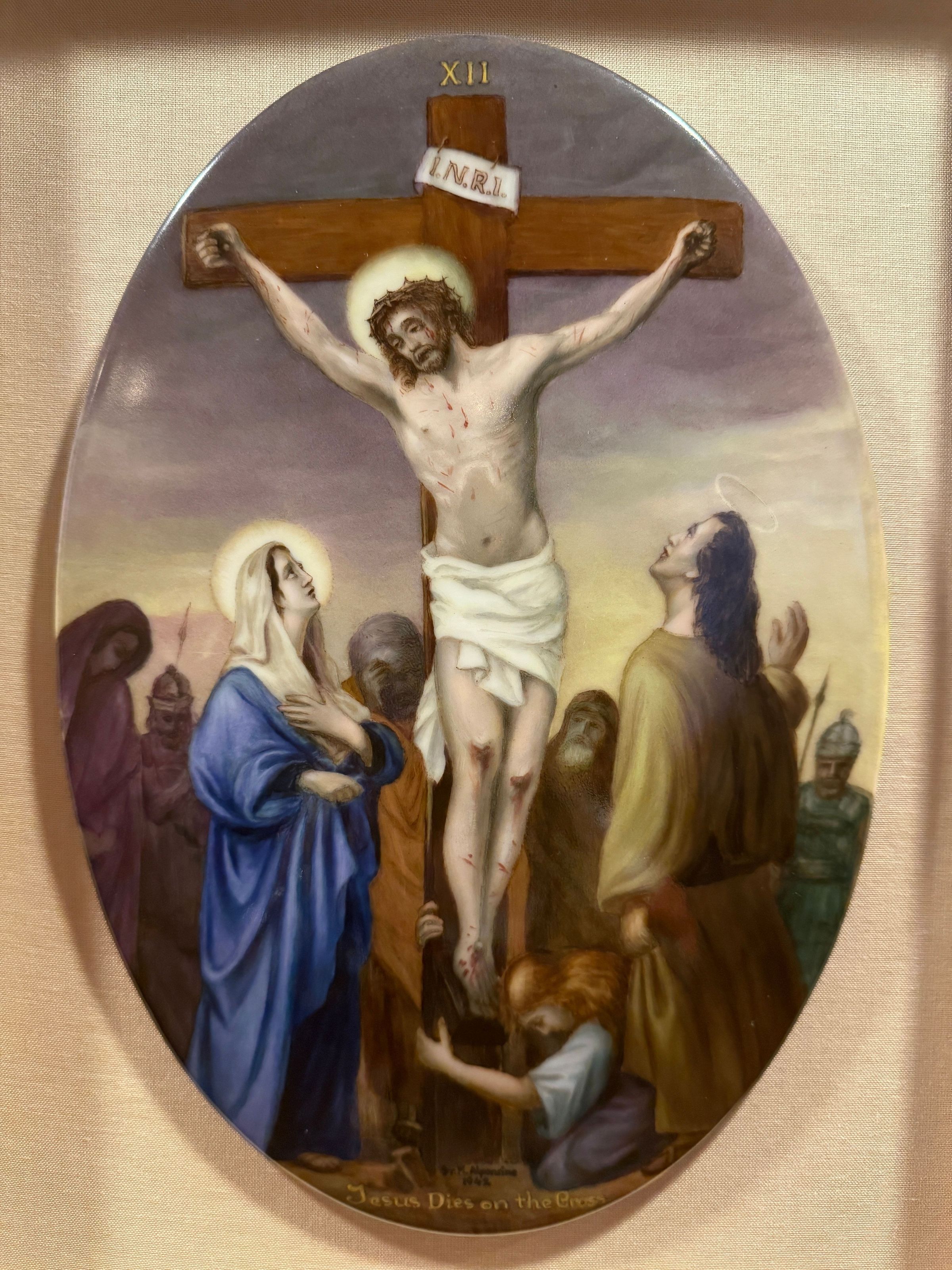
These fourteen acrylic paintings depict the stations of the cross, a series of images of Jesus Christ throughout the day of his Crucifixion. These stations are a contemplative tool that allow the faithful to make a meditative spiritual pilgrimage through the Passion of Christ. Sister Alphonsine Seiwert (1884 – 1959) captures the stations in remarkable small-scale detail; each image is finely painted on an 8 in x 12 in oval-shaped convex ceramic plaque.
Sister Alphonsine found inspiration for these artworks during the Summer of 1925 while studying at the Art Institute of Chicago. When visiting the Motherhouse Chapel of the Benedictine Sisters in Chicago, she saw the stations of the cross painted by a sister artist on china plaques. Sister Alphonsine, determined to make a similar series for her Motherhouse in San Antonio, commissioned the Maurer Firm to import china plaques from Germany. She modeled her stations after those by Italian artist Luigi Morgari (1857 – 1935). In a journal entry, Sister Alphonsine noted that Morgari’s stations “excel by simplicity of composition, religious character, convenient balance of movement, and soberness of color, preserving at the same time in a just measure, artistic and ornamental requirement; the whole in strict accordance with the decrees of the Church as to their dogmatical setting and liturgical compliance.”
Sister Alphonsine further noted that “The Stations of St. Joseph's Convent have been painted at St. Mary's Academy, Amarillo, Texas, and fired there at a Revelation Kiln #6, - four times, some of them five times. May they accomplish what there were intended for: grant help and consolation to those who follow in the Blessed Saviours sacred footsteps during the last stages of His Sacred Passion and Death - particularly our sick and old Sisters.” As of 08/2025, the Stations of the Cross continue to serve this mission in the Extended Care Chapel in The Village at Incarnate Word.
Título [asignado por el artista]: Estaciones del Vía Crucis
Estas catorce pinturas acrílicas representan las estaciones del Vía Crucis, una serie de imágenes de Jesucristo a lo largo del día de su crucifixión. Estas estaciones son una herramienta contemplativa que permite a los fieles realizar una peregrinación espiritual meditativa a través de la Pasión de Cristo. Sor Alphonsine Seiwert (1884-1959) captura las estaciones con un notable detalle a pequeña escala; cada imagen está finamente pintada en una placa de cerámica convexa de forma ovalada de 20 x 30 cm.
Sor Alphonsine encontró la inspiración para estas obras de arte durante el verano de 1925, mientras estudiaba en el Instituto de Arte de Chicago. Al visitar la capilla de la casa madre de las Hermanas Benedictinas en Chicago, vio las estaciones del Vía Crucis pintadas por una hermana artista en placas de porcelana. Sor Alphonsine, decidida a hacer una serie similar para su casa madre en San Antonio, encargó a la empresa Maurer la importación de placas de porcelana de Alemania. Modeló sus estaciones según las del artista italiano Luigi Morgari (1857-1935). En una entrada de su diario, Sor Alphonsine señala que las estaciones de Morgari «destacan por la simplicidad de su composición, su carácter religioso, el equilibrio adecuado de los movimientos y la sobriedad de los colores, conservando al mismo tiempo, en la medida justa, los requisitos artísticos y ornamentales; el conjunto se ajusta estrictamente a los decretos de la Iglesia en cuanto a su configuración dogmática y su conformidad litúrgica».
Continúa diciendo que «Las Estaciones del Convento de San José han sido pintadas en la Academia Santa María, en Amarillo, Texas, y cocidas allí en un horno Revelation Kiln #6, cuatro veces, algunas de ellas cinco veces. Que cumplan con su propósito: brindar ayuda y consuelo a quienes siguen los pasos sagrados del Bendito Salvador durante las últimas etapas de su Sagrada Pasión y Muerte, en particular a nuestras hermanas enfermas y ancianas». A partir de agosto de 2025, las Estaciones del Vía Crucis siguen cumpliendo esta misión en la Capilla de Cuidados Prolongados de The Village at Incarnate Word.Type of Painting
CeramicCollection
Personnel Membership-SistersMade/Created
Artist
Sister Alphonsine Seiwert, CCVIDate made
1942Time Period
20th CenturyPlace
* Untyped Place
Amarillo, TexasInscription/Signature/Marks
Type
SignatureLocation
Bottom (right, left, or center) of each workTranscription
Sr. M. Alphonsine 1942Material/Technique
In Artist's Hand, PaintedLexicon
Nomenclature 4.0
Nomenclature Class
ArtNomenclature Category
Category 08: Communication ObjectsGetty AAT
* Untyped Getty AAT
Ceramic, religious artLOC Thesaurus for Graphic Materials
Religious art objects, CeramicsDimensions
Dimension Description
Dimensions of oval china plaquesHeight
12 inWidth
8 inCircumference
31-3/4 inResearch Notes
Research Type
CuratorNotes
Sister Alphonsine Seiwert was born in Merzig, Germany on June 22, 1884. She entered the Congregation in 1901 and took final vows in 1908. In her early years as a Sister, she missioned in Monterrey, Nuevo Leon and Chihuahua, Chihuahua, Mexico.
Sister Alphonsine came from a family of artists and spent the majority of her career working as an art teacher. She formally trained in oil and china painting at the Art Institute of Chicago during the summers of 1917, 1921, 1925, and 1926, and for a year from 1930-1931. In San Antonio, Sister Alphonsine studied under famed Texas Impressionist painter Julian Onderdonk (1882 – 1922) and Polish painter and printmaker Frederic Taubes (1900 – 1981).
Sister Alphonsine taught at St. Mary’s Academy in Amarillo, Texas from the year after its founding, 1914, until 1919. Following her tenure in the art department at Incarnate Word College—she worked as an instructor from 1919 to 1930 and as department head from 1931 to 1938—she returned to St. Mary’s for the final stretch of her career. She served as an art teacher at St. Mary’s Academy and offered private art classes to adults in Amarillo from 1938 until her death at St. Anthony’s Hospital in 1959.Research Type
CuratorNotes
Sor Alphonsine Seiwert nació en Merzig, Alemania, el 22 de junio de 1884. Ingresó en la Congregación en 1901 y tomó los votos perpetuos en 1908. En sus primeros años como hermana, realizó misiones en Monterrey, Nuevo León, y Chihuahua, Chihuahua, México.
Sor Alphonsine provenía de una familia de artistas y pasó la mayor parte de su carrera trabajando como profesora de arte. Se formó formalmente en pintura al óleo y porcelana en el Instituto de Arte de Chicago durante los veranos de 1917, 1921, 1925 y 1926, y durante un año entre 1930 y 1931. En San Antonio, Sor Alphonsine estudió con el famoso pintor impresionista texano Julian Onderdonk (1882-1922) y con el pintor y grabador polaco Frederic Taubes (1900-1981).
Sor Alphonsine enseñó en la Academia St. Mary's de Amarillo, Texas, desde el año siguiente a su fundación, 1914, hasta 1919. Tras su paso por el departamento de arte del Incarnate Word College —donde trabajó como profesora entre 1919 y 1930 y como jefa de departamento entre 1931 y 1938—, regresó a St. Mary's para la recta final de su carrera. Trabajó como profesora de arte en la St. Mary's Academy y ofreció clases particulares de arte a adultos en Amarillo desde 1938 hasta su muerte en el St. Anthony's Hospital en 1959.