Agnus Dei Pyx

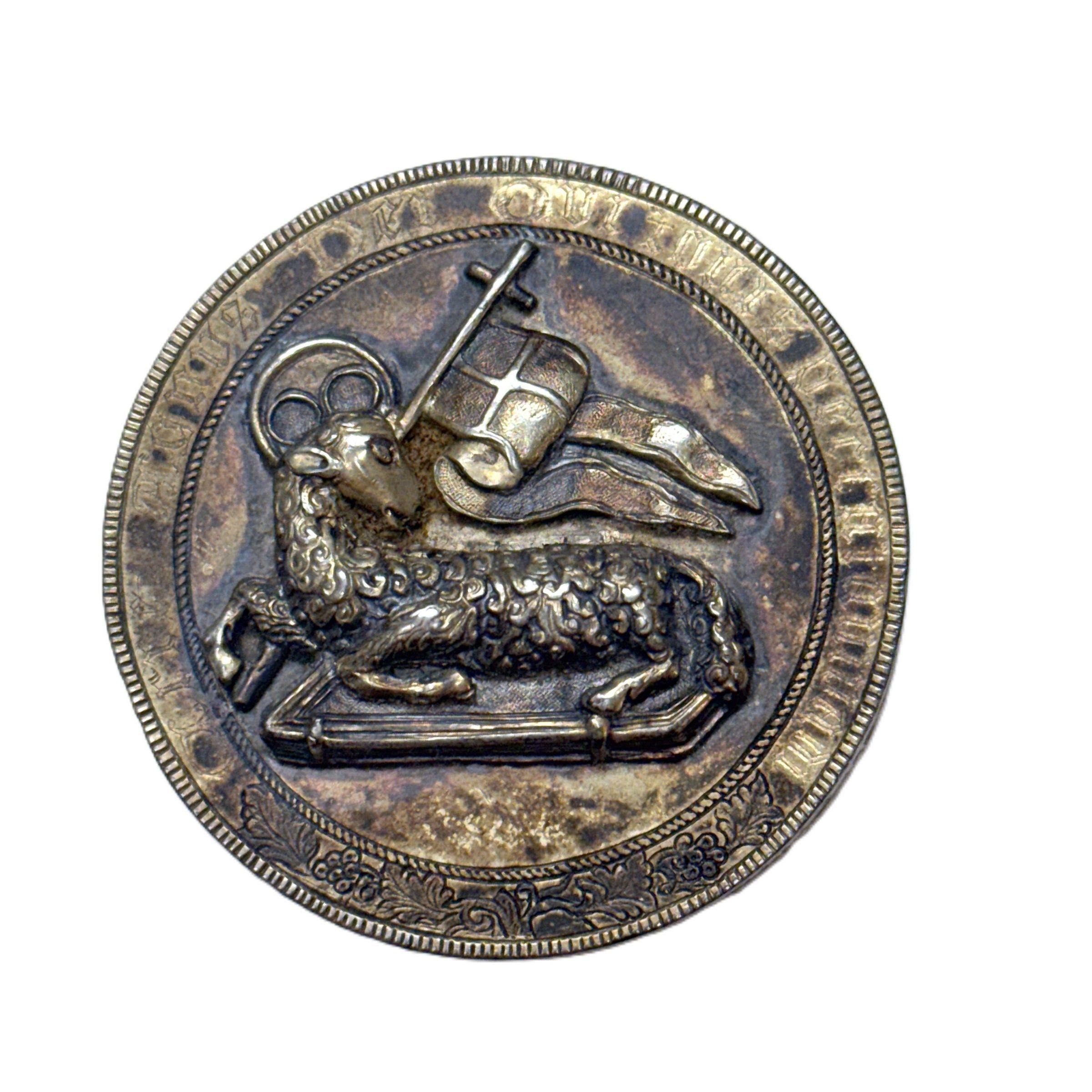
Top of pyx depicting Lamb of God and Christian flag; inscription reads, "Ecce Agnus Dei, qui tollis peccata mundi," "Behold the Lamb of God, who takes away the sins of the world": En la parte superior de la píxide se representa al Cordero de Dios y la bandera cristiana; la inscripción reza: «Ecce Agnus Dei, qui tollis peccata mundi», «He aquí el Cordero de Dios, que quitas los pecados del mundo».
Top of pyx depicting Lamb of God and Christian flag; inscription reads, "Ecce Agnus Dei, qui tollis peccata mundi," "Behold the Lamb of God, who takes away the sins of the world"

En la parte superior de la píxide se representa al Cordero de Dios y la bandera cristiana; la inscripción reza: «Ecce Agnus Dei, qui tollis peccata mundi», «He aquí el Cordero de Dios, que quitas los pecados del mundo».

Name/Title

Agnus Dei Pyx

Entry/Object ID

2026.3.2

Description

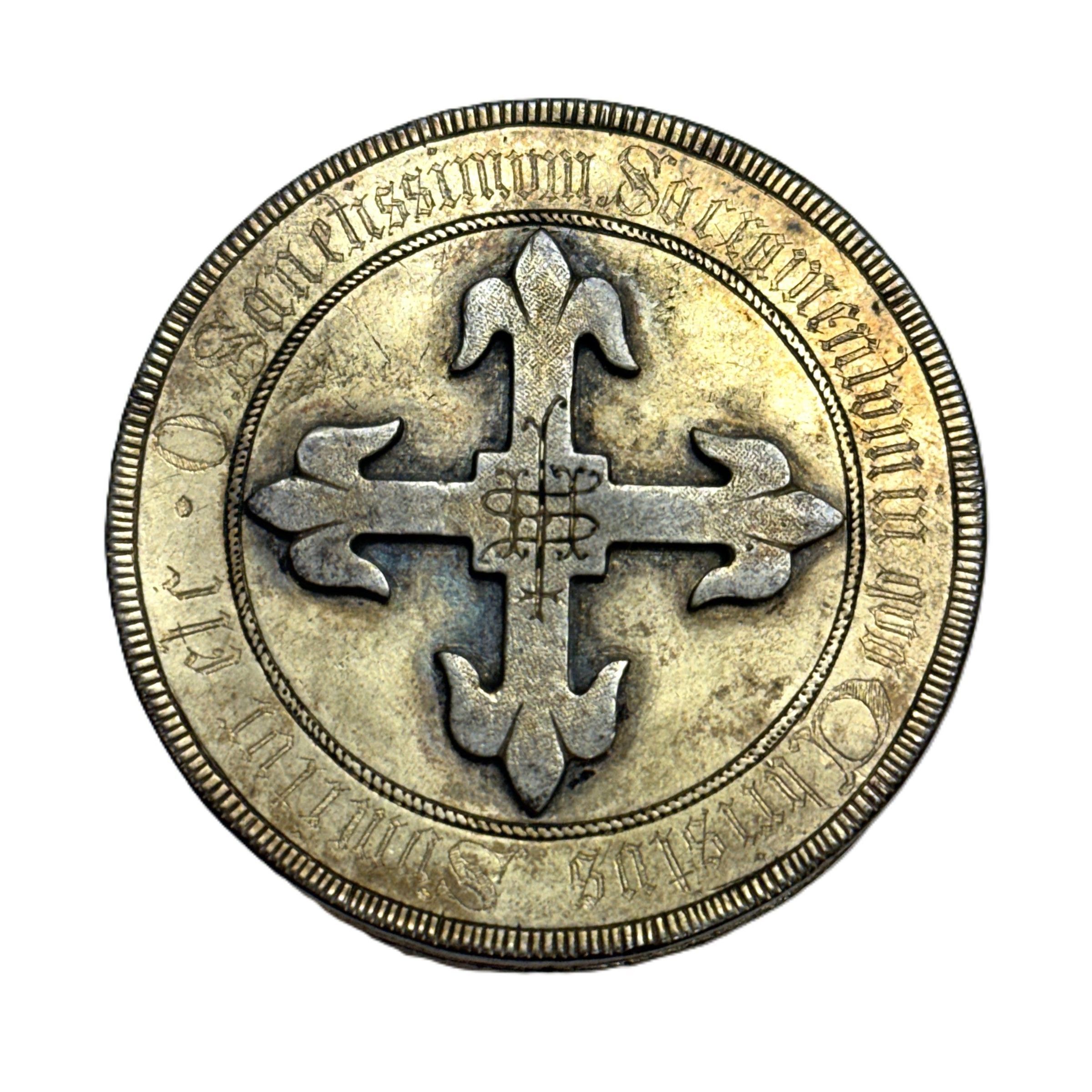
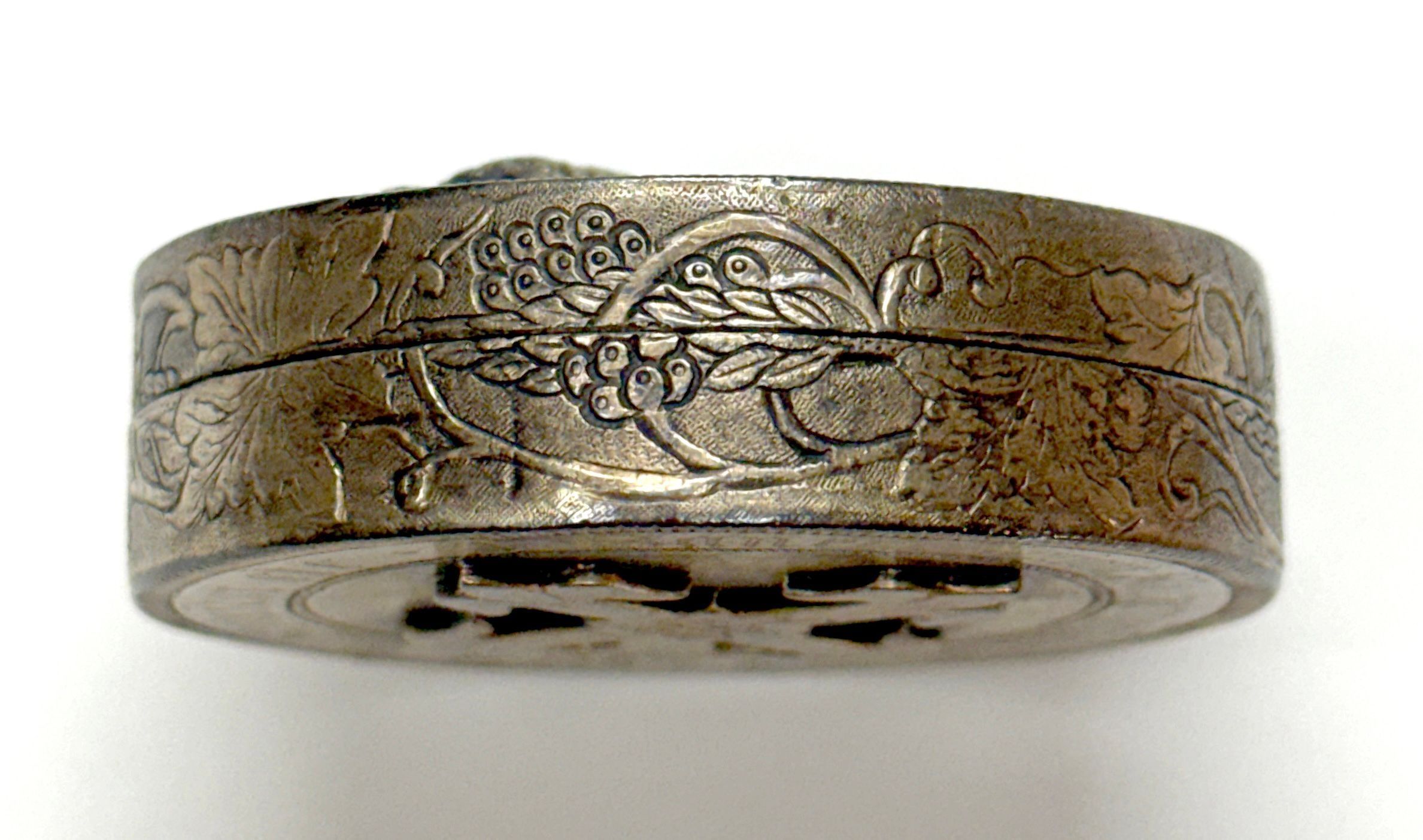
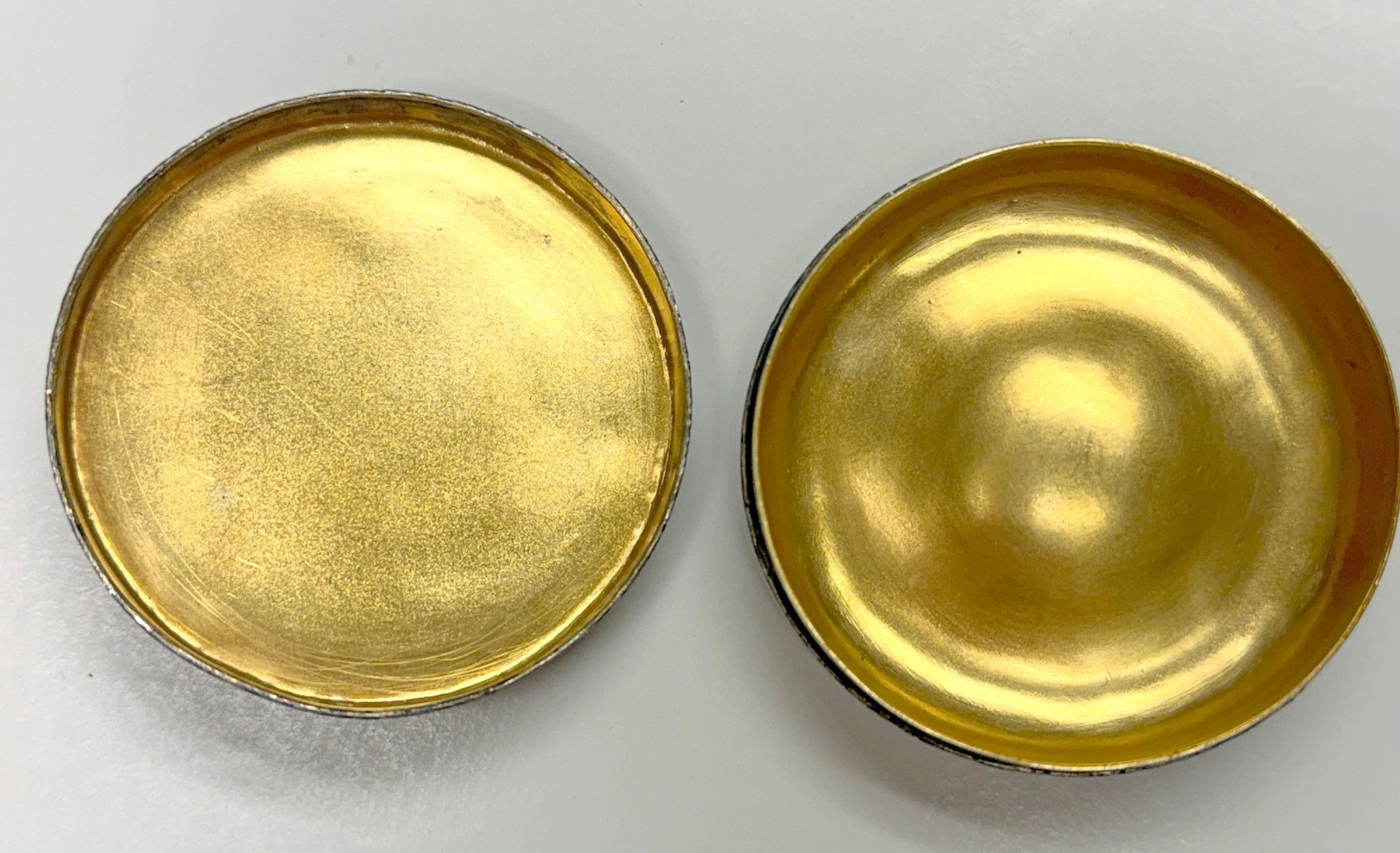
Title of artifact [assigned by archives]: Agnus Dei Pyx This antique silver pyx belonged to Mother St. Pierre Cinquin, CCVI (1845 – 1891). Pyxes are used to carry consecrated Hosts (the Body of Christ) out of the church, typically for viaticum to the sick. Though the provenance of this pyx is unknown, its neo-Gothic style suggests it was created in Mother St. Pierre’s home country of France in the 19th century. Mother St. Pierre likely used this pyx to carry consecrated hosts to infirmed patients at Santa Rosa Hospital. A relief on the top of the pyx depicts the Lamb of God, or Agnus Dei, holding a flag with a cross. A blackletter engraved inscription around the border reads, “Ecce Agnus Dei, qui tollis peccata mundi,” Latin for “Lamb of God, who takes away the sins of the world.” The Priest recites this verse (from John 1:29) during Mass when holding up the consecrated Host before Holy Communion. A cross fleury adorns the reverse of the vessel with the monogram IHS at its center. IHS is a Christogram, a combination of letters that represent the name of Jesus Christ. The blackletter engraving around the edge reads “O sanctissimum sacramentum quo Christus sumitur etc,” Latin for “O most holy sacrament by which Christ is received.” This is an adaptation of the Magnificat antiphon for Vespers on the feast of Corpus Christi. The edges of the vessel are engraved with Eucharistic imagery of wheat and grapes. The pyx is made of silver and gilded in gold, though its exterior surface is quite tarnished. This vermeil is most noticeable on the inside of the vessel, which follows a specific requirement of Catholic liturgical law: any vessel that directly touches the consecrated Host (ciboria, patens, pyxes) must have its interior surface gilded, even when the body of the piece is silver rather than gold. This is standard practice because gold does not oxidize like silver. -------------------- Título del objeto [asignado por el archivo]: Píxide del Agnus Dei Esta antigua píxide de plata perteneció a la Madre St. Pierre Cinquin, CCVI (1845-1891). Las píxides se utilizan para llevar las hostias consagradas (el Cuerpo de Cristo) fuera de la iglesia, normalmente para administrar el viático a los enfermos. Aunque se desconoce la procedencia de esta píxide, su estilo neogótico sugiere que fue creada en Francia, el país natal de la Madre St. Pierre, en el siglo XIX. Es probable que la Madre St. Pierre utilizara esta píxide para llevar hostias consagradas a los pacientes enfermos del Hospital de Santa Rosa. Un relieve en la parte superior de la píxide representa al Cordero de Dios, o Agnus Dei, sosteniendo una bandera con una cruz. Una inscripción grabada en letra gótica alrededor del borde reza: «Ecce Agnus Dei, qui tollis peccata mundi», que en latín significa «Cordero de Dios, que quitas los pecados del mundo». El sacerdote recita este versículo (de Juan 1, 29) durante la misa al elevar la hostia consagrada antes de la Sagrada Comunión. Una cruz florida adorna el reverso del recipiente con el monograma IHS en el centro. IHS es un cristograma, una combinación de letras que representan el nombre de Jesucristo. El grabado en letra gótica que rodea el borde reza «O sanctissimum sacramentum quo Christus sumitur etc.», que en latín significa «Oh, santísimo sacramento por el que se recibe a Cristo». Se trata de una adaptación de la antífona del Magnificat para las Vísperas de la fiesta del Corpus Christi. Los bordes del recipiente están grabados con motivos eucarísticos de trigo y uvas. La píxide es de plata y está dorada, aunque su superficie exterior está bastante deslustrada. Este vermeil se aprecia sobre todo en el interior del recipiente, lo cual cumple con un requisito específico de la ley litúrgica católica: cualquier recipiente que entre en contacto directo con la Hostia consagrada (ciborios, patenas, píxides) debe tener su superficie interior dorada, incluso cuando el cuerpo de la pieza sea de plata en lugar de oro. Se trata de una práctica habitual, ya que el oro no se oxida como la plata.

Collection

Foundations - Mother St. Pierre Cinquin

Made/Created

Time Period

19th Century

Place

Country

France

Continent

Europe

Inscription/Signature/Marks

Type

Inscription

Location

Top of pyx / Parte superior de la píxide

Transcription

Ecce Agnus Dei, qui tollis peccata mundi

Language

English

Translation

Behold the Lamb of God, who takes away the sins of the world / He aquí el Cordero de Dios, que quitas los pecados del mundo

Material/Technique

Engraved

Type

Inscription

Location

Bottom of pyx / Parte inferior de la píxide

Transcription

O sanctissimum sacramentum quo Christus sumitur etc

Language

Latin

Translation

O most holy sacrament by which Christ is received / Oh, santísimo sacramento por el que se recibe a Cristo

Material/Technique

Engraved

Lexicon

Nomenclature 4.0

Nomenclature Secondary Object Term

Pyx

Nomenclature Primary Object Term

Container, Ritual

Nomenclature Sub-Class

Religious Objects

Nomenclature Class

Ceremonial Objects

Nomenclature Category

Category 08: Communication Objects

Getty AAT

Concept

pyxes

LOC Thesaurus for Graphic Materials

Pyxes, Eucharist, Lambs, Objects, Religious, Catholicism

Dimensions

Height

2 in

Diameter

6-1/2 in

Circumference

6-1/2 in

Research Notes

Research Type

Curator

Notes

Entry on Mother St. Pierre Cinquin by Sister Josephine Kennelly, CCVI in the Texas State Historical Association Handbook, December 1, 1994: Jeanne Pierrette (Mother St. Pierre) Cinquin, foundress of the Sisters of the Incarnate Word of San Antonio and pioneer in health care and education, the daughter of Pierre and Claudine (Biellard) Cinquin, was born in Beaujeu, France, on May 22, 1845. On completing her education at the Ursuline Academy in Beaujeu, she entered the Monastery of the Incarnate Word in Lyons, where she was prepared for the mission in Texas. She received the habit and with it the name Sister Saint Pierre on August 6, 1868. Toward the close of the year she arrived in Galveston to join her missionary companions at St. Mary's Charity Hospital. Bishop Claude Dubuis appointed sisters St. Pierre, Madeleine, and Agnes to begin a new foundation; they arrived in San Antonio in March 1869. At that time San Antonio was a mere frontier village recovering from the effects of two cholera epidemics that had broken out during the two previous decades. The worst epidemic recorded was that of 1849; it was followed by another in 1866, which, though not so severe, was sufficiently grave to arouse the anxiety of the people. But the community, with few doctors, no nurses, and no hospitals, experienced new hope when on December 3, 1869, Sister St. Pierre and her two companions opened the first hospital, known at that time as Santa Rosa Infirmary (now Santa Rosa Medical Center), to begin its long career of service to humanity. In the spring of 1872 Sister St. Pierre was appointed superioress of her congregation, an office she held until her death. During her administration she recruited new members for the congregation; trained sisters for health care and education; and opened schools and hospitals throughout Texas and beyond its borders, a home for the aged, and an orphanage in San Antonio. Her letters reveal that she was a shrewd businesswoman and a wise and practical administrator, deeply spiritual and dedicated to serving the sick, the poor, and orphans. She died in her native France on December 19, 1891, at the age of forty-six. Her remains were transferred to San Antonio in 1895.

Research Type

Curator

Notes

Entrada sobre la Madre St. Pierre Cinquin por la hermana Josephine Kennelly, CCVI, en el Manual de la Asociación Histórica del Estado de Texas, 1 de diciembre de 1994: Jeanne Pierrette (Madre St. Pierre) Cinquin, fundadora de las Hermanas del Verbo Encarnado de San Antonio y pionera en la atención sanitaria y la educación, hija de Pierre y Claudine (Biellard) Cinquin, nació en Beaujeu, Francia, el 22 de mayo de 1845. Tras completar su educación en la Academia de las Ursulinas de Beaujeu, ingresó en el Monasterio del Verbo Encarnado de Lyon, donde se preparó para la misión en Texas. Recibió el hábito y, con él, el nombre de hermana Saint Pierre el 6 de agosto de 1868. Hacia finales de año llegó a Galveston para reunirse con sus compañeras misioneras en el St. Mary's Charity Hospital. El obispo Claude Dubuis encargó a las hermanas St. Pierre, Madeleine y Agnes que iniciaran una nueva fundación; llegaron a San Antonio en marzo de 1869. En aquella época, San Antonio no era más que una aldea fronteriza que se recuperaba de los efectos de dos epidemias de cólera que habían estallado durante las dos décadas anteriores. La peor epidemia registrada fue la de 1849; a esta le siguió otra en 1866 que, aunque no tan severa, fue lo suficientemente grave como para despertar la inquietud de la población. Pero la comunidad, con pocos médicos, sin enfermeras y sin hospitales, experimentó una nueva esperanza cuando, el 3 de diciembre de 1869, la hermana St. Pierre y sus dos compañeras inauguraron el primer hospital, conocido en aquella época como Santa Rosa Infirmary (hoy Santa Rosa Medical Center), para iniciar su larga trayectoria de servicio a la humanidad. En la primavera de 1872, la hermana St. Pierre fue nombrada superiora de su congregación, cargo que ocupó hasta su muerte. Durante su mandato, reclutó nuevas miembros para la congregación; formó a las hermanas en el ámbito de la asistencia sanitaria y la educación; y abrió escuelas y hospitales por todo Texas y más allá de sus fronteras, así como una residencia para personas