Research Type
CuratorNotes
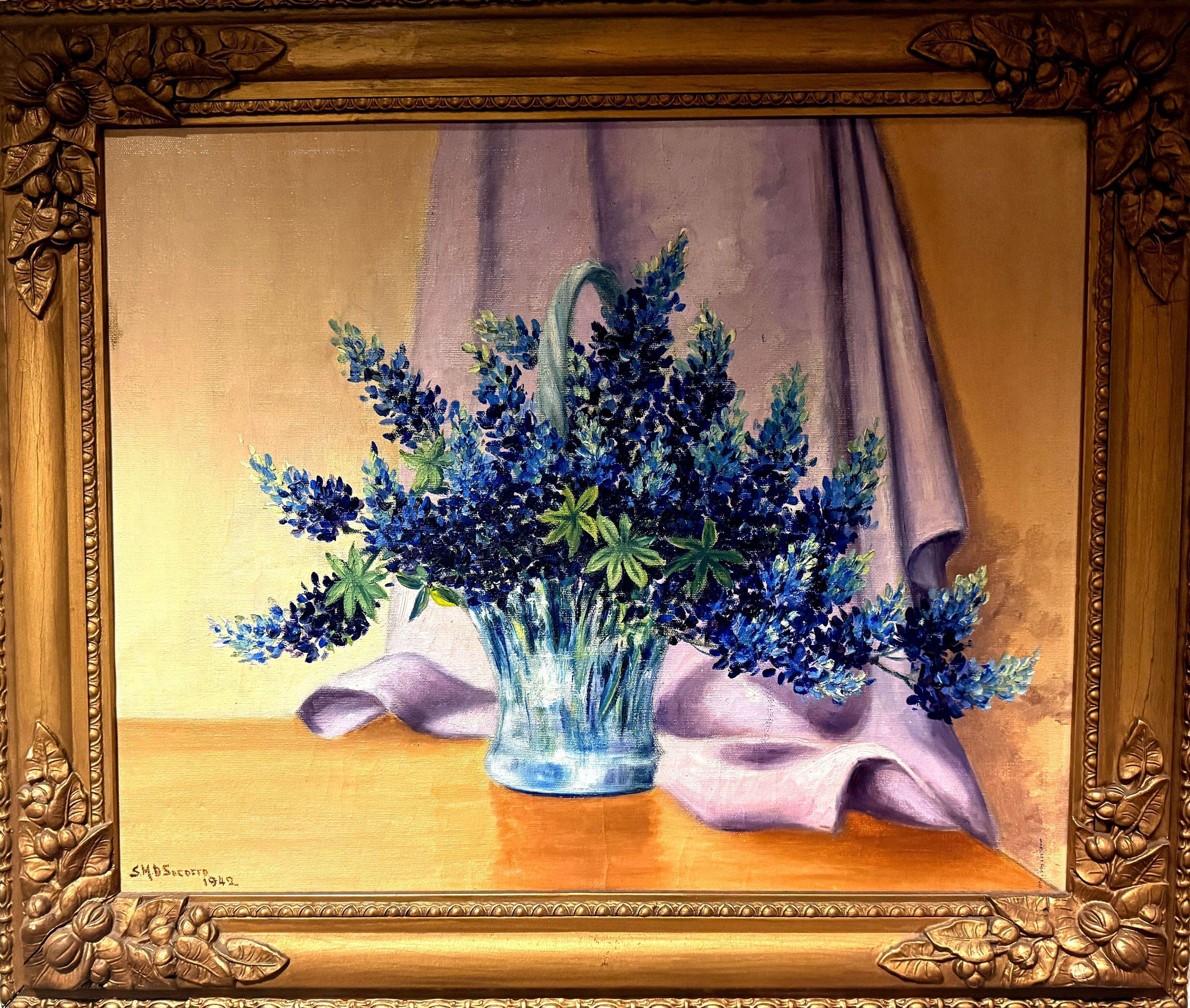
Sister María del Socorro Lazo Houston, CCVI was born in Chihuahua, Mexico in 1893. She entered the Congregation in 1914 and took final vows in 1921. In her early years as a Sister, Sister Maria del Socorro missioned in Kerrville and San Antonio, and taught art at St. Mary’s School in Amarillo. In 1941, she received an MA from Peabody College at Vanderbilt University.
Sister María del Socorro was perhaps the most prolific visual artist in CCVI history. An artist from a young age, she received an abundance of formal training throughout her life. Sister María del Socorro first studied at Incarnate Word College (IWC) under Sister Alphonsine Seiwert (1884 – 1956), to whom she attributed much of her artistic knowledge. She traveled to Chicago with Sister Alphonsine to study at the Art Institute of Chicago twice: once during the summer of 1926, and again for the academic year of 1930 – 1931. She traveled far and wide in pursuit of artistic training and studied under the tutelage of several esteemed artists, including Frank Reaugh (1860 – 1945) in Dallas, Texas, Jacob Getlar Smith (1898 – 1958) in Saltillo, Mexico, and Frederic Taubes (1900 – 1981) in Taos, New Mexico.
As a member of the San Antonio Art League, The Water Color Society, the River Art Group, and the National Art Education Association, Sister María del Socorro befriended many local artists in San Antonio. These relationships aided Sister in her endeavors at IWC, where she worked as an instructor in the Art Department from 1938 to 1941 before serving as Department Chair from 1941 to 1956. Ceramicists Harding Black (1912 – 2004) and Arthur Calder, watercolorist and fiber artist Janet Shook LaCoste (1912 – 1984), and painter Amy Freeman Lee (1914 – 2004) helped Sister establish a ceramics department at IWC. Additionally, Sister opened an art gallery at IWC to showcase the works of local artists. One of her first exhibitions showcased artworks by Amy Freeman Lee.
Sister María del Socorro passed away on January 28, 1956 at St. Joseph’s Convent in San Antonio, Texas. In 2025, her art still adorns the walls of the CCVI administrative offices as well as the Bennack Concert Hall at the University of the Incarnate Word. Her prolific career is best summarized in her own words: “Most of the artists I know think that painters develop best when they have complete freedom. But for me the serenity of religious life, and the opportunity it offers for contemplation and study—these spell a kind of freedom for the artist too.” (San Antonio Express News, August 30, 1953).Research Type
CuratorNotes
Sor María del Socorro Lazo Houston, CCVI nació en Chihuahua, México, en 1893. Ingresó en la Congregación en 1914 y tomó los votos perpetuos en 1921. En sus primeros años como hermana, Sor María del Socorro realizó misiones en Kerrville y San Antonio, y enseñó arte en la escuela St. Mary's de Amarillo. En 1941, obtuvo una maestría en el Peabody College de la Universidad de Vanderbilt.
Sor María del Socorro fue quizás la artista visual más prolífica en la historia de CCVI. Artista desde muy joven, recibió una abundante formación formal a lo largo de su vida. Sor María del Socorro estudió primero en el Incarnate Word College (IWC) con Sor Alphonsine Seiwert (1884-1956), a quien atribuyó gran parte de sus conocimientos artísticos. Viajó a Chicago con Sor Alphonsine para estudiar en el Art Institute of Chicago en dos ocasiones: una durante el verano de 1926 y otra durante el año académico 1930-1931. Viajó por todo el mundo en busca de formación artística y estudió bajo la tutela de varios artistas de renombre, entre ellos Frank Reaugh (1860-1945) en Dallas, Texas; Jacob Getlar Smith (1898-1958) en Saltillo, México, y Frederic Taubes (1900-1981) en Taos, Nuevo México.
Como miembro de la Liga de Arte de San Antonio, la Sociedad de Acuarelistas, el Grupo de Arte River y la Asociación Nacional de Educación Artística, Sor María del Socorro entabló amistad con muchos artistas locales de San Antonio. Estas relaciones ayudaron Sor en sus esfuerzos en el IWC, donde trabajó como profesora en el Departamento de Arte de 1938 a 1941, antes de ocupar el cargo de directora del departamento de 1941 a 1956. Los ceramistas Harding Black (1912-2004) y Arthur Calder, la acuarelista y artista textil Janet Shook LaCoste (1912-1984) y la pintora Amy Freeman Lee (1914-2004) ayudaron a Sor a crear un departamento de cerámica en el IWC. Además, Sor abrió una galería de arte en el IWC para exhibir las obras de los artistas locales. Una de sus primeras exposiciones mostró obras de Amy Freeman Lee.
Sor María del Socorro falleció el 28 de enero de 1956 en el convento de San José en San Antonio, Texas. En 2025, su arte sigue adornando las paredes de las oficinas administrativas de CCVI, así como la sala de conciertos Bennack de la Universidad del Verbo Encarnado. Su prolífica carrera se resume mejor en sus propias palabras: «La mayoría de los artistas que conozco piensan que los pintores se desarrollan mejor cuando tienen total libertad. Pero para mí, la serenidad de la vida religiosa y la oportunidad que ofrece para la contemplación y el estudio también suponen una especie de libertad para el artista» (San Antonio Express News, 30 de agosto de 1953).