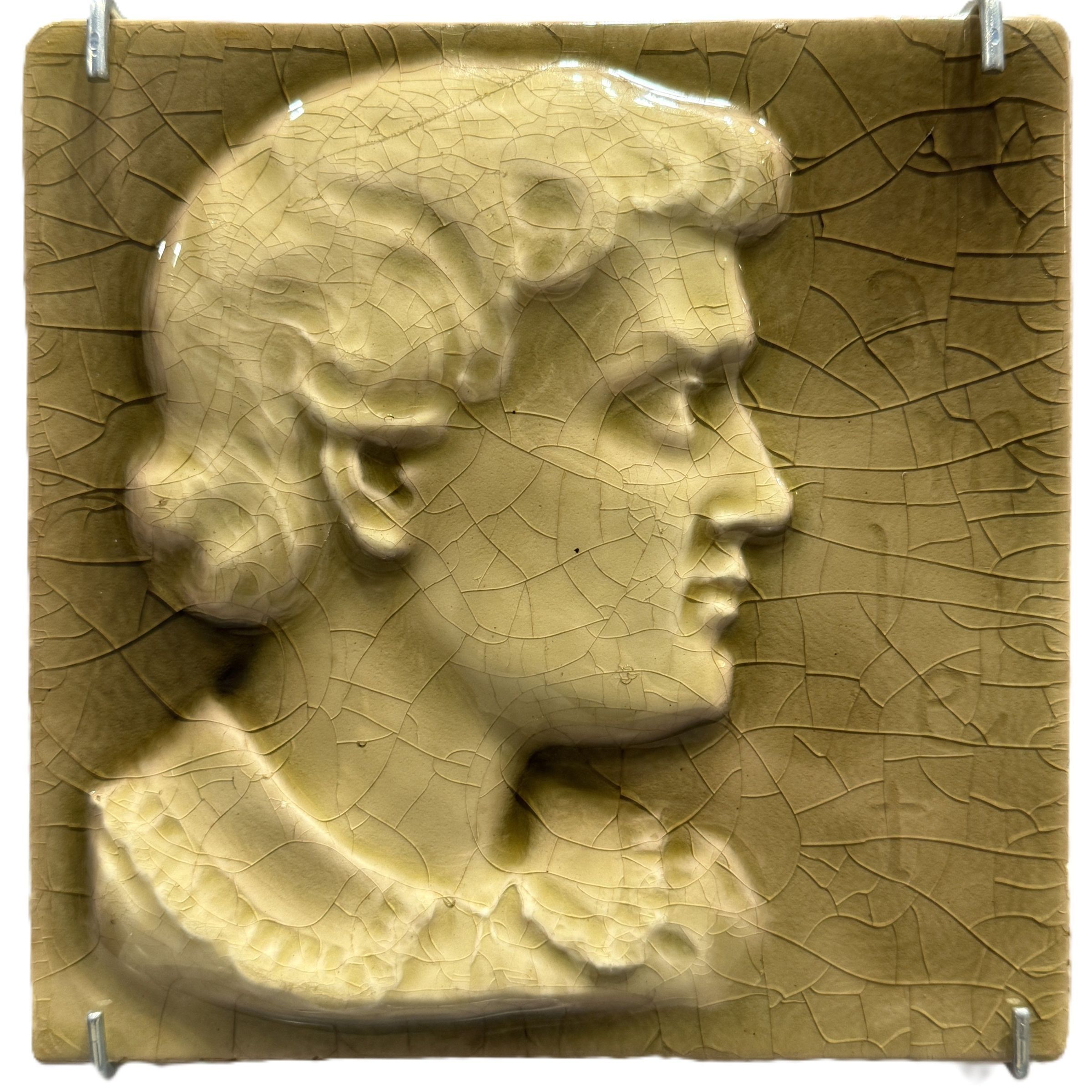
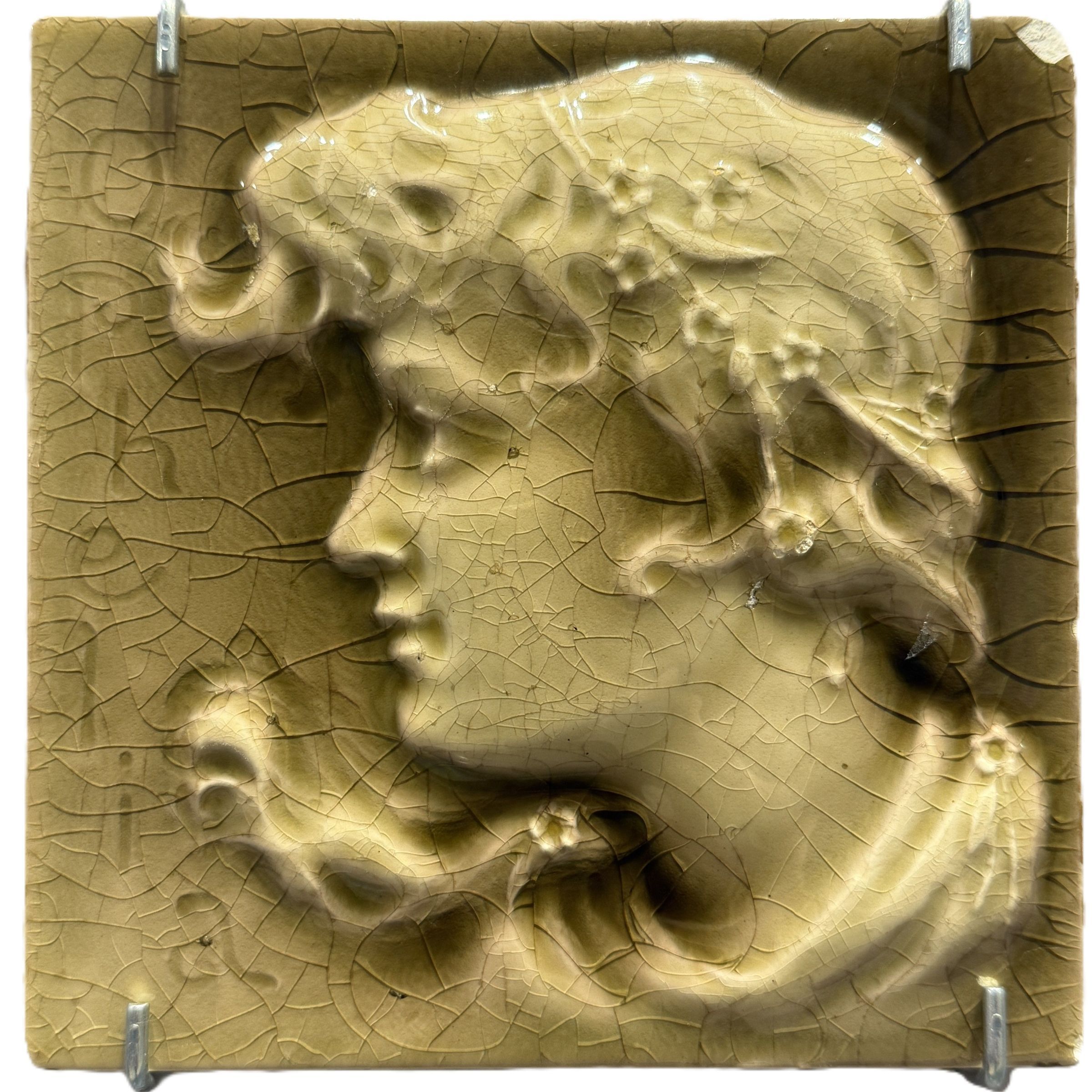
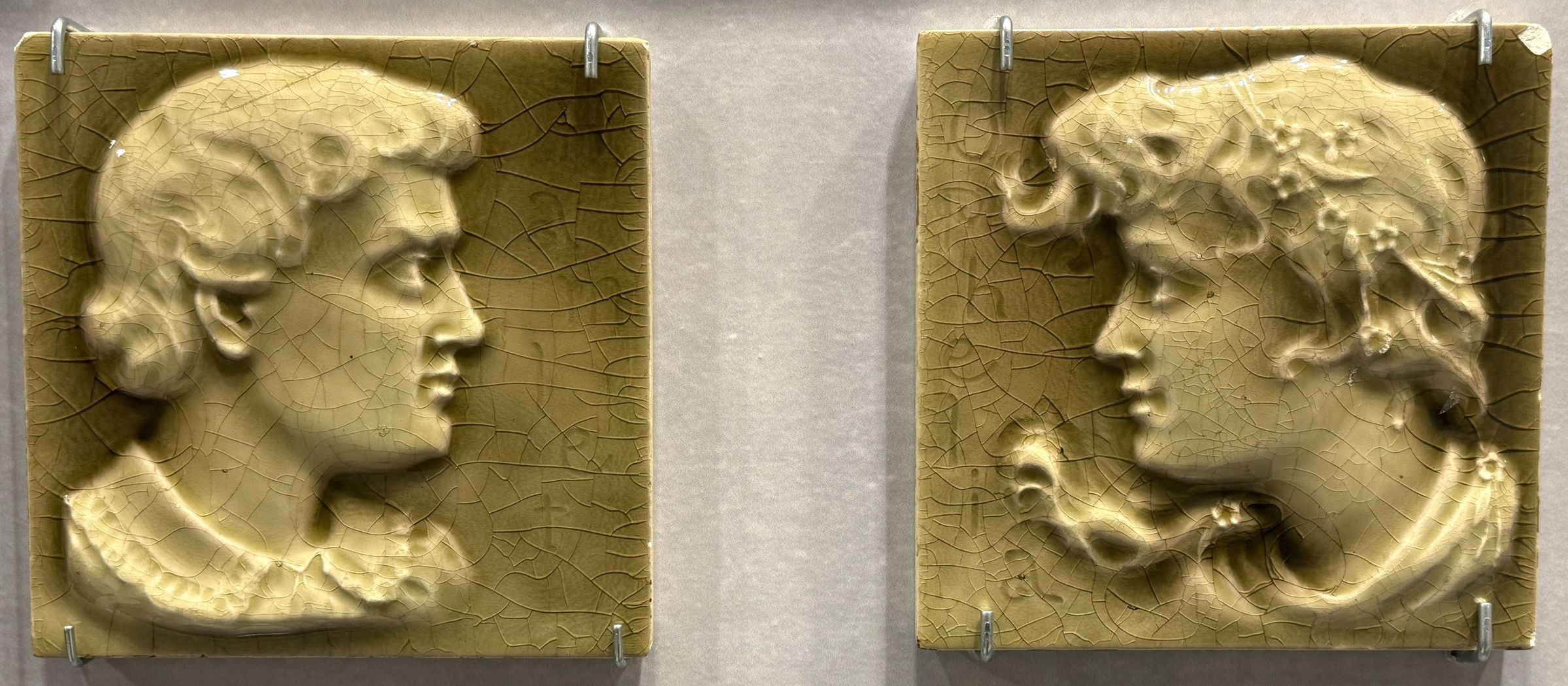
Hamlet and Ophelia Tiles

Hamlet

Hamlet

Name/Title

Hamlet and Ophelia Tiles

Entry/Object ID

2026.13.3

Description

Title of artifact [assigned by archives]: Hamlet and Ophelia Tiles These green glazed tiles depicting Hamlet and Ophelia came from the Motherhouse of the Sisters of Charity of the Incarnate Word (CCVI), which was demolished in 1988. These tiles were salvaged and returned to the Sisters by Mr. George Barnes. United States Encaustic Tile Works produced the tiles in the late-19th century. They were designed by their principal modeler, Ruth Winterbotham. CCVI Archives does not have information on the exact location of these tiles within the Motherhouse, though they were presumably installed in a fireplace mantel. -------- Título del objeto [asignado por el archivo]: Azulejos de Hamlet y Ofelia Estos azulejos esmaltados en verde, que representan a Hamlet y Ofelia, proceden de la Casa Madre de las Hermanas de la Caridad del Verbo Encarnado (CCVI), que fue demolida en 1988. El Sr. George Barnes recuperó estos azulejos y se los devolvió a las Hermanas. La empresa United States Encaustic Tile Works fabricó los azulejos a finales del siglo XIX. Fueron diseñados por su modelista principal, Ruth Winterbotham. Los Archivos de las CCVI no disponen de información sobre la ubicación exacta de estos azulejos dentro de la Casa Madre, aunque se supone que estaban colocados en la repisa de una chimenea.

Collection

HIM-US-Communities-Motherhouse

Made/Created

Artist

Ruth Winterbotham

Manufacturer

United States Encaustic Tile Works

Date made

circa 1870 - 1900

Time Period

19th Century

Inscription/Signature/Marks

Type

Inscription

Location

Side of tiles

Transcription

Hamlet; Ophelia

Material/Technique

Etched

Lexicon

Nomenclature 4.0

Nomenclature Secondary Object Term

Tile, Decorative

Nomenclature Primary Object Term

Tile

Nomenclature Sub-Class

Surface Elements

Nomenclature Class

Building Components

Nomenclature Category

Category 01: Built Environment Objects

Getty AAT

Concept

ceramic tile

LOC Thesaurus for Graphic Materials

Tiles

Dimensions

Height

6 in

Width

6 in

Depth

1/2 in

Research Notes

Research Type

Curator

Notes

Excerpt from "Recent Advances in the Pottery Industry," Popular Science Monthly, January 1892: The United States Encaustic Tile Works, of Indianapolis, Ind., is the outgrowth of the United States Encaustic Tile Company, which was organized shortly after the Centennial. Five years ago the present proprietors took charge of the works, and are now making encaustic geometrical and relief mantel tiles. So rapidly has the business grown in the past few years that the plant now includes six bisque and twelve muffle kilns, which are taxed to their utmost capacity. The clays used for white bodies come from South Carolina and Kentucky, and those for dark bodies are obtained from Indiana, the burning being done by means of natural gas. Miss Ruth Winterbotham, who is at present the principal modeler of this factory, has produced many beautiful designs, of which some three and six section panels are probably the most artistic.

Research Type

Curator

Notes

Extracto de «Avances recientes en la industria de la cerámica», Popular Science Monthly, enero de 1892: La empresa United States Encaustic Tile Works, con sede en Indianápolis (Indiana), es la evolución de la United States Encaustic Tile Company, que se constituyó poco después del Centenario. Hace cinco años, los actuales propietarios se hicieron cargo de la fábrica y ahora fabrican azulejos encáusticos geométricos y en relieve para chimeneas. El negocio ha crecido tan rápidamente en los últimos años que la planta cuenta ahora con seis hornos de bizcocho y doce hornos de mufla, que funcionan al máximo de su capacidad. Las arcillas utilizadas para los cuerpos blancos proceden de Carolina del Sur y Kentucky, y las de los cuerpos oscuros se obtienen de Indiana; la cocción se realiza mediante gas natural. La señorita Ruth Winterbotham, que actualmente es la modeladora principal de esta fábrica, ha creado muchos diseños hermosos, entre los cuales destacan, probablemente por su valor artístico, los paneles de tres y seis secciones.