Name/Title
Motherhouse Chapel of the Incarnate WordDescription
Though the Motherhouse convent of the Sisters of Charity of the Incarnate Word was built in 1900, construction on the Chapel had to wait until the Sisters had adequate funds in 1906. Sister Margaret Patrice Slattery, CCVI provided a history of the Chapel’s construction in her 1995 history of the Congregation, “Promises to Keep”:
“The addition of the chapel to the motherhouse was begun in 1906. The increase in the number of sisters made it imperative that a larger space be made available for the assembly of the whole community for prayers and for the celebration of the Eucharist. In writing to the monastery in Lyons, Mother Alphonse Brollier said the situation had become so bad that "there [were] more people outside than inside."
F. B. Gaenslen was selected as architect for the building, and Father Bednarek, who had designed the grotto, supervised every detail of the architectural plan. August Fuessel was named the contractor, and Theodore Engelhardt, who supervised the building of many of the congregational schools and hospitals, was named building superintendent. Rev. Mother Madeleine was so deeply interested in seeing the chapel come to fruition that she took on the responsibility of overseeing the project herself.
On January 6, 1906, ground was broken for the new building, with Bishop Forest, Father Bednarek and Father Schneider presiding at the ceremony. Just thirteen days later, Father Bednarek became critically ill and died before seeing his plans for the chapel become a reality. His death was followed within a few months by that of Rev. Mother Madeleine. Both of them had shared the dream of seeing the Incarnate Word chapel built on the grounds of the mother house, and both had died before their dream could be fulfilled…
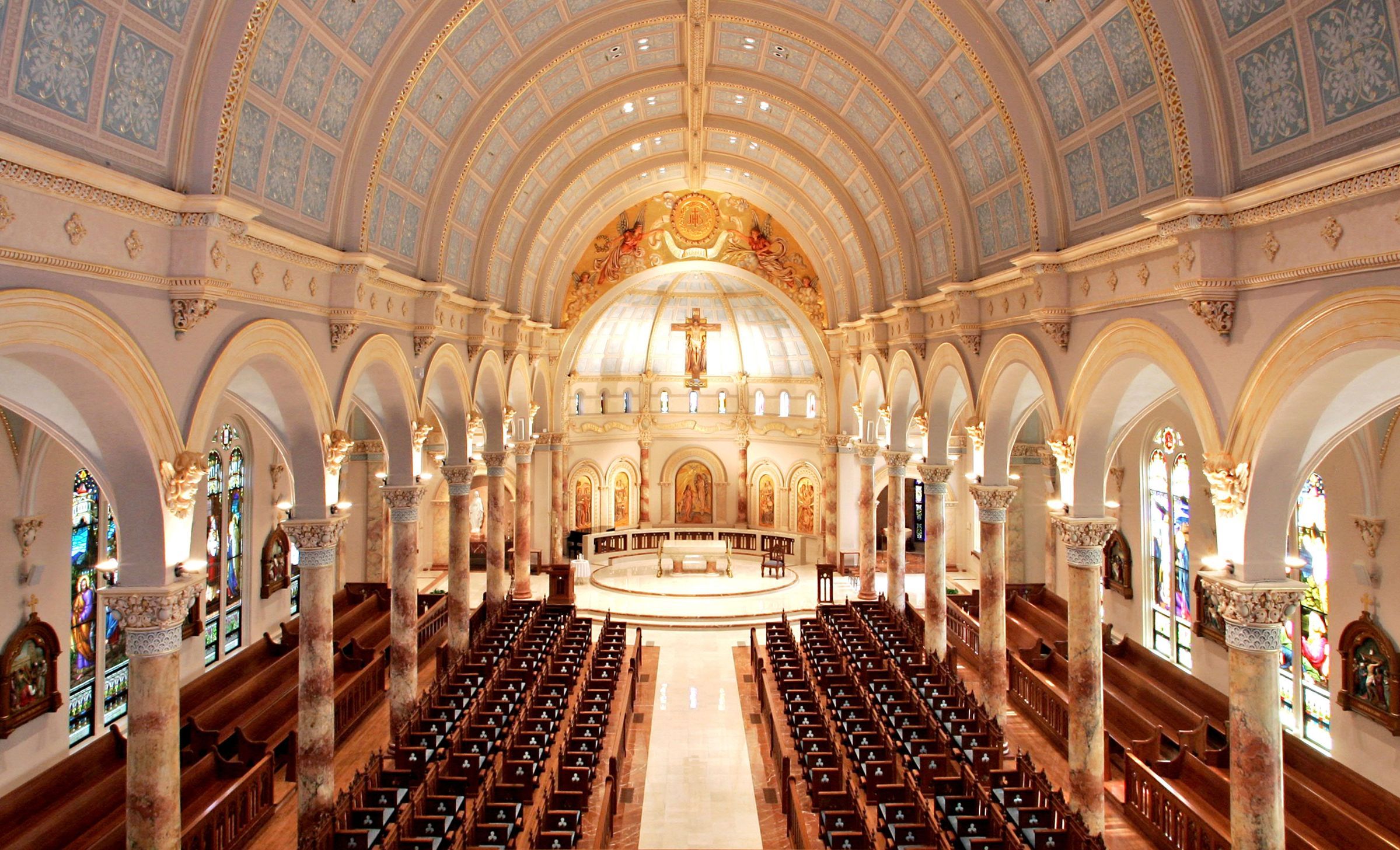
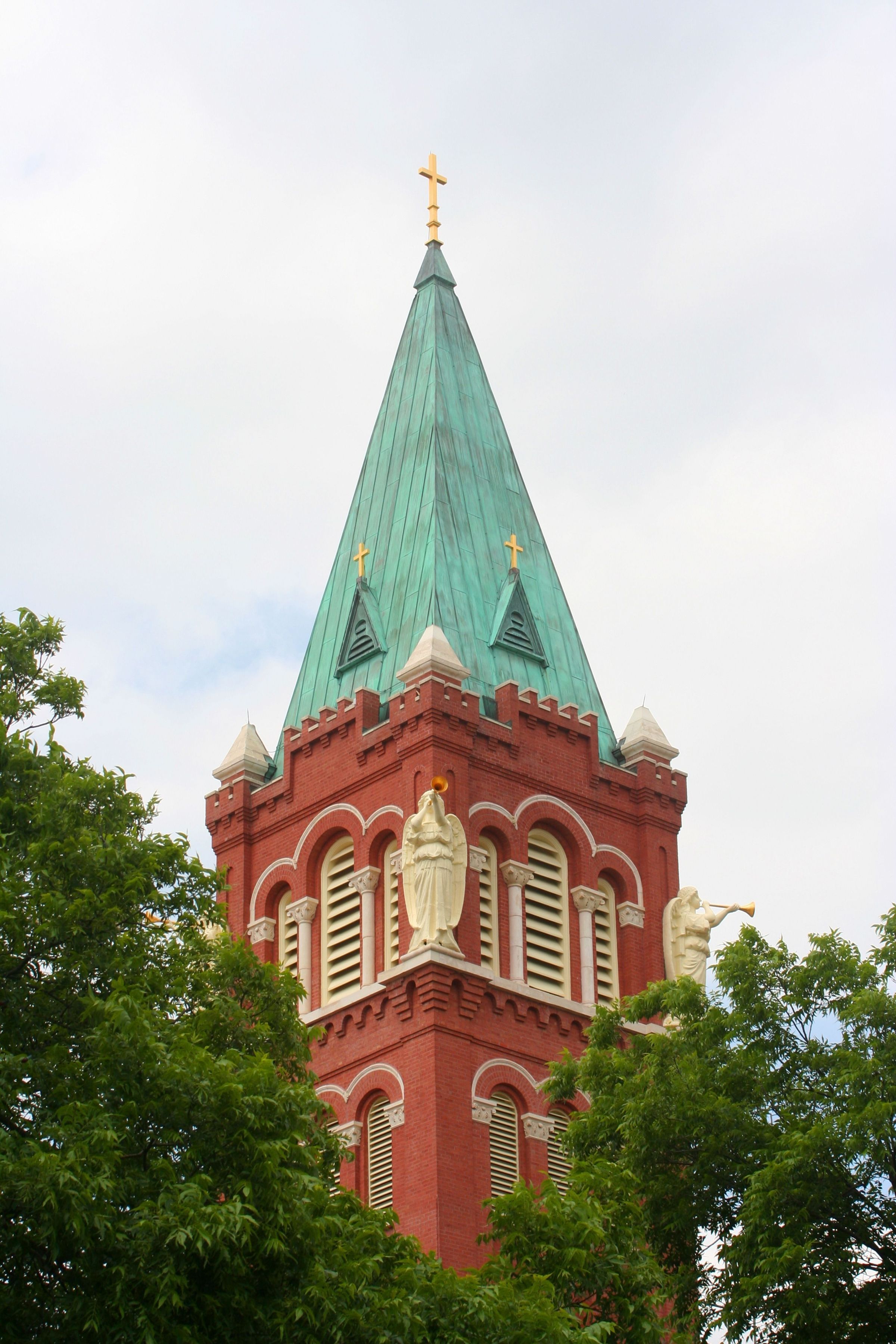
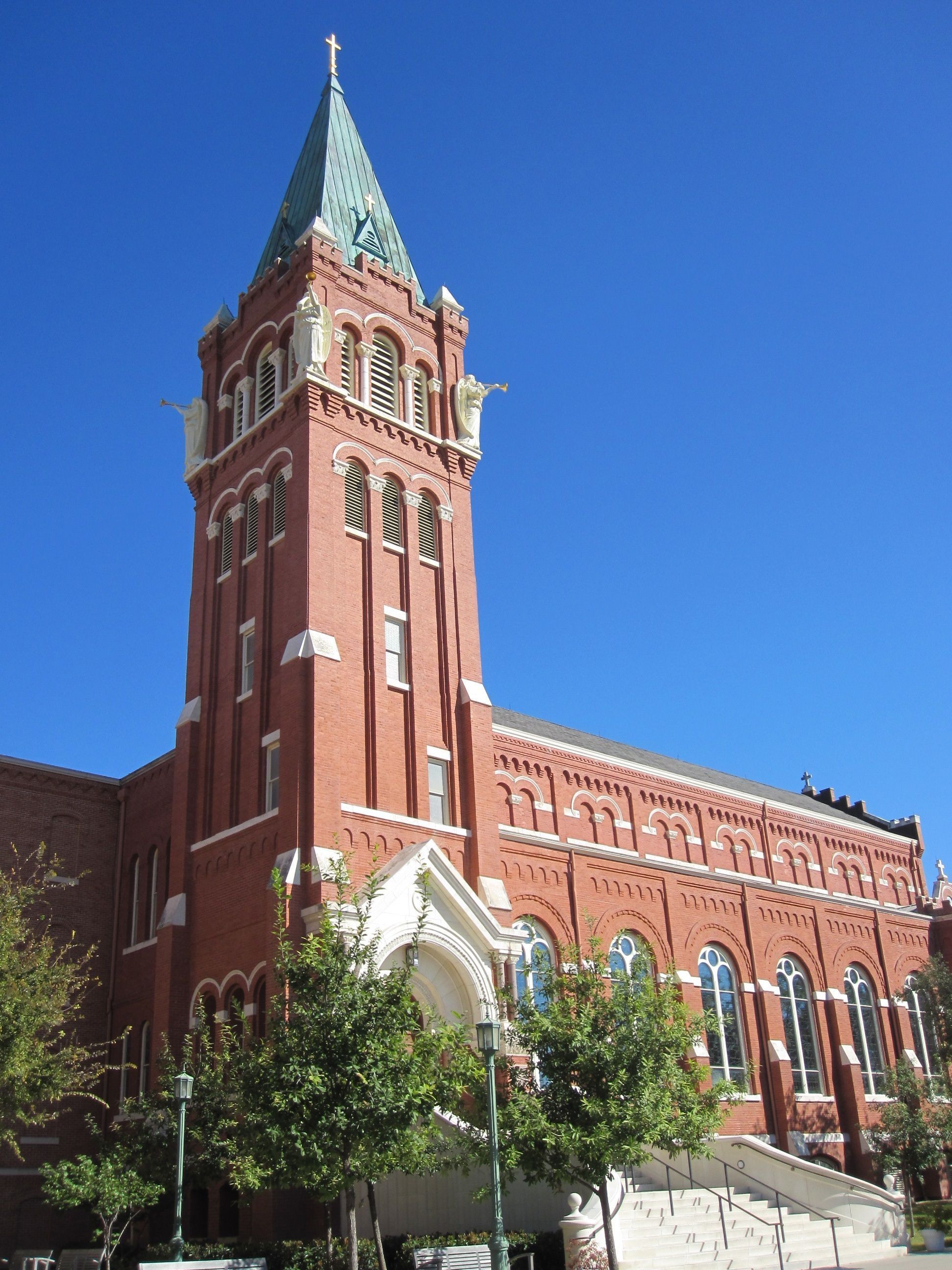
Designed in the Romanesque style of architecture, the completed chapel was an imposing structure of cathedral-size dimensions. Built of red brick with white stone facings and slate roof, the building soon became an impressive landmark in San Antonio. The towering steeple topped with a gold cross and with figures of trumpeting angels could be seen from all directions in the city.
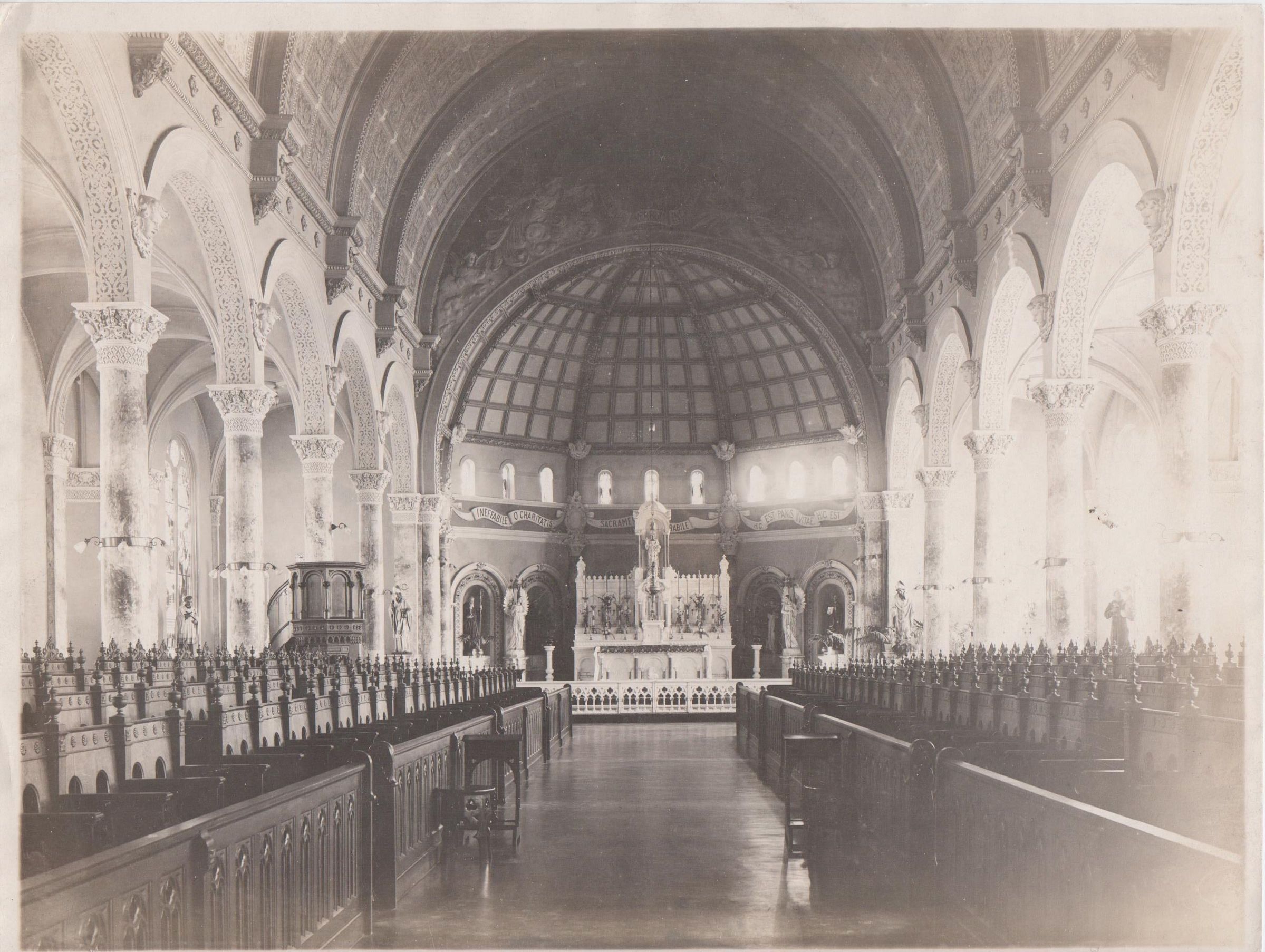
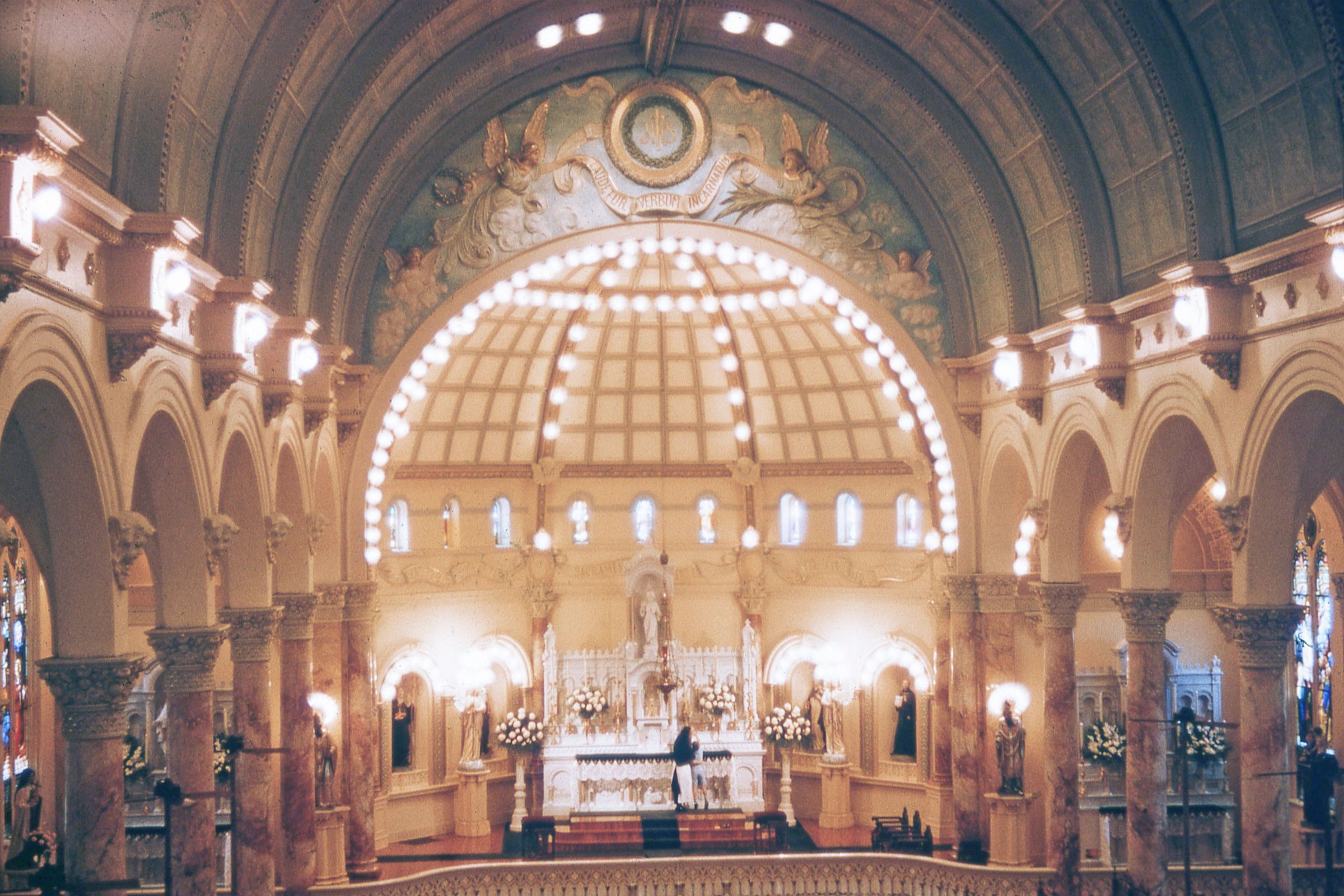
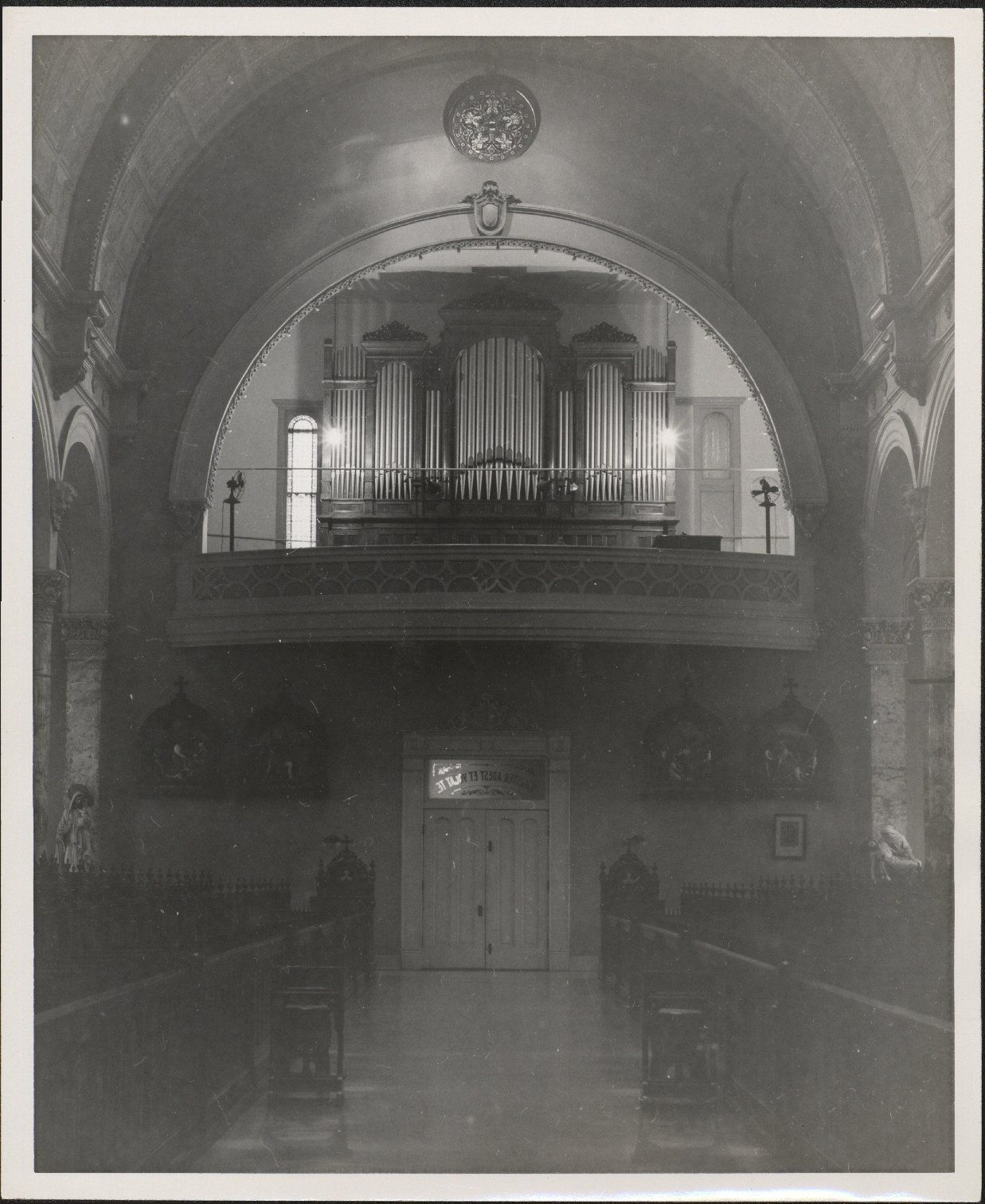
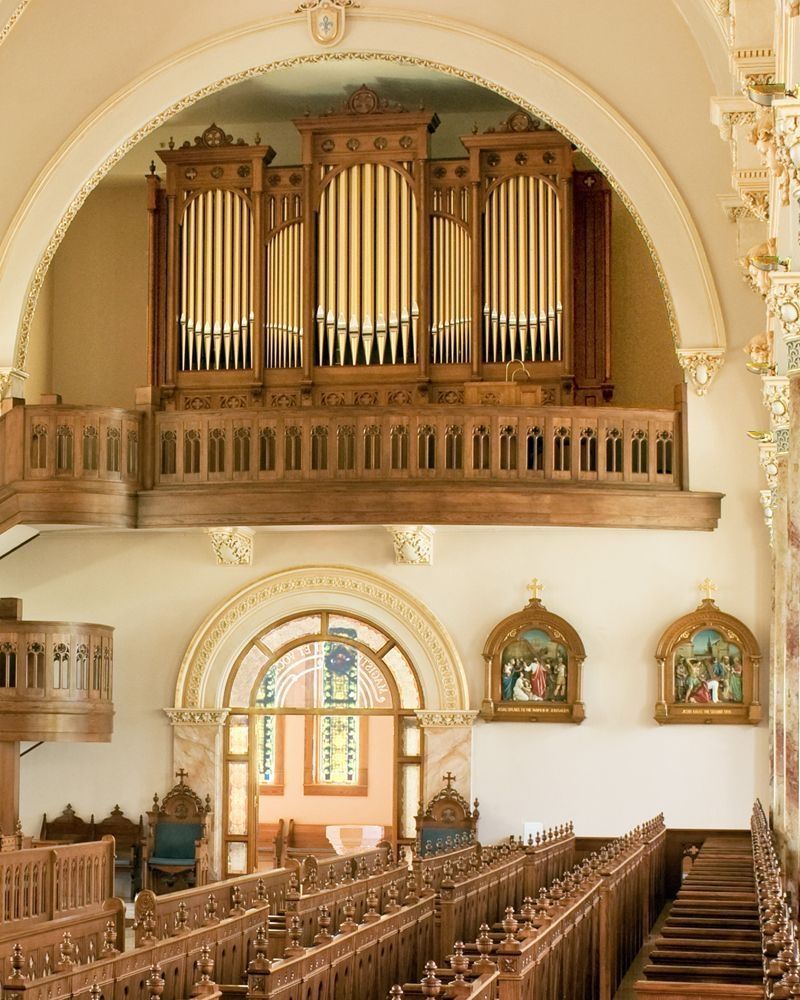
The interior of the chapel featured a vaulted ceiling of embossed metal, scagliola columns, a dome-shaped sanctuary, and an impressive altar of Carrara marble with onyx columns. The altar was donated by Dan Sullivan, Sr., in memory of his mother Annie Cotter Sullivan, longtime benefactor of the sisters. Placed in four niches around the main altar were the statues of four founders of religious orders: St. Benedict, St. Francis, St. Dominic, and St. Ignatius.
Because of a lack of funds, the side altars were originally made of wood but were replaced by marble in 1916 in celebration of the fiftieth anniversary of the sisters’ coming to Galveston. The altars were donated by all of the houses of the Congregation.” (vol 1, pp. 84-86) The carved oak choir stalls in the chapel are arranged in the style of medieval European monasteries. The seats face each other to facilitate the traditional chanting of the Divine Office.
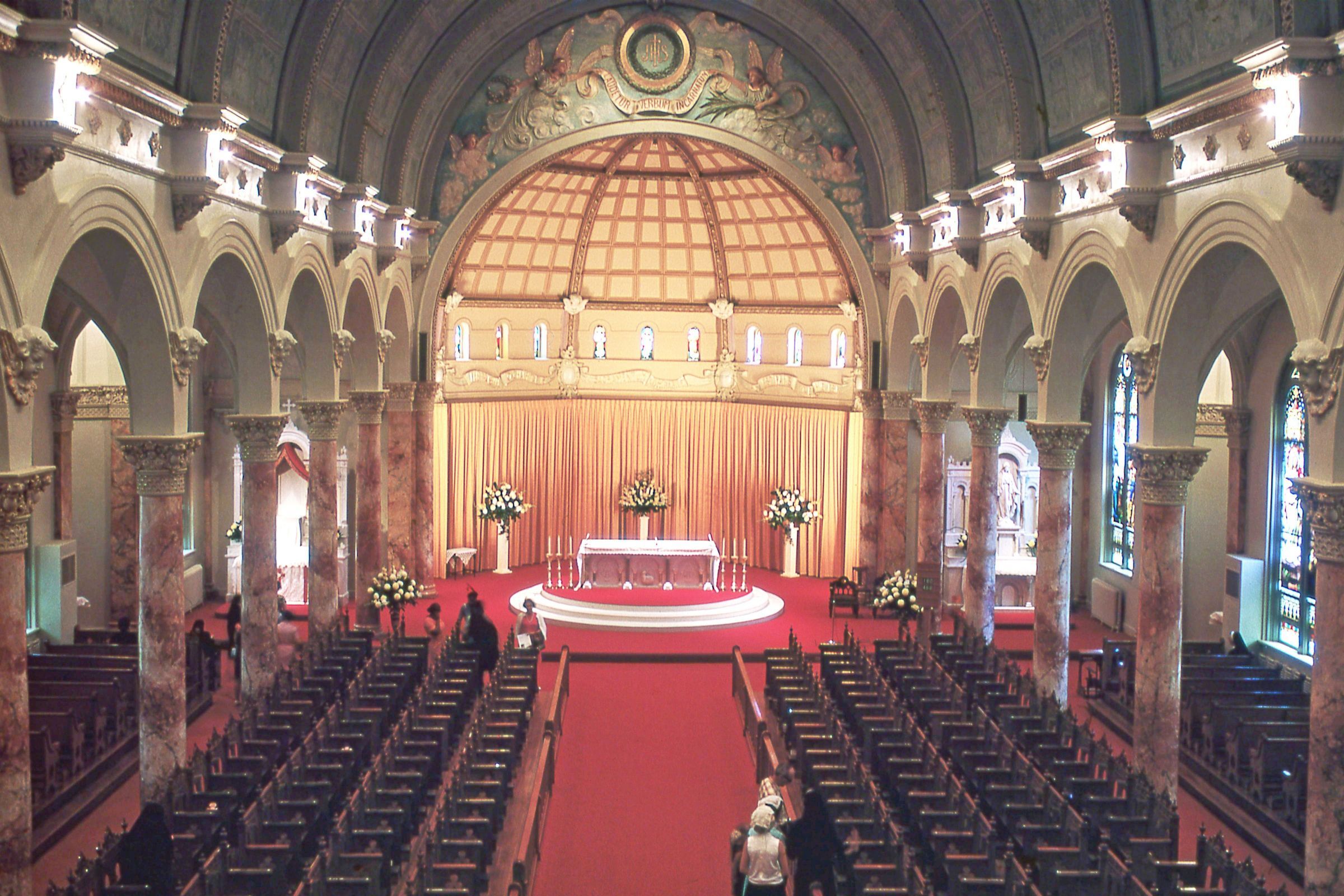
The Chapel has gone through several renovations since its opening. Sister Eilish Ryan described these in a 2011 brochure: In 1969, on the 100th anniversary of the founding of the Sisters of Charity of the Incarnate Word of San Antonio, the chapel underwent repairs and alterations to meet the liturgical directives of the Second Vatican Council (1962-65). The principal change moved the high altar forward so that the priest could face the assembly. The marble altar rail, which had divided the sanctuary from the nave, was removed. Four statues of founders of religious orders of men (Benedict, Francis, Dominic and lgnatius) were removed from niches behind the high altar. Air conditioning units were installed.
In 1985, the Chapel was closed for major structural repair, for which a preservation Campaign was organized. The Chapel was solemnly reopened on October 21, 1992, the anniversary of the occupation of the first house by the three founding sisters in 1869.
The 2006-2007 renovations, marking the Chapel’s 100th year, included a new altar, marble floor, redesign of the sanctuary, new seating in the original style, repainting, new lighting, sound and video systems, and upgraded air-conditioning. The work was directed by liturgical designer RoIf Rohn, general contractor M.J. Boyle, woodwork stalls by Bethany Company in PA, and Circle C. The apsidal carvings were executed in Italy of German linden wood by Edmund Rabasner from designs created by Renate Rohn.”
Since its opening, the Chapel of the Incarnate Word has been the symbolic spiritual center of the CCVI Congregation. Many Sisters take their vows and celebrate their jubilees in the Chapel annually on the Feast of the Assumption of Mary. While Sisters lived together in the Motherhouse until 1986, they used the Chapel daily for Mass, vespers, and meditative prayer. Today, the Sisters hold Mass in the Chapel on the second Sunday of every month. During the rest of the month, the Chapel serves as a venue for concerts, weddings, and special prayer services. Learn more about the Chapel and view the concert calendar at ccvichapel.org.
//////////////////////////////////////////////////////////
Aunque el convento de la Casa Madre de las Hermanas de la Caridad del Verbo Encarnado se construyó en 1900, la construcción de la capilla tuvo que esperar hasta que las hermanas dispusieron de los fondos suficientes en 1906. La hermana Margaret Patrice Slattery, CCVI, relató la historia de la construcción de la capilla en su libro de 1995 sobre la historia de la congregación, «Promises to Keep» (Promesas que cumplir):
«La ampliación de la casa madre con la capilla se inició en 1906. El aumento del número de hermanas hizo imprescindible disponer de un espacio más amplio para que toda la comunidad pudiera reunirse para rezar y celebrar la Eucaristía. En una carta dirigida al monasterio de Lyon, la madre Alphonse Brollier dijo que la situación se había agravado tanto que «había más gente fuera que dentro».
F. B. Gaenslen fue elegido como arquitecto del edificio, y el padre Bednarek, que había diseñado la gruta, supervisó cada detalle del plano arquitectónico. August Fuessel fue nombrado contratista y Theodore Engelhardt, que había supervisado la construcción de muchas de las escuelas y hospitales de la congregación, fue nombrado supervisor de la obra. La reverenda madre Madeleine estaba tan interesada en que la capilla se hiciera realidad que asumió la responsabilidad de supervisar el proyecto ella misma.
El 6 de enero de 1906 se colocó la primera piedra del nuevo edificio, en una ceremonia presidida por el obispo Forest, el padre Bednarek y el padre Schneider. Tan solo trece días después, el padre Bednarek cayó gravemente enfermo y falleció antes de ver cumplidos sus planes para la capilla. A su muerte le siguió, pocos meses después, la de la reverenda madre Madeleine. Ambos habían compartido el sueño de ver construida la capilla del Verbo Encarnado en los terrenos de la casa madre, y ambos murieron antes de que su sueño se hiciera realidad...
Diseñada en estilo arquitectónico románico, la capilla terminada era una imponente estructura de dimensiones catedralicias. Construida en ladrillo rojo con revestimientos de piedra blanca y techo de pizarra, el edificio se convirtió pronto en un impresionante punto de referencia en San Antonio. La altísima torre, coronada por una cruz dorada y figuras de ángeles tocando la trompeta, podía verse desde todos los puntos de la ciudad.
El interior de la capilla presentaba un techo abovedado de metal repujado, columnas de escayola, un santuario en forma de cúpula y un impresionante altar de mármol de Carrara con columnas de ónix. El altar fue donado por Dan Sullivan, Sr., en memoria de su madre, Annie Cotter Sullivan, benefactora de las hermanas durante muchos años. En cuatro nichos alrededor del altar mayor se colocaron las estatuas de los cuatro fundadores de las órdenes religiosas: San Benito, San Francisco, Santo Domingo y San Ignacio.
Debido a la falta de fondos, los altares laterales se construyeron originalmente en madera, pero fueron sustituidos por mármol en 1916 para celebrar el quincuagésimo aniversario de la llegada de las hermanas a Galveston. Los altares fueron donados por todas las casas de la Congregación» (vol. 1, pp. 84-86). Los bancos del coro de roble tallado de la capilla están dispuestos al estilo de los monasterios medievales europeos. Los asientos están enfrentados para facilitar el canto tradicional del Oficio Divino.
La capilla ha sido objeto de varias renovaciones desde su inauguración. La hermana Eilish Ryan las describió en un folleto de 2011: En 1969, con motivo del centenario de la fundación de las Hermanas de la Caridad del Verbo Encarnado de San Antonio, la capilla fue objeto de reparaciones y modificaciones para cumplir con las directrices litúrgicas del Concilio Vaticano II (1962-65). El cambio principal consistió en adelantar el altar mayor para que el sacerdote pudiera dar la cara a la asamblea. Se eliminó la barandilla de mármol del altar, que separaba el santuario de la nave. Se retiraron cuatro estatuas de fundadores de órdenes religiosas masculinas (Benedicto, Francisco, Domingo e Ignacio) de los nichos situados detrás del altar mayor. Se instalaron unidades de aire acondicionado.
En 1985, la capilla se cerró para realizar importantes reparaciones estructurales, para lo cual se organizó una campaña de conservación. La capilla se reabrió solemnemente el 21 de octubre de 1992, aniversario de la ocupación de la primera casa por las tres hermanas fundadoras en 1869.
Las renovaciones de 2006-2007, que marcaron el centenario de la capilla, incluyeron un nuevo altar, suelo de mármol, rediseño del santuario, nuevos asientos al estilo original, repintado, nuevos sistemas de iluminación, sonido y vídeo, y aire acondicionado mejorado. Las obras fueron dirigidas por el diseñador litúrgico RoIf Rohn, el contratista general M.J. Boyle, los bancos de madera por Bethany Company en Pensilvania y Circle C. Las tallas del ábside fueron realizadas en Italia con madera de tilo alemán por Edmund Rabasner a partir de diseños creados por Renate Rohn.
Desde su inauguración, la Capilla del Verbo Encarnado ha sido el centro espiritual simbólico de la Congregación CCVI. Muchas hermanas hacen sus votos y celebran sus jubileos en la capilla cada año, en la fiesta de la Asunción de María. Mientras las hermanas vivieron juntas en la casa madre hasta 1986, utilizaban la capilla a diario para la misa, las vísperas y la oración meditativa. Hoy en día, las hermanas celebran misa en la capilla el segundo domingo de cada mes. Durante el resto del mes, la capilla sirve como lugar para conciertos, bodas y servicios de oración especiales. Para obtener más información sobre la capilla y ver el calendario de conciertos, visite ccvichapel.org.