Name/Title
St. DominicEntry/Object ID
2026.4.6Description
Title of artwork [assigned by archives]: St. Dominic
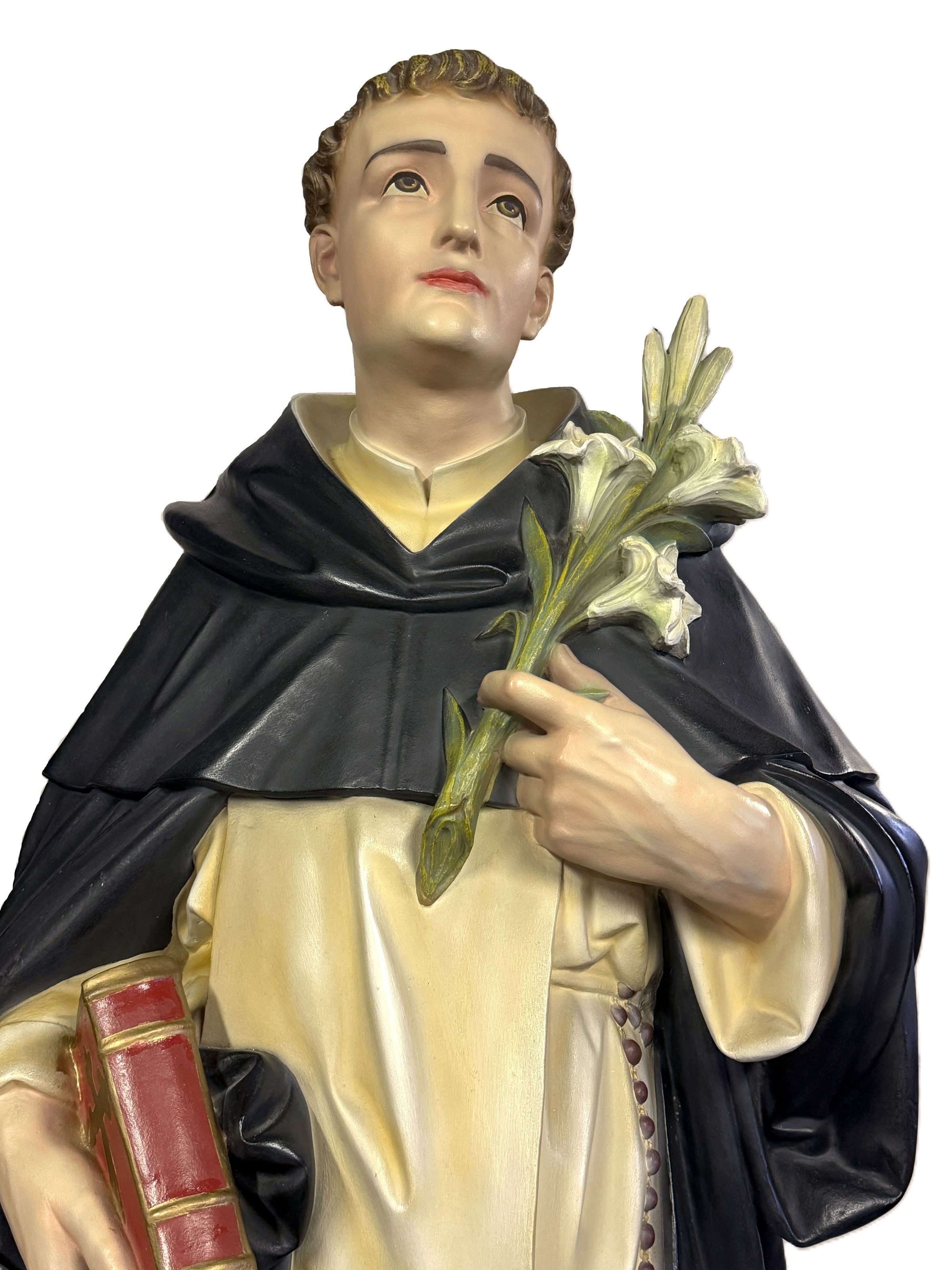
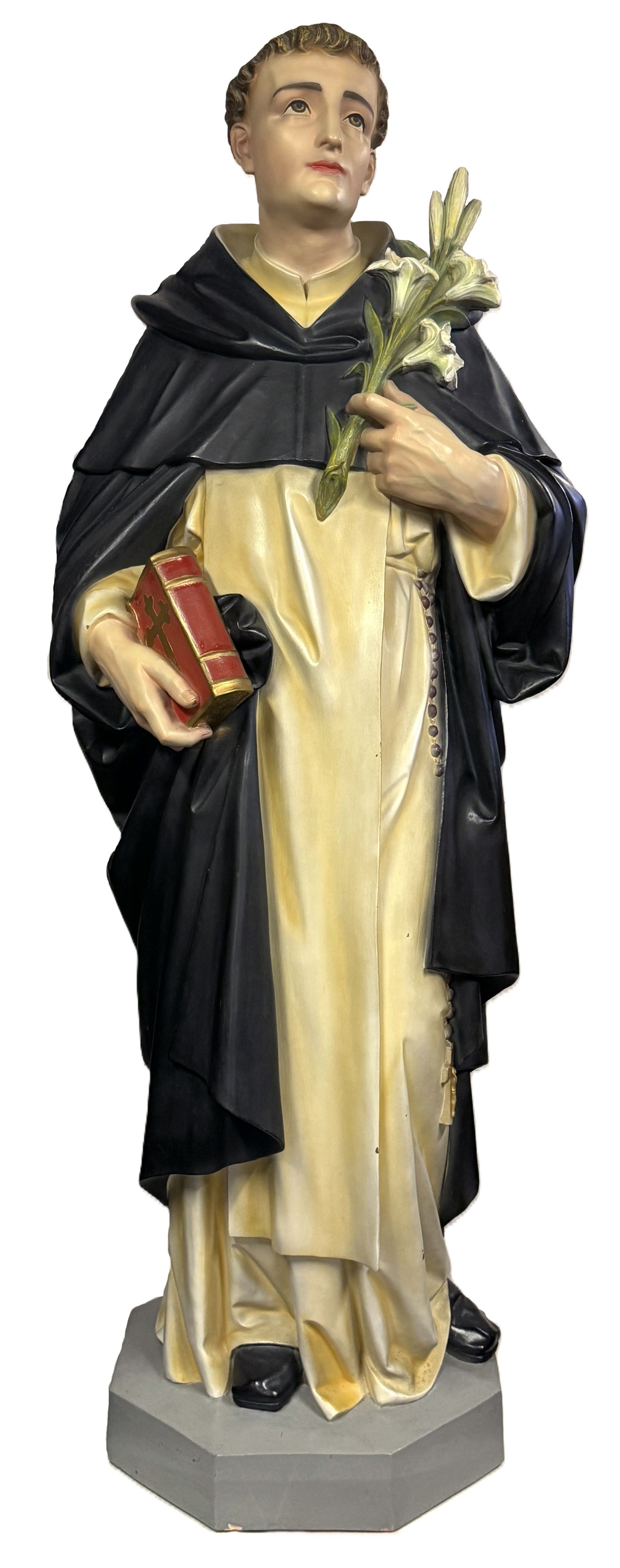
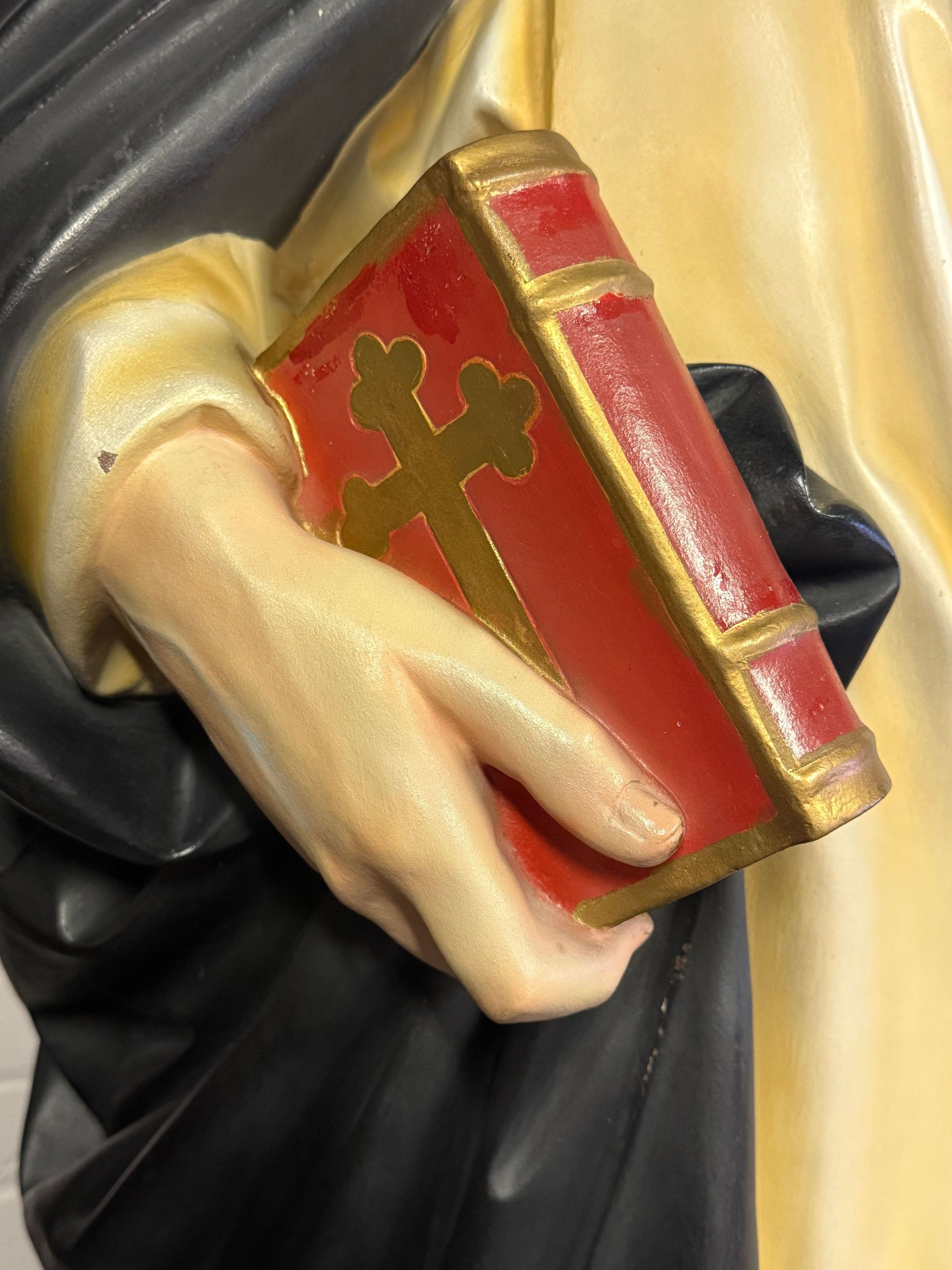
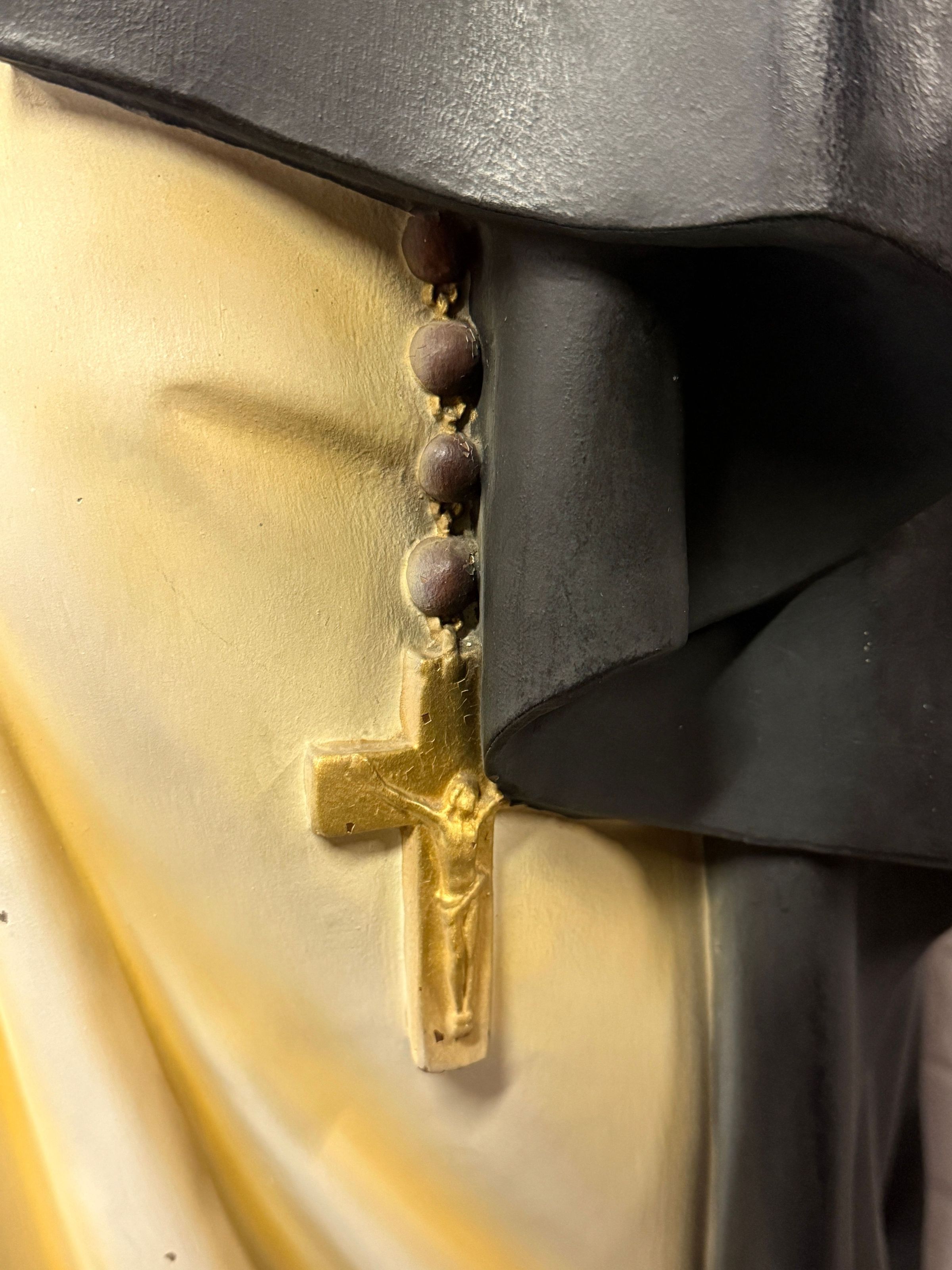
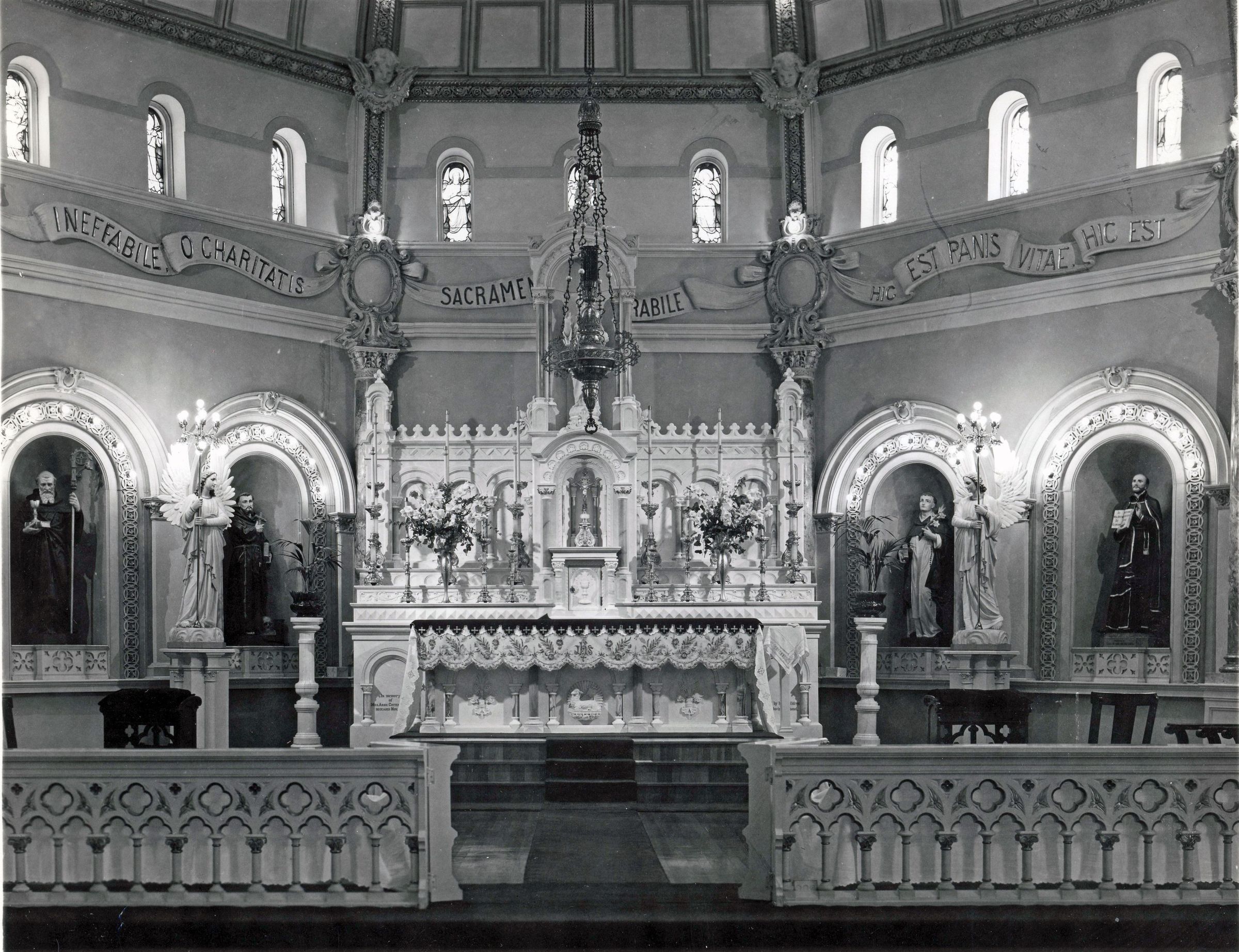
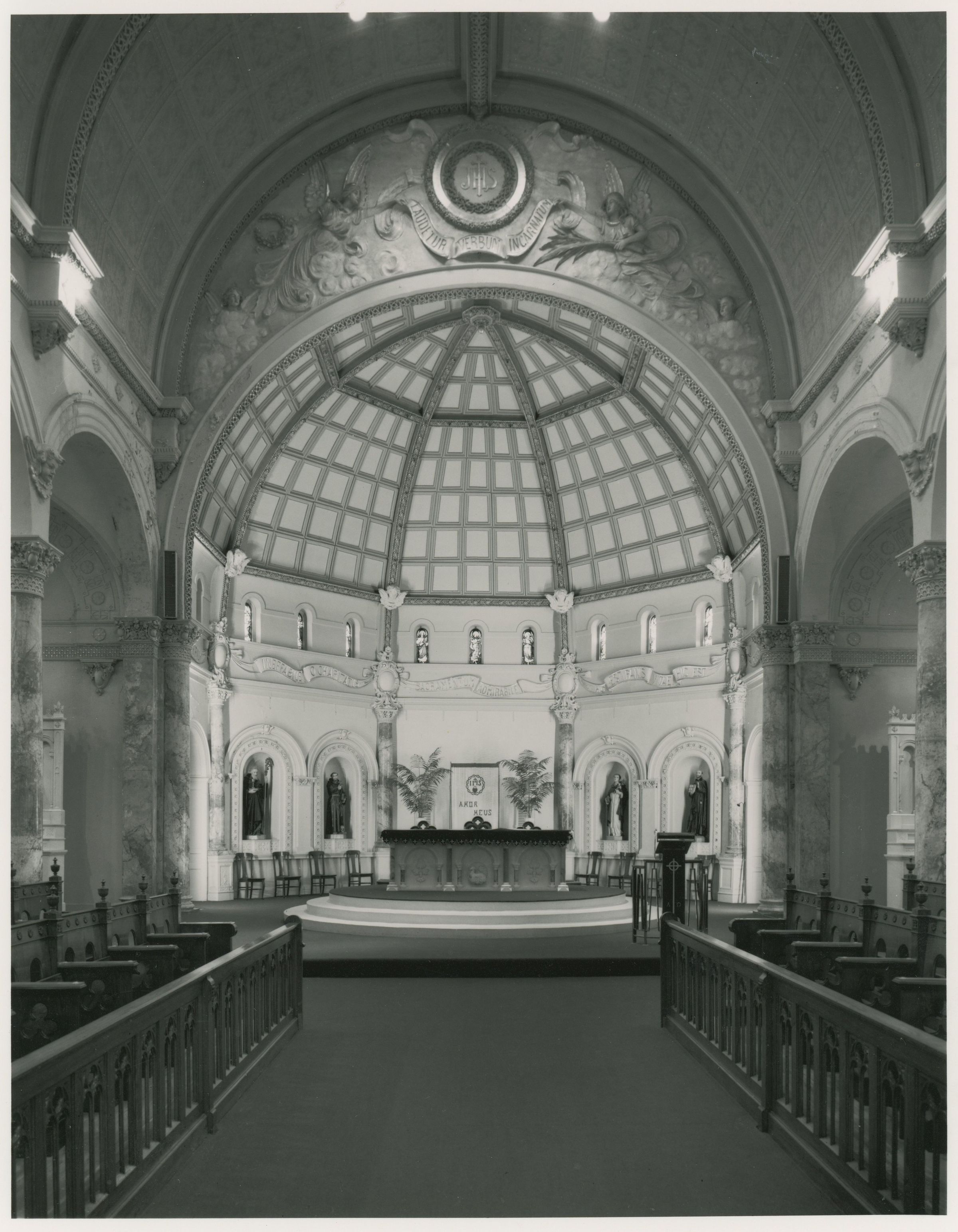
This polychrome plaster statue of Saint Dominic (1170-1221) stood in a niche behind the altar of the Motherhouse Chapel of the Incarnate Word in San Antonio, Texas from its opening 1907 until approximately the late 1990s. St. Dominic is shown wearing the traditional habit of the Dominican Order, a white tunic with a black cappa, or cloak, draped over the shoulders. A black-beaded rosary, a historically Dominican devotional object, hangs down from the Saint’s waist. Dominic looks upward while holding white lilies, a symbol of purity, against his chest. In his other hand, he holds a red, gilt-edged book.
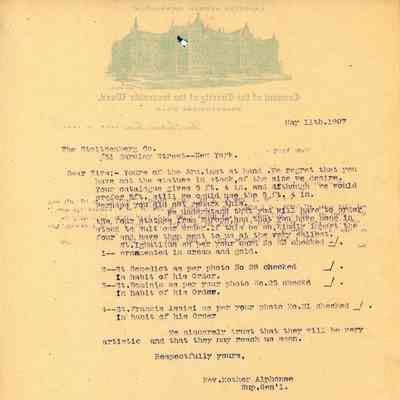
In a letter to the Stoltzenberg Company, a New York ecclesiastical art manufacturer and importer, dated May 11, 1907, Mother Superior Alphonse Brollier, CCVI (1858-1939) ordered four statues of male saints for the Chapel: “We understand that you will have to order the four statues from Europe, and that you have none in stock to suit our order. If this be so, kindly import the four and have them sent to us at the very earliest.” Mother Alphonse then listed the requested statues, the third of which was “St. Dominic as per photo No. 25 checked / In habit of his Order.” A French inscription on another statue in the grouping, St. Francis, suggests that the Stoltzenberg Company imported the statues from France.
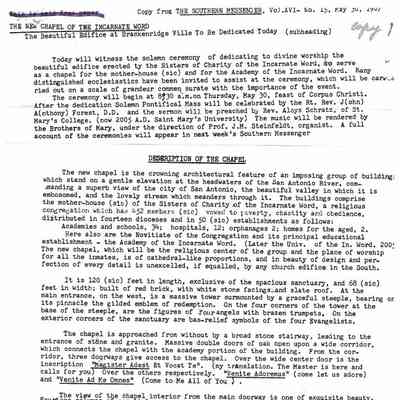
A Southern Messenger article covering the Chapel’s dedication on May 30, 1907, described “four niches, two on each side of the main altar contain[ing] the statues of four founders of religious orders - St. Francis, St. Benedict, St. Dominic, and St. Ignatius.” The statues remained undisturbed in their niches for 60 years before the Chapel underwent significant changes in response to the mandates of the Second Vatican Council. Following the removal of the altar rail and neo-Gothic high altar, curtains were installed around the back of the sanctuary, completely covering the statues from the early 1970s to late 1980s. The statues were unveiled again sometime in the late 1980s to early 1990s before being permanently removed in the mid-1990s. During the Chapel's 2006–2007 renovation, low-relief carvings depicting the Congregation's history and the Annunciation were installed in the vacated niches.
-----
Título de la obra [asignado por los archivos]: Santo Domingo
Esta estatua de yeso policromado de Santo Domingo (1170-1221) se encontraba en una hornacina situada detrás del altar de la capilla de la Casa Madre del Verbo Encarnado, en San Antonio (Texas), desde su inauguración en 1907 hasta aproximadamente finales de la década de 1990. Se representa a San Domingo vistiendo el hábito tradicional de la Orden Dominicana: una túnica blanca con una cappa negra, o capa, drapeada sobre los hombros. Un rosario de cuentas negras, objeto devocional históricamente dominicano, cuelga de la cintura del santo. Domingo mira hacia arriba mientras sostiene contra su pecho unos lirios blancos, símbolo de pureza. En la otra mano, sostiene un libro rojo con bordes dorados.
En una carta dirigida a la empresa Stoltzenberg, fabricante e importador de arte eclesiástico de Nueva York, con fecha del 11 de mayo de 1907, la madre superiora Alphonse Brollier, CCVI (1858-1939), encargó cuatro estatuas de santos varones para la capilla: «Entendemos que tendrán que encargar las cuatro estatuas desde Europa y que no disponen de ninguna en stock que se ajuste a nuestro pedido. Si es así, les rogamos que importen las cuatro y nos las envíen lo antes posible». La madre Alphonse enumeró a continuación las estatuas solicitadas, la tercera de las cuales era «San Domingo, según la foto n.º 25 marcada / con el hábito de su Orden». Una inscripción en francés en otra estatua del conjunto, la de San Francisco, sugiere que la empresa Stoltzenberg importó las estatuas desde Francia.
Un artículo del Southern Messenger que cubría la consagración de la capilla el 30 de mayo de 1907 describía «cuatro nichos, dos a cada lado del altar mayor, que albergaban las estatuas de los cuatro fundadores de órdenes religiosas: San Francisco, San Benito, Santo Domingo y San Ignacio». Las estatuas permanecieron intactas en sus nichos durante 60 años, hasta que la capilla sufrió cambios significativos en respuesta a las disposiciones del Concilio Vaticano II. Tras la retirada de la barandilla del altar y del altar mayor neogótico, se instalaron cortinas alrededor de la parte trasera del santuario, que cubrieron por completo las estatuas desde principios de la década de 1970 hasta finales de la de 1980. Las estatuas fueron desveladas de nuevo en algún momento entre finales de los años 80 y principios de los 90, antes de ser retiradas definitivamente a mediados de los 90. Durante la renovación de la capilla entre 2006 y 2007, se instalaron en los nichos que habían quedado vacíos unos bajorrelieves que representan la historia de la Congregación y la Anunciación.Type of Sculpture
Free StandingCollection
HIM-US-Communities-MotherhouseMade/Created
Date made
circa 1907Time Period
20th CenturyNotes
Unknown European (likely French) manufacturer; Imported by Frederick Pustet & Company of Cincinnati, Ohio in 1907 / Fabricante europeo desconocido (probablemente francés); importado por Frederick Pustet & Company, de Cincinnati (Ohio), en 1907Lexicon
Nomenclature 4.0
Nomenclature Secondary Object Term
StatueNomenclature Primary Object Term
SculptureNomenclature Class
ArtNomenclature Category
Category 08: Communication ObjectsGetty AAT
Concept
statues* Untyped Getty AAT
religious artLOC Thesaurus for Graphic Materials
Statues, Religious art objects, SaintsDimensions
Dimension Description
Approximate measurementsHeight
60 inWidth
20-1/2 inDepth
18-1/2 inResearch Notes
Research Type
CuratorNotes
Label from Old Heritage Room: “SAINT DOMINIC
St. Dominic was born in Calaruega, Spain around the year 1170. He studied theology at Palencia and was made a canon of the church at Osma. He worked effectively against the Albigensian heresy through preaching and good example. To carry on his work, he gathered together companions and founded the Order of Preachers. He died at Bologna on August 6, 1221. Many illustrious saints belonged to the Dominican Order, among them are Sts. Thomas Aquinas and Catherine of Siena.”
-----
Etiqueta de la Sala del Patrimonio Antiguo: «SAN DOMINGO
San Domingo nació en Calaruega, España, hacia el año 1170. Estudió teología en Palencia y fue nombrado canónigo de la catedral de Osma. Luchó eficazmente contra la herejía albigense mediante la predicación y el buen ejemplo. Para continuar su labor, reunió a un grupo de compañeros y fundó la Orden de los Predicadores. Falleció en Bolonia el 6 de agosto de 1221. Muchos santos ilustres pertenecieron a la Orden Dominicana, entre ellos los santos Tomás de Aquino y Catalina de Siena».