Name/Title
St. Ignatius of LoyolaEntry/Object ID
2026.4.3Description
Title of artwork [assigned by archives]: Saint Ignatius of Loyola
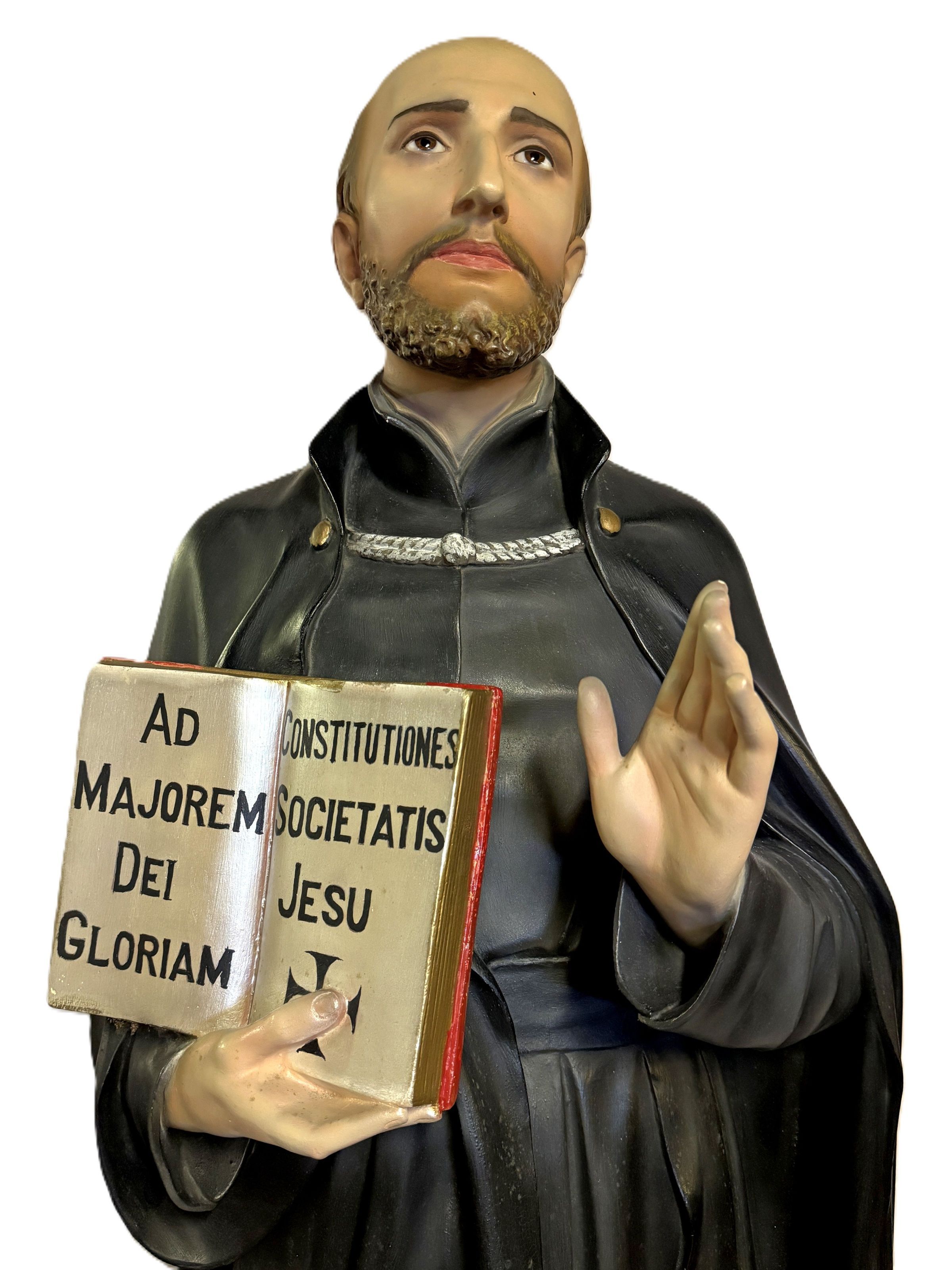
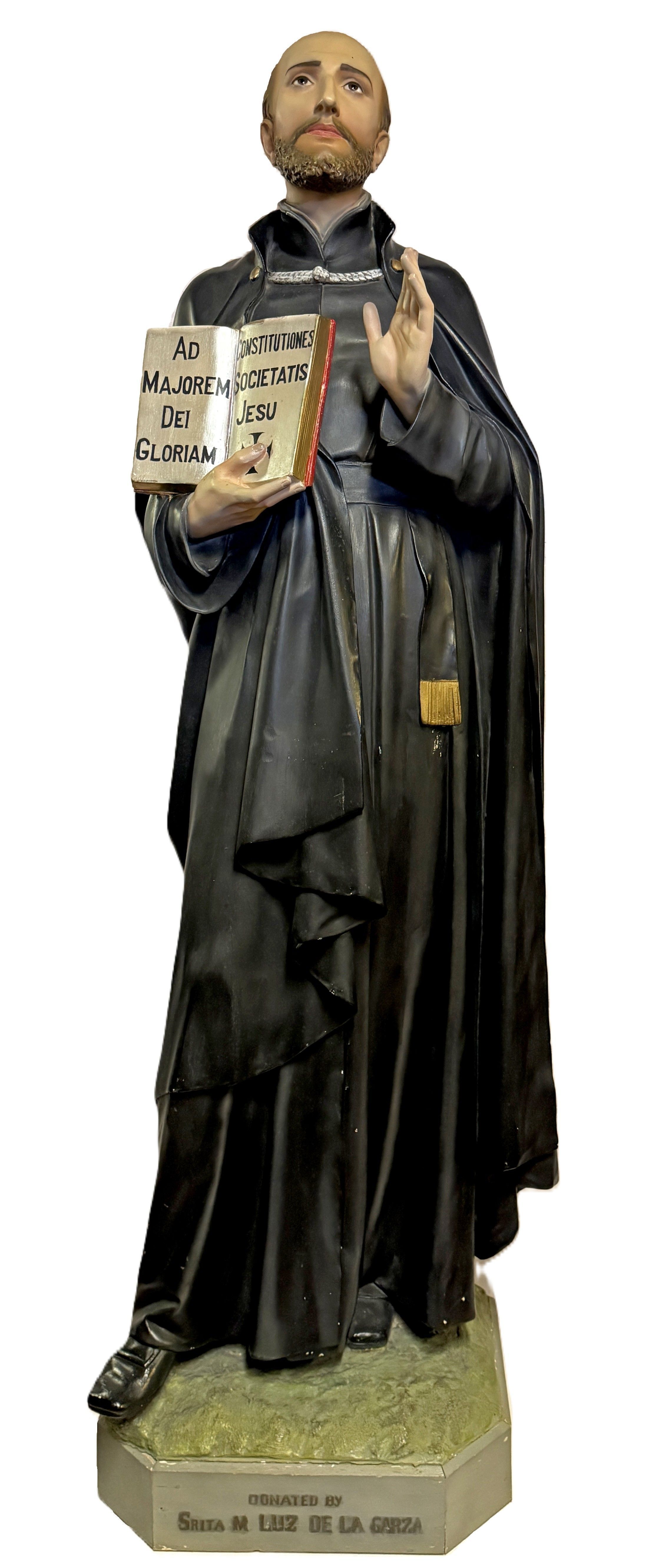
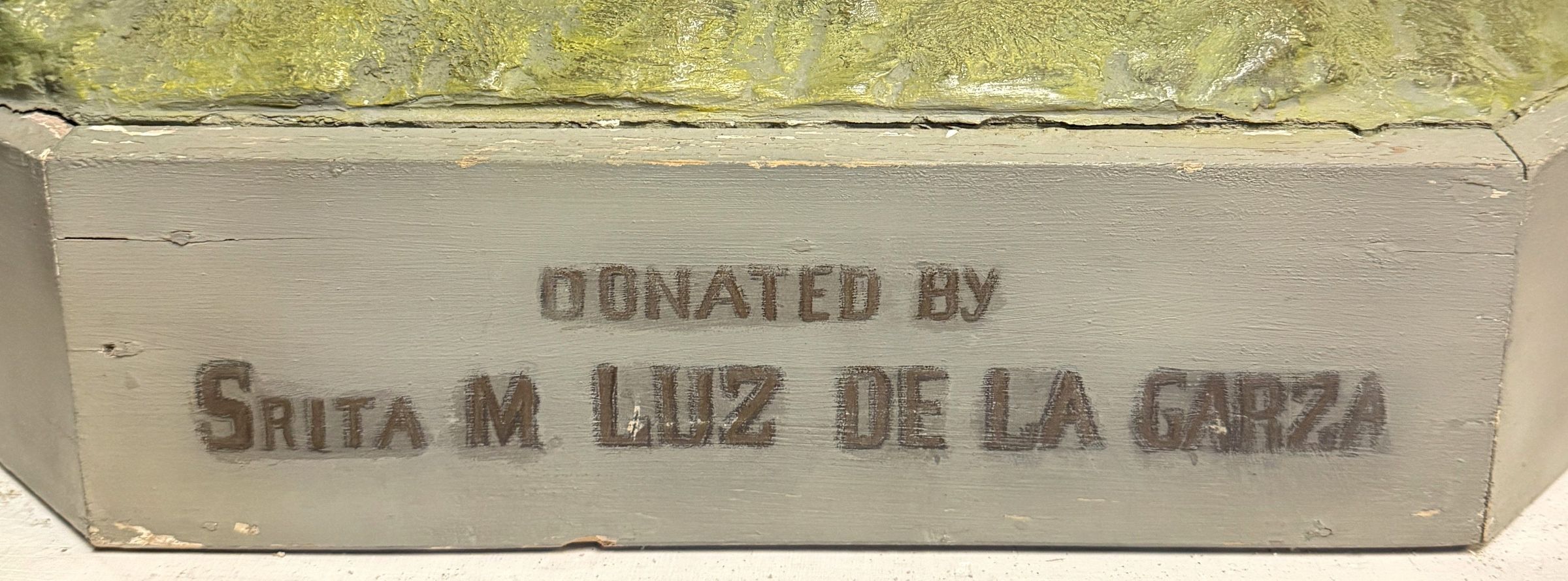
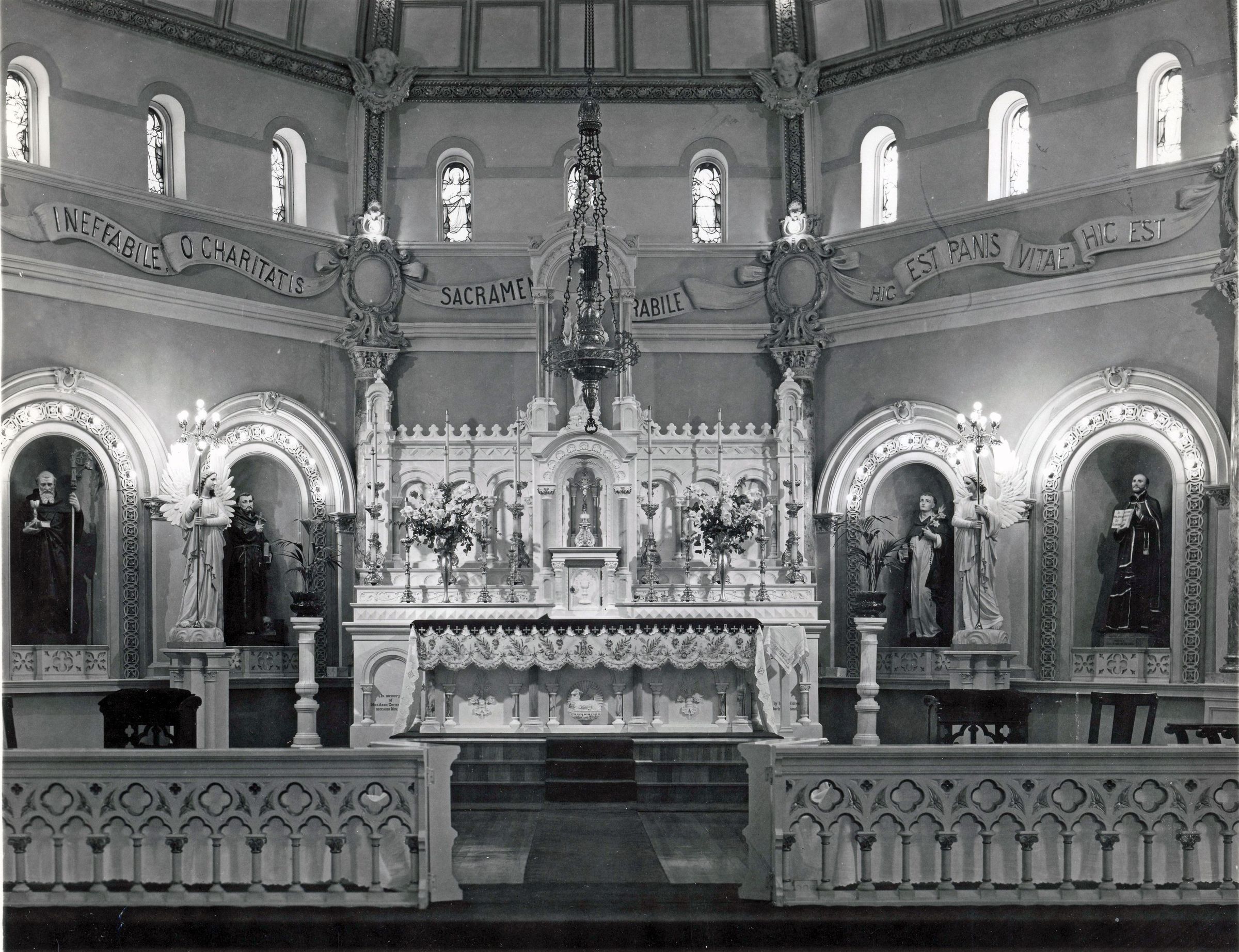
This polychrome plaster statue of Saint Ignatius of Loyola (1491-1556) stood in a niche behind the altar of the Motherhouse Chapel of the Incarnate Word in San Antonio, Texas from its opening in 1907 until approximately the late 1990s. Saint Ignatius, the founder of the Jesuit order, wears a black cassock and cape, his gaze lifted upward and his right hand raised in blessing. In his left arm he cradles an open book inscribed "AD MAJOREM DEI GLORIAM" ("For the Greater Glory of God," the Jesuit motto) on the left page and "CONSTITUTIONES SOCIETATIS JESU" (Constitutions of the Society of Jesus) on the right. He stands atop a hexagonal base bearing an inscription noting the statue's donation by "S[eño]rita M. Luz de la Garza." CCVI Archives does not have information on this donor, though she could have been related to Sister M. Guadalupe de la Garza, CCVI (1861-1941), who entered the Congregation of the Sisters of Charity of the Incarnate Word in 1893.
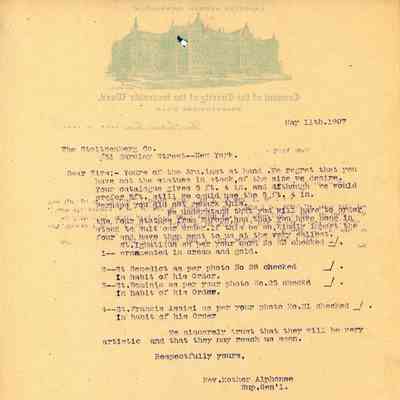
In a letter to the Stoltzenberg Company, a New York ecclesiastical art manufacturer and importer, dated May 11, 1907, Mother Superior Alphonse Brollier, CCVI (1858-1939) ordered four statues of male saints for the Chapel: “We understand that you will have to order the four statues from Europe, and that you have none in stock to suit our order. If this be so, kindly import the four and have them sent to us at the very earliest.” Mother Alphonse then listed the requested statues, the first of which was “St. Ignatius as per your card No. 22 checked / ornamented in cream and gold.”
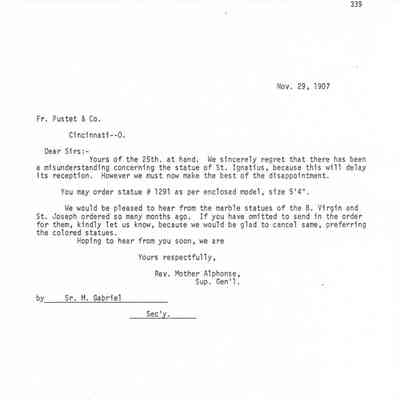
Evidently, an issue arose with the import of the St. Ignatius statue by the Stoltzenberg Company. On November 29, 1907, Mother Alphonse wrote to Frederick Pustet & Company, a Cincinnati-based manufacturer of religious articles, “We sincerely regret that there has been a misunderstanding concerning the statue of St. Ignatius, because this will delay its reception. However we must now make the best of the disappointment. You may order statue # 1291 as per enclosed model, size 5’4”.” CCVI Archives does not have documentation of the issues with the original order, nor its transfer from the Stoltzenberg Company to Pustet & Company.
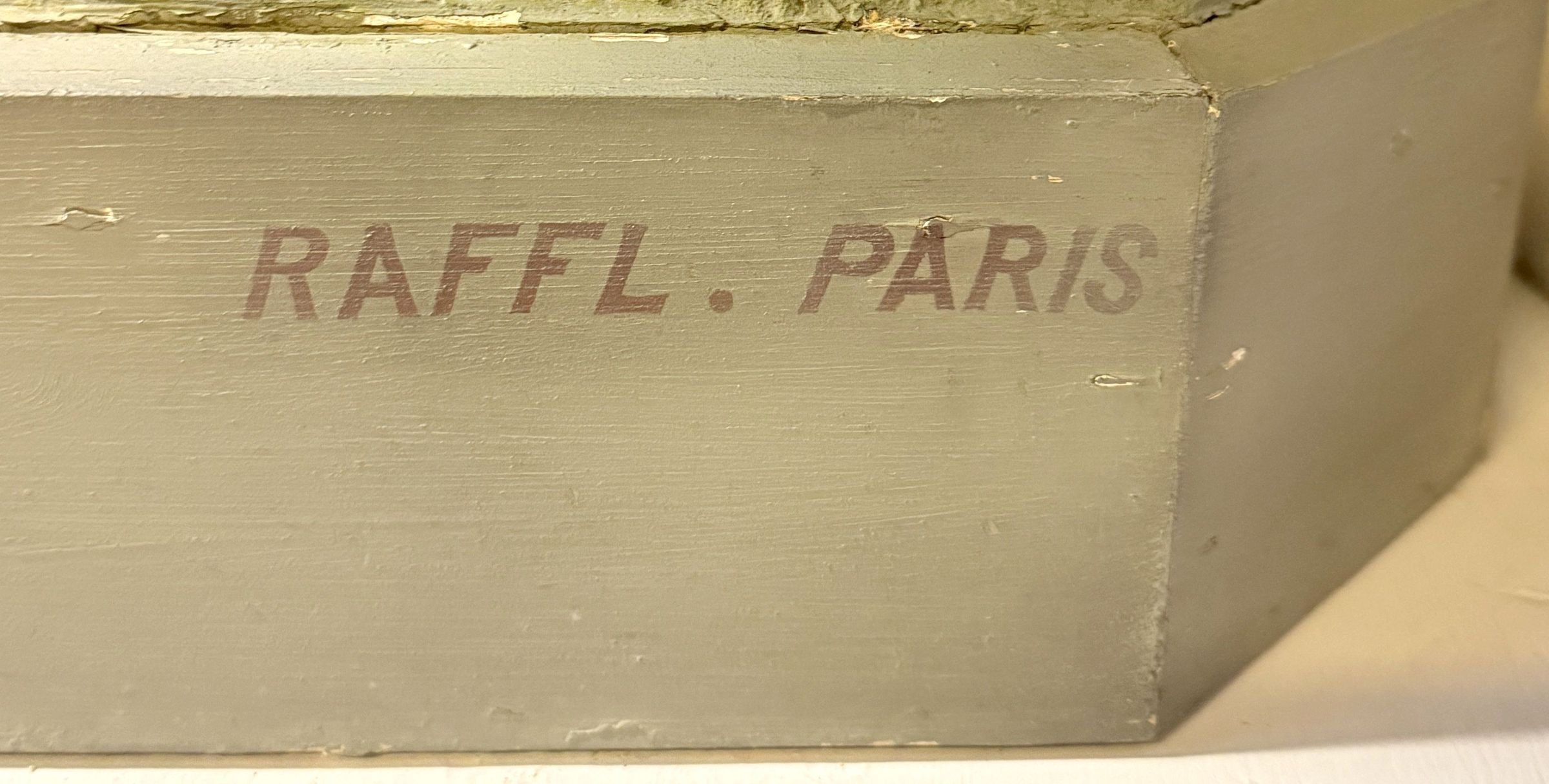
Frederick Pustet & Company exported the statue from Europe. Unlike the Chapel’s other three statues of male Saints, the figure of St. Ignatius bears the mark of its manufacturer, Raffl Paris, on its base. Maison Raffl was a religious statuary firm that operated in Paris between 1857 and 1920. The firm exported their statues worldwide and were known for their “Saint-Sulpice” style, the sentimental, mass-produced aesthetic characteristic of 19th century Catholic art.
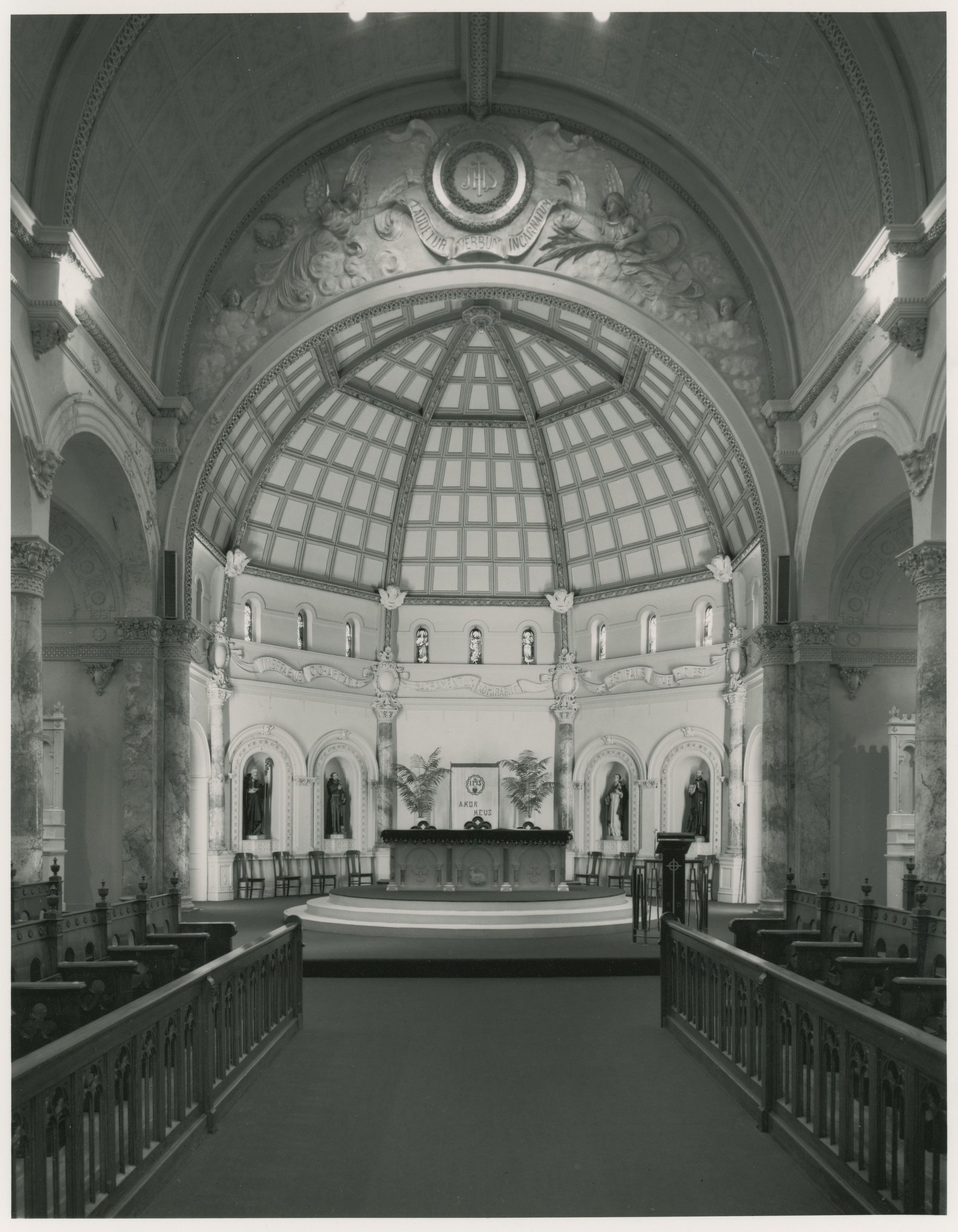
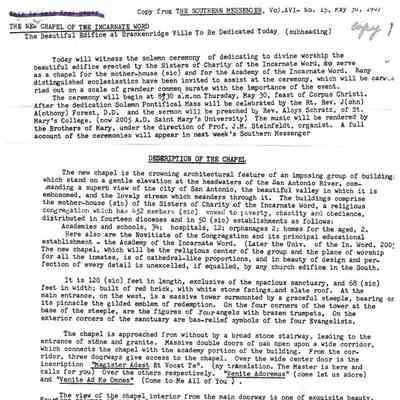
A Southern Messenger article covering the Chapel’s dedication on May 30, 1907, described “four niches, two on each side of the main altar contain[ing] the statues of four founders of religious orders - St. Francis, St. Benedict, St. Dominic, and St. Ignatius.” The statues remained undisturbed in their niches for 60 years before the Chapel underwent significant changes in response to the mandates of the Second Vatican Council. Following the removal of the altar rail and neo-Gothic high altar, curtains were installed around the back of the sanctuary, completely covering the statues from the early 1970s to late 1980s. The statues were unveiled again sometime in the late 1980s to early 1990s before being permanently removed in the mid-1990s. During the Chapel's 2006–2007 renovation, low-relief carvings depicting the Congregation's history and the Annunciation were installed in the vacated niches.
-----
Título de la obra [asignado por los archivos]: San Ignacio de Loyola
Esta estatua policromada de yeso de San Ignacio de Loyola (1491-1556) se encontraba en una hornacina situada detrás del altar de la capilla de la Casa Madre del Verbo Encarnado en San Antonio, Texas, desde 1907 hasta aproximadamente finales de la década de 1990. San Ignacio, fundador de la orden de los jesuitas, viste una sotana negra y una capa, con la mirada elevada hacia arriba y la mano derecha levantada en señal de bendición. En su brazo izquierdo sostiene un libro abierto en cuya página izquierda figura la inscripción «AD MAJOREM DEI GLORIAM» («Para mayor gloria de Dios», el lema jesuita) y en la derecha «CONSTITUTIONES SOCIETATIS JESU» (Constituciones de la Compañía de Jesús). Se erige sobre una base hexagonal que lleva una inscripción en la que se indica que la estatua fue donada por «S[eño]rita M. Luz de la Garza». Los Archivos de la CCVI no disponen de información sobre esta donante, aunque podría haber estado emparentada con la hermana M. Guadalupe de la Garza, CCVI (1861-1941), que ingresó en la Congregación de las Hermanas de la Caridad del Verbo Encarnado en 1893.
En una carta dirigida a la empresa Stoltzenberg, una empresa de arte eclesiástico de Nueva York, con fecha del 11 de mayo de 1907, la madre superiora Alphonse Brollier, CCVI (1858-1939), encargó las estatuas: «Entendemos que tendrán que encargar las cuatro estatuas desde Europa y que no disponen de ninguna en stock que se ajuste a nuestro pedido. Si es así, les rogamos que importen las cuatro y nos las envíen lo antes posible». A continuación, la Madre Alphonse enumeró las estatuas solicitadas, la primera de las cuales era «San Ignacio, según su tarjeta n.º 22, con detalles en color crema y dorado».
Evidentemente, surgió un problema con la importación de la estatua de San Ignacio por parte de la empresa Stoltzenberg. El 29 de noviembre de 1907, la Madre Alfonsa escribió a Frederick Pustet & Company, un fabricante de artículos religiosos con sede en Cincinnati: «Lamentamos sinceramente que haya habido un malentendido en relación con la estatua de San Ignacio, ya que esto retrasará su recepción. Sin embargo, ahora debemos sacar lo mejor de esta decepción. Pueden encargar la estatua n.º 1291 según el modelo adjunto, de 5’4” de altura». Los Archivos CCVI no disponen de documentación sobre los problemas con el pedido original, ni sobre su transferencia de la empresa Stoltzenberg a Pustet & Company.
Frederick Pustet & Company exportó la estatua desde Europa. A diferencia de las otras tres estatuas de santos masculinos de la capilla, esta figura lleva la marca de su fabricante, Raffl Paris, en la base. Maison Raffl fue una empresa de estatuas religiosas que operó en París entre 1857 y 1920. La empresa exportaba sus estatuas a todo el mundo y era conocida por su estilo «Saint-Sulpice», la estética sentimental y de producción en serie característica del arte católico del siglo XIX.
Un artículo del Southern Messenger que cubría la consagración de la capilla el 30 de mayo de 1907 describía «cuatro nichos, dos a cada lado del altar mayor, que albergaban las estatuas de los cuatro fundadores de órdenes religiosas: San Francisco, San Benito, Santo Domingo y San Ignacio». Las estatuas permanecieron intactas en sus nichos durante 60 años, hasta que la capilla sufrió cambios significativos en respuesta a las disposiciones del Concilio Vaticano II. Tras la retirada de la barandilla del altar y del altar mayor neogótico, se instalaron cortinas alrededor de la parte trasera del santuario, que cubrieron por completo las estatuas desde principios de la década de 1970 hasta finales de la de 1980. Las estatuas fueron desveladas de nuevo en algún momento entre finales de los años 80 y principios de los 90, antes de ser retiradas definitivamente a mediados de los 90. Durante la renovación de la capilla entre 2006 y 2007, se instalaron en los nichos que habían quedado vacíos unos bajorrelieves que representan la historia de la Congregación y la Anunciación.Type of Sculpture
Free StandingCollection
HIM-US-Communities-MotherhouseMade/Created
Manufacturer
Maison Raffl, ParisDate made
circa 1907Time Period
20th CenturyPlace
Country
FranceContinent
EuropeInscription/Signature/Marks
Type
InscriptionLocation
Book in St. Ignatius’s hand / Libro escrito de puño y letra de San IgnacioTranscription
AD MAJOREM DEI GLORIAM / CONSTITUTIONES SOCIETATIS JESULanguage
LatinTranslation
For the Greater Glory of God / Constitutions of the Society of Jesus //
Para mayor gloria de Dios / Constituciones de la Compañía de JesúsMaterial/Technique
PaintedType
InscriptionLocation
Front of statue’s base / La parte frontal del pedestal de la estatuaTranscription
DONATED BY S[EÑO]RITA M. LUZ DE LA GARZALanguage
EnglishTranslation
DONADO POR S[EÑO]RITA M. LUZ DE LA GARZAMaterial/Technique
Etched, PaintedType
Makers MarkLocation
Side of statue’s base / El lateral de la base de la estatuaTranscription
RAFFL. PARISMaterial/Technique
StampedLexicon
Nomenclature 4.0
Nomenclature Secondary Object Term
StatueNomenclature Primary Object Term
SculptureNomenclature Class
ArtNomenclature Category
Category 08: Communication ObjectsGetty AAT
Concept
statues* Untyped Getty AAT
religious artLOC Thesaurus for Graphic Materials
Statues, Religious art objects, SaintsDimensions
Dimension Description
Approximate measurementsHeight
58 inWidth
18 inDepth
16-1/2 inResearch Notes
Research Type
CuratorNotes
Label from Old Heritage Room: “SAINT IGNATIUS OF LOYOLA
Ignatius, a Basque, was born in Loyola, Spain in 1491. As a young man he too, like St. Francis, chose a military career. Later he was “converted.” In the famous monastery of Montserrat he laid his sword at Our Lady’s feet. Many of Ignatius’ spiritual decisions and experiences were at Benedictine monasteries and his motto A.M.D.G. (All for the greater glory of God) reflects Benedict’s U.I.O.G.D (That God may be glorified in all things). Benedict filled Europe with missionary monks; Ignatius provided it with apostolic priests, whose tireless activities spring from their interior life. These two branches share the same root and bear the same fruit. When Ignatius died in 1665, his Society had spread to the New World, evangelizing the Pacific Northwest and what is now New York and Canada. Many universities bear his name. His feast is observed on July 31.”
----
Etiqueta de la Sala del Patrimonio Antiguo: «SAN IGNACIO DE LOYOLA
Ignacio, de origen vasco, nació en Loyola, España, en 1491. De joven, al igual que San Francisco, eligió la carrera militar. Más tarde se «convirtió». En el famoso monasterio de Montserrat depositó su espada a los pies de Nuestra Señora. Muchas de las decisiones y experiencias espirituales de Ignacio tuvieron lugar en monasterios benedictinos, y su lema A.M.D.G. (Todo para la mayor gloria de Dios) refleja el U.I.O.G.D. de San Benito (Para que Dios sea glorificado en todas las cosas). Benedicto llenó Europa de monjes misioneros; Ignacio la dotó de sacerdotes apostólicos, cuyas incansables actividades brotan de su vida interior. Estas dos ramas comparten la misma raíz y dan el mismo fruto. Cuando Ignacio falleció en 1665, su Compañía se había extendido al Nuevo Mundo, evangelizando el noroeste del Pacífico y lo que hoy es Nueva York y Canadá. Muchas universidades llevan su nombre. Su festividad se celebra el 31 de julio».