Name/Title
The Blessed Virgin and St. JosephEntry/Object ID
2025.9.5Description
Title [assigned by archives]: The Blessed Virgin and St. Joseph
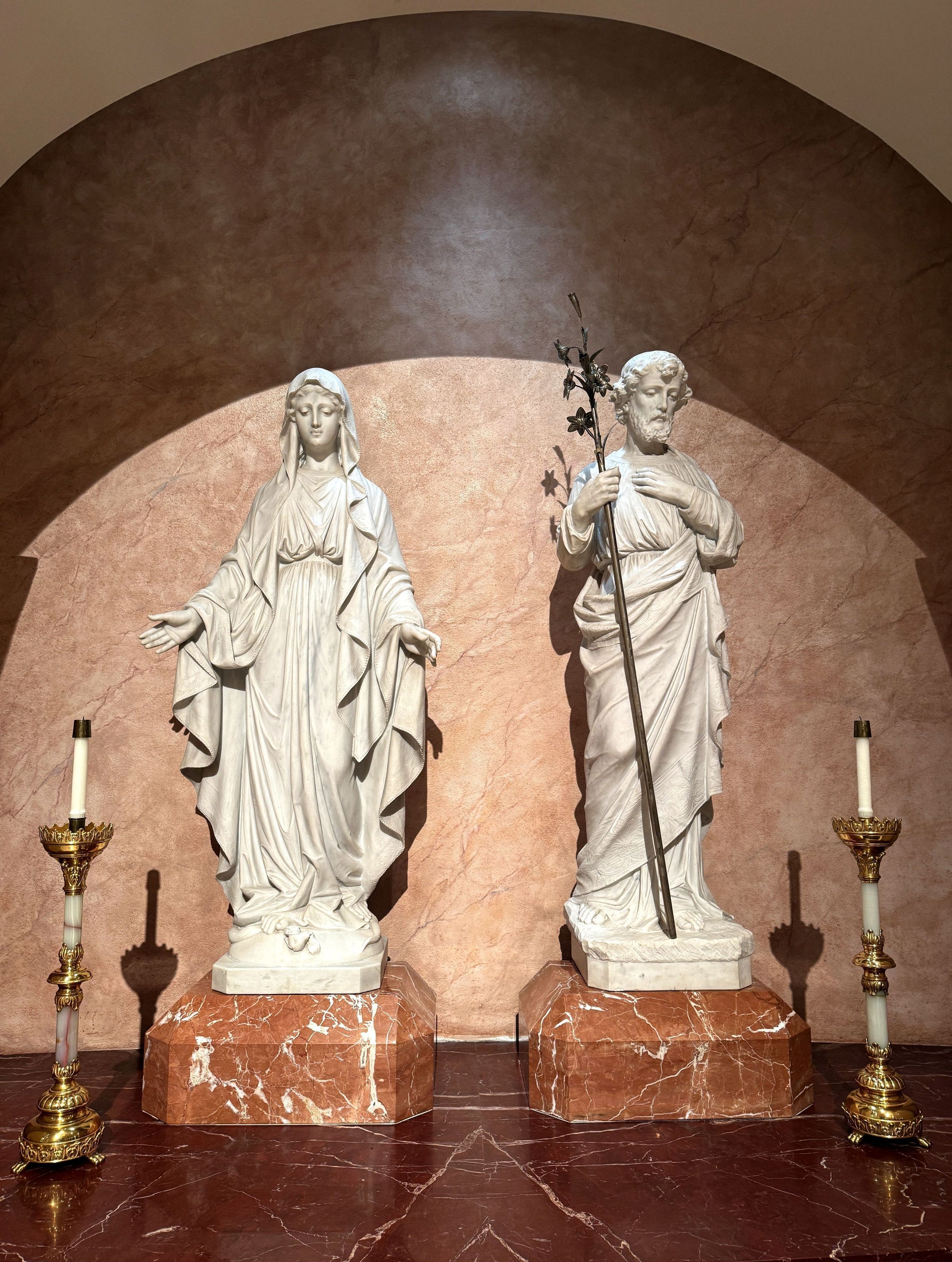
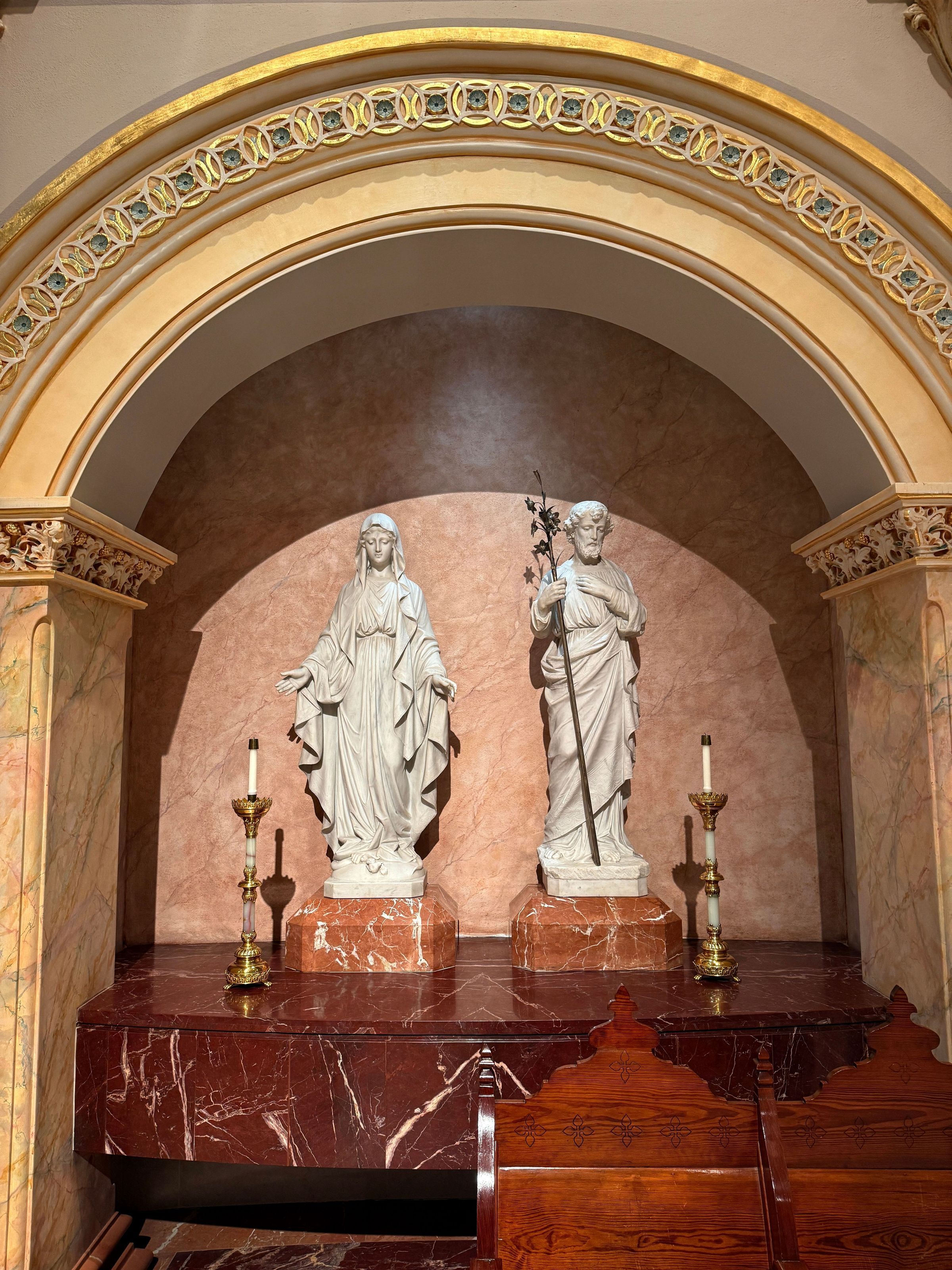
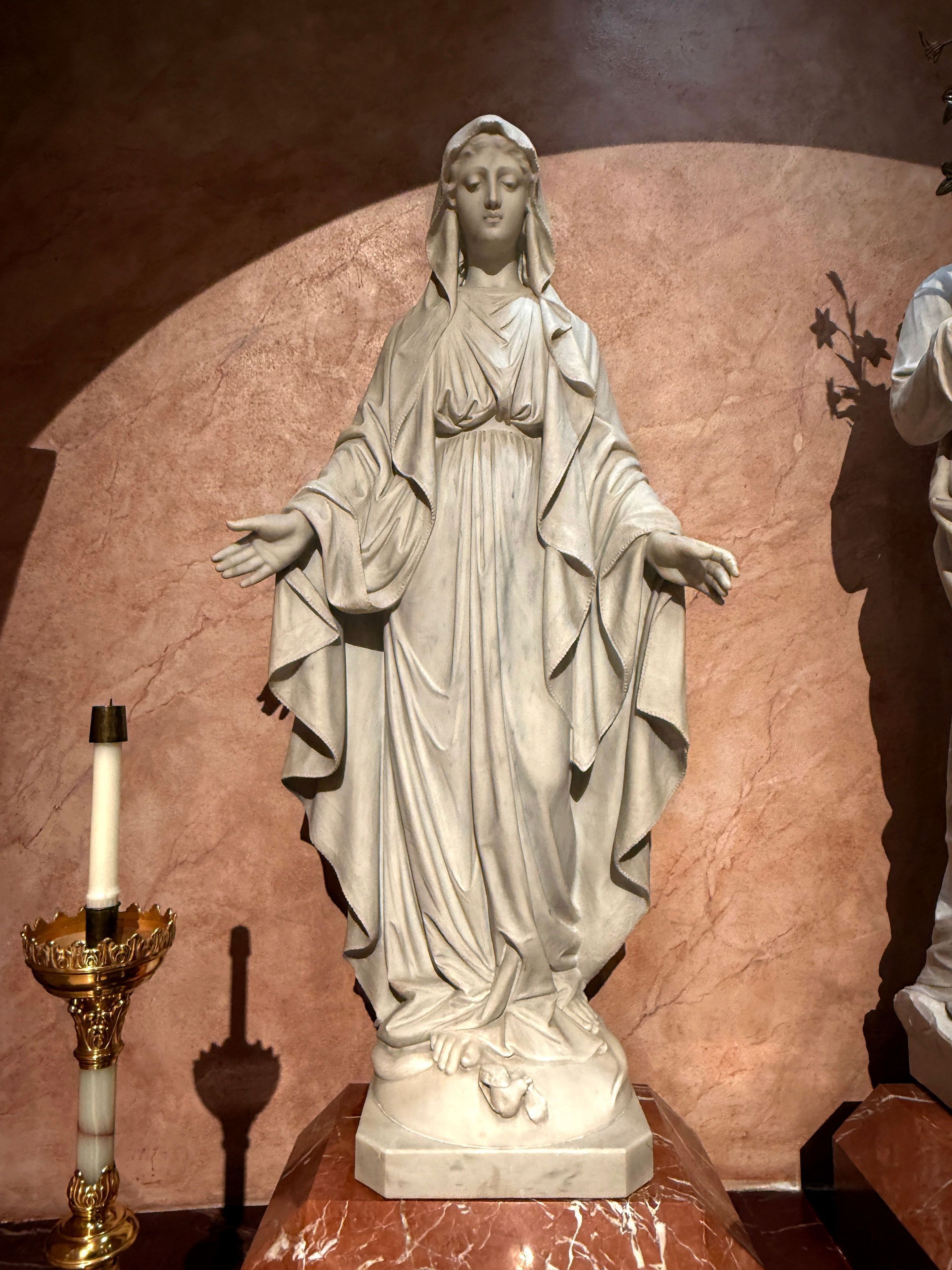
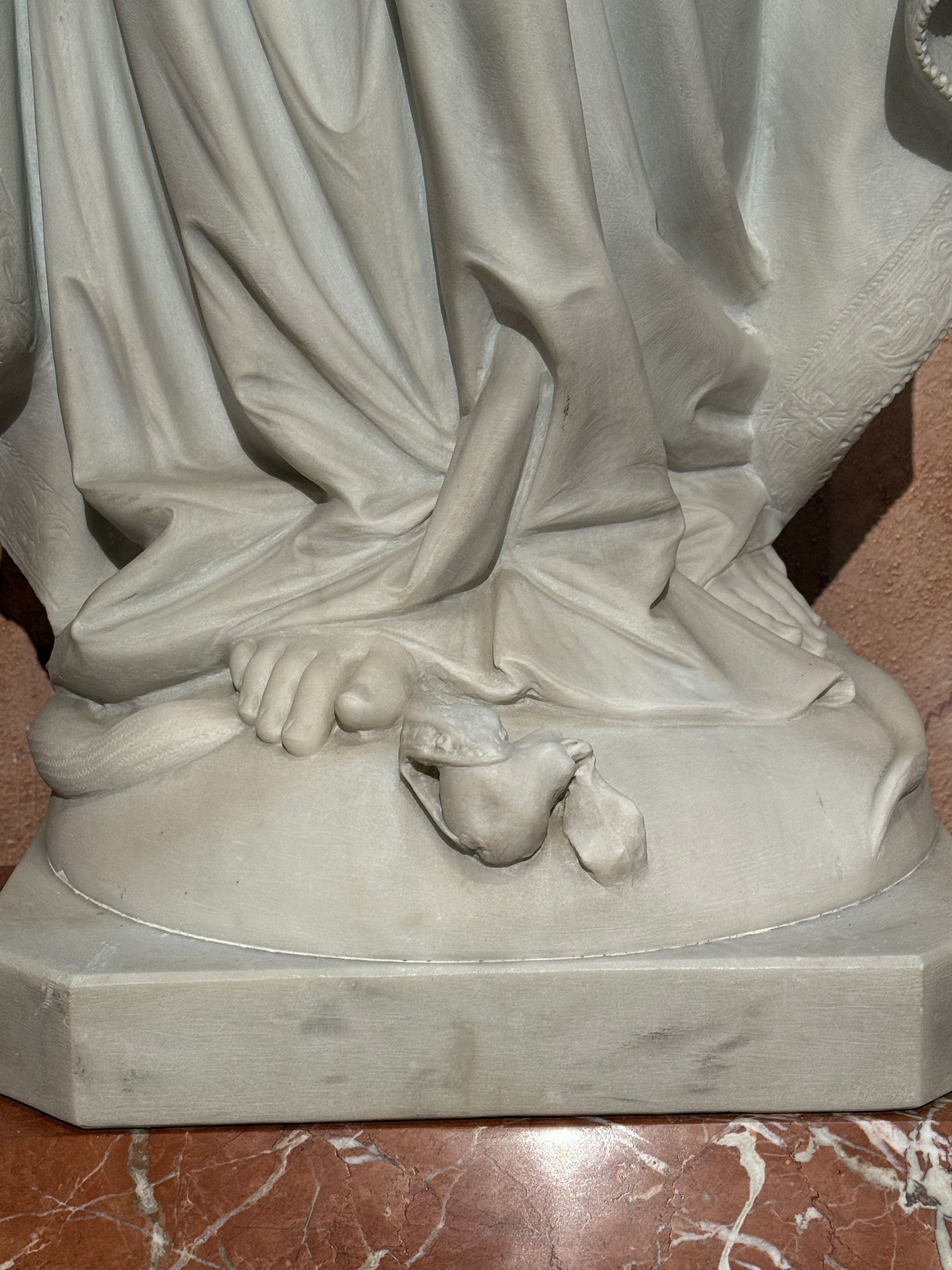
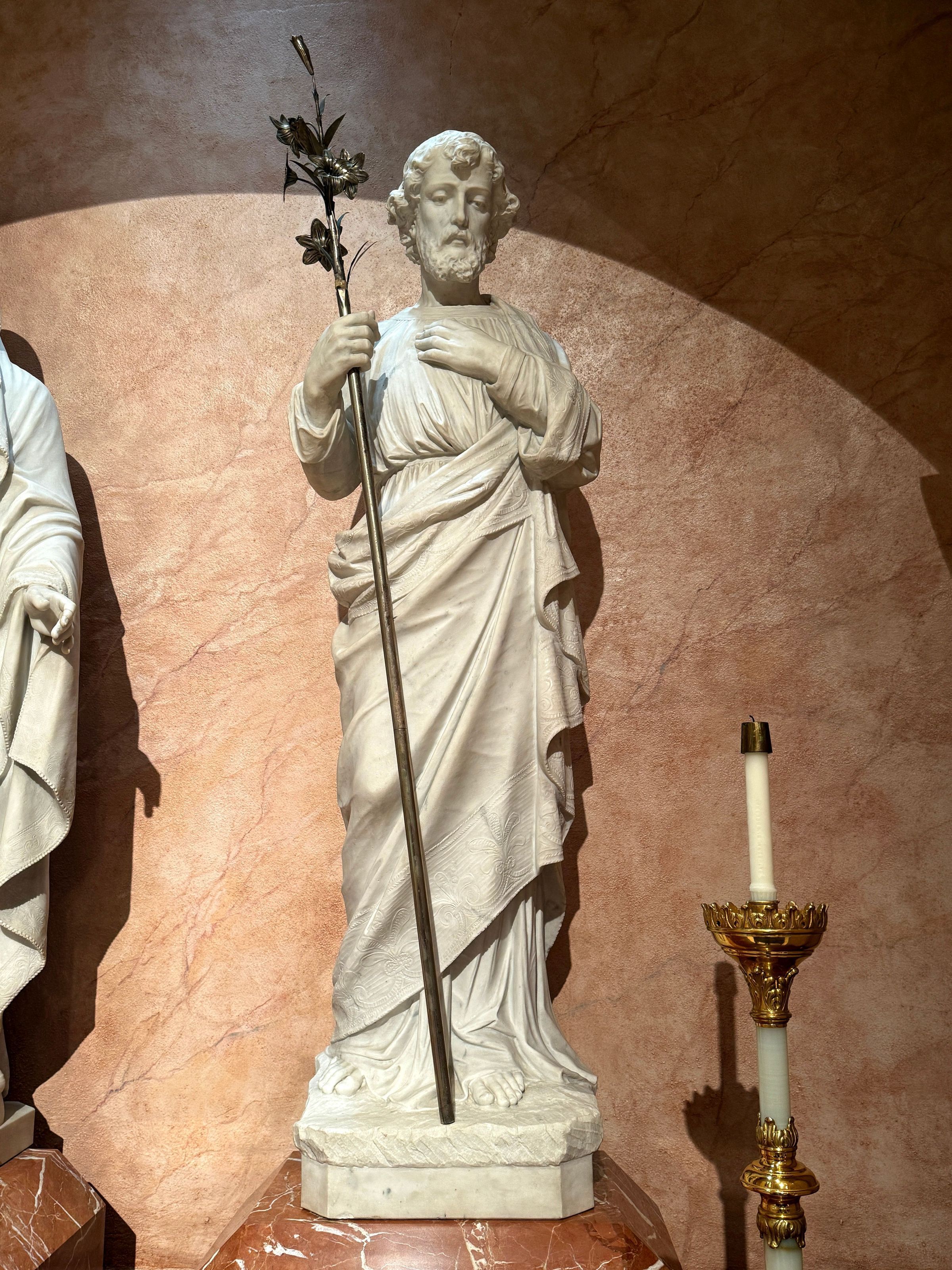
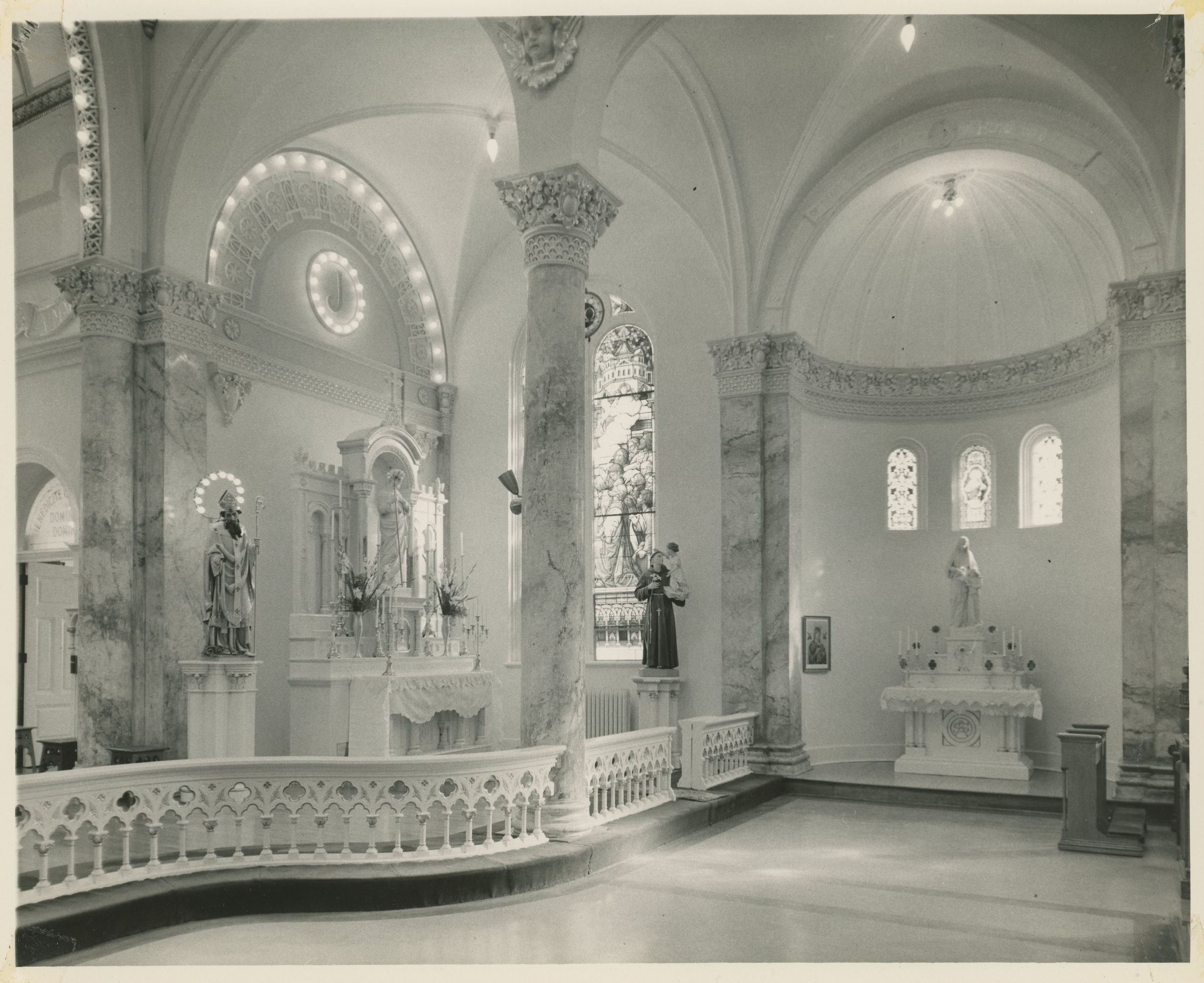
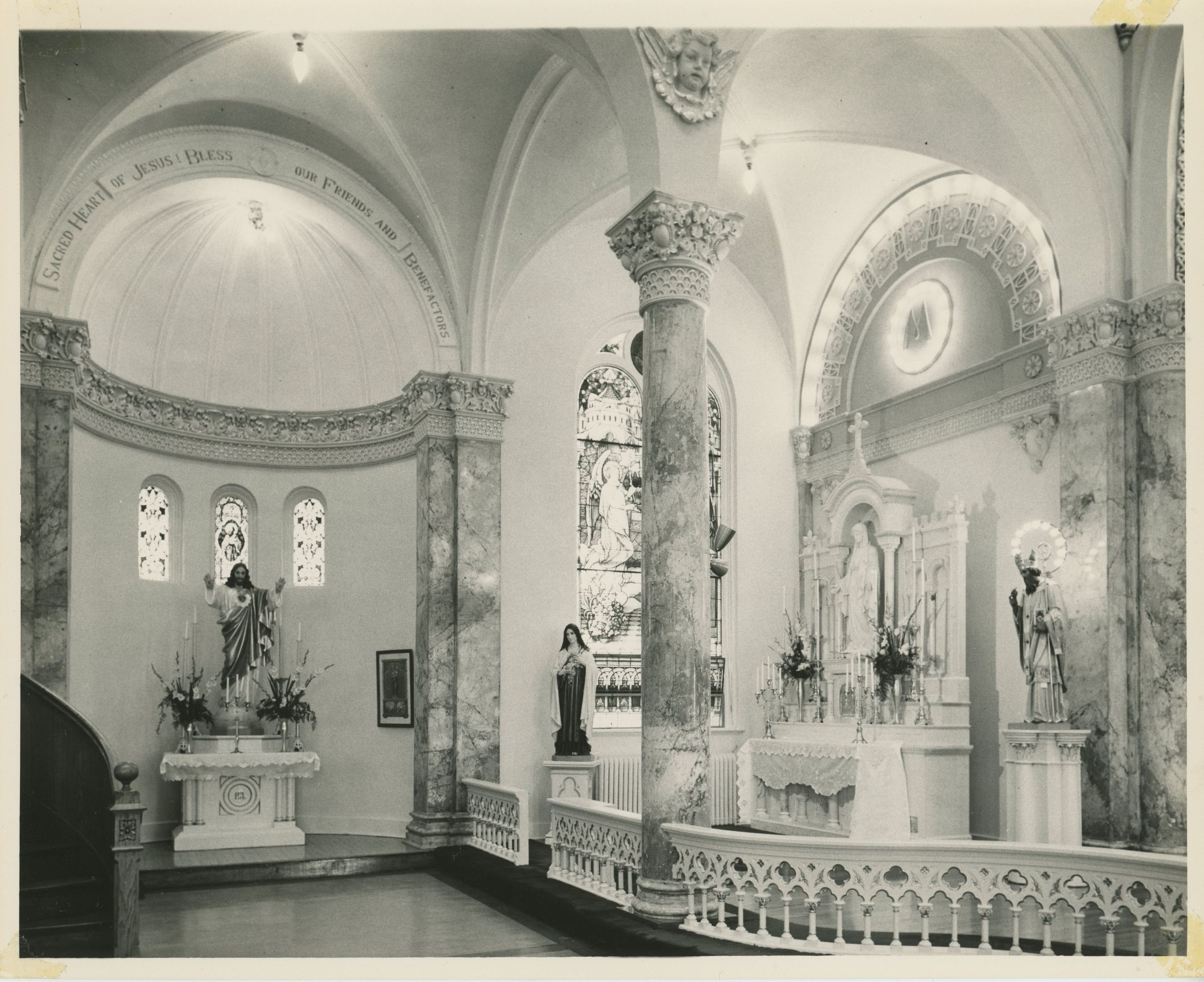
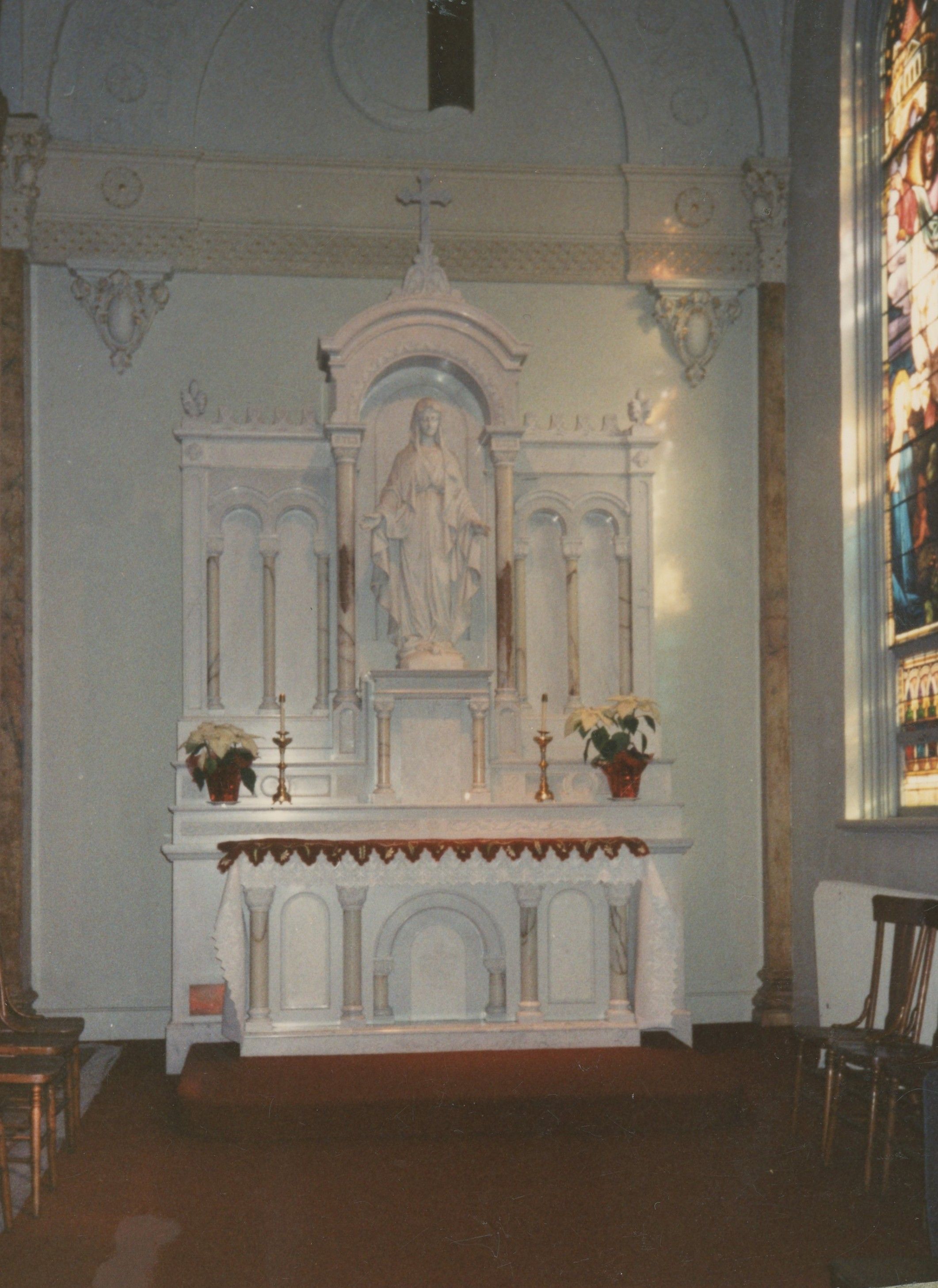
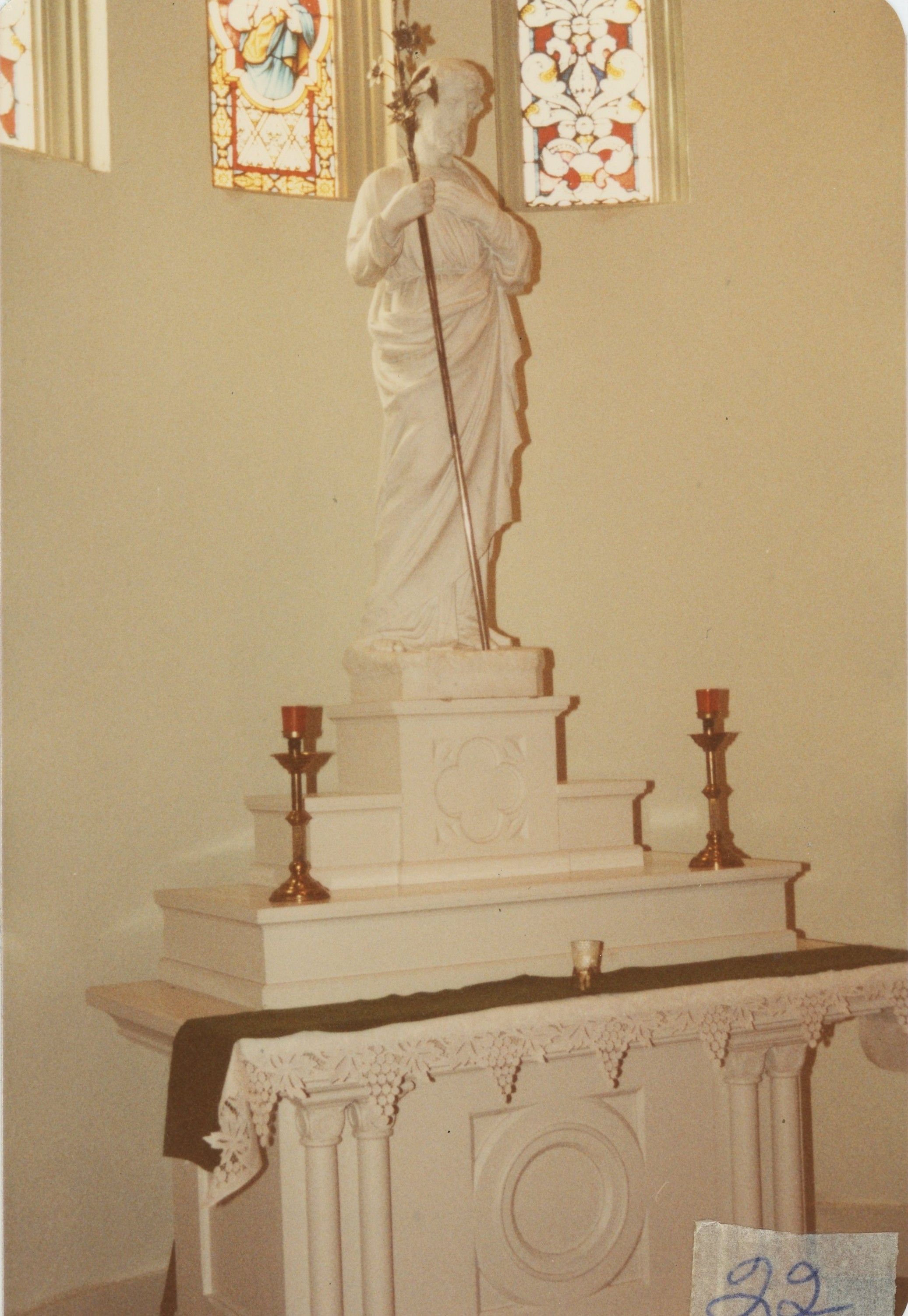
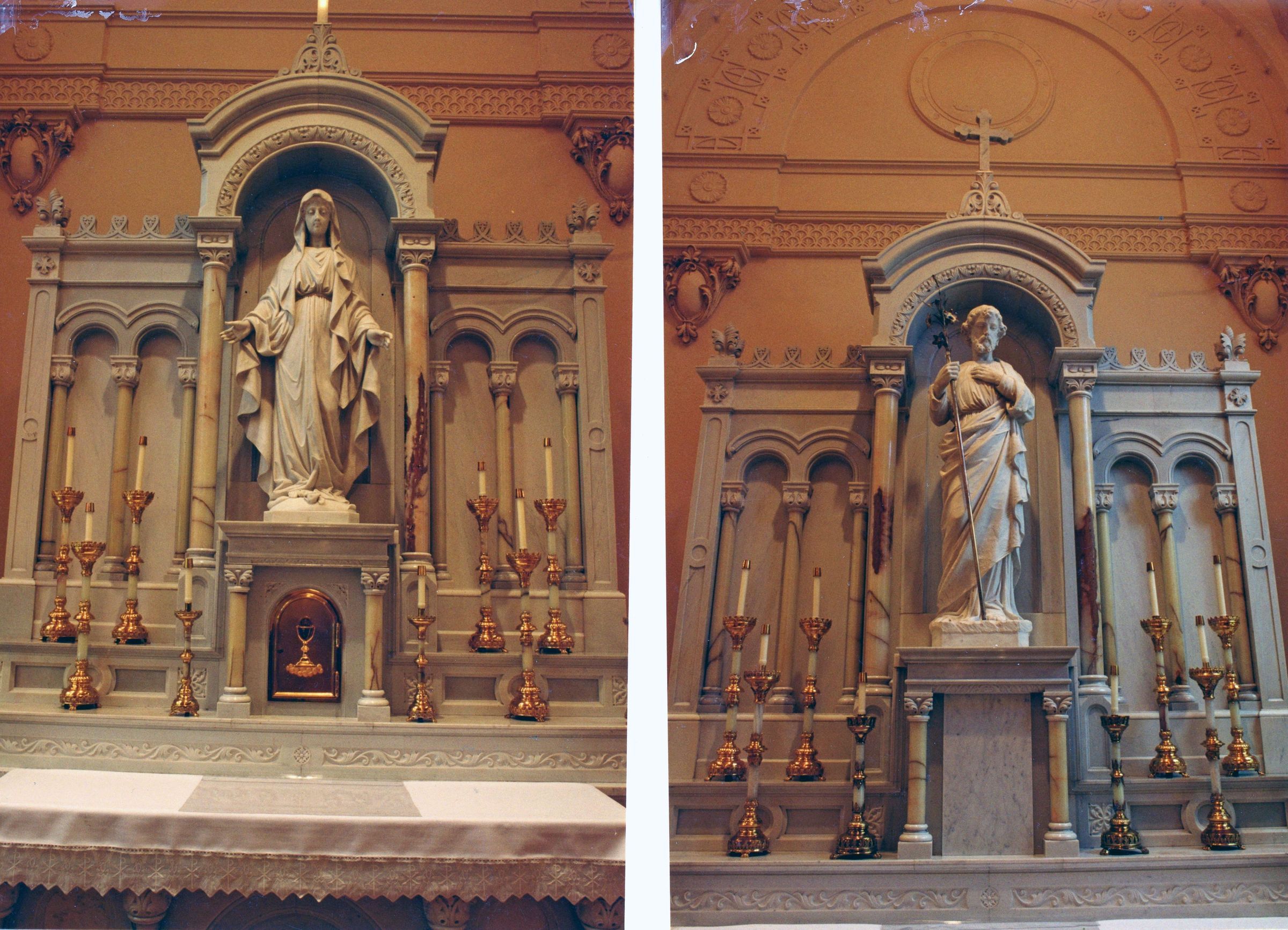
These marble statues depicting the Blessed Virgin and St. Joseph stand together on a side altar in the Motherhouse Chapel of the Sisters of Charity of the Incarnate Word (CCVI) in San Antonio, Texas. Mary stands on the left of the altar, indicating her privileged role at the right hand of Jesus (from the sanctuary view). Additionally, she stands atop a snake with an apple in its mouth to represent her triumph over original sin.
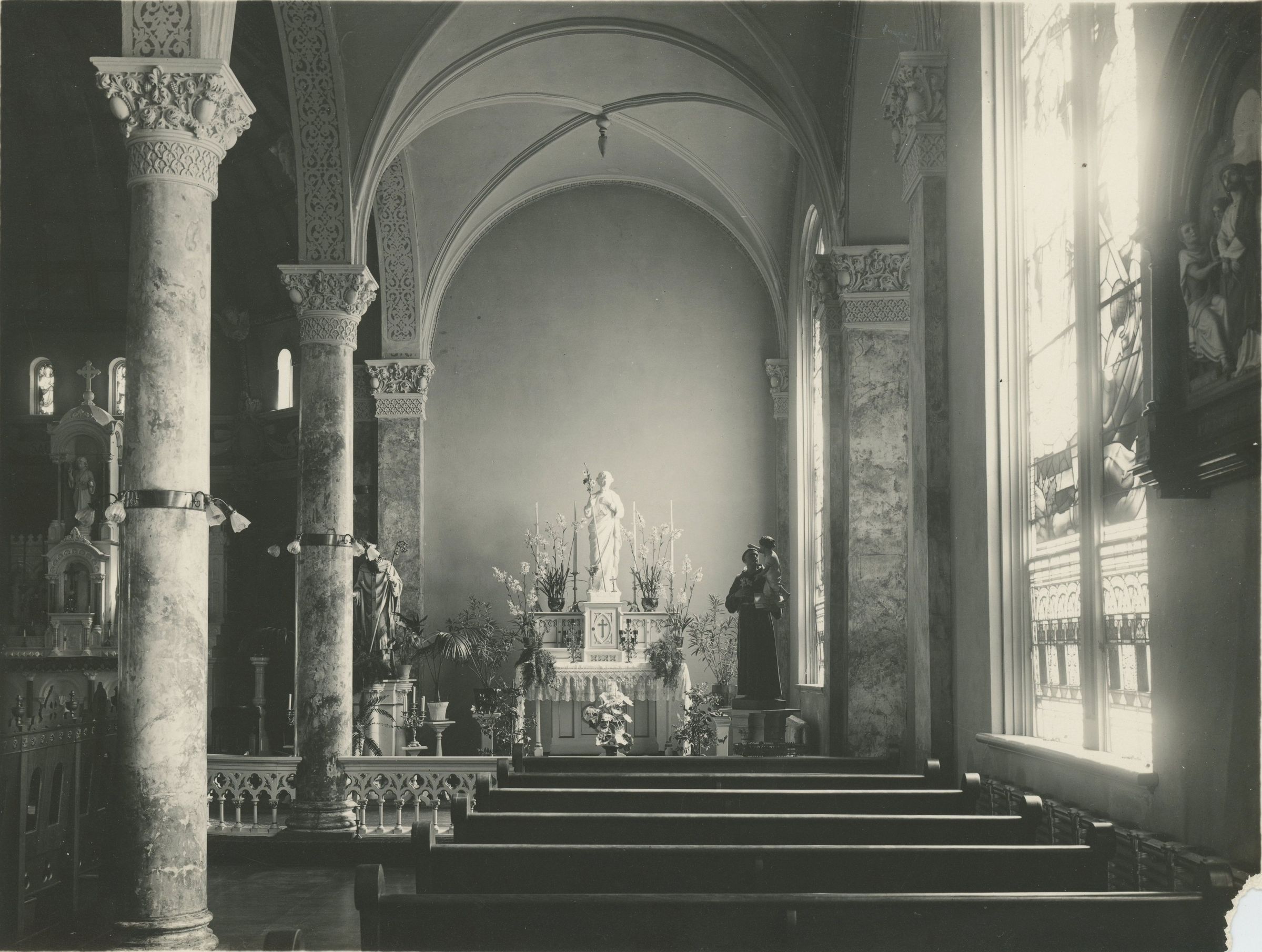
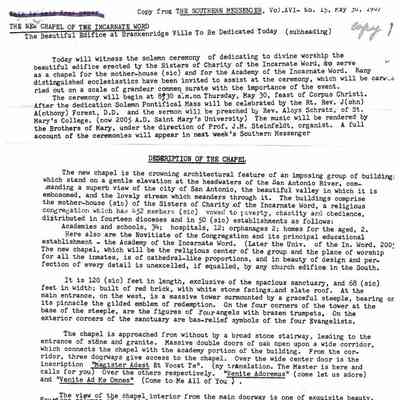
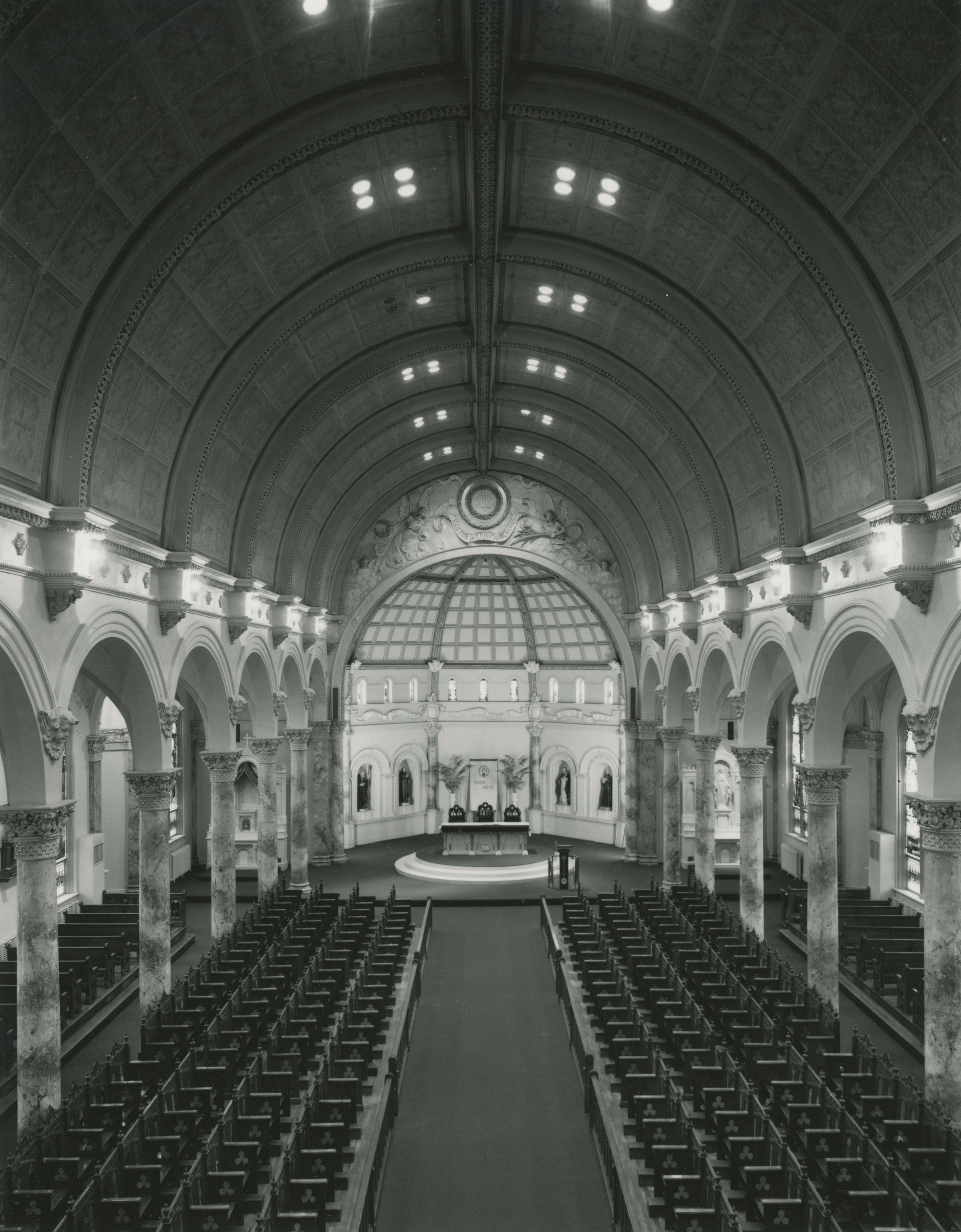
It is unclear whether these statues are original to the Chapel. When the Chapel opened in 1907, an article in the Southern Messenger described, “On each side of the sanctuary is a smaller altar, one of the Blessed Virgin and one of St. Joseph.” (May 30, 1907). Mr. Pat Brennan of San Francisco, California donated the marble statue of St. Joseph, while the Postulants of 1906 donated that of the Blessed Virgin. On February 11, 1908, Sister M. Gabriel Wheelahan, CCVI, the secretary under Mother Alphonse Brollier, wrote to the Congregation that “the handsome statues of Our Blessed Mother and St. Joseph have arrived and add new beauty to our chapel.” It is unclear why new statues of Mary and Joseph were needed at that time, and if these statues replaced the originals.
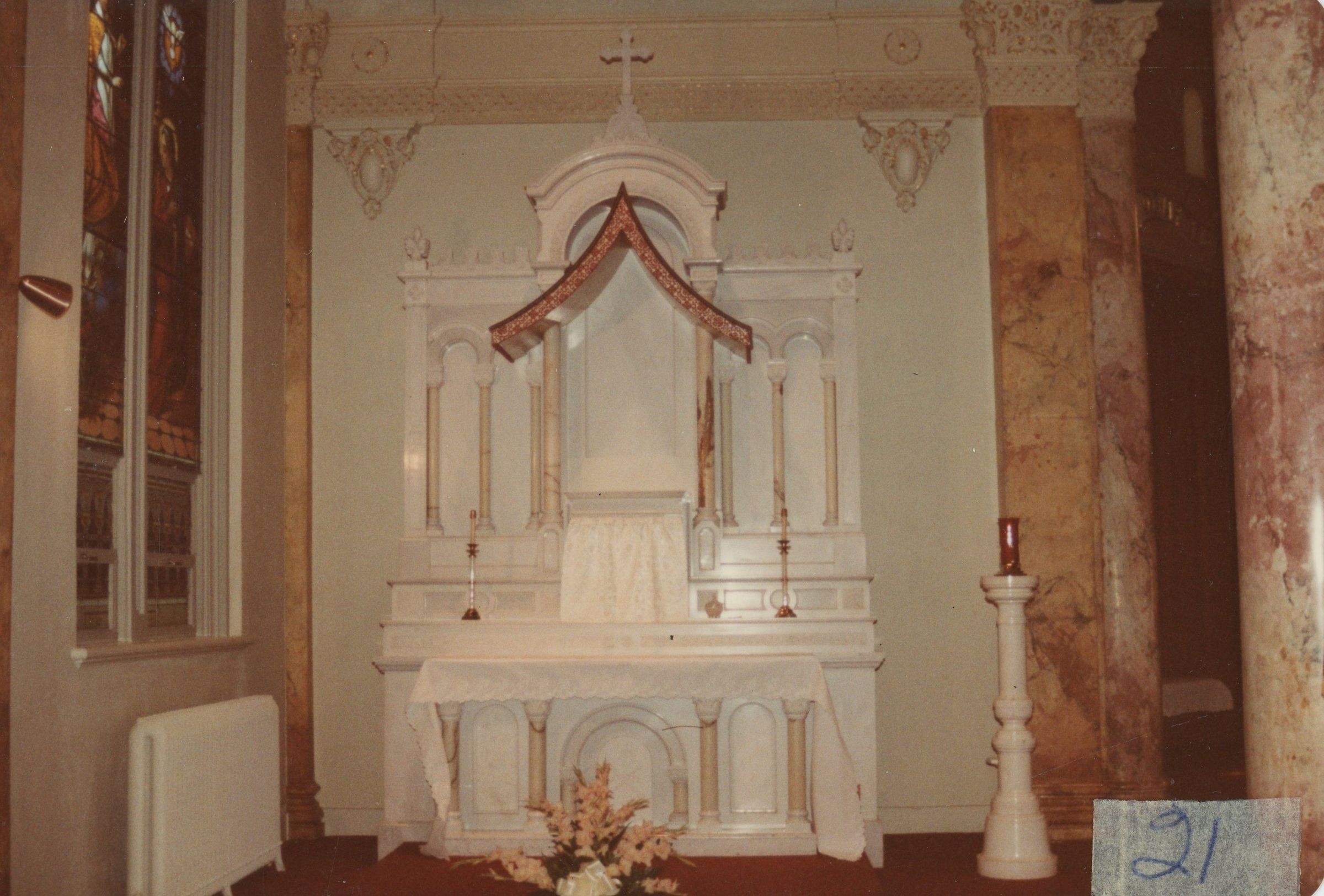
Jospeh and the Virgin originally stood on wooden side altars due to a lack of funds at the end of the Chapel’s construction. Sister Mary John O’Shaughnessy, CCVI (1864 -1938) spearheaded the fundraising efforts for new marble altars and, in a letter to Mother Alphonse Brollier and her CCVI Sisters on February 20, 1915, wrote, “As next year, we celebrate the Golden Jubilee of the Foundation of our dear Congregation, we ought to get a souvenir which would be a permanent remembrance of this auspicious occasion, and we think that which would please our dear Rev. Mother and all our dear Mothers and Sisters, most of all, is something for our lovely chapel.
What is really needed, are two side altars for the B. Virgin and St. Joseph. Those we have are entirely out of place, being so small. Marble would, of course, correspond best with the main altar, but we think it too expensive. We could however get Pigalico, which is an imitation of marble, looks very well and is not costly.
We cannot, dear Sisters, put any community money into this present, but I think, among all our Houses, the Sisters could, from small donations from relatives, friends, pupils and patients, even from a raffle of a spread or other article, make up a price. The fact of having this present dedicated to our dear Lord’s worship, and of adding to the beauty of His own dwelling place, will be to us all, a source of pious pleasure and satisfaction.”
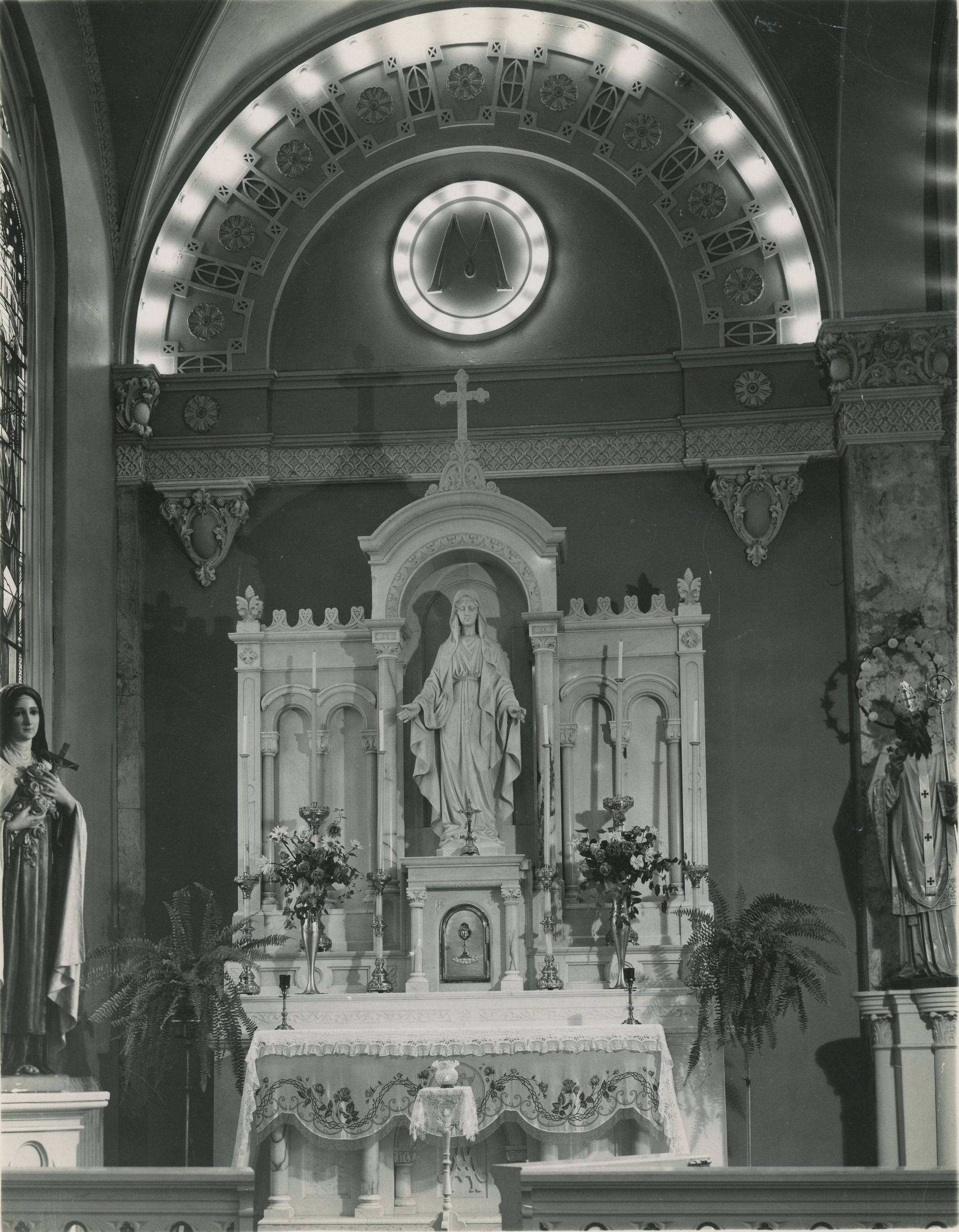
Sr. Mary John’s fundraising efforts were successful, and the wooden altars were replaced by marble altars in 1919. Around the 1960s, lights and illuminated circles containing the letters “M” for Mary and “J” for Joseph were added to the molding above the altars. At some point in the early 1970s, following the mandates of the Second Vatican Council, the statue of Joseph was moved to the alcove next to the right side altar, and Mary was moved from the left to right side altar. The left side altar was reserved as the repository for the Blessed Sacrament. The statues remained in this arrangement until 1995, when the Sisters commissioned a new chapel for the tabernacle to be built into the central niche behind the altar. Following this renovation, Mary and Joseph went back to their original locations on their respective side altars.
During the 2006-7 renovations of the chapel, the statue of Joseph was moved into in the left chapel with the Virgin when the right became a Eucharistic adoration chapel. Today, the marble statues in the side chapel comprise the Shrine of the Blessed Virgin Mary and St. Joseph, which serves as a space for quiet prayer and reflection. Additionally, during wedding ceremonies in the Chapel, the bride and groom have the option of presenting the statues of Mary and Joseph with an offering.
/////////////////////////////
Título [asignado por los archivos]: La Santísima Virgen y San José
Estas estatuas de mármol que representan a la Santísima Virgen y a San José se encuentran juntas en un altar lateral de la capilla de la Casa Madre de las Hermanas de la Caridad del Verbo Encarnado (CCVI) en San Antonio, Texas. María se encuentra a la izquierda del altar, lo que indica su papel privilegiado a la derecha de Jesús (desde la perspectiva del santuario). Además, se encuentra sobre una serpiente con una manzana en la boca, lo que representa su triunfo sobre el pecado original.
No está claro si estas estatuas son originales de la capilla. Cuando la capilla se inauguró en 1907, un artículo del Southern Messenger describía: «A cada lado del santuario hay un altar más pequeño, uno dedicado a la Santísima Virgen y otro a San José». (30 de mayo de 1907). El Sr. Pat Brennan, de San Francisco (California), donó la estatua de mármol de San José, mientras que las postulantes de 1906 donaron la de la Santísima Virgen. El 11 de febrero de 1908, la hermana M. Gabriel Wheelahan, CCVI, secretaria de la madre Alphonse Brollier, escribió a la Congregación que «las hermosas estatuas de Nuestra Señora y de San José han llegado y aportan una nueva belleza a nuestra capilla». No está claro por qué se necesitaban nuevas estatuas de María y José en aquel momento, ni si estas sustituyeron a las originales.
Las estatuas de José y la Virgen se colocaron inicialmente en altares laterales de madera debido a la falta de fondos al finalizar la construcción de la capilla. La hermana Mary John O’Shaughnessy, CCVI (1864-1938), encabezó los esfuerzos para recaudar fondos destinados a la adquisición de nuevos altares de mármol y, en una carta dirigida a la madre Alphonse Brollier y a sus hermanas CCVI el 20 de febrero de 1915, escribió: «Dado que el año que viene celebramos el Jubileo de Oro de la fundación de nuestra querida Congregación, deberíamos conseguir un recuerdo que sea un testimonio permanente de esta auspiciosa ocasión, y creemos que lo que más complacería a nuestra querida Reverenda Madre y a todas nuestras queridas Madres y Hermanas es algo para nuestra preciosa capilla.
Lo que realmente se necesita son dos altares laterales para la Santísima Virgen y San José. Los que tenemos quedan totalmente fuera de lugar, ya que son muy pequeños. El mármol, por supuesto, sería lo que mejor encajaría con el altar mayor, pero nos parece demasiado caro. Sin embargo, podríamos adquirir Pigalico, que es una imitación del mármol, tiene muy buen aspecto y no es costoso.
Queridas hermanas, no podemos destinar dinero de la comunidad a este regalo, pero creo que, entre todas nuestras casas, las hermanas podrían reunir el importe necesario a partir de pequeñas donaciones de familiares, amigos, alumnos y pacientes, o incluso mediante una rifa de un surtido de productos u otro artículo. El hecho de dedicar este regalo al culto de nuestro querido Señor y de contribuir a la belleza de su propia morada será para todas nosotras una fuente de pío placer y satisfacción».
Las iniciativas de recaudación de fondos de la hermana Mary John tuvieron éxito, y en 1919 los altares de madera fueron sustituidos por altares de mármol. Hacia la década de 1960, se añadieron luces y círculos iluminados con las letras «M» de María y «J» de José a la moldura situada sobre los altares. En algún momento a principios de la década de 1970, siguiendo las directrices del Concilio Vaticano II, la estatua de José se trasladó al nicho situado junto al altar lateral derecho, y la de María se trasladó del altar lateral izquierdo al derecho. El altar lateral izquierdo se reservó como lugar de custodia del Santísimo Sacramento. Las estatuas permanecieron en esta disposición hasta 1995, cuando las Hermanas encargaron la construcción de una nueva capilla para el sagrario en el nicho central situado detrás del altar. Tras esta renovación, María y José volvieron a sus ubicaciones originales en sus respectivos altares laterales.
Durante las obras de renovación de la capilla realizadas entre 2006 y 2007, la estatua de José se trasladó a la capilla de la izquierda, junto a la Virgen, cuando la de la derecha pasó a ser una capilla de adoración eucarística. Hoy en día, las estatuas de mármol de la capilla lateral conforman el Santuario de la Santísima Virgen María y San José, que sirve como espacio para la oración y la reflexión en silencio. Además, durante las ceremonias nupciales celebradas en la capilla, los novios tienen la opción de presentar una ofrenda a las estatuas de María y José.Type of Sculpture
Free StandingCollection
HIM-US-Communities-MotherhouseLexicon
Nomenclature 4.0
Nomenclature Secondary Object Term
StatueNomenclature Primary Object Term
SculptureNomenclature Class
ArtNomenclature Category
Category 08: Communication ObjectsLOC Thesaurus for Graphic Materials
Religious art objects, Marble, Statues