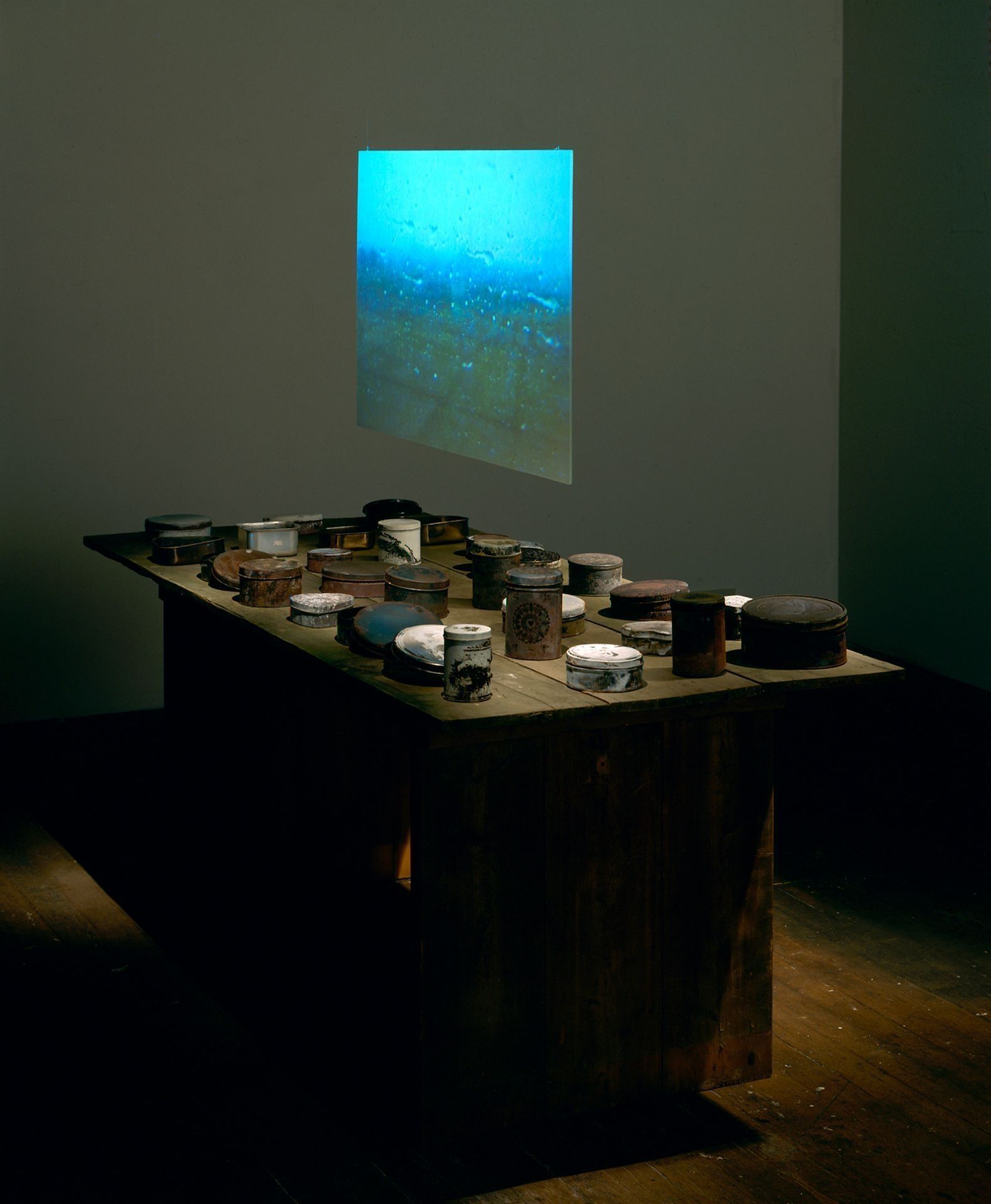
After visiting her husband’s family in Kyushu, Japan, Bornstein learned about the porcelain industry pioneered by captive Korean potters in the 16th century. The artist reflected on what it would be like for an artist to be held captive and forced to make art.
An array of porcelain pieces, representing the sex organs of various organisms, including earthworms, barnacles and flatworms, is displayed in a vitrine similar to 17th century collector’s cabinets. Like Cuvier’s impossible classifying system of comparative anatomy, the artist observes that representing inchoate energies of creativity is a futile task.
Fifty-nine cast porcelain pieces representing reproductive parts of invertebrates