2_Pyrcak Family Photo
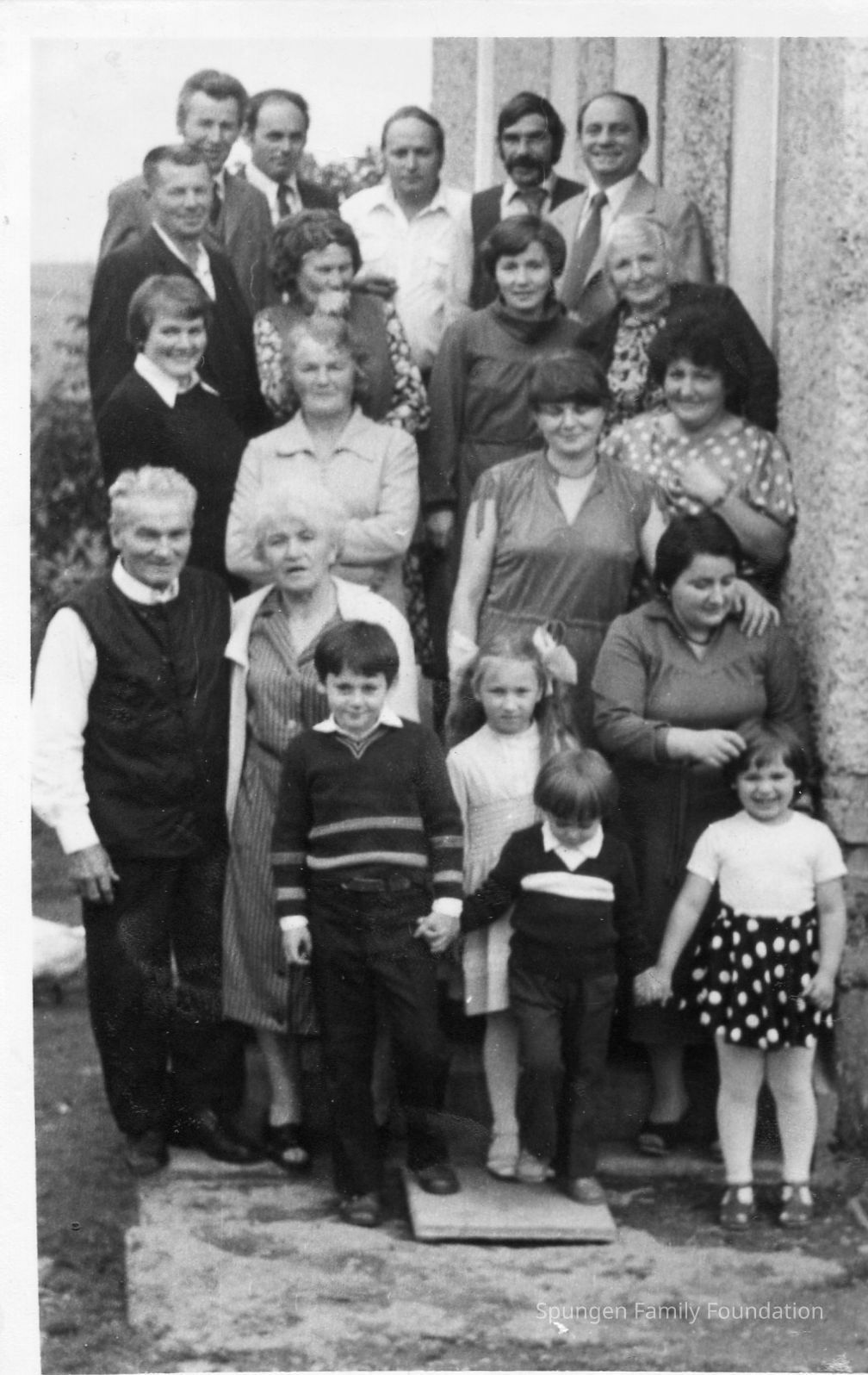
1984, Front side - Photograph depicting Pyrcak family with Stanisław, Stefania, and Zofia present.
Black-and-white photograph of the Pyrcak family. The two elderly people in the front left are Stanisław and Stefania. Stanisław is depicted wearing a white dress shirt with black vest/smock overtop, dark pants, and dark dress shoes. Stefania is wearing a vertically striped dress with an open white jacket overtop. Directly across the image is Zofia. She has her right hand in her daughter, Olympia's hair. Zofia is wearing a neutral colored blouse with a dark skirt. Both her and Stefania are wearing open-toe sandals. The family is posed near a concrete building. In the background is a field and greenery.
Name/Title
2_Pyrcak Family PhotoEntry/Object ID
2018.1.2Scope and Content
1984, photograph depicting Pyrcak family with Stanisław, Stefania, and Zofia present.Context
Context taken from the exhibit page 1.2 The Pyrcak Family: Polish Rescuers: In the fall of 1942, Jews from the Sanok ghetto in southeastern Poland were deported to the Zasław concentration camp. During this time, a young Polish Catholic man named Michał Pyrcak was in contact with a group of Jews and promised to hide them in the home of his widowed friend Maria Kuśmierczyk. Michał was betrayed by Kuśmierczyk’s brother when he went to town to covertly buy food for the fugitives. He was arrested for possessing US dollars and deported to the Mauthausen concentration camp, where he died in February 1945. Fearing for the safety of the Jewish people in her home, Kuśmierczyk and one of the fugitives went to the nearby village of Prusiek to ask Michał’s brother Stanisław if he would hide them. Stanisław and his wife Stefania agreed. In October 1942, 17 fugitives arrived at the Pyrcak home, where they were hidden in a bunker dug for them underneath a barn. Stefania, who had four children at the time, was terrified of the consequences for her family if they were caught sheltering Jews. However, she reported being visited by the Virgin Mary in a dream, who said to her, “Do not cry or be afraid – everyone will survive.” She told the adult members of the family (the children were not informed of the rescue operation), and they felt reassured. In a time of strict rationing, the family baked bread and made soup for 17 extra people three to four times per week. They took extreme care to acquire provisions from different villages in the area on a rotating basis to avoid suspicion. All 17 people hidden by the Pyrcak family survived 22 months in hiding and were liberated by Soviet forces in August 1944. The youngest was a 10-year-old boy. Many of those who were rescued later emigrated to the US and Israel. Two who stayed in Poland, a father and his eldest daughter, were murdered after the war by a friend of Kuśmierczyk’s brother – the same one who had betrayed Michał. Stanisław and Stefania’s home was burned down twice by antisemites – once during the war and once after. In 1984, Michał Pyrcak, Maria Kuśmierczyk, and Stanisław and Stefania Pyrcak were named as Righteous Among the Nations by Yad Vashem. Stanisław and Stefania had two more children after the war. The youngest, Zofia, married a Polish Jewish Holocaust survivor in the USA.Collection
Righteous Among the NationsCategory
Photograph