53_Salzburg Stier; Nazi Germany’s Election Propaganda
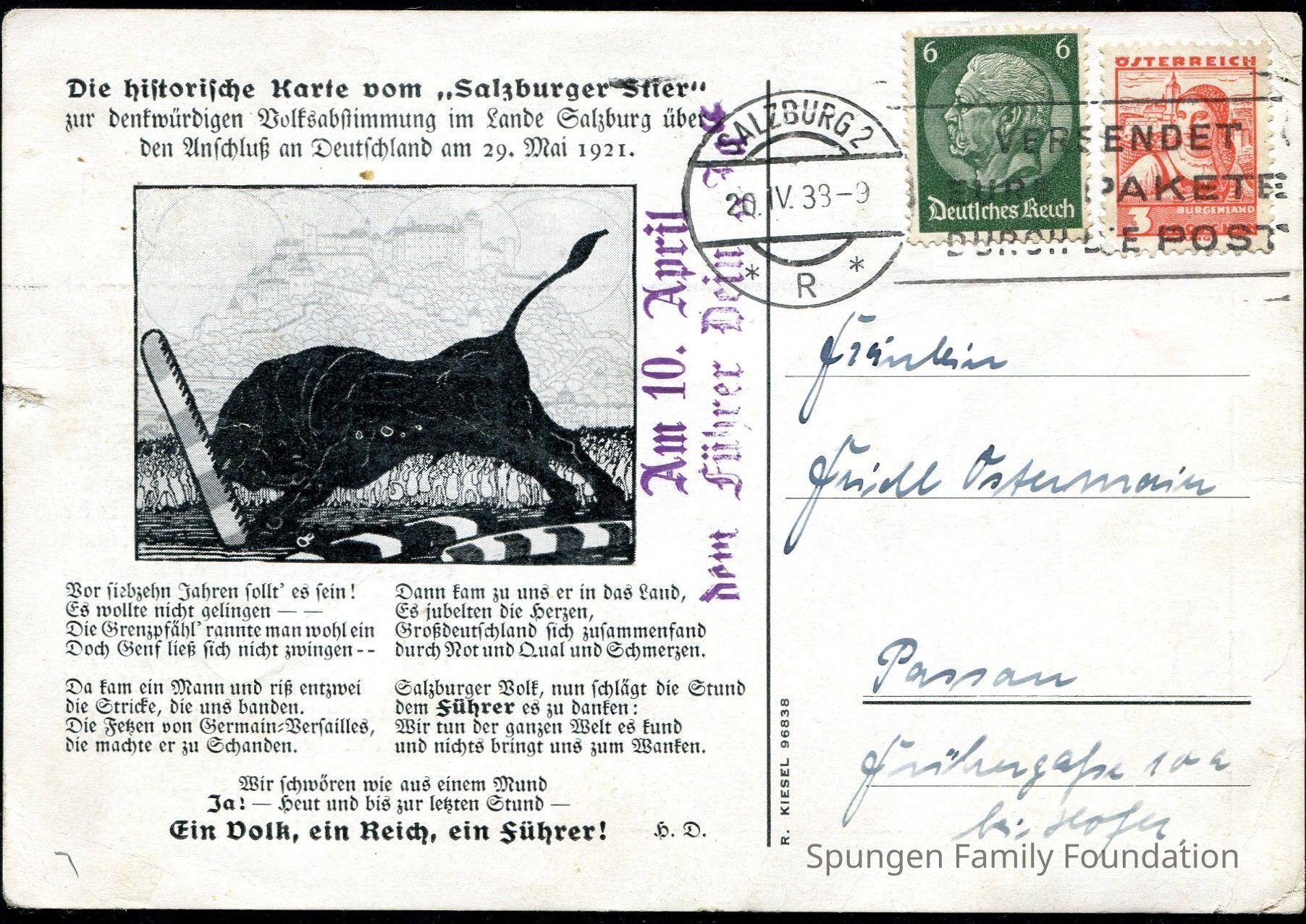
1938, April 20, Front side - Post card from the plebiscite of 1938 for the annexation of Austria.
White post card with printed text and outline in German using black ink Cursive handwriting in black ink is present at the right side. A black-and-white illustration depicts a black bull ramming down a striped border post. In the background, a crowd of individuals stand on the ground while further into the mountains, the Fortress Hohensalzburg is portrayed. At the top right corner, two stamps are present. One, dark green 6-pfennig stamp depicts President Paul von Hindenburg. To the right, a red 3-groschen stamp depicting a farmer's wife from Burgenland, Austria. At the top center, a black ink overprint cancellation dated April 20, 1938 is present.
Name/Title
53_Salzburg Stier; Nazi Germany’s Election PropagandaEntry/Object ID
2008.3.22Scope and Content
1938, April 20, post card from the plebiscite of 1938 for the annexation of Austria.Context
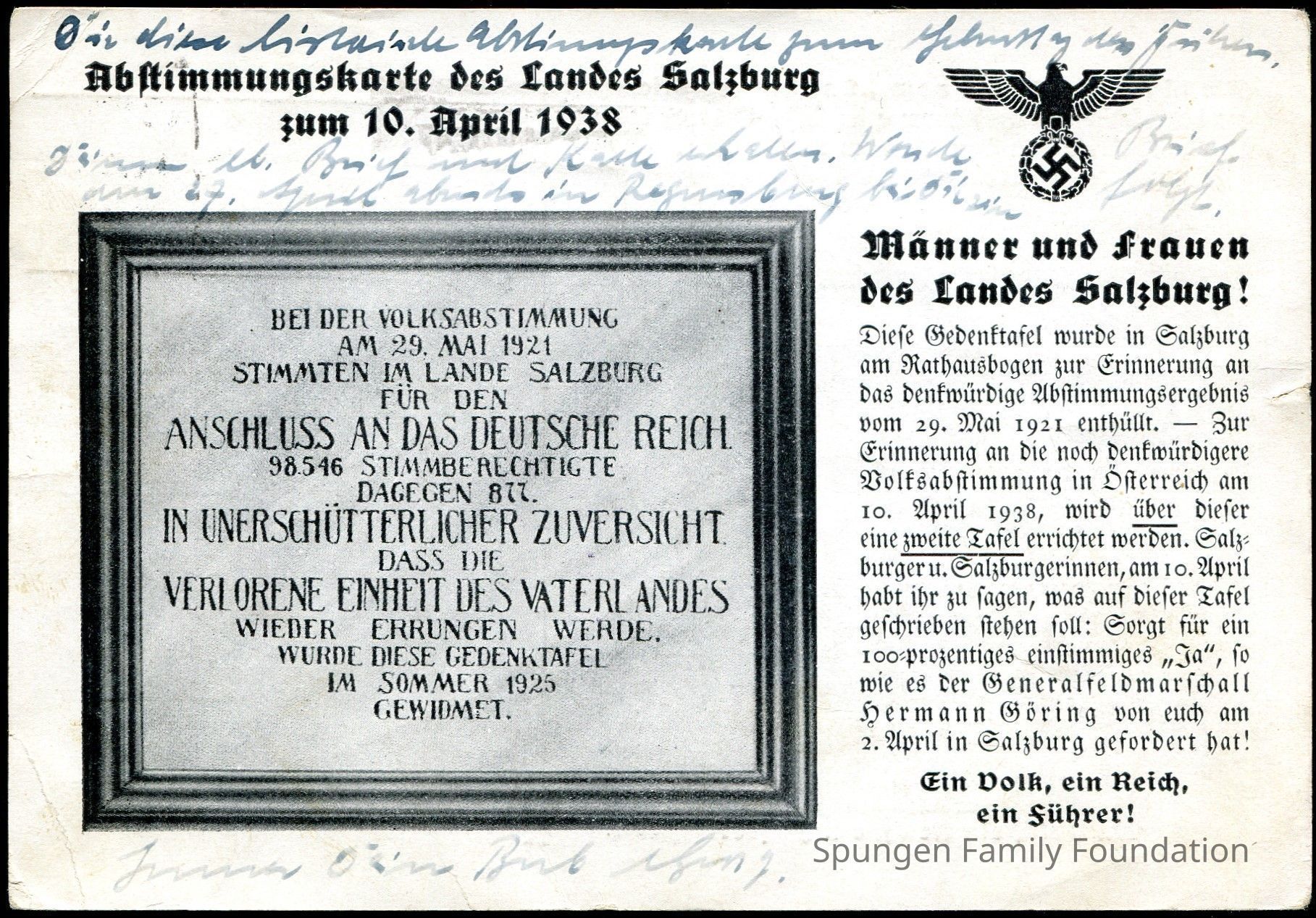
In 1921, a plebiscite (a popular vote) was held by the Austrian parliament in Tyrol and Salzburg to unify Germany and Austria. Upon results, 99.73% of voters were in favor; however, this was not a reflection of accurate feelings many Austrian citizens experienced. The Nazi Party encouraged and manipulated voters for desired results. Both cities experienced a sweeping favor towards the motion. The Austrian government was displeased following the results, and no annexation occurred. To many Austrians, the unification with Germany promised economic prosperity and global influence. On April 10, 1938, the Nazi Party hosted a reelection. The post card below is a prime example of the propaganda used to brainwash Europeans to conform to the Nazi Party’s agenda. The Salzburg Stier post card from April 10, 1938, features the memorial plaque dedicated to the unsuccessful annexation of Austria in 1921. The reverse side of the postcard depicts a bull ramming down a Bavarian border post. A German and Austrian border post lay on the ground, as the bull acts one final push to solidify unification. Salzburg cancellation dated April 20, 1938-9 with 6-pfennig Hindenburg Medallion and 3-pfennig Burgenland, Austria stamp. Addressed to Fräulein Fride Ostermann.Collection
Lot 80, WWII/Holocaust PropagandaCategory
Post Card
Philatelic Material