Arthur Seyss-Inquart
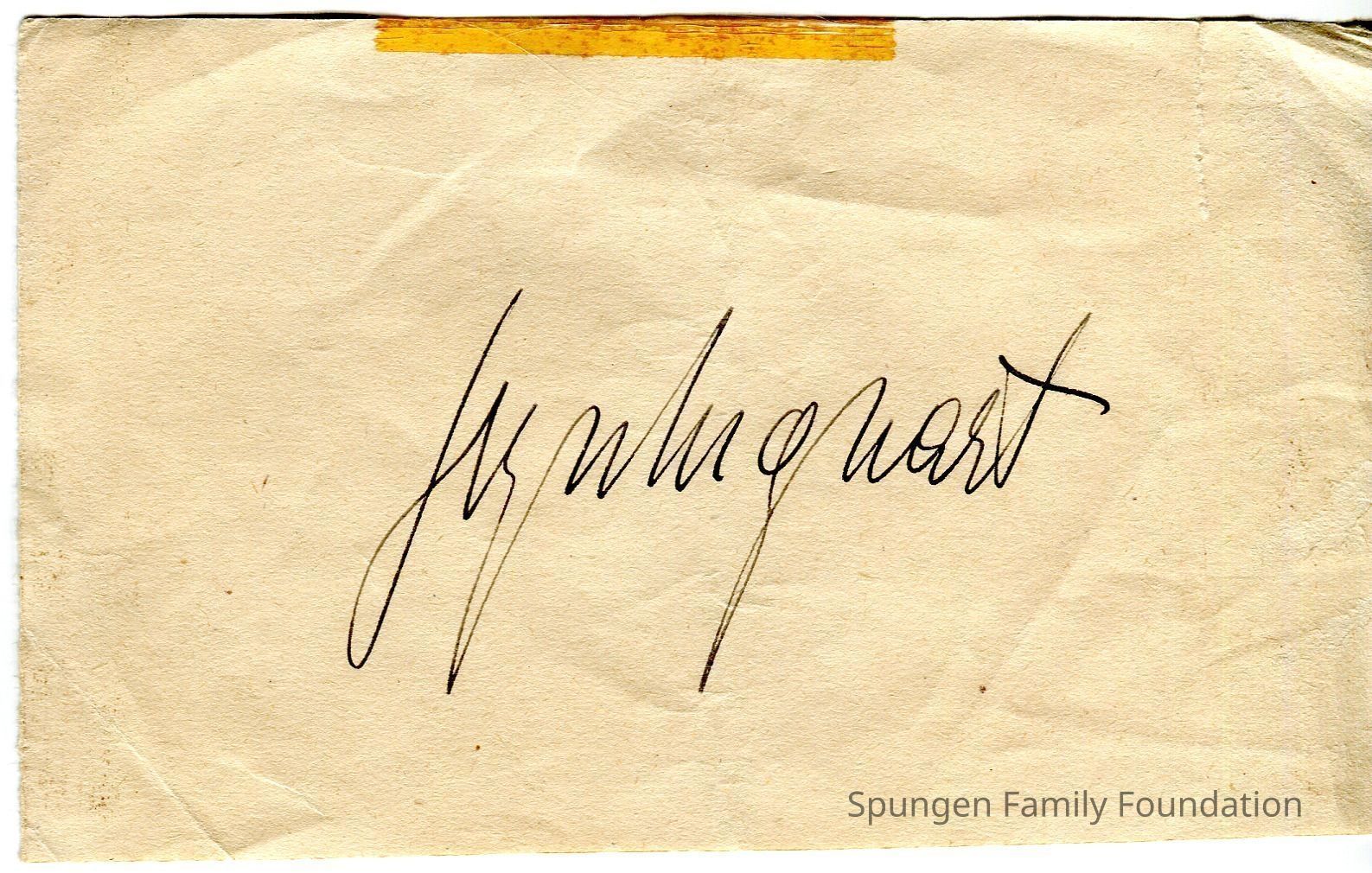
1946, Front side - Note card with Arthur Seyss-Inquart signature from the Palace of Justice in Nuremberg, Germany.
Tan note card with cursive signature and printed handwriting in German using black ink.
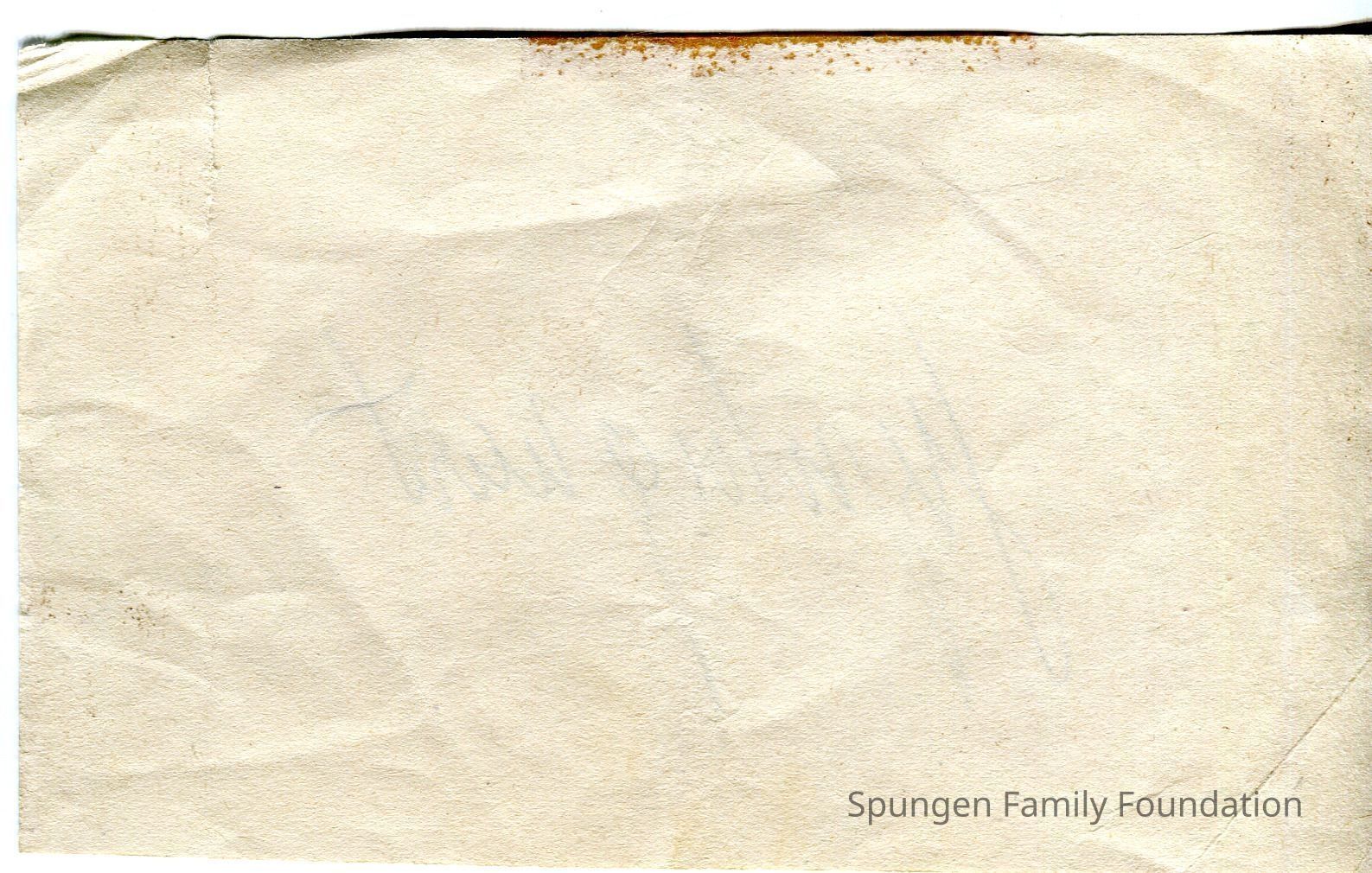
Name/Title
Arthur Seyss-InquartEntry/Object ID
2026.7.17Scope and Content
1946, note card with Arthur Seyss-Inquart signature from the Palace of Justice in Nuremberg, Germany.Context
Arthur Seysss-Inquart held multiple positions in the Nazi Party. Notably, he was Chancellor of Austria for two days before the March 1938 Anschluss. Additionally, Seyss-Inquart was Deputy Governor to Hans Frank and Reichskommissar in German-occupied Netherlands. In World War I, Seyss-Inquart enlisted in the Austrian Army. He was decorated for his bravery and received a degree in law which he had been working towards before the start of the war. Prior to the Anschluss, Seyss-Inquart followed Heinrich Himmler’s concept of racial purity, exploring the ideologies of Aryan racial theories. In 1938, Seyss-Inquart became an active member for the Austrian National Socialists. The growing pressure the Chancellor of Austria, Kurt Schuschnigg faced quickly led to his resignation. President Wilhelm Miklas hesitated to appoint Seyss-Inquart, but the choice was impending. For nearly two days, Seyss-Inquart was the Chancellor of Austria before German troops crossed the border, instilling the plebiscite and annexing Austria. Two days later, Seyss-Inquart joined the Nazi Party. Seyss-Inquart’s operations in the Netherlands did not create popularity with the public. Many Dutch people mocked him and detested the Nazi Party. On the other hand, the Dutch National Socialist Movement in the Netherlands allowed Seyss-Inquart and the Nazis to create an auxiliary police force. A dedicated antisemite, Seyss Inquart removed Jews from positions of government in the Netherlands, established the Westerbork transit camp, and deported Jews to concentration camps in Germany. Seyss-Inquart was deemed a suitable replacement for Joachim von Ribbentrop by Adolf Hitler despite his failures to meet successes in the later half of the war. Eventually, Seyss-Inquart was arrested by English soldiers, one of whom was a German Jew who escaped to Britain via the Kindertransport. In 1946, Seyss-Inquart was put on trial at the Palace of Justice in Nuremberg, Germany where he was convicted of multiple counts and executed by hanging in 1946. He died at age 54.Collection
Nazi Party SignaturesCategory
Note
Philatelic Material