Baldur von Schirach
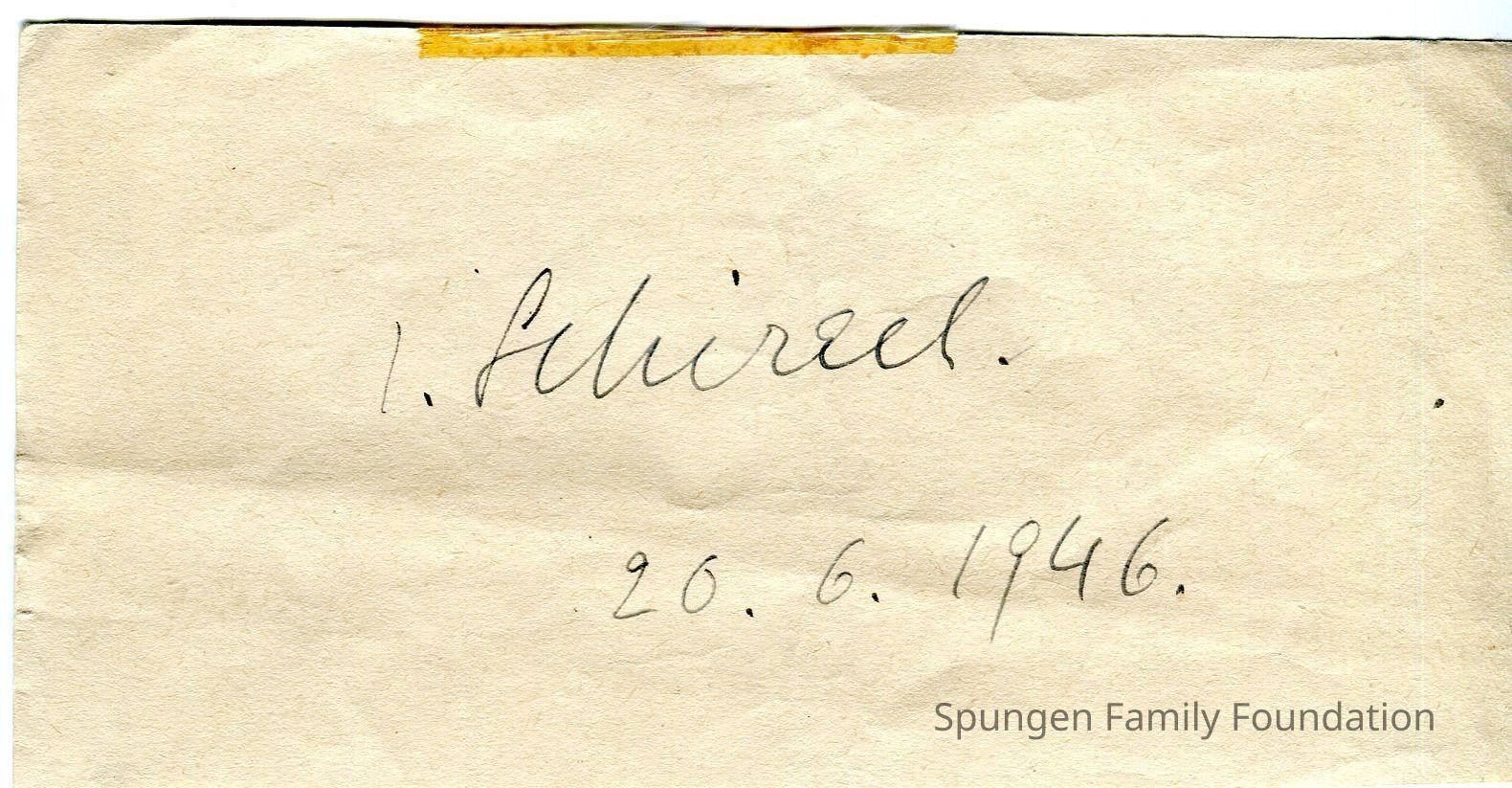
1946, Front side - Note card with Baldur von Schirach signature from the Palace of Justice in Nuremberg, Germany.
Tan note card with cursive signature and printed handwriting in German using black ink.
Name/Title
Baldur von SchirachEntry/Object ID
2026.7.16Scope and Content
1946, note card with Baldur von Schirach signature from the Palace of Justice in Nuremberg, Germany.Context
Baldur Benedikt von Schirach was a politician and leader of the Hitler Youth from 1931 to 1940. From 1940 until the end of the war, he was the district leader and Reich governor of Vienna, Austria. Schirach joined the Nazi Party at the age of 18 and was awarded as national youth leader of the party in 1931. One of his notable operations was carrying out the deportation of 65,000 Viennese Jews to concentration camps in Germany. In 1940, Schirach volunteered for the Wehrmacht, participating in fighting action on the front lines of France. He was promoted to Lieutenant and awarded the Iron Cross 2nd class. After his military service, Adolf Hitler appointed Schirach as district leader and Reich governor. Schirach was very culturally influenced. He stole and looted art and treasures from Jewish people. He was described as a flamboyant poet, a prima donna, and a man of great cultural pretensions but lacking political ambitions. It was concerning how Schirach had the position he did without being fully invested and important in politics. Even the bunker Schirach hid in was decorated with lavish rugs and numerous paintings of military generals. As a strong antisemite, Schirach facilitated the deportation of thousands of Jews, ensuring to loot their belongings and money. Schirach felt he had succeeded after fully ridding Vienna of Jewish individuals. His career as an antisemite interfered with his personal hobbies. Schirach feared ridding the Jews from Vienna and reciting a celebratory speech would expel him from his glorious cultural art circles. In 1946, Schirach was placed on trial. He was the youngest of the 22 Nazis at age 38. Avoiding heavy prosecution, Schirach claimed his antisemitism rose from American businessman, Henry Ford’s The International Jew. Additionally, he asserted the Hitler Youth he was the head of was merely an organization like the Boy Scouts, not a representation of Hitler’s war ideology. Ultimately, Schirach was sentenced to 20 years of prison at Spandau Prison in West Berlin, Germany. In 1966, Schirach was released after serving his full sentence. He was interviewed and gave multiple statements regarding his view of the Nazi Party and his participation. Schirach expressed he regret had not done enough to prevent the atrocities committed. Additionally, he claimed he had no knowledge that the exterminations took place. Schirach lived with multiple family members and adopted excessive alcoholism. He died form health complications in 1974 at age 67.Collection
Nazi Party SignaturesCategory
Note
Philatelic Material