Cecil A. Dye and Paul W. Fleming
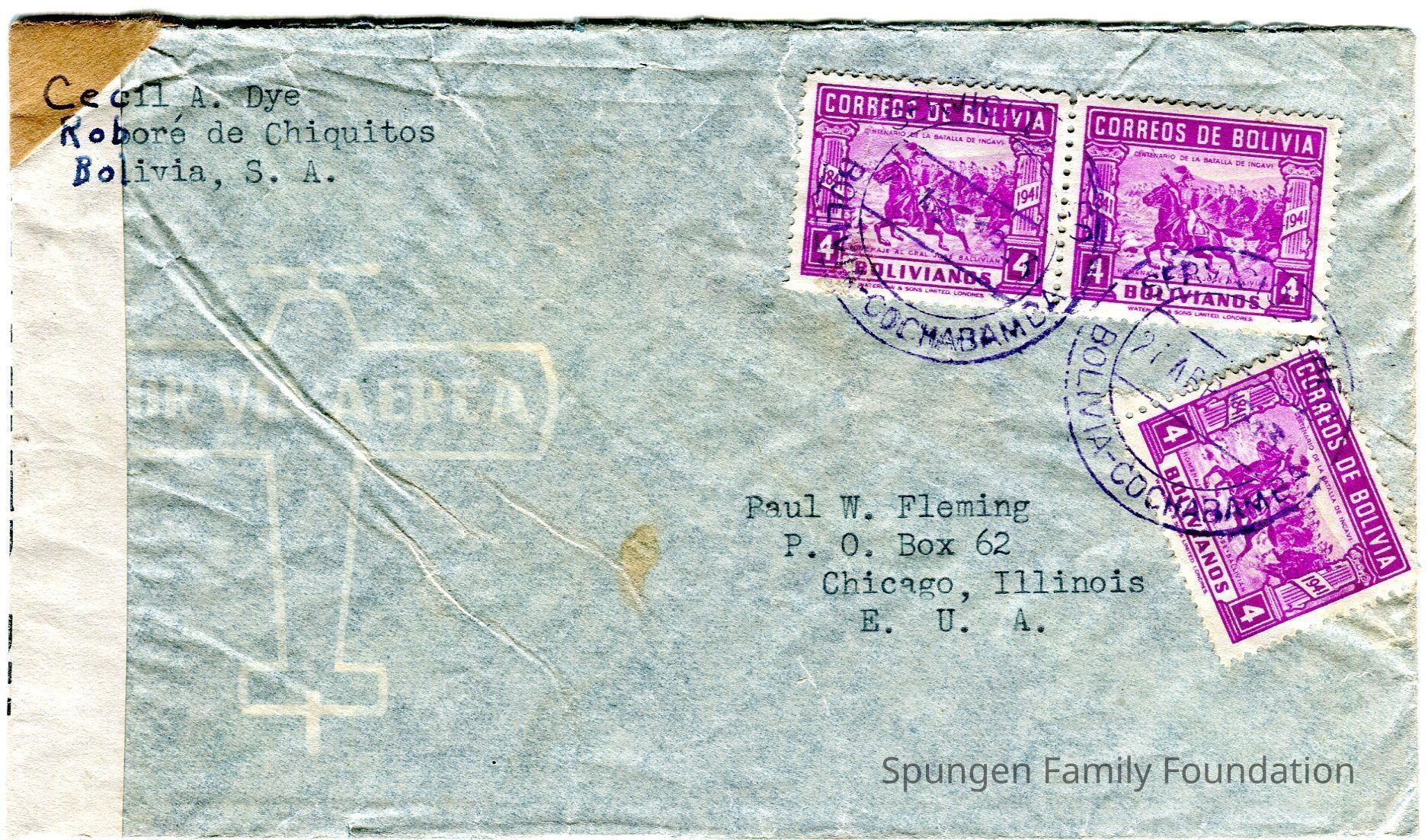
1942 April 21, Front side - Envelope from Cecil A. Dye in Bolivia to Paul W. Fleming in Chicago, Illinois.
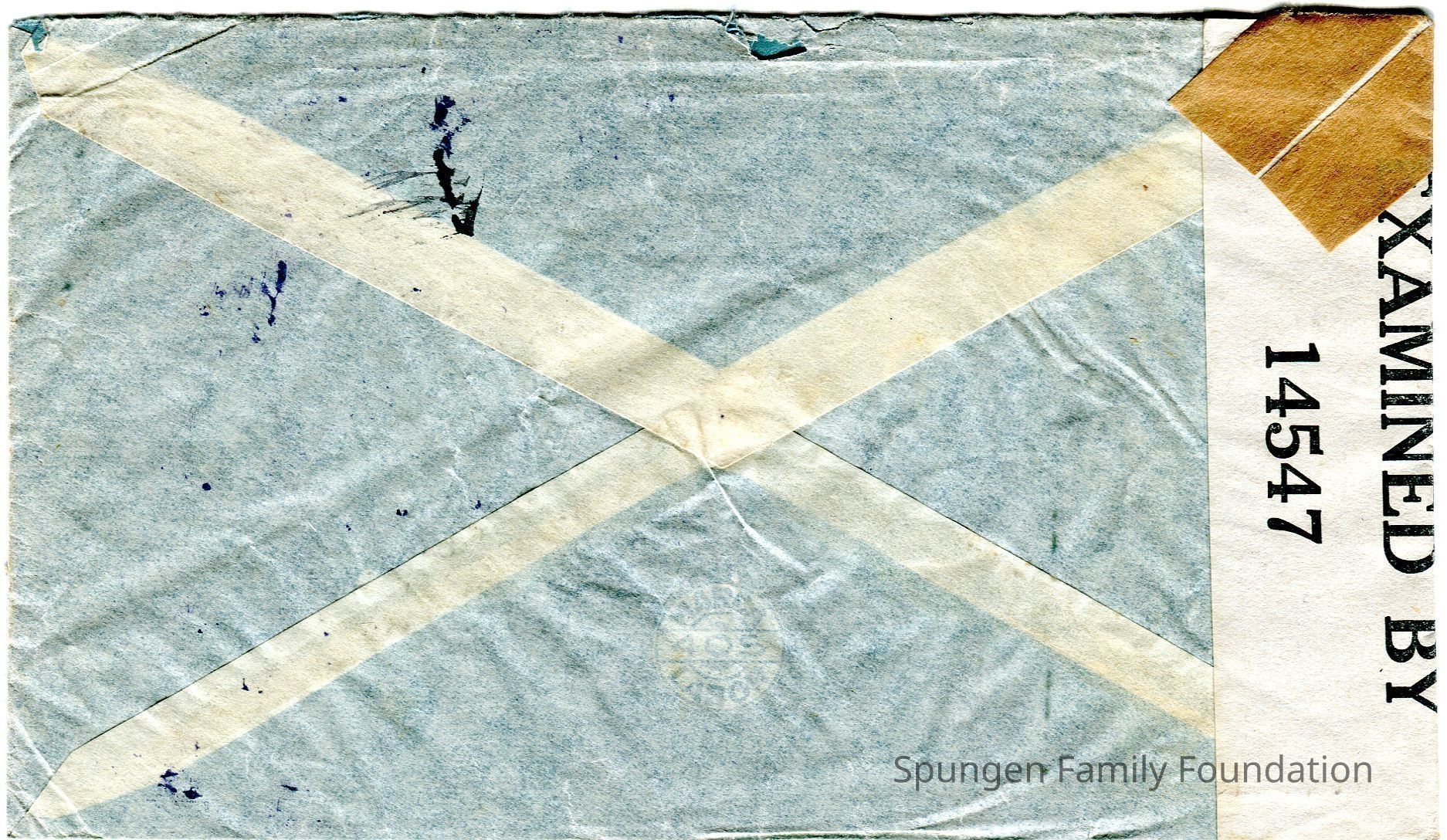
Blue envelope with typed text in English using black ink. Printed handwriting in the top left corner in blue ink is present. At the right side, three purple ink 4-bolivianos stamps are present. Overtop, two cancellations dated April 21, 1943 appear.
Name/Title
Cecil A. Dye and Paul W. FlemingEntry/Object ID
2026.9.1Scope and Content
1942 April 21, envelope from Cecil A. Dye in Bolivia to Paul W. Fleming in Chicago, Illinois.Context
*Note this piece is not related to the Holocaust. It is a reflection of the intersection between the spread of Christianity and Latin America. In 1943, Cecil A. Dye and Paul W. Fleming, two men from the United States along with eight other men, set out in the Gran Chaco region of Bolivia in hopes to spread Christianity to the indigenous. Cecil A. Dye was a business man from Detroit, Michigan who was raised Christian but lost touch with his religion after graduating from university. A few years later, he met his soon to be wife, Dorothy, and the two committed to becoming missionaries. Paul W. Fleming was born and raised in Fort Wayne, Indiana before a job at a refinery led him to Los Angeles, California. Unhappy with his career, Fleming wanted to become a minister. He planned to leave the country along with his fiancé, Cherrill in order to share knowledge of Christianity with others worldwide. In 1942, Fleming traveled to the British Malaya (now Malaysian and Signaporean territories) and contracted malaria. After months of fatigue and fevers, Paul and Cherrill returned to the United States, allowing Paul to make a full recovery. In the following months, Fleming founded the New Tribes Mission (now Ethnos360). The traction of his new organization was the foundation for creating a group to travel to Bolivia. With Dye aboard, ten men set out for the Gran Chaco. After setting up camp in a nearby village, the group strived to make contact with the Ayoreo, a community native to the Gran Chaco region. Within the first month they departed, Dye, Fleming, and the rest of the group were murdered. Eventually, the widows accompanied by community members searched for the Ayoreo who apologized for murdering their loved ones. Evidently, they were not aware the men did not have weapons with them.Collection
Latin AmericaCategory
Cover
Philatelic Material