Dr. Heinz Reach and Dr. Curt Reach
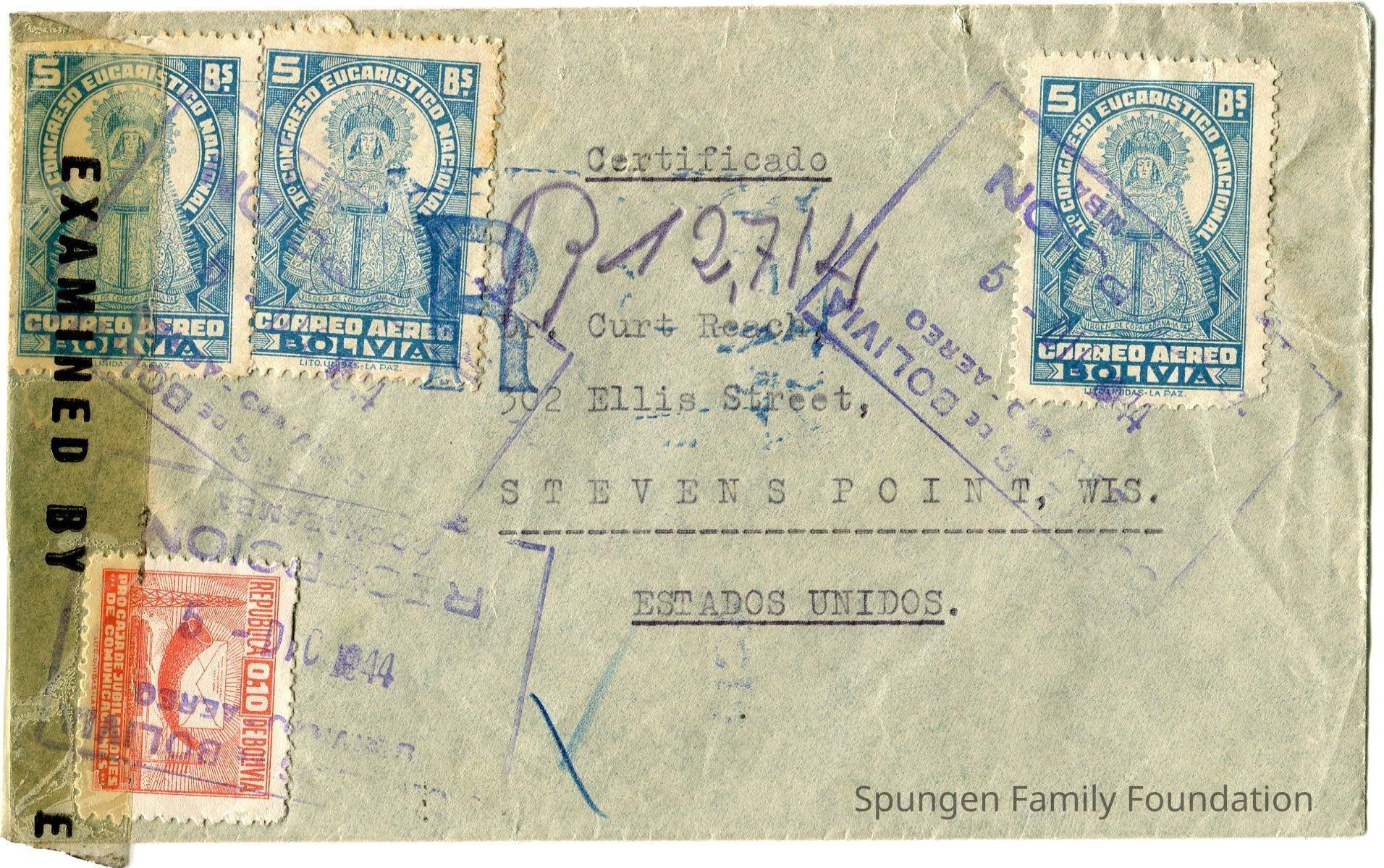
1944 December 5, Front side - Envelope from Dr. Heinz Reach in Cochabamba, Bolivia to Dr. Curt Reach in Wisconsin.
Green envelope with typed text in Spanish and English using black ink. Four stamps are present. Three stamps are blue 5-bolivianos stamps. At the bottom left, an orange 0,10-boliviano stamp appears. Overtop, three overprint purple cancellations are present. At the left side, a transparent yellow adhesive sticker with printed text in English using black ink.
Name/Title
Dr. Heinz Reach and Dr. Curt ReachEntry/Object ID
2026.9.3Scope and Content
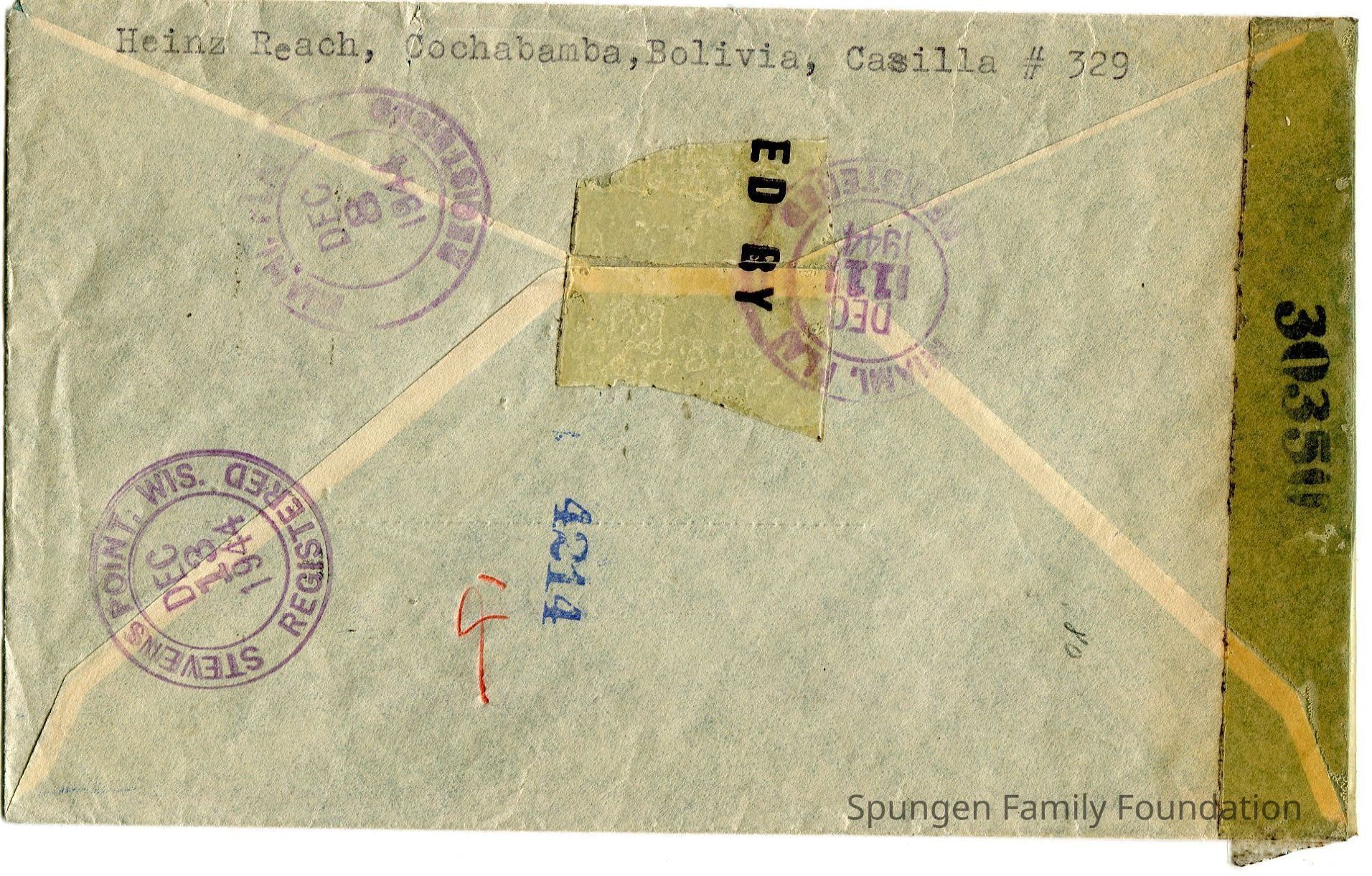
1944 December 5, envelope from Dr. Heinz Reach in Cochabamba, Bolivia to Dr. Curt Reach in Wisconsin.Context
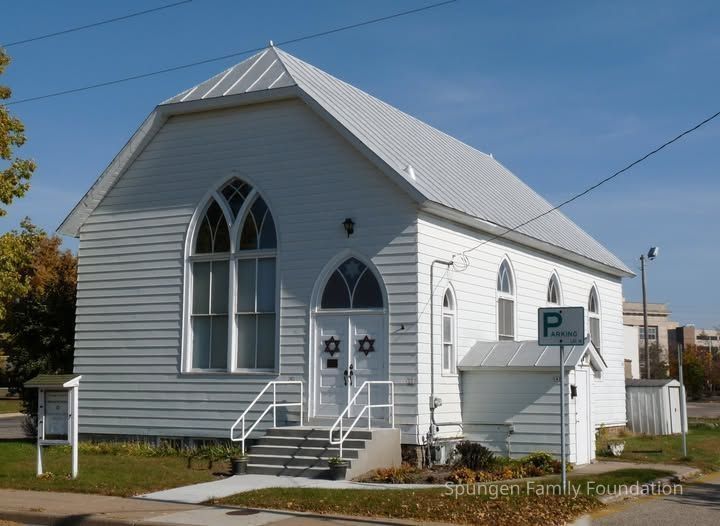
Dr. Curt Reach was a Jewish refugee who fled from Danzig, Germany at the start of World War II. Curt obtained a career as a Rabbi at Beth Israel Synagogue in Steven's Point, Wisconsin in 1940. The synagogue was built in 1905 and remained host to over 40 families during the 1940s. In 1986, a minyan was no longer retained, and the building became a historical site, and renamed as the Beth Israel Synagogue Museum. Rabbi Reach was heavily involved with the Jewish community and synagogue even collaborating with Christian congregations in town. By the time the United States had entered World War II, Reach encouraged a group of women at the synagogue to belong to an organization called the Sisterhood, affiliated with the National and State Federations of Temple Sisterhoods, a charitable organization. The women including Rabbi Reach's wife, Louise volunteered at the USO center and with the Red Cross. Louise herself was co-chair of the Red Cross. After the war ended, more than 100 Jewish members of the synagogue lived in Steven's Point and surrounding areas. Eighteen Jewish businesses operated in town by the 1960s. Yet, as the older generation died and others left Steven's Point, the number of members eventually dwindled to two in the 1990s, leaving the synagogue a place of memory. Source: United States Department of Interior National Park Service chrome-extension://efaidnbmnnnibpcajpcglclefindmkaj/https://npgallery.nps.gov/NRHP/GetAsset/NRHP/07000101_textCollection
Latin AmericaCategory
Cover
Philatelic Material