Erich Raeder
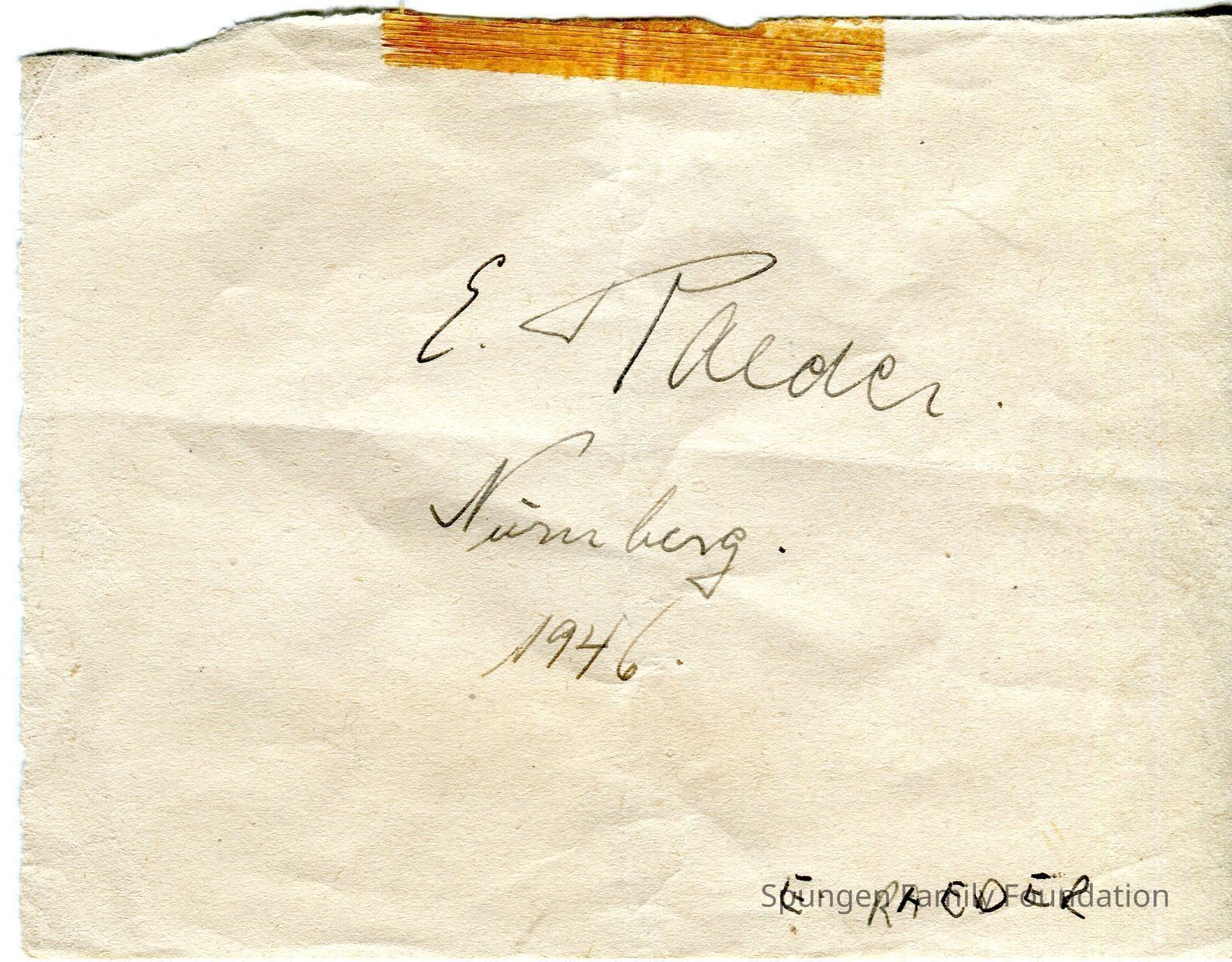
1946, Front side - Note card with Erich Raeder signature from the Palace of Justice in Nuremberg, Germany.
Tan note card with cursive signature and printed handwriting in German using black ink.
Name/Title
Erich RaederEntry/Object ID
2026.7.12Scope and Content
1946, note card with Erich Raeder signature from the Palace of Justice in Nuremberg, Germany.Context
Erich Johann Albert Raeder was a German admiral who made important strides to the naval history of World War II. Raeder was leader of the Kriegsmarine from 1939-1943 until his resignation and replacement by Karl Dönitz. Raeder joined the Kaiserliche Marine in 1894. He became chief of staff to Franz von Hipper, an admiral in the German Imperial Navy in 1912. A very dedicated and intelligent man, Raeder was stoic and cold. He certainly climbed quickly in rank. Following World War I, two major philosophies surrounding the German navy appeared. The Grand Admiral of the Germany Imperial Navy, Alfred von Tirpitz believed building a balanced fleet would lead to sure annihilation of the British Royal Navy; whereas Commander Wolfgang Wegener argued submarines and cruisers would be Germany’s greatest strength. Raeder took to opposition to Wegener and detested his thesis. Raeder gained traction as a naval strategist and philosophical thinker. Admiral Hipper took to Raeder and received many promotions due to his deliberate knowledge. Eventually, Raeder became Admiral of the Kriegsmarine in 1925. Aiding to Nazi Germany’s war effort, Raeder worked with Adolf Hitler to confirm military missions, advancements, and goals. In 1941, Raeder proposed firing on United States warships even if they were passive. Furthermore, Raeder urged Hitler to declare war on the United States so he could deploy naval forces, eager for warfare. Ultimately two ships were sent out on mission to raid Allied escorts, the Bismarck and Prinz Eugen. The Bismarck sunk, wasting resources and military troops. Hitler was displeased with the result, connected to Erich Raeder. In January 1943, Erich Raeder resigned after failing to inform Hitler of a battle which he learned about through the news. Hitler found Albert Speer’s goals to align better with his own, leading to Raeder resignation. In 1946, Raeder was held on trial in Nuremberg, Germany. He was tried three counts, though found guilty of ordering unrestricted submarine warfare. Additionally, Raeder approved of executing naval battle survivors. Raeder was sentenced to life in prison but was released in 1955 due to his poor health. He died five years later.Collection
Nazi Party SignaturesCategory
Note
Philatelic Material