F04_P12: Occupation of the Baltic Countries and White Russia
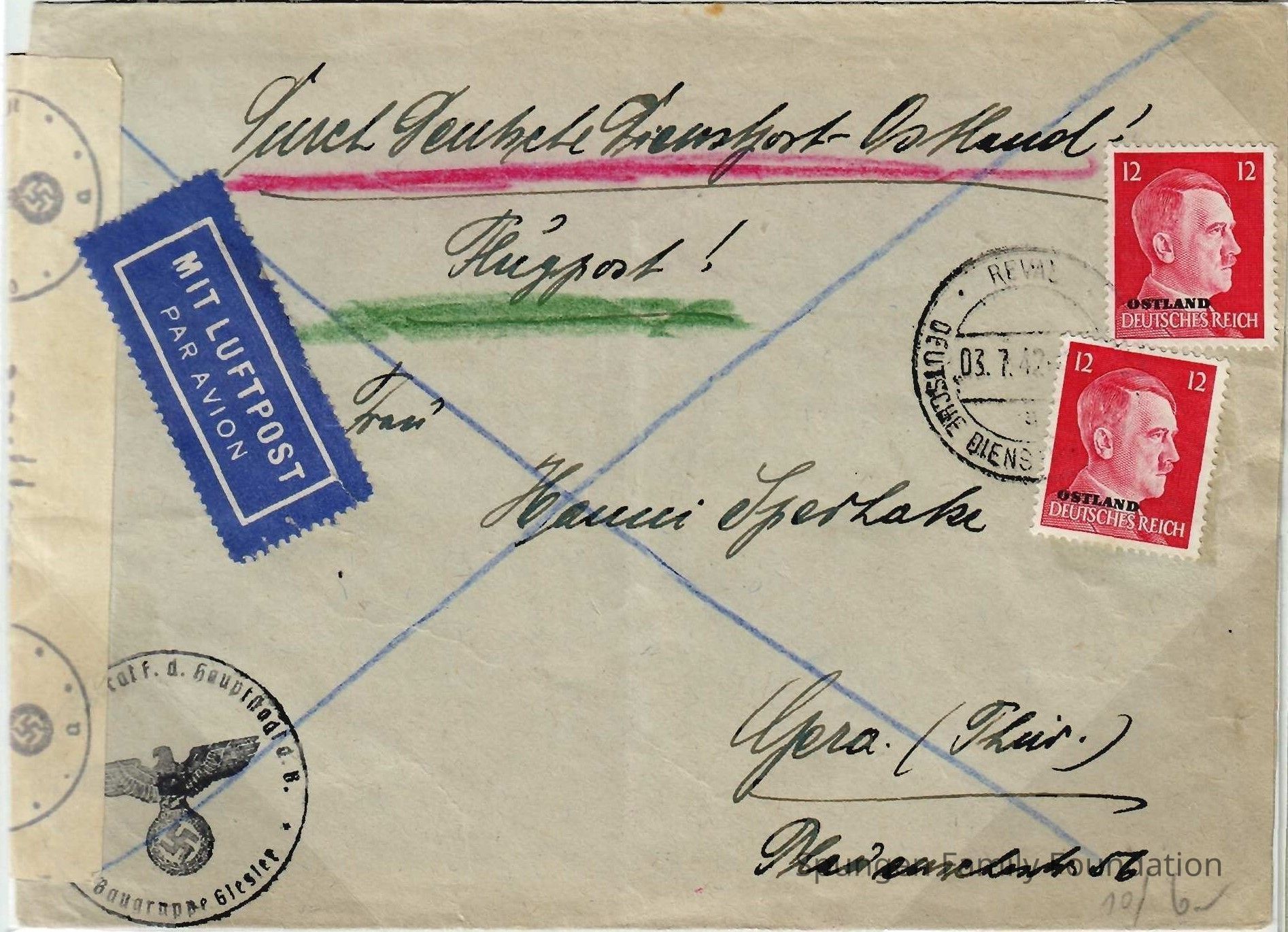
1942 July 3, Front side - Envelope with provisional overprint stamps censored in Germany.
Tan-green envelope with cursive handwriting in German using black ink. At the right side, two red-12 pfennig stamps depicting Adolf Hitler facing to the right are present. Overtop, a provisional reads, "OSTLAND" in black ink. At the center, an X marking in blue pencil is present. At the left side, a blue stamp with text, "MIT LUFTPOST / PAR AVION." At the left side, an adhesive sticker with printed Reichsalder symbol in black ink. Red and green pencil markings present at the top center.
Name/Title
F04_P12: Occupation of the Baltic Countries and White RussiaEntry/Object ID
2008.4.76Scope and Content
1942 July 3, envelope with provisional overprint stamps censored in Germany.Context
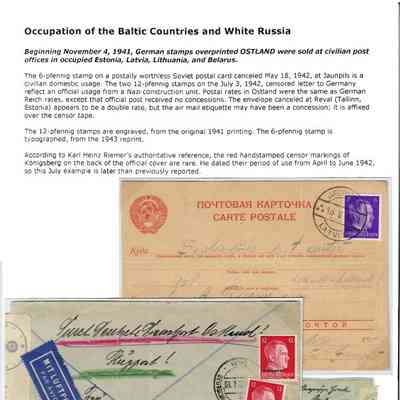
Beginning November 4, 1941, German stamps overprinted OSTLAND were sold at civilian post offices in occupied Estonia, Latvia, Lithuania, and Belarus. The 6-pfennig stamp on a postally worthless Soviet postal card canceled May 18, 1942, at Jaunpils is a civilian domestic usage. The two 12-pfennig stamps on the July 3, 1942, censored letter to Germany reflect an official usage from a Nazi construction unit. Postal rates in Ostland were the same as German Reich rates, except that official post received no concessions. The envelope canceled at Reval (Tallinn, Estonia) appears to be a double rate, but the air mail etiguette may have been a concession; it is affixed over the censor tape. The 12-pfennig stamps are engraved, from the original 1941 printing. The 6-pfennig stamp is typographed, from the 1943 repirnt. According to Karl Heinz Riemer’s authoritative reference, the red handstamped censor markings of Königsberg on the back of the official cover are rare. He dated their period of use from April to June 1942, so this July example is later than previously reported.Collection
Nazi Scourge II: Five Frame ExhibitCategory
Cover
Philatelic Material