F04_P16: The Holocaust: Transport to Death Camps
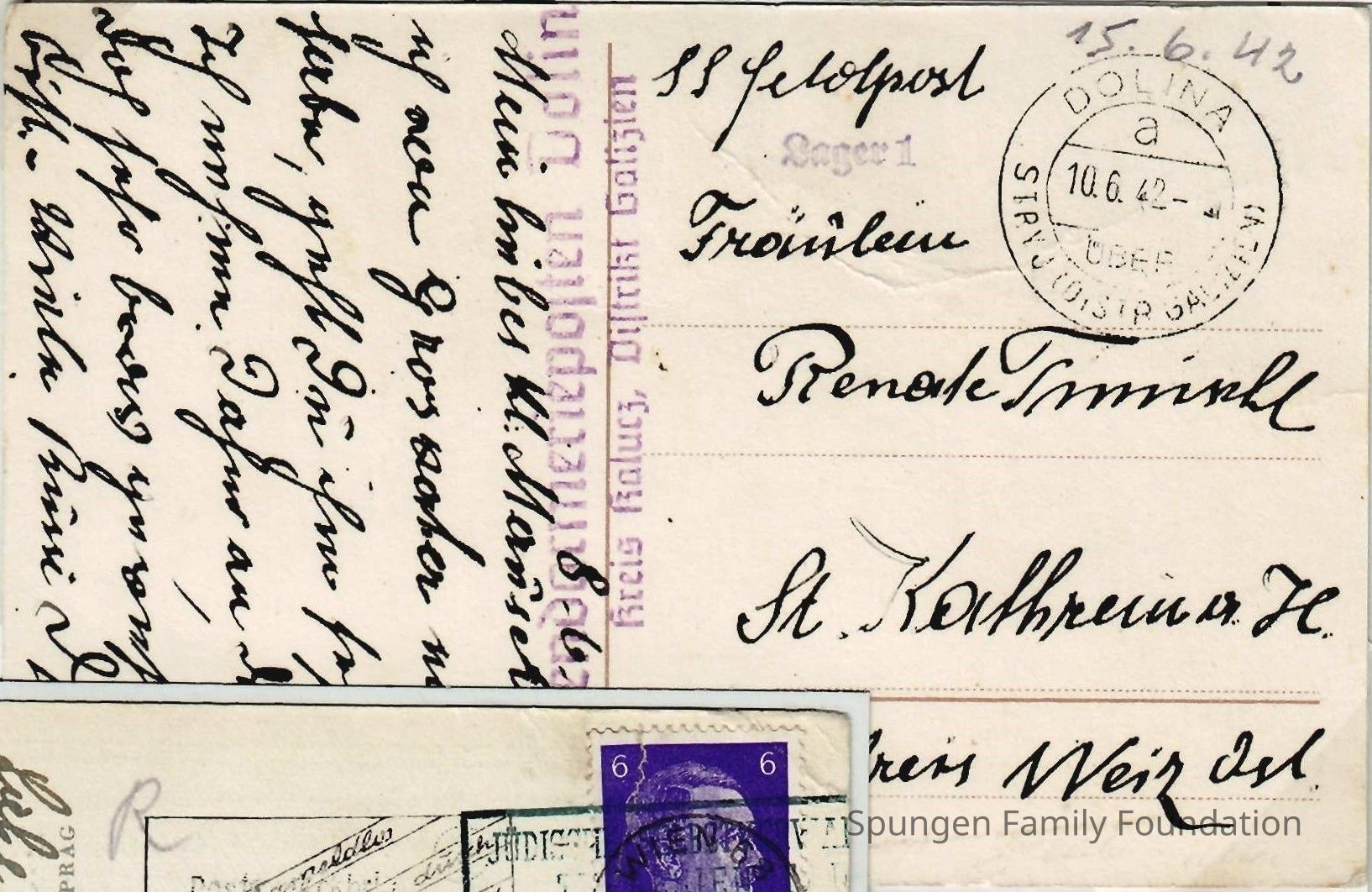
1942 June 10, Front side - Post card from Dolina Camp 1, an assembly center in Ukraine for Jews selected for extermination.
Beige post card with printed text and outline in German using brown ink. Cursive handwriting in German using black ink is present. At the top right corner, a black ink cancellaiton dated June 10, 1942 is present. At the center, a purple ink overprint stamp. At the bottom left, an overlay of an additional archive on the exhibit page is present. The foundation is promptly working to update this scan.
Name/Title
F04_P16: The Holocaust: Transport to Death CampsEntry/Object ID
2008.4.81Scope and Content
1942 June 10, post card from Dolina Camp 1, an assembly center in Ukraine for Jews selected for extermination.Context
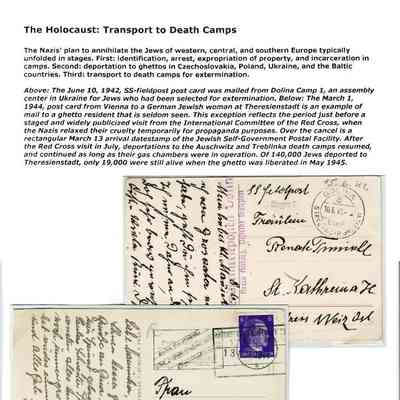
The Nazis’ plan to annihilate the Jews of western, central, and southern Europe typically unfolded in stages. First: identification, arrest, expropriation of property, and incarceration in camps. Second: deportation to ghettos in Czechoslovakia, Poland, Ukraine, and the Baltic countries. Third: transport to death camps for extermination. Above: The June 10, 1942, SS-fieldpost post card was mailed from Dolina Camp 1, an assembly center in the Ukraine for Jews who had been selected for extermination. Below: The March 1, 1944, post card from Vienna to a German Jewish woman at Theresienstadt is an example of mail to a ghetto resident that is seldom seen. This exception reflects the period just before a staged and widely publicized visit from the International Committee of the Red Cross, when the Nazis relaxed their cruelty temporarily for propaganda purposes. Over the cancel is a rectangular March 13 arrival datestamp of the Jewish Self-Government Postal Facility. After the Red Cross visit in July, deportations to the Auschwitz and Treblinka death camps resumed, and continued as long as their gas chambers were in operation. Of 140,000 Jews deported to Theresienstadt, only 19,000 were still alive when the ghetto was liberated in May 1945.Collection
Nazi Scourge II: Five Frame ExhibitCategory
Post Card
Philatelic Material