F05_P01: Lublin Jewish Ghetto Extermination Camp Majdanek
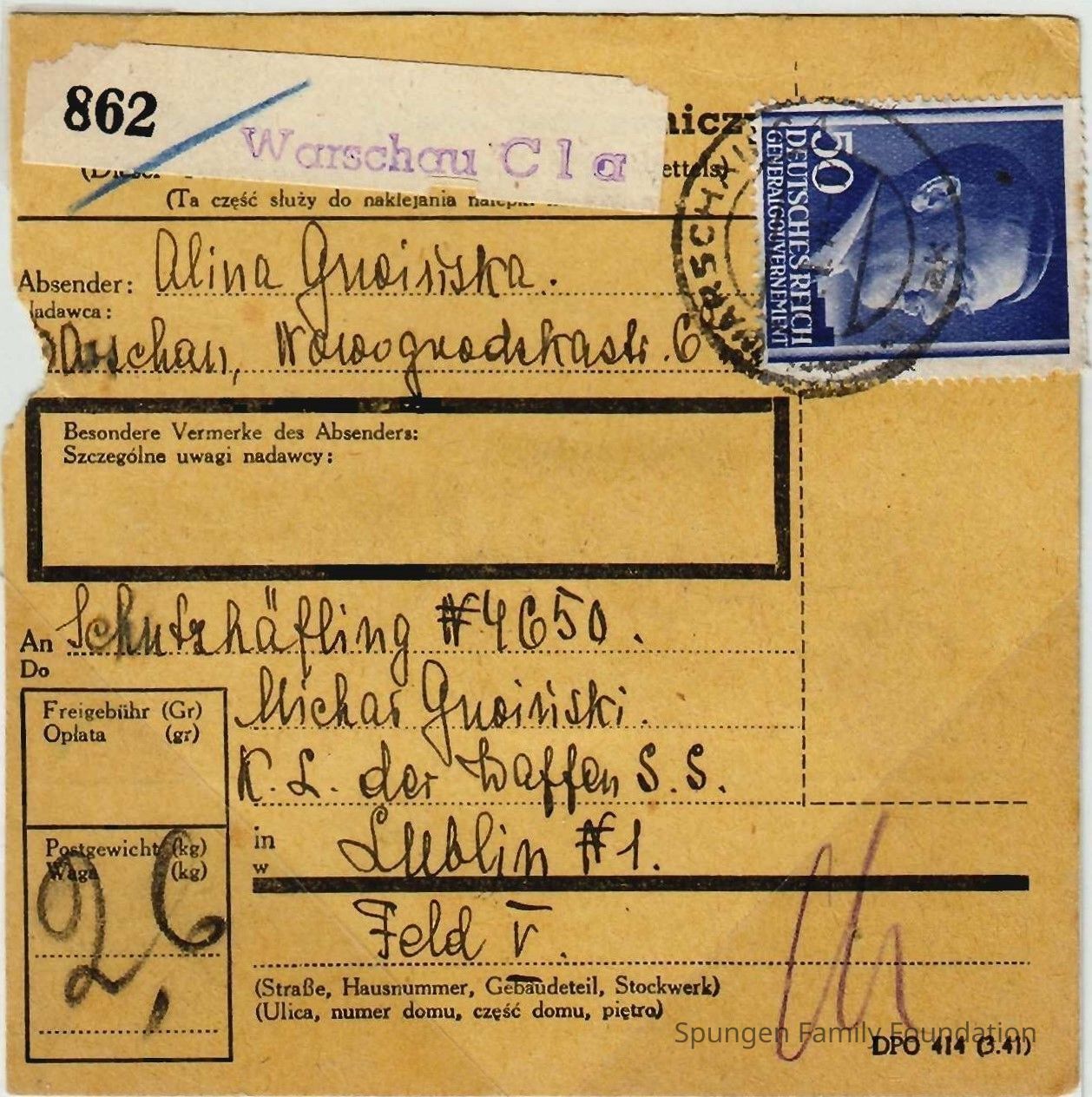
1944 January 11, Front side - Waybill with shipment from a relative in Warsaw to a Majdanek prisoner in Lublin, Poland.
Tan waybill with printed text and outline in German using black ink. Cursive handwriting in German using black ink is present. At the top right, a dark-blue 50-pfennig stamp depicting Adolf Hitler appears. Overtop, a black ink cancellation dated January 11, 1944 is present. At the top edge, a beige adhesive sticker with the number "862" in black ink.
Name/Title
F05_P01: Lublin Jewish Ghetto Extermination Camp MajdanekEntry/Object ID
2008.4.84Scope and Content
1944 January 11, waybill with shipment from a relative in Warsaw to a Majdanek prisoner in Lublin, Poland.Context
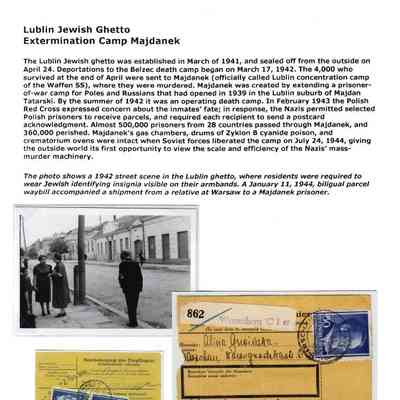
The Lublin Jewish ghetto was established in March of 1941, and sealed off from the outside on April 24. Deportations to the Belzec death camp began on March 17, 1942. The 4,000 who survived at the end of April were sent to Majdanek (officially called Lublin concentration camp of the Waffen SS), where they were murdered. Majdanek was created by extending a prisoner-of-war camp for Poles and Russians that had opened in 1939 in the Lublin suburb of Majdan Tatarski. By the summer of 1942 it was an operating death camp. In February 1943 the Polish Red Cross expressed concern about the inmates’ fate; in response, the Nazis permitted selected Polish prisoners to receive parcels, and required each recipient to send a post card acknowledgement. Almost 500,000 prisoners from 28 countries passed through Majdanek, and 360,000 perished. Majdanek’s gas chambers, drums of Zyklon B cyanide poison, and crematorium ovens were intact when Soviet forces liberated the camp on July 24, 1944, giving the outside world its first opportunity to view the scale and efficiency of the Nazis’ mass-murder machinery. The photo shows a 1942 street scene in the Lublin ghetto, where residents were required to wear Jewish identifying insignia visible on their armbands. A January 11, 1944, bilingual parcel waybill accompanied a shipment from a relative at Warsaw to a Majdanek prisoner.Collection
Nazi Scourge II: Five Frame ExhibitCategory
Waybill
Philatelic Material