F10_P01-02: Anti-Nazi Resistance: Rote Kapelle (“Red Orchestra”)
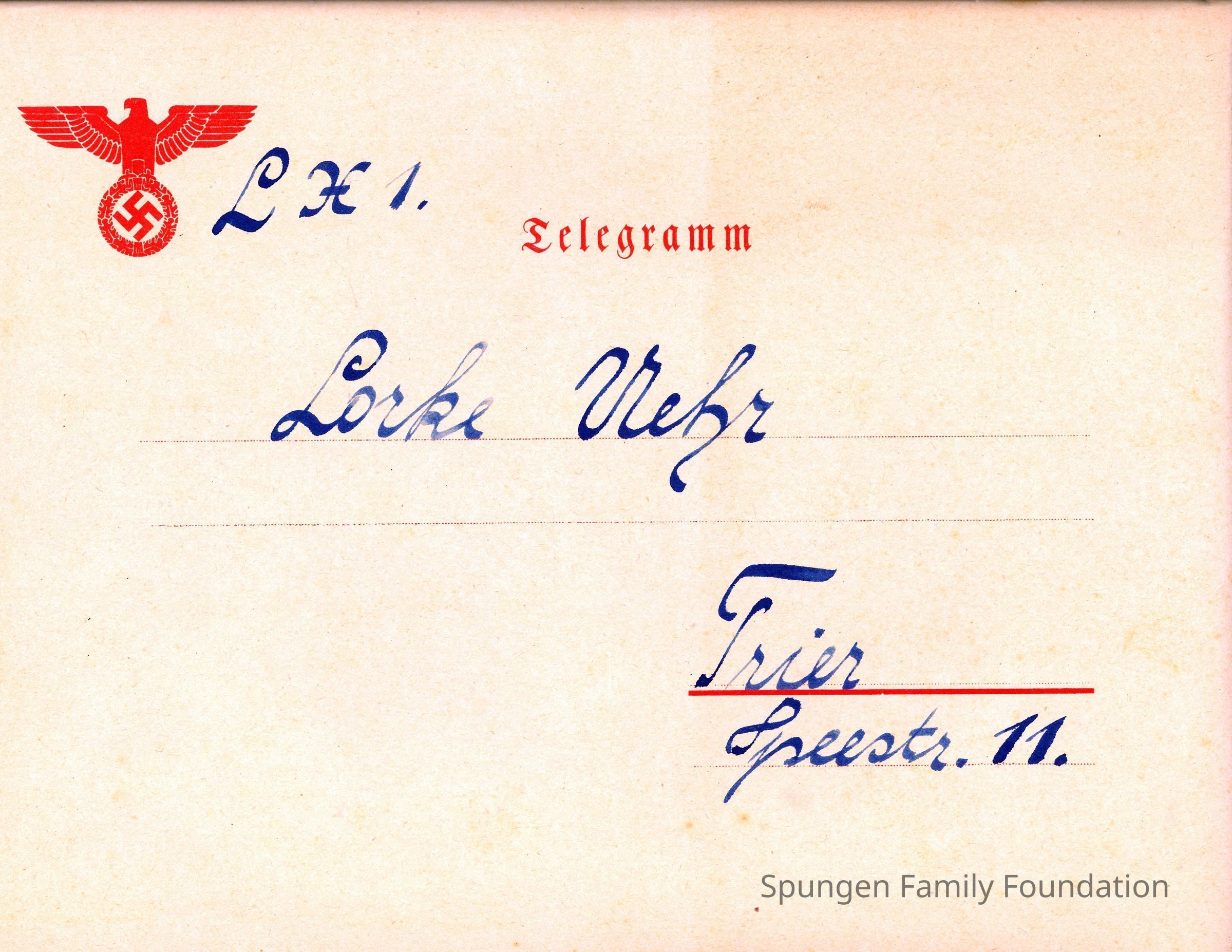
1944 May 14, Front side - Envelope addressed to Gertrud Lorke after her husband, Ühr Lorke was killed in battle.
Tan envelope with printed text and outline in German using red ink. Cursive handwriting in blue ink is present overall. At the top left corner is a red ink Reichsadler emblem.
Name/Title
F10_P01-02: Anti-Nazi Resistance: Rote Kapelle (“Red Orchestra”)Entry/Object ID
2007.10.1Scope and Content
1944 May 14, envelope addressed to Gertrud Lorke after her husband, Ühr Lorke was killed in battle.Context
"Had anyone called them spies, they would have rejected the label; they regarded themselves as revolutionaries" Gilles Perrault, The Red Orchestra Of all the anti-Nazi resistance organizations in Germany, the most effective was the Schulze-Boysen/ Harnack group in Berlin, known to the Gestapo as "Rote Kapelle" (Red Orchestra). Harro Schulze-Boysen was deputy to Hermann Göring, chief of the Luftwaffe (German air force) and thus had access to Germany's most important military secrets, which were passed along to the Soviet Union. The group also published illegal anti-Nazi propaganda, including a fortnightly newsletter, Die Innere Front (The Home Front) in six languages. Among the leaders who worked on the newsletter were Adam and Grete Kuckhoff, who sent the telegram, shown here (left and right) to Ühr Lorke, Grete Kuckhoff's brother, on March 27, 1940. Even at that time, when the German-Soviet non- aggression pact was in force, this secret group of Communists was preparing to oppose Germany's war effort and to rally the German people against Adolf Hitler. Most members of the Schulze- Boysen/Harnack group, including Adam Kuckhoff, were captured and executed by the Nazis in 1942. Ühr Lorke was conscripted into the German army and killed in battle. The Nazi provincial governor's May 19, 1944 condolence letter to his widow is shown here (far right). Grete Kuckhoff survived the war and headed the economics ministry of the German Democratic Republic. The Rote Kapelle, or Red Orchestra, was the Gestapo’s name for an intrepid band of German artists, intellectuals, and bureaucrats who battled treacherous odds to unveil the brutal secrets of their fascist employers and oppressors. Based on years of research, featuring new information, and culled from exclusive interviews, Red Orchestra documents this riveting story through the eyes of Greta Kuckhoff, a German working mother. After his arrest, Ühr Lorke was conscripted into the German army and killed in battle. The Nazi provincial governor's May 19, 1944 condolence letter (shown here) was mailed to his widow, Gertrud Lorke (later Grete Kuckhoff), in this envelope canceled on May 14, 1944.Collection
Nazi Scourge I: Primary ExhibitionCategory
Cover
Philatelic Material