F04_P12: Annexation of the Sudetenland
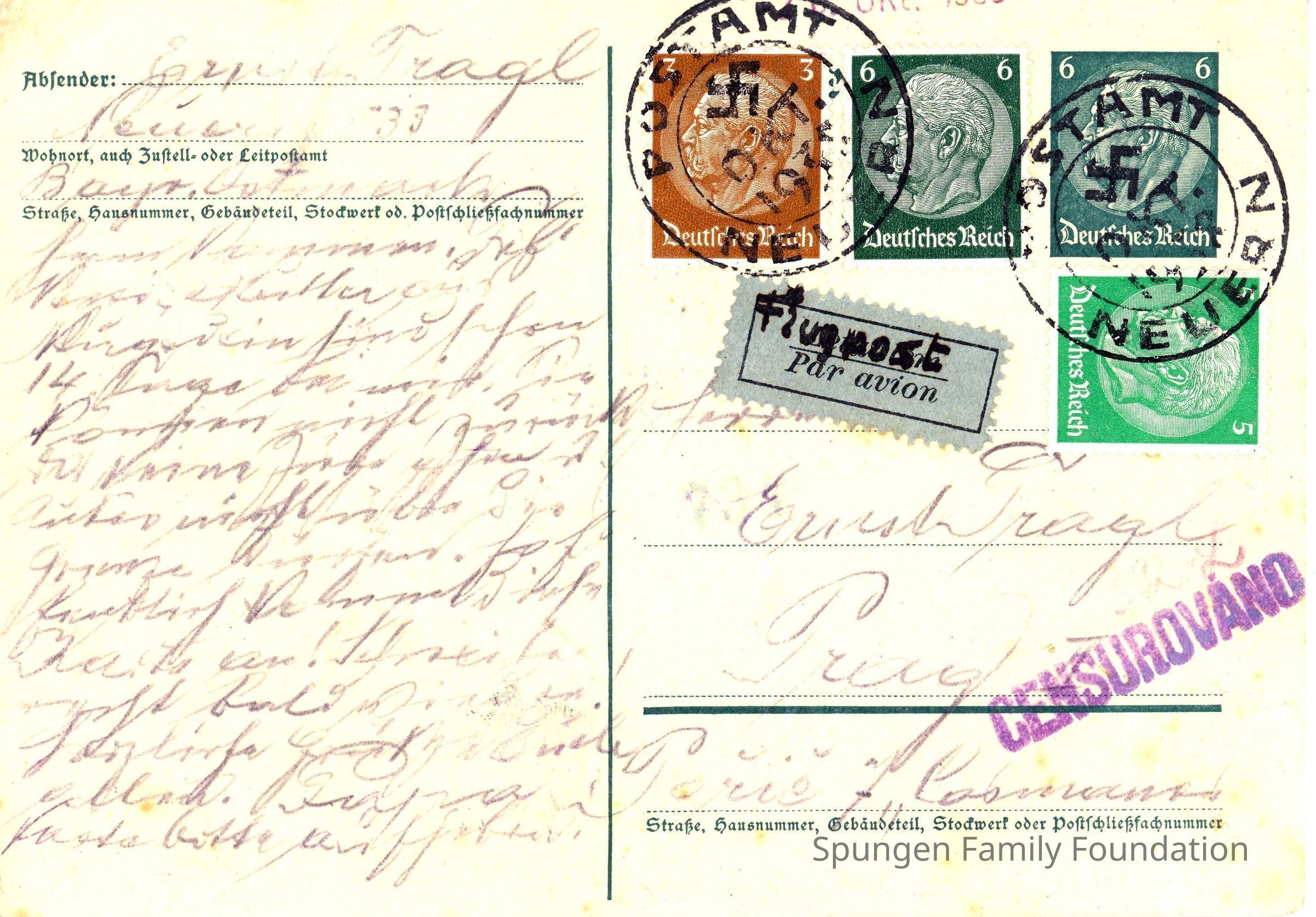
1938 October 26, Front side - Post card with provincial postmarks and Czech censorship stamp.
White-yellow (brightness of scan blows out proper appearance of the archive) post card with cursive handwriting in black ink. At the top right are four stamps. One orange-brown 3-pfennig stamp, two green-teal 6-pfennig stamps, and one green 5-pfennig stamp. All four stamps depict President Paul von Hindenburg. Below is a Flugpost or Airmail stamp. At the bottom right is a purple ink stamp, Censurováno. The post card outline is printed in German using green ink. The foundation is promptly working to update this scan.
Name/Title
F04_P12: Annexation of the SudetenlandEntry/Object ID
2007.4.12Scope and Content
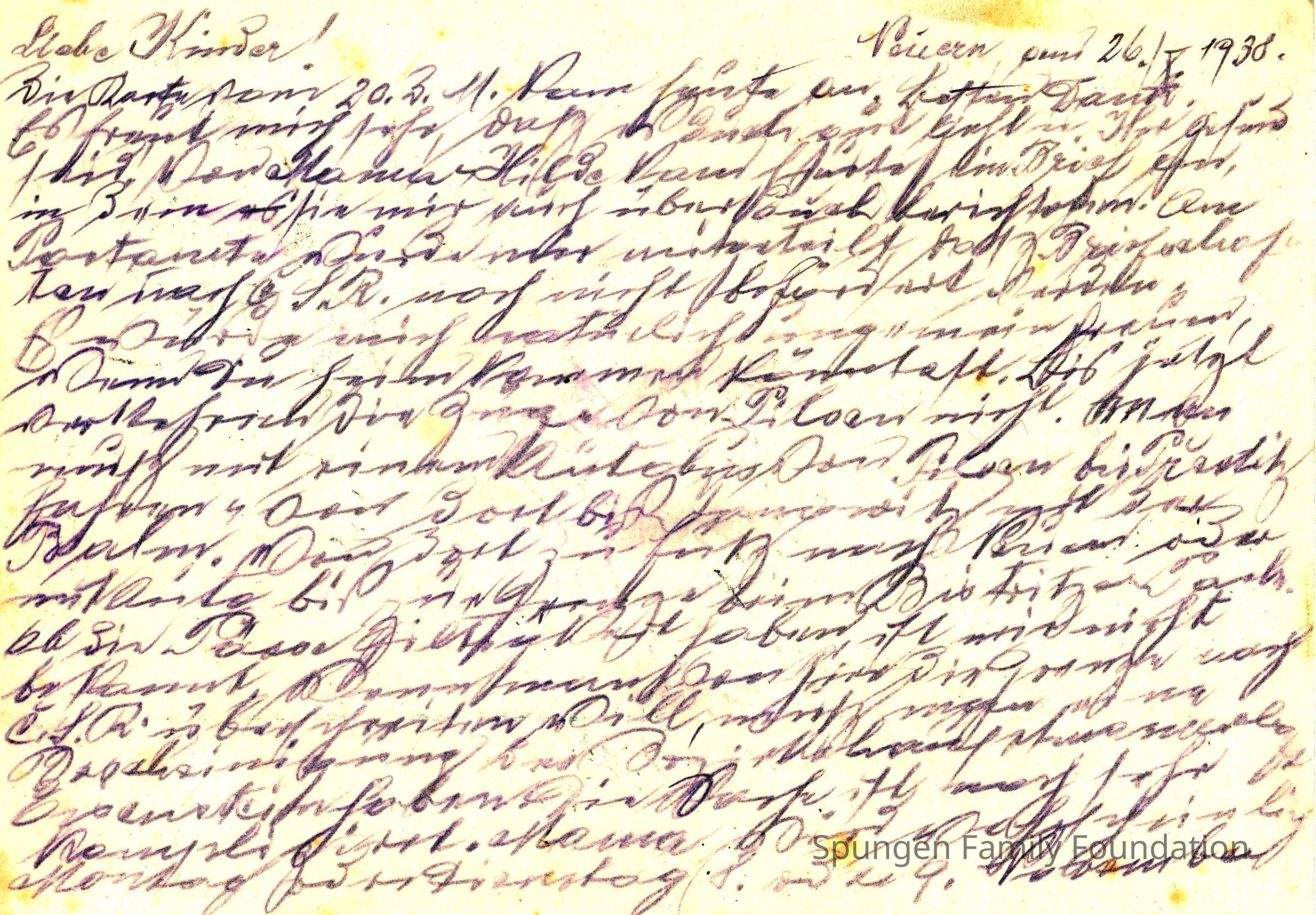
1938 October 26, post card with provincial postmarks and Czech censorship stamp.Context
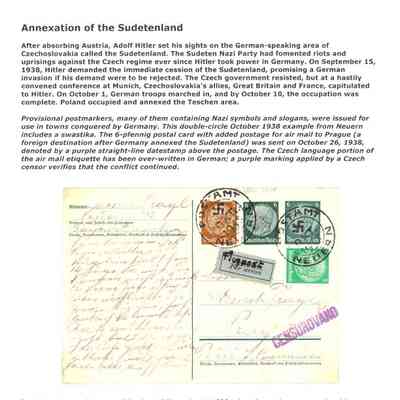
After absorbing Austria, Adolf Hitler set his sights on the German-speaking area of Czechoslovakia called the Sudetenland. The Sudeten Nazi Party had fomented riots and uprisings against the Czech regime ever since Hitler took power in Germany. On September 15, 1938, Hitler demanded the immediate cession of the Sudetenland, promising a German invasion if his demand were to be rejected. The Czech government resisted, but at a hastily convened conference at Munich, Czechoslovakia’s allies, Great Britain and France, capitulated to Hitler. On October 1, German troops marched in, and by October 10, the occupation was complete. Poland occupied and annexed the Teschen area. Provisional postmarkers, many of them containing Nazi symbols and slogans, were issued for use in towns conquered by Germany. This double-circle October 1938 example from Neuern includes a swastika. The 6-pfennig postal card with added postage for air mail to Prague (a foreign destination after Germany annexed the Sudetenland) was sent on October 26, 1938, denoted by a purple straight-line datestamp above the postage. The Czech language portion of the air mail etiquette has been over-written in German; a purple marking applied by a Czech censor verifies that the conflict continued. Provisional postmarks were valid only until November 1, 1938, when the markers were replaced by standard German cancelers in the areas annexed by Germany.Collection
Nazi Scourge I: Primary ExhibitionCategory
Post Card
Philatelic Material