F06_P16: Opole and Dombrowa Jewish Ghettos
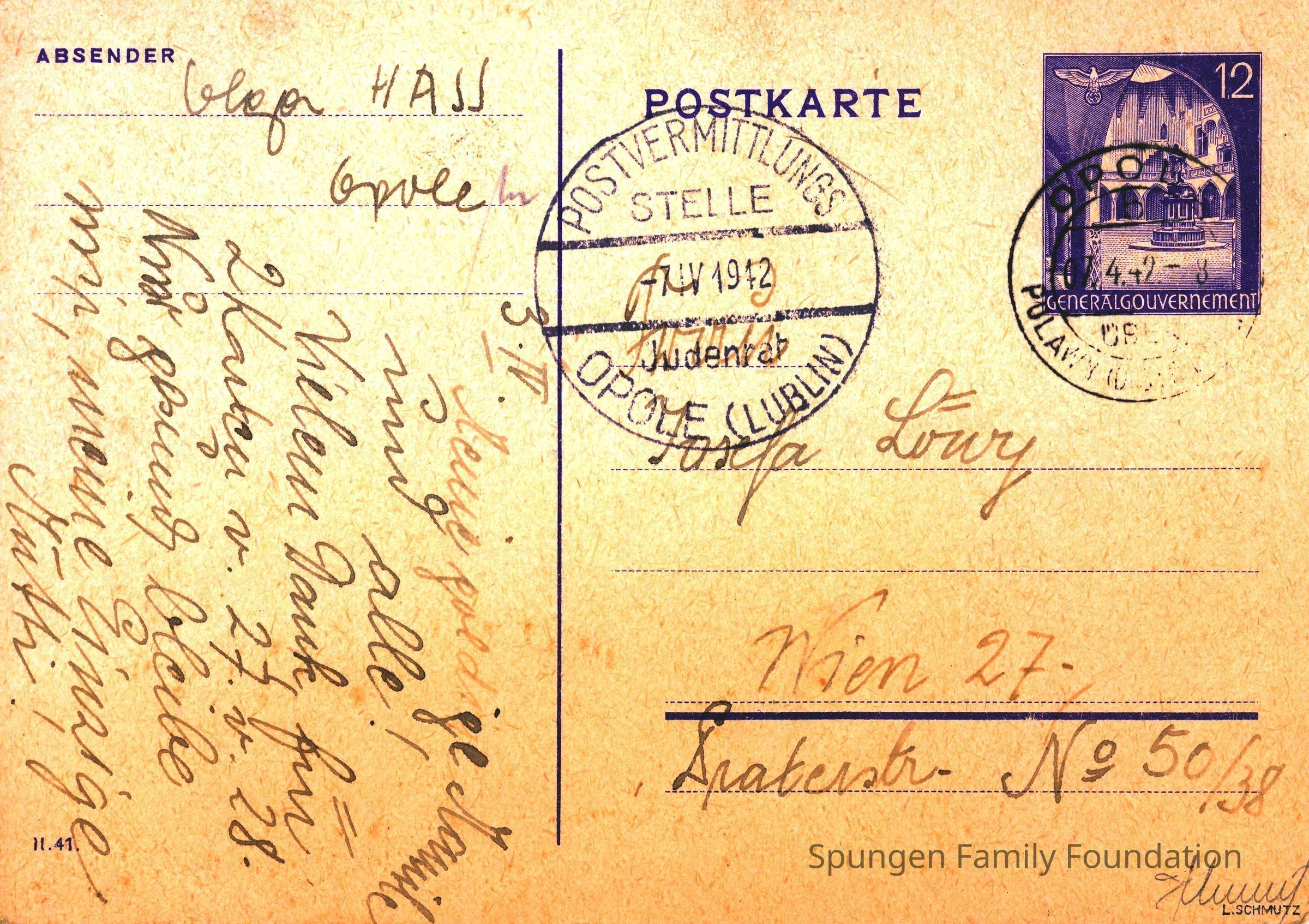
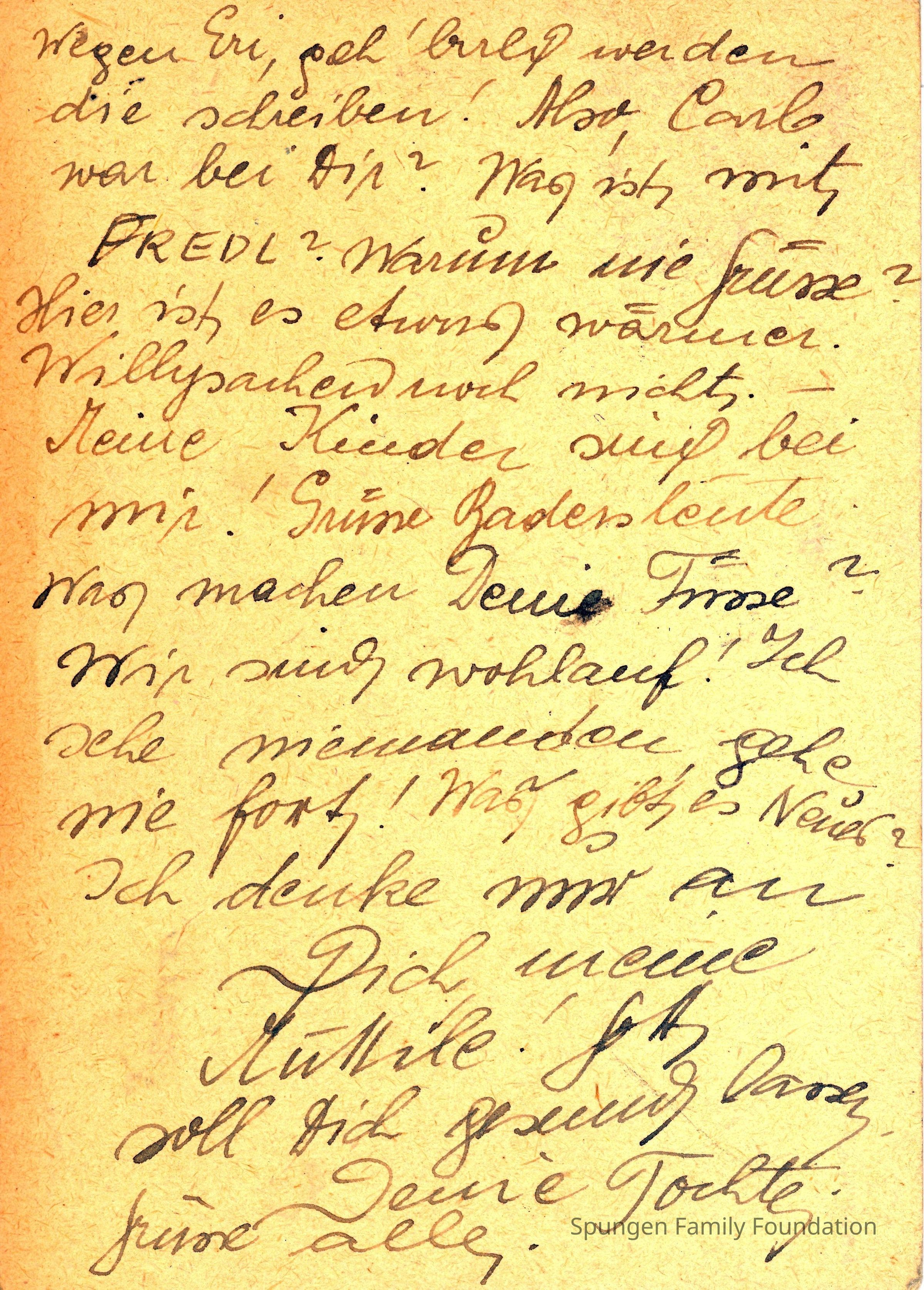
1942 April 7, Front side - Post card from Opole postal exchange office of the Jewish Council.
Tan post card (appears yellow via scan) with printed text and outline in German using purple ink. Cursive handwriting using black ink is present overall. There is a stamp in the top right corner depicting the courtyard at Jagiellonian University in Krakow, Poland. Overtop is a black ink cancellation dated April 7, 1942. At the center is a cancellation dated April 7, 1942 as well. The foundation is promptly working to update this scan.
Name/Title
F06_P16: Opole and Dombrowa Jewish GhettosEntry/Object ID
2007.6.16Scope and Content
1942 April 7, post card from Opole postal exchange office of the Jewish Council.Context
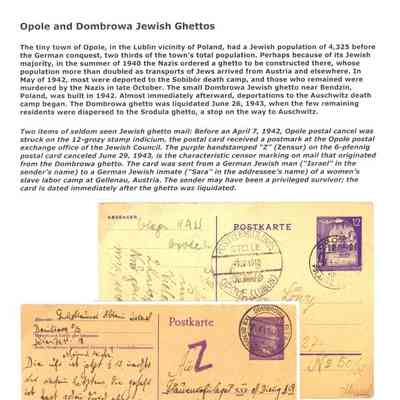
The tiny town of Opole, in the Lublin vicinity of Poland, had a Jewish population of 4,325 before the German conquest, two thirds of the town's total population. Perhaps because of its Jewish majority, the Nazis ordered a ghetto to be constructed there in the summer of 1940. Its population more than doubled as transports of Jews arrived from Austria and elsewhere. In May of 1942, most were deported to the Sobibór death camp, and those who remained were murdered by the Nazis in late October. The small Dombrowa Jewish ghetto near Bendzin, Poland, was built in 1942. Almost immediately afterward, deportations to the Auschwitz death camp began. The Dombrowa ghetto was liquidated June 26, 1943, when the few remaining residents were dispersed to the Srodula ghetto, a stop on the way to Auschwitz. Two items of seldom seen Jewish ghetto mail: Before an April 7, 1942, Opole postal cancel was struck on the 12-grozy stamp indicium, the postal card received a postmark at the Opole postal exchange office of the Jewish Council. The purple handstamped "Z" (Zensur) on the 6-pfennig postal card canceled June 29, 1943, is the characteristic censor marking on mail that originated from the Dombrowa ghetto. The card was sent from a German Jewish man ("Israel" in the sender's name) to a German Jewish inmate ("Sara" in the addressee's name) of a women's slave labor camp at Gellenau, Austria. The sender may have been a privileged survivor; the card is dated immediately after the ghetto was liquidated.Collection
Nazi Scourge I: Primary ExhibitionCategory
Post Card
Philatelic Material