F07_P10: Assembly and Detention Camp Westerbork Prisoner Art
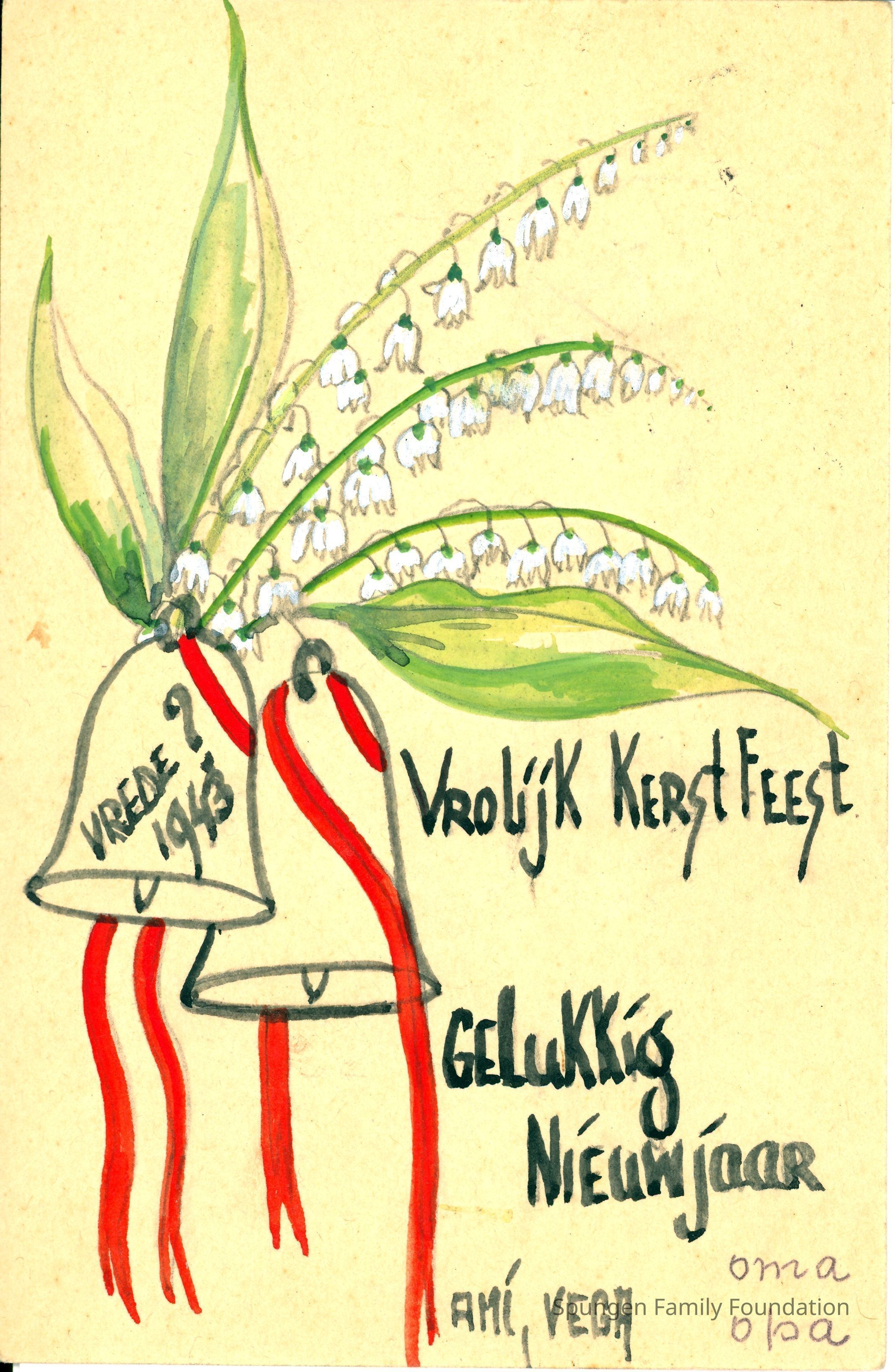
1942 December 22, Front side - Post card from Grandparents to Gerrit van Brakel for the winter holidays.
Tan post card (appears yellow via scan) with two hand-painted bells in black, each with two red ribbons attached. At the top are painted snowdrop flowers in white and green. At the center is Dutch painted in black ink. At the bottom right is penciling signed "oma" and "opa" or "grandmother" and "grandfather". The foundation is promptly working to update this scan.
Name/Title
F07_P10: Assembly and Detention Camp Westerbork Prisoner ArtEntry/Object ID
2007.7.10Scope and Content
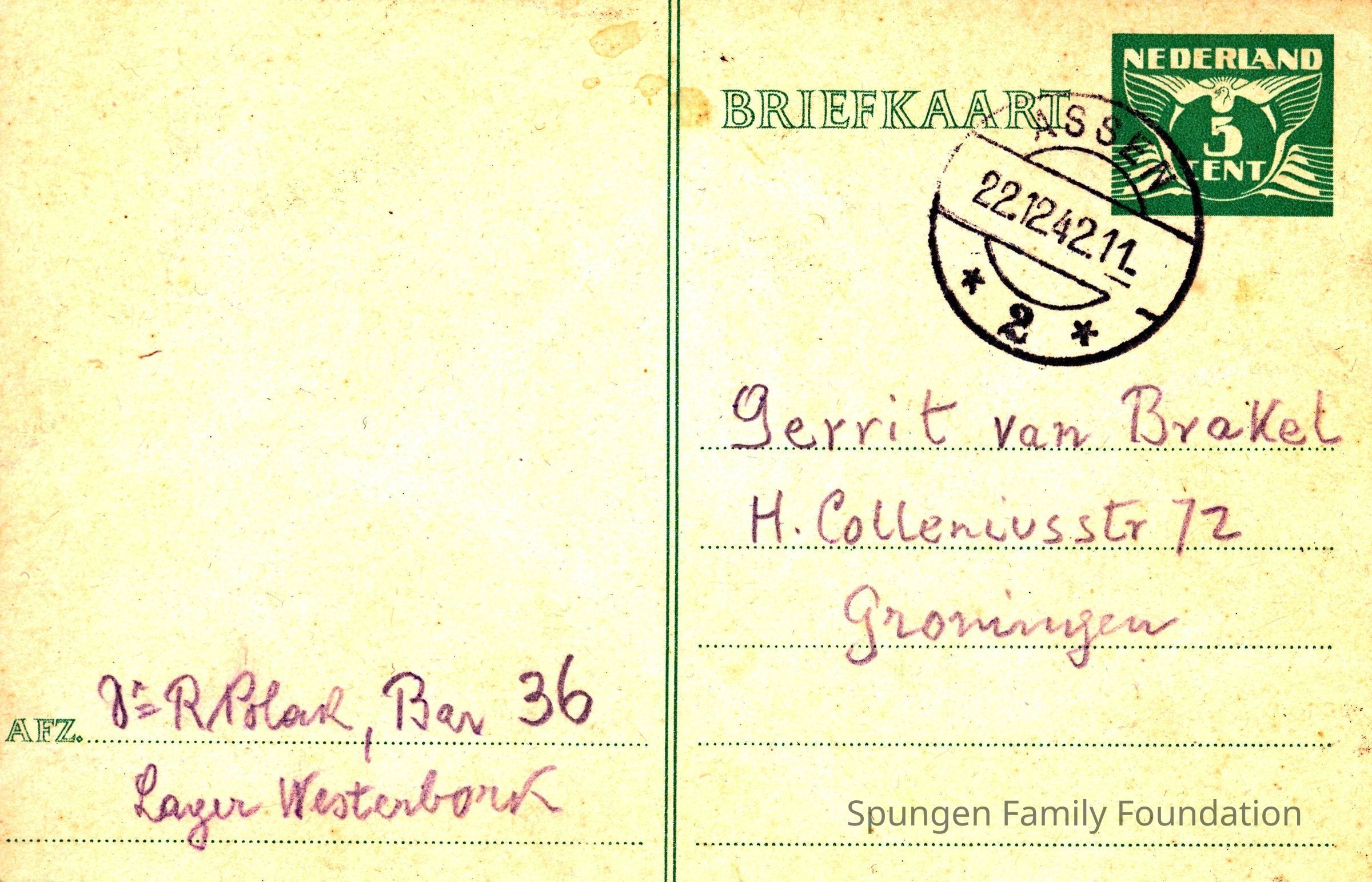
1942 December 22, post card from Grandparents to Gerrit van Brakel for the winter holidays.Context
Originally built by the Dutch government in October 1939 to house Jewish refugees from Nazi Germany and occupied countries who had entered Holland illegally, Camp Westerbork became a transit camp for Jews being deported to death camps in Poland at the end of 1941. A riot erupted during the first transport to Auschwitz, when Sicherheitspolizei (security police) official Erich Deppner, the camp commandant, filled his quota of Jews by taking children without their parents and women without their husbands. More experienced SS officers replaced Deppner. After that, almost 100,000 Jews were deported from Westerbork, and about 400 Gypsies. Toward the end of the war, women of the Dutch anti-Nazi resistance also were imprisoned at Westerbork. The camp was liberated on April 12, 1945. Among the victims who passed through Westerbork was the young diarist Anne Frank. Nazi abuse and abasement never completely crushed its victims' human spirit. Cultural, political, and religious hope and expression continued to spring forth from the most dire circumstances. This December 22, 1942, hand-painted post card carried Christmas and New Year greetings to Gerrit van Brakel from his grandparents. The message reads “Peace 1943?“ and "Cheerful Christmas, Happy New Year," an ironic Christian holiday sentiment from doomed Jewish inmates. According to Kevin Ostoyich, professor and researcher and partner of the Spungen Family Foundation, the grandparents who addressed the post card were Richard Pollack and wife, Jetti Pollack. Richard was a medical doctor before the two were transported from Westerbork to Theresienstadt concentration camp. They both survived the Holocaust.Collection
Nazi Scourge I: Primary ExhibitionCategory
Post Card
Philatelic Material