F08_P01: Operation Barbarossa: War against the Soviet Union
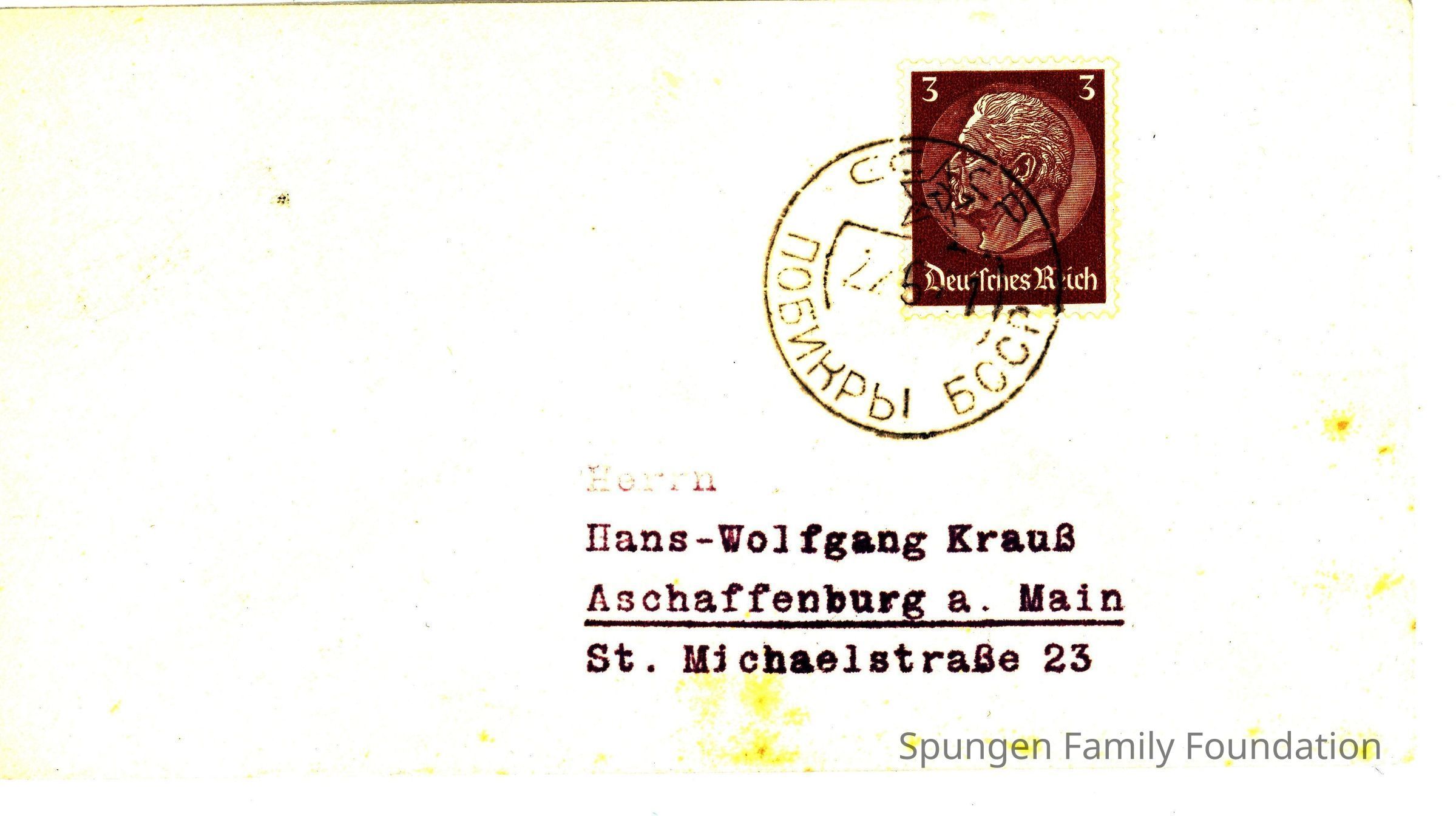
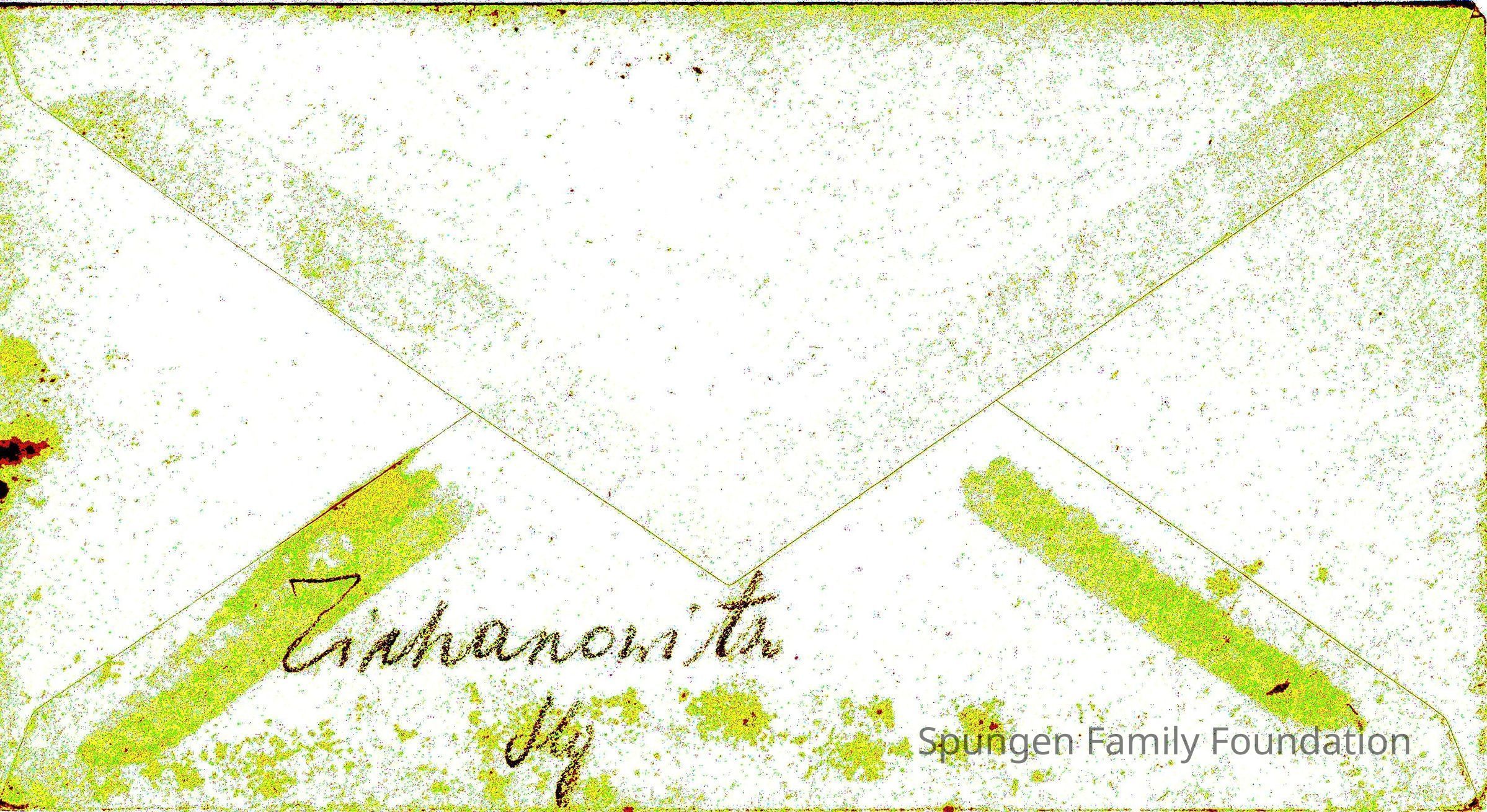
1941 June 6, Front side - Envelope from Soviet Union returned to Poland after the war ended.
White envelope (brightness of scan blows out proper appearance of the archive) with typed text in black ink at the center. Above is a brown 3-pfennig stamp depicting President Paul von Hindenburg facing to the left. Overtop is a cancellation from the CCCP, dated June 6, 1941. The foundation is promptly working to update this scan.
Name/Title
F08_P01: Operation Barbarossa: War against the Soviet UnionEntry/Object ID
2007.8.1.aScope and Content
1941 June 6, envelope from Soviet Union returned to Poland after the war ended.Context
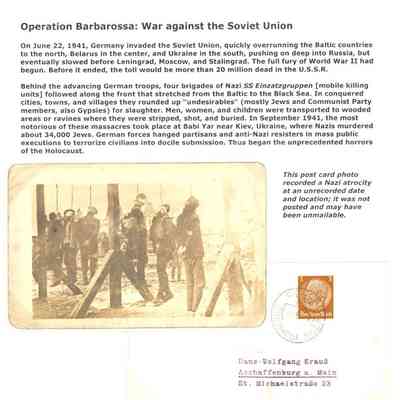
On June 22, 1941, Germany invaded the Soviet Union, quickly overrunning the Baltic countries to the north, Belarus in the center, and Ukraine in the south, pushing on deep into Russia, but eventually slowed before Leningrad, Moscow, and Stalingrad. The full fury of World War II had begun. Before it ended, the toll would be more than 20 million dead in the U.S.S.R. Behind the advancing German troops, four brigades of Nazi SS Einsatzgruppen [mobile killing units] followed along the front that stretched from the Baltic to the Black Sea. In conquered cities, towns, and villages they rounded up "undesirables" (mostly Jews and Communist Party members, also Gypsies) for slaughter. Men, women, and children were transported to wooded areas or ravines where they were stripped, shot, and buried. In September 1941, the most notorious of these massacres took place at Babi Yar near Kiev, Ukraine, where Nazis murdered about 34,000 Jews. German forces hanged partisans and anti-Nazi resisters in mass public executions to terrorize civilians into docile submission. Thus began the unprecedented horrors of the Holocaust. This post card photo recorded a Nazi atrocity at an unrecorded date and location; it was not posted and may have been unmailable. The 3-pfennig stamp paid the printed matter rate. The 3-pfennig German stamp was canceled with a June 22, 1941, datestamp of Pobikry, U.S.S.R. Pobikry, located in the Bialystok district, had been part of the Soviet Union only since the partition of Poland in October 1939, a period of 18 months. After the war, it was returned to Poland, so this cancel would be most unusual even if it had not been canceled on the first day of war on the Eastern Front.Collection
Nazi Scourge I: Primary ExhibitionCategory
Cover
Philatelic Material