Fritz Sauckel
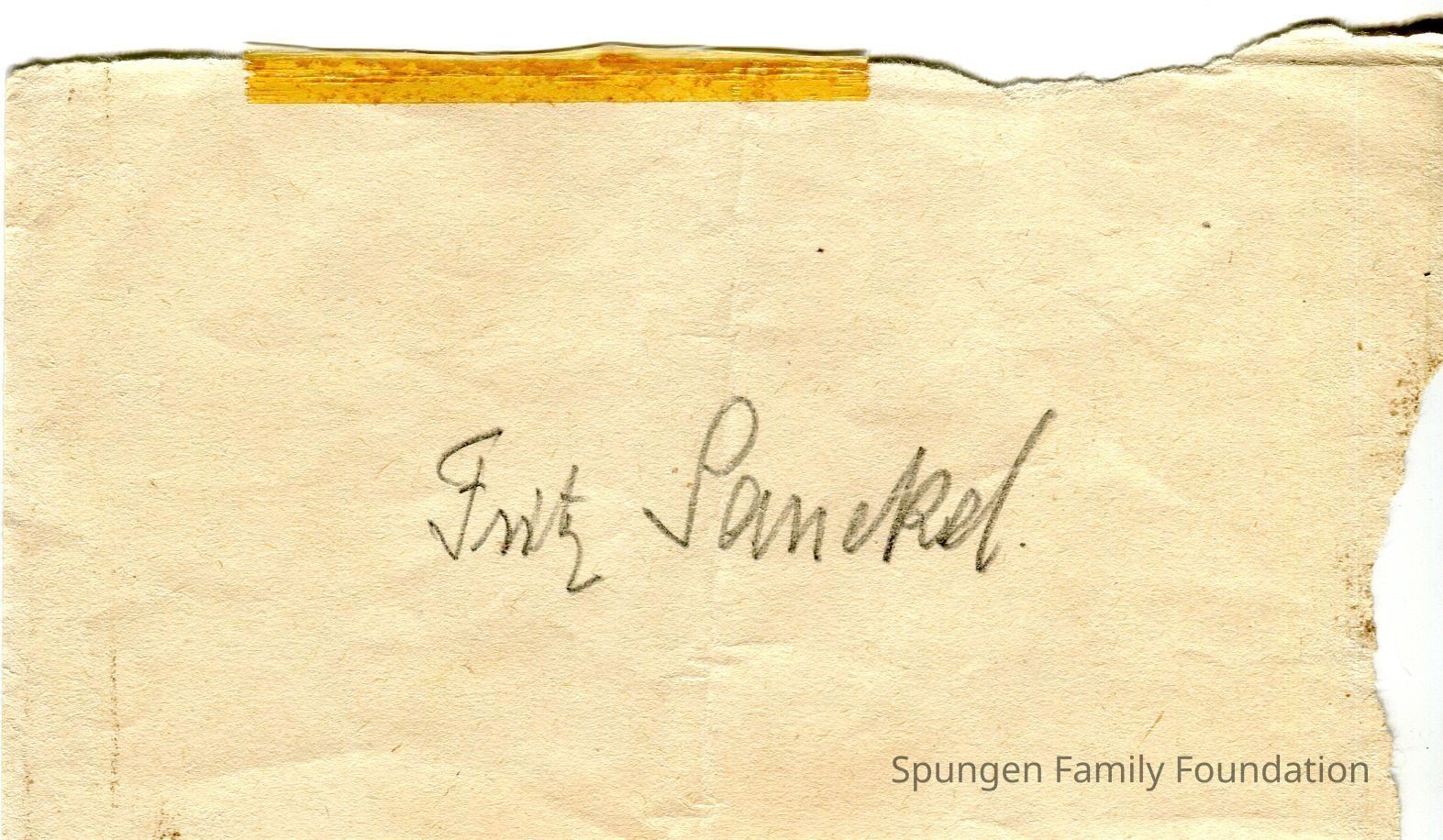
1946, Front side - Note card with Fritz Sauckel signature from the Palace of Justice in Nuremberg, Germany.
Tan note card with cursive signature and printed handwriting in German using black ink.
Name/Title
Fritz SauckelEntry/Object ID
2026.7.15Scope and Content
1946, note card with Fritz Sauckel signature from the Palace of Justice in Nuremberg, Germany.Context
Ernst Friedrich (Fritz) Sauckel was the General Plenipotentiary for Labor Deployment from 1942 to 1945. Sauckel’s main responsibility was instating and maintaining forced labor civilians and foreign volunteers. During World War I, Sauckel joined the merchant marine of Norway and Sweden. Aboard a German ship en route to Australia, the ship was captured by the French navy. Sauckel was interned in France from 1914 to 1919. After his release, Sauckel returned to Germany and worked as a locksmith and toolmaker before joining Deutschvölkischer Schutz und Trutzbund, a globally influential antisemitic organization. In 1921, he studied engineering but was soon expelled for his political activities. After joining the NSDAP in 1923, Sauckel immediately became an active member. Sauckel worked to establish a newspaper, Der Nationalsozialist, serving as its editor from 1927 to 1945. In 1933, Sauckel was appointed as Reichsstatthalter or Reich Governor of Thuringia, a state in Germany. His position provided more control over state centralized governments. In the midst of the war, Sauckel, General Plenipotentiary for Labor Deployment was in charge of managing over five million foreign workers utilized forced labor. Of the five million, only around 200,000 volunteered for labor aiding to the war effort. The extensive number of laborers allowed Sauckel and Germany to divide the work among many German industries like steel, mining, and weapons manufacturing. At the end of the war, on his 50th birthday, Sauckel was awarded a cash sum of 250,000 Reichsmark. Months later, on April 10, 1945, Sauckel fled Weimar in Thuringia, Germany but was arrested a month later. Sauckel was put on trial at the Palace of Justice in Nuremberg, Germany. He was found guilty of war crimes and crimes against humanity, and shortly after was executed by hanging on October 16, 1946. At the end of his life, Sauckel believe he was an innocent man and that his sentencing was unjust.Collection
Nazi Party SignaturesCategory
Note
Philatelic Material