Hermann Göring
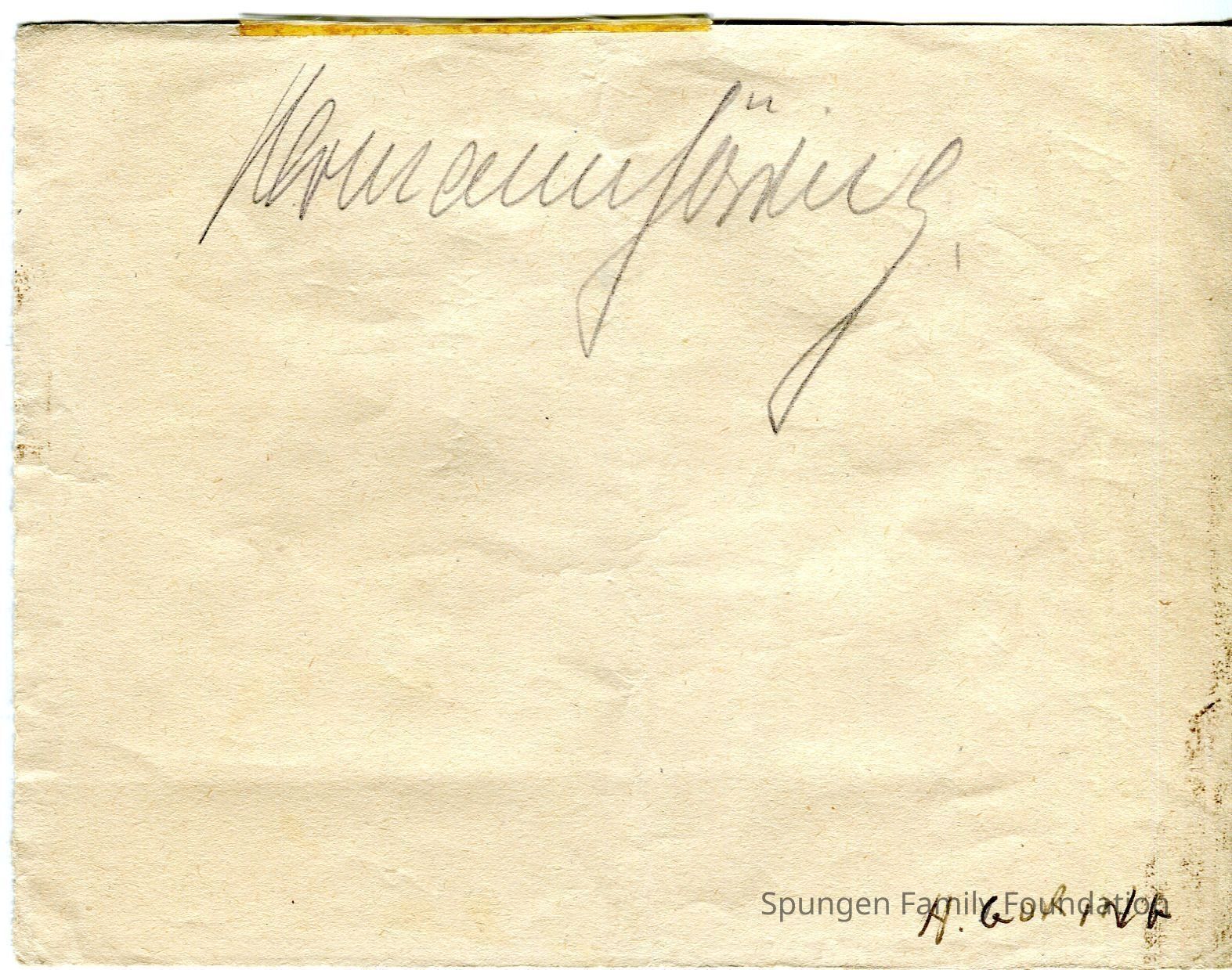
1946, Front side - Note card with Hermann Göring signature from the Palace of Justice in Nuremberg, Germany.
Tan note card with cursive signature and printed handwriting in German using black ink.
Name/Title
Hermann GöringEntry/Object ID
2026.7.6Scope and Content
1946, note card with Hermann Göring signature from the Palace of Justice in Nuremberg, Germany.Context
One of the most notorious Nazi figures, Hermann Wilhelm Göring was a World War I fighter pilot ace. An early member of the Nazi party, Göring gained the trust of Adolf Hitler and was named minister without portfolio in 1933. Early in his career with the Nazi party, Göring was not deeply antisemitic. He did not have an innate hatred for Jewish people as Joseph Goebbels or Heinrich Himmler did. Yet, Göring backed the Nuremberg Laws of 1935 and more policies that would help remove Jews from Europe. In the years before the war, Göring oversaw the foundation of the Gestapo, helped create the Four-Year Plan, and preparing the economy for warfare. By 1941, Göring was greatly powerful, especially since Hitler had entrusted Göring to carry out the process of the Final Solution, the eradication of Jewish people which Göring had passed off to Reinhard Heydrich. Yet, despite his power and influence, his relationship with Adolf Hitler would strain. Two major factors led to Göring’s exit from office. First, the Luftwaffe failed to protect German cities from Allied bombings. Additionally, the lack of resupply to Axis forces in Stalingrad during the winter of 1941 was extremely detrimental. As a result, Göring withdrew from politics, and shifted focus to propaganda and stealing assets from Jewish victims. In April 1945, the end of war was impending. Top Nazi leaders sent their families to Obersalzberg, a large Nazi complex in the mountainous Alps region. On April 25, 1945, Göring got word of Hitler’s plan to commit suicide. This knowledge encouraged Göring to send a telegram to Hitler requesting to resume position as chancellor. Hitler was unmoved by Göring’s request and revoked all of his positions from the Nazi party and ordering an arrest. Following his arrest, Göring was placed on trial at the Palace of Justice in Nuremberg, Germany. Although Göring held multiple positions of power, leading to the mass eradication of Jews, he pleaded not guilty to crimes against humanity. Sentenced to death by hanging, Göring made an appeal for death by firearm, though it was denied by the court. A day before his scheduled execution, Göring committed suicide with a potassium cyanide tablet, convulsing which alarmed the guards but being far too late, Göring died within five minutes.Collection
Nazi Party SignaturesCategory
Note
Philatelic Material