F06_P06: Jewish Slave Labor in Poland, Palestine
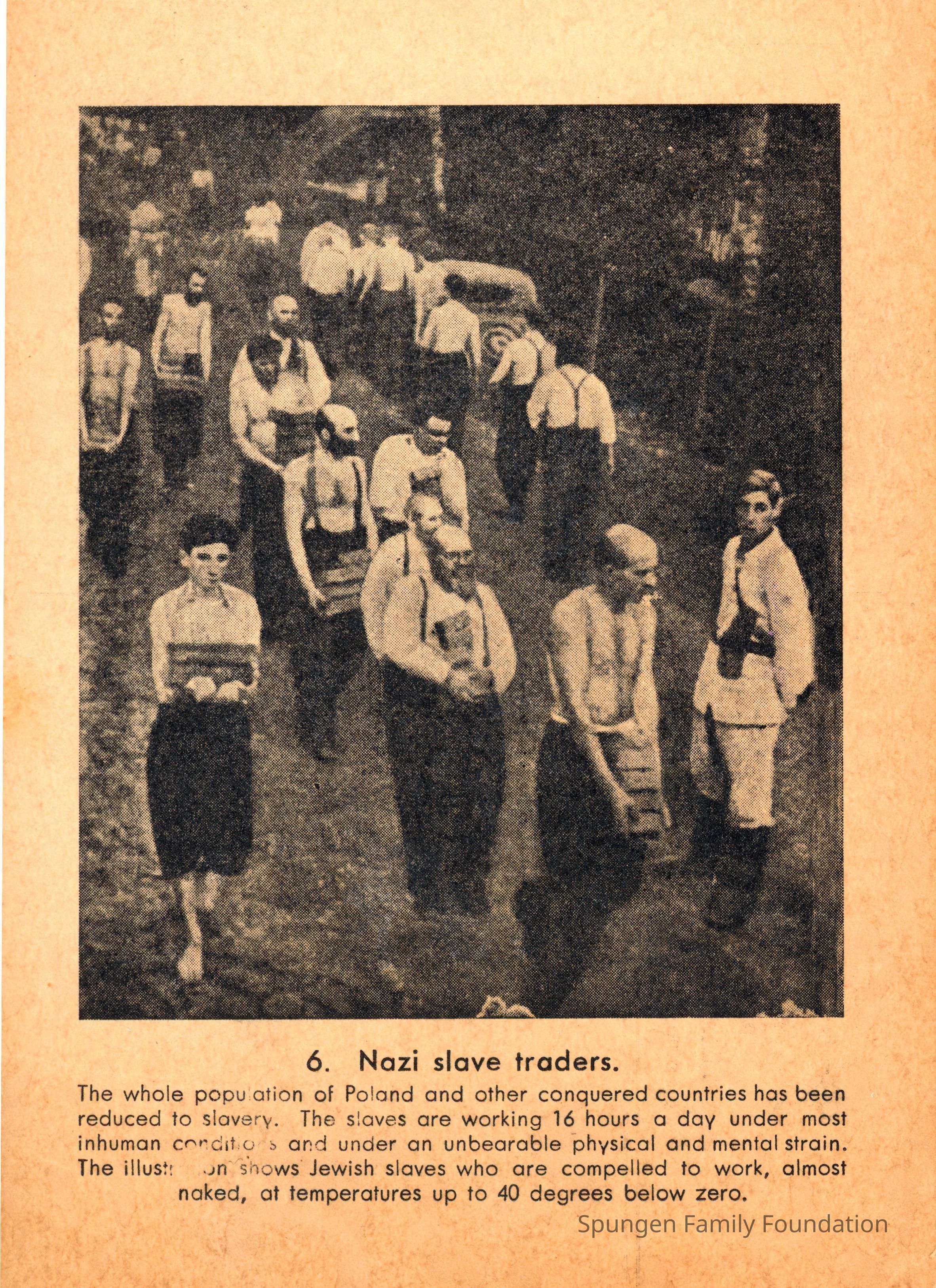
c. 1943, Front side - Post card from Anti Nazi League headquarters in Palestine.
Tan post card with typed text printed in English using black ink. A black-and-white photo depicting dozens of Jewish men carrying bricks or stones as forced labor. The men are wearing dark pants and some wearing a light colored top or no top at all. To the right is a guard wearing a light colored uniform and dark boots. In the background is a coupe style car the individuals are walking past. In the furthest point of the image, prisoners can be seen walking to and from with bricks and stones as part of physical and mental torture.
Name/Title
F06_P06: Jewish Slave Labor in Poland, PalestineEntry/Object ID
2007.6.6.aScope and Content
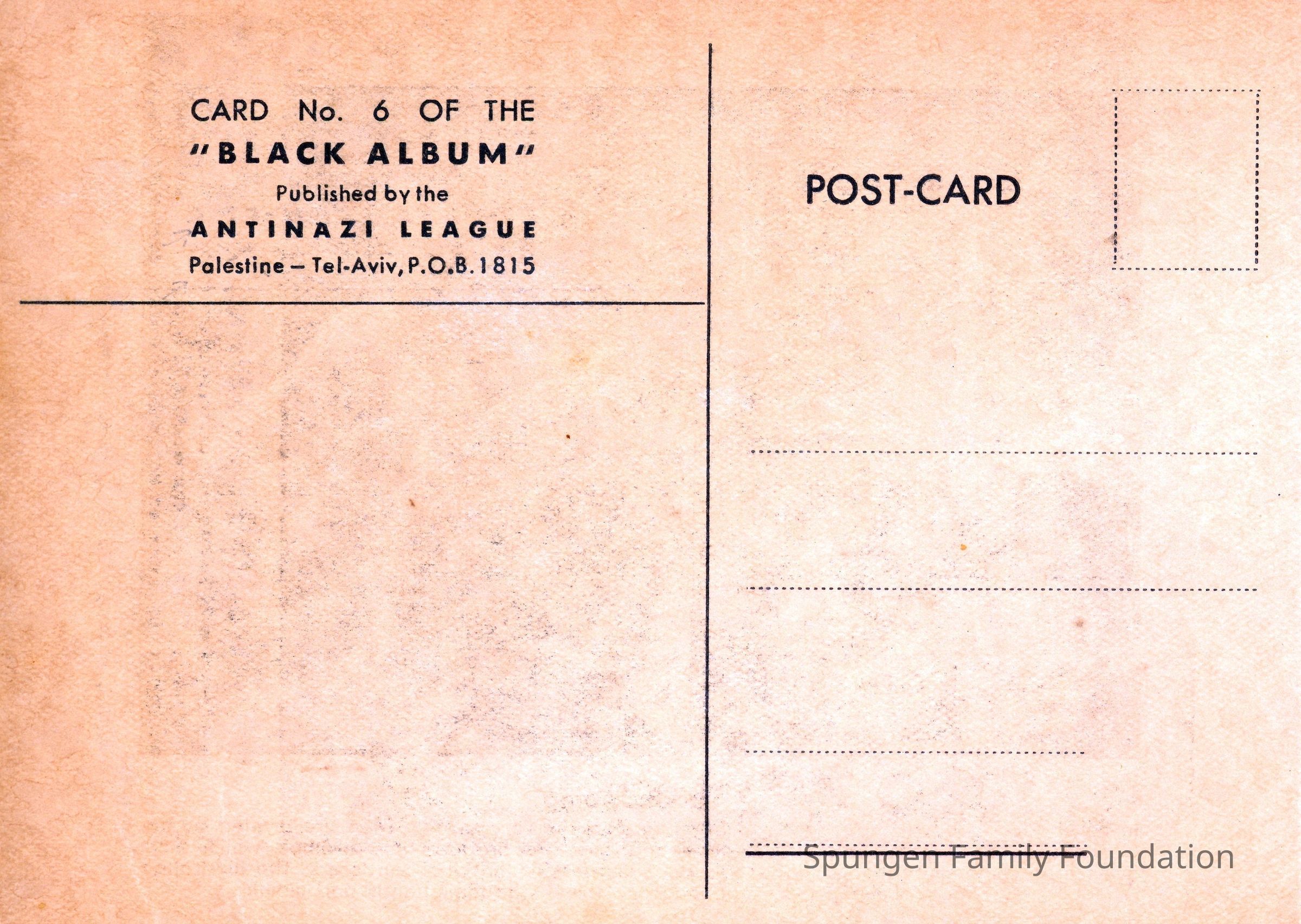
c. 1943, post card from Anti Nazi League headquarters in Palestine.Context
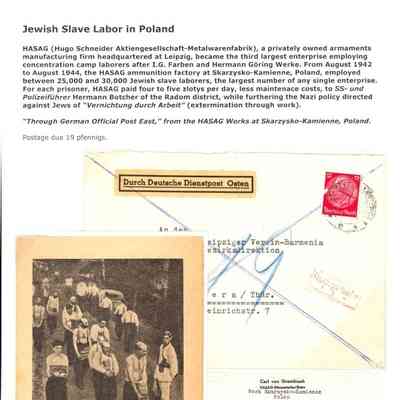
HASAG (Hugo Schneider Aktiengesellschaft-Metalwarenfabrik), a privately owned armaments manufacturing firm headquartered at Leipzig, became the third largest enterprise employing concentration camp laborers after I.G. Farben and Hermann Göring Werke. From August 1942 to August 1944, the HASAG ammunition factory at Skarzysko-Kamienne, Poland, employed between 25,000 and 30,000 Jewish slave laborers, the largest number of any single enterprise. For each prisoner, HASAG paid four to five zlotys per day, less maintenance costs, to SS- und Polizeiführer Hermann Botcher of the Radom district, while furthering the Nazi policy directed against Jews of "Vernichtung durch Arbeit" (extermination through work). "Through German Official Post East," from the HASAG Works at Skarzysko-Kamienne, Poland. Postage due 19 pfennigs. In 1943 the Anti Nazi League headquarters in Palestine published the Black Album, a book of ten post cards that reproduced photographs of Nazi atrocities that had been smuggled out of Germany and Nazi-occupied Europe. These were among the first visual proofs of the events that became known as the Holocaust. Very few of these prints survived the war.Collection
Nazi Scourge I: Primary ExhibitionCategory
Post Card
Philatelic Material