Joachim von Ribbentrop
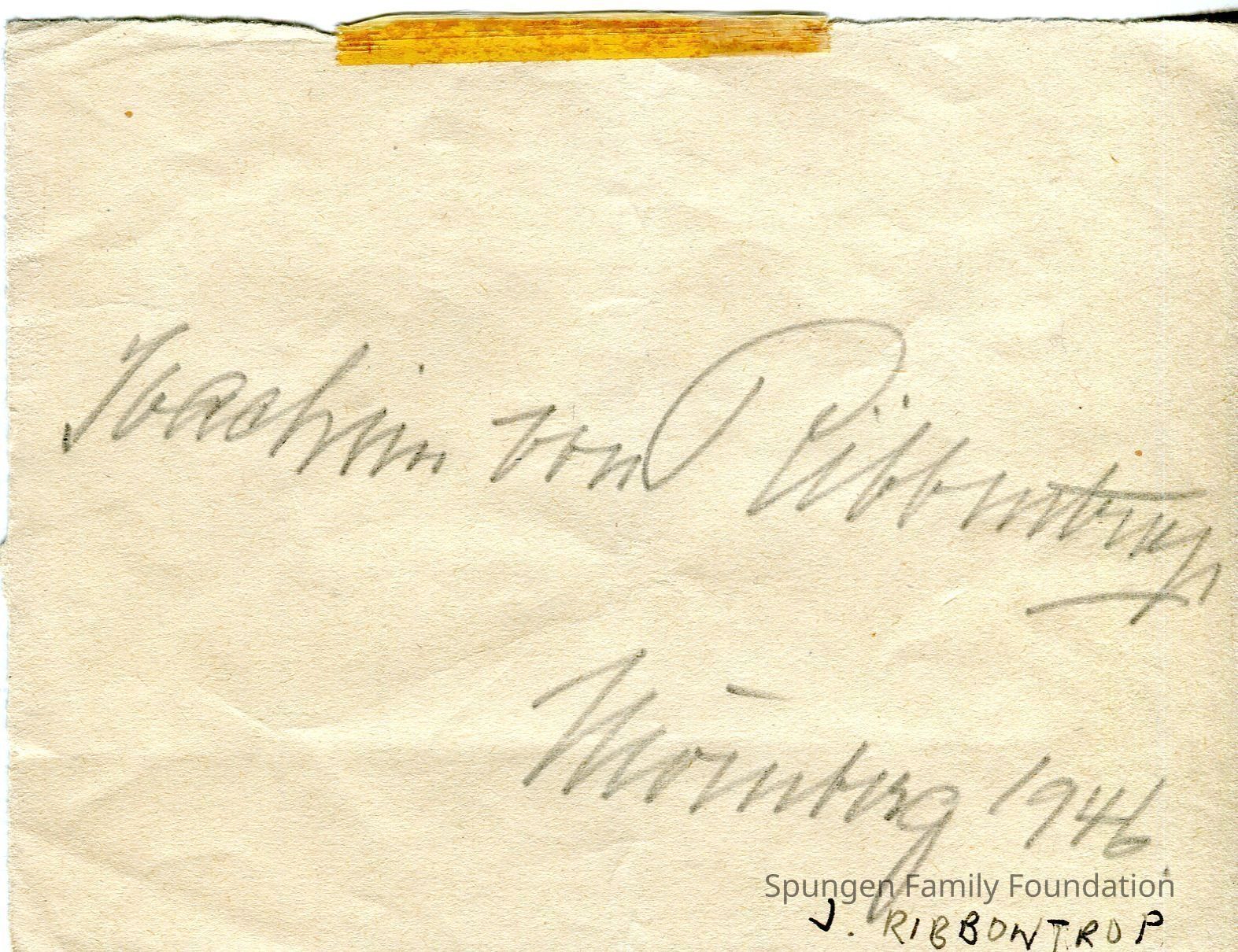
1946, Front side - Note card with Joachim von Ribbentrop signature from the Palace of Justice in Nuremberg, Germany.
Tan note card with cursive signature and printed handwriting in German using black ink.
Name/Title
Joachim von RibbentropEntry/Object ID
2026.7.13Scope and Content
1946, note card with Joachim von Ribbentrop signature from the Palace of Justice in Nuremberg, Germany.Context
Minister of Foreign Affairs of Nazi Germany from 1938 to 1945, Joachim von Ribbentrop first came to Adolf Hitler as a well-versed businessman. Ribbentrop quickly became a close confidant of Hitler, aiding in various ways. Ribbentrop worked in Canada following his adolescent education in then Prussia. Returning, Ribbentrop served in World War I, fighting on the Eastern then the Western Front. He was awarded the Iron Cross for his bravery while wounded in action. In 1918, Ribbentrop befriended Franz von Papen by chance. In 1928, Ribbentrop was introduced to Hitler and displayed himself as a trustworthy businessman with connections. He offered to be Hitler’s secret emissary, but Hitler declined his offer, only to return to it six months later, offering Ribbentrop the position. Ahead of the war, as the Nazi party gained popularity, a strongly devoted Ribbentrop was disliked by most members of the party. Joseph Goebbels claimed Ribbentrop bought his name, married his money, and swindled his way into office. Additionally, Ribbentrop was apolitical and did not seem to express antisemitism, shocking Jewish individuals who knew him before his devotion to the Nazi regime. Ribbentrop was appointed as Minister of Foreign Affairs, and was reviewed by his colleagues as lazy, diverting, and superficial. Many could not believe he gained the position he did. During the war, Ribbentrop failed to protect Hitler from an assassination attempt constructed by old Foreign Office diplomats. Hitler believed Ribbentrop’s “bloated administration” obstructed him from organizing and committing to his diplomat responsibilities. Eventually, Ribbentrop was excommunicated by Hitler and rejected in attempts to meet with him. In 1946, Ribbentrop appeared on trial in Nuremberg, Germany. Ribbentrop was described by the psychologist at Nuremberg as “highly neurotic”. Even until the end of his life, Ribbentrop was loyal to Hitler who wanted nothing to do with him. He was executed by hanging in 1946.Collection
Nazi Party SignaturesCategory
Note
Philatelic Material