Never Again???
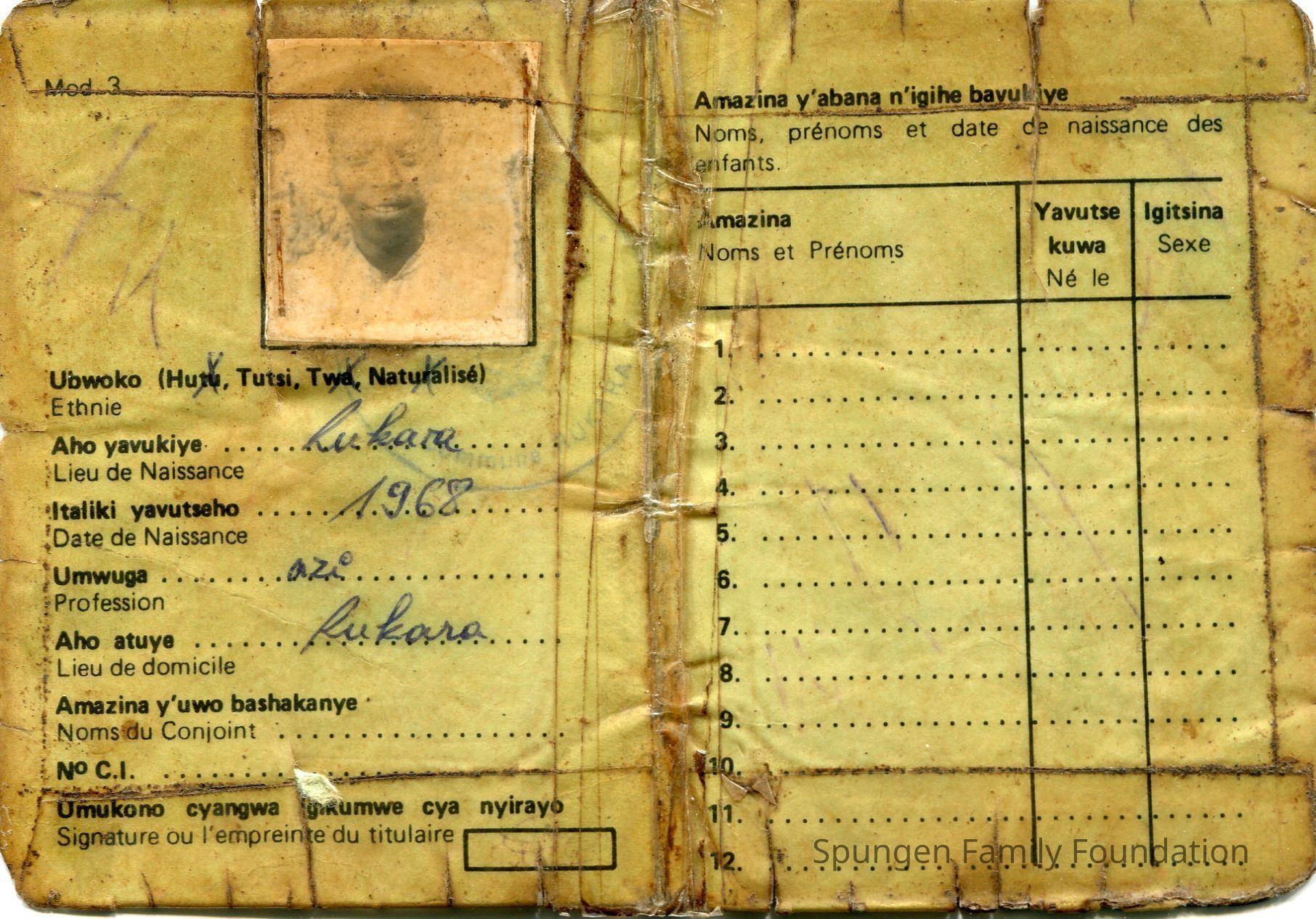
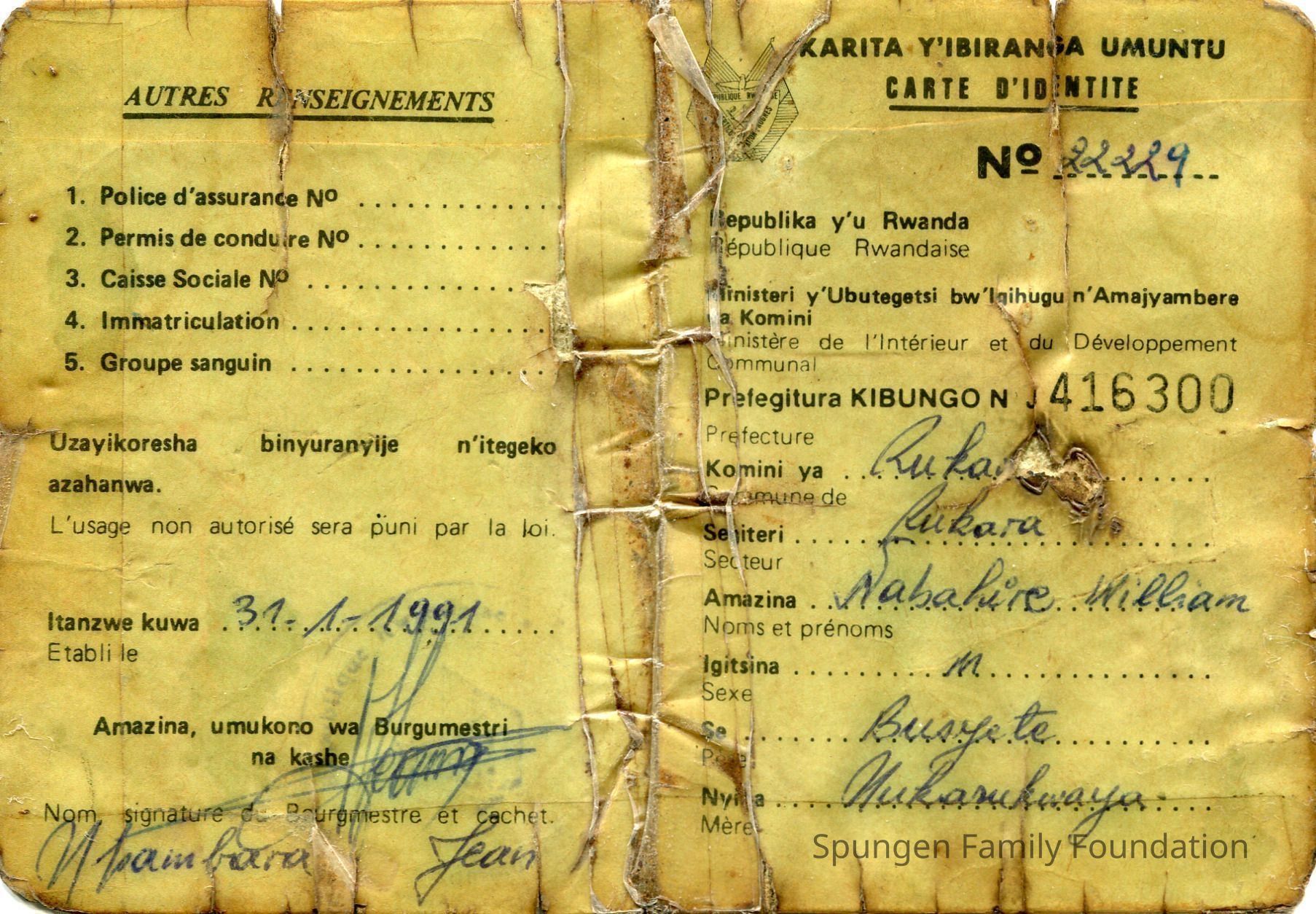
1991 January 31, Front side - Identification pass which belonged to William Nabahire who was murdered in the Rwandan Genocide.
Green identification pass of paper and adhesive tape. Printed text and outline in Swahili and French using black ink. At the left center, cursive handwriting in blue ink is present. Above, a black-and-white photograph depicting William Nabahire wearing a white shirt, facing forward and slightly smiling. He has a short, dark haircut.
Name/Title
Never Again???Entry/Object ID
2018.2.1Scope and Content
1991 January 31, identification pass which belonged to William Nabahire who was murdered in the Rwandan Genocide.Context
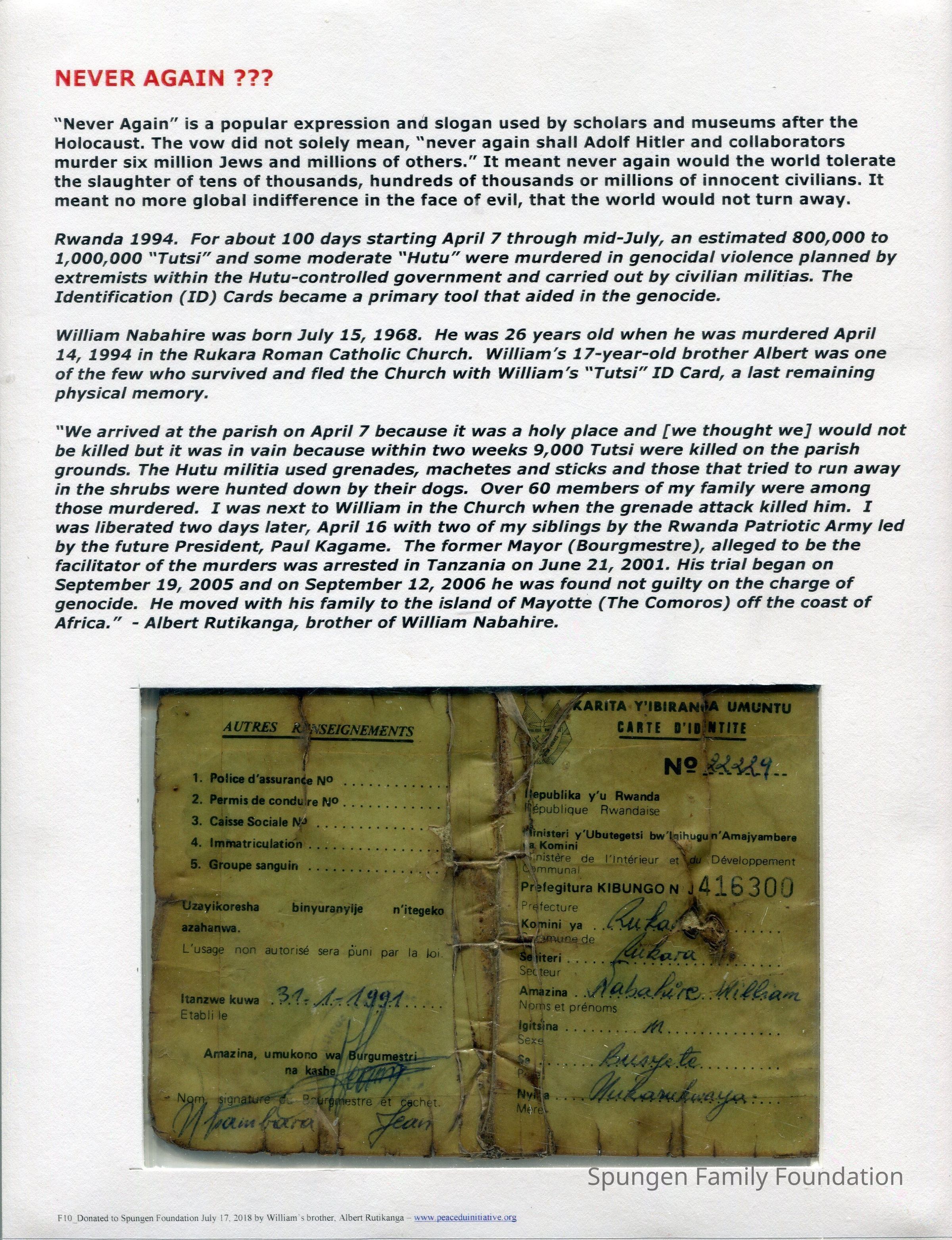
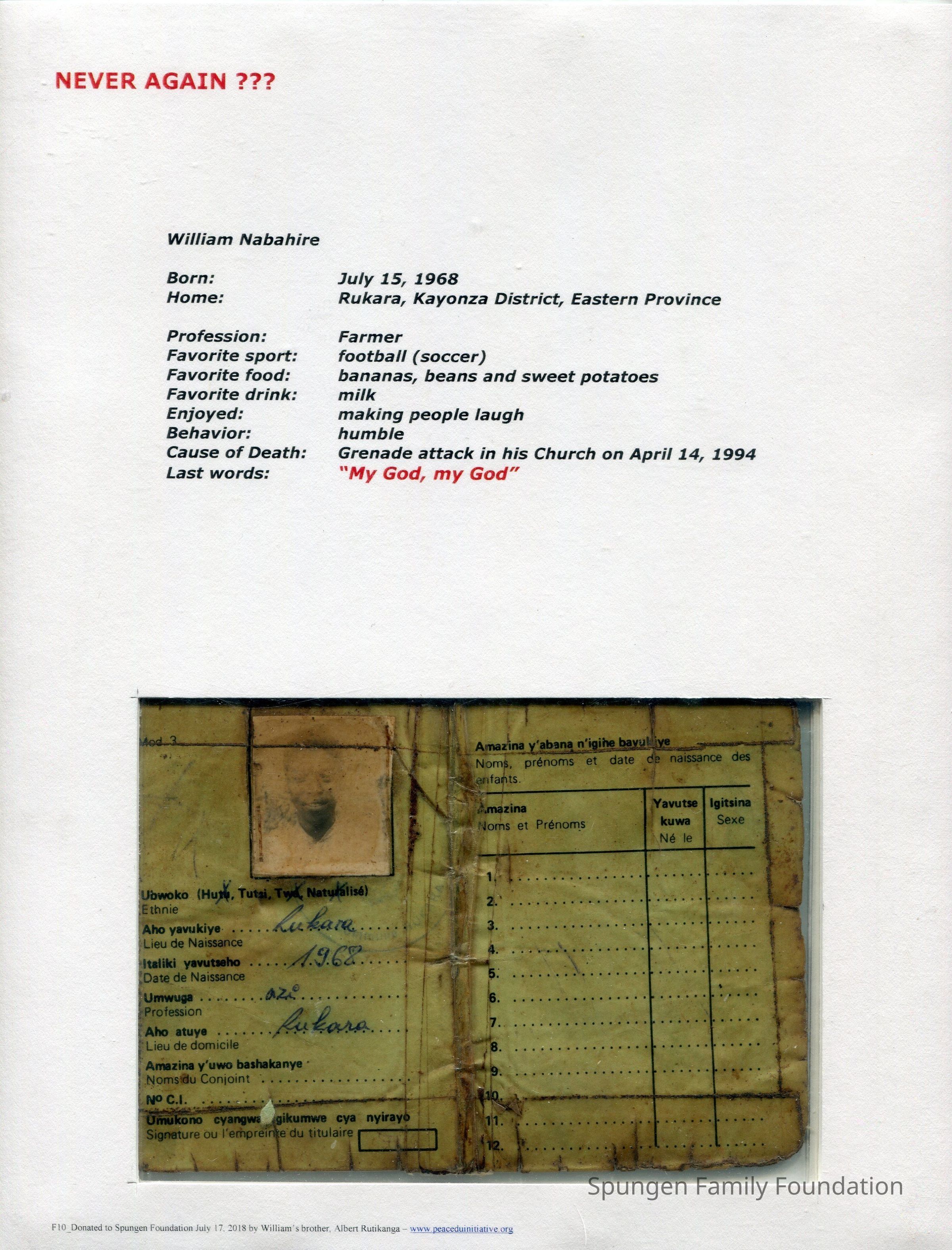
“Never Again” is a popular expression and slogan used by scholars and museums after the Holocaust. The vow did not solely mean, “never again shall Adolf Hitler and collaborators murder six million Jews and millions of others.” It meant never again would the world tolerate the slaughter of tens of thousands, hundreds of thousands or millions of innocent civilians. It meant no more global indifference in the face of evil, that the world would not turn away. Rwanda 1994. For about 100 days starting April 7 through mid-July, an estimated 800,000 to 1,000,000 “Tutsi” and some moderate “Hutu” were murdered in genocidal violence planned by extremists within the Hutu-controlled government and carried out by civilian militias. The Identification (ID) Cards became a primary tool that aided in the genocide. William Nabahire was born July 15, 1968. He was 26 years old when he was murdered April 14, 1994 in the Rukara Roman Catholic Church. William’s 17-year-old brother Albert was one of the few who survived and fled the Church with William’s “Tutsi” ID Card, a last remaining physical memory. “We arrived at the parish on April 7 because it was a holy place and [we thought we] would not be killed but it was in vain because within two weeks 9,000 Tutsi were killed on the parish grounds. The Hutu militia used grenades, machetes and sticks and those that tried to run away in the shrubs were hunted down by their dogs. Over 60 members of my family were among those murdered. I was next to William in the Church when the grenade attack killed him. I was liberated two days later, April 16 with two of my siblings by the Rwanda Patriotic Army led by the future President, Paul Kagame. The former Mayor (Bourgmestre), alleged to be the facilitator of the murders was arrested in Tanzania on June 21, 2001. His trial began on September 19, 2005 and on September 12, 2006 he was found not guilty on the charge of genocide. He moved with his family to the island of Mayotte (The Comoros) off the coast of Africa.” - Albert Rutikanga, brother of William Nabahire. Reverse Exhibit Page - Information about William Nabahire: William Nabahire Born: July 15, 1968 Home: Rukara, Kayonza District, Eastern Province Profession: Farmer Favorite sport: football (soccer) Favorite food: bananas, beans and sweet potatoes Favorite drink: milk Enjoyed: making people laugh Behavior: humble Cause of Death: Grenade attack in his Church on April 14, 1994 Last words: “My God, my God”Collection
The Rwandan GenocideCategory
Identification Card
Philatelic Material