Wilhelm Keitel
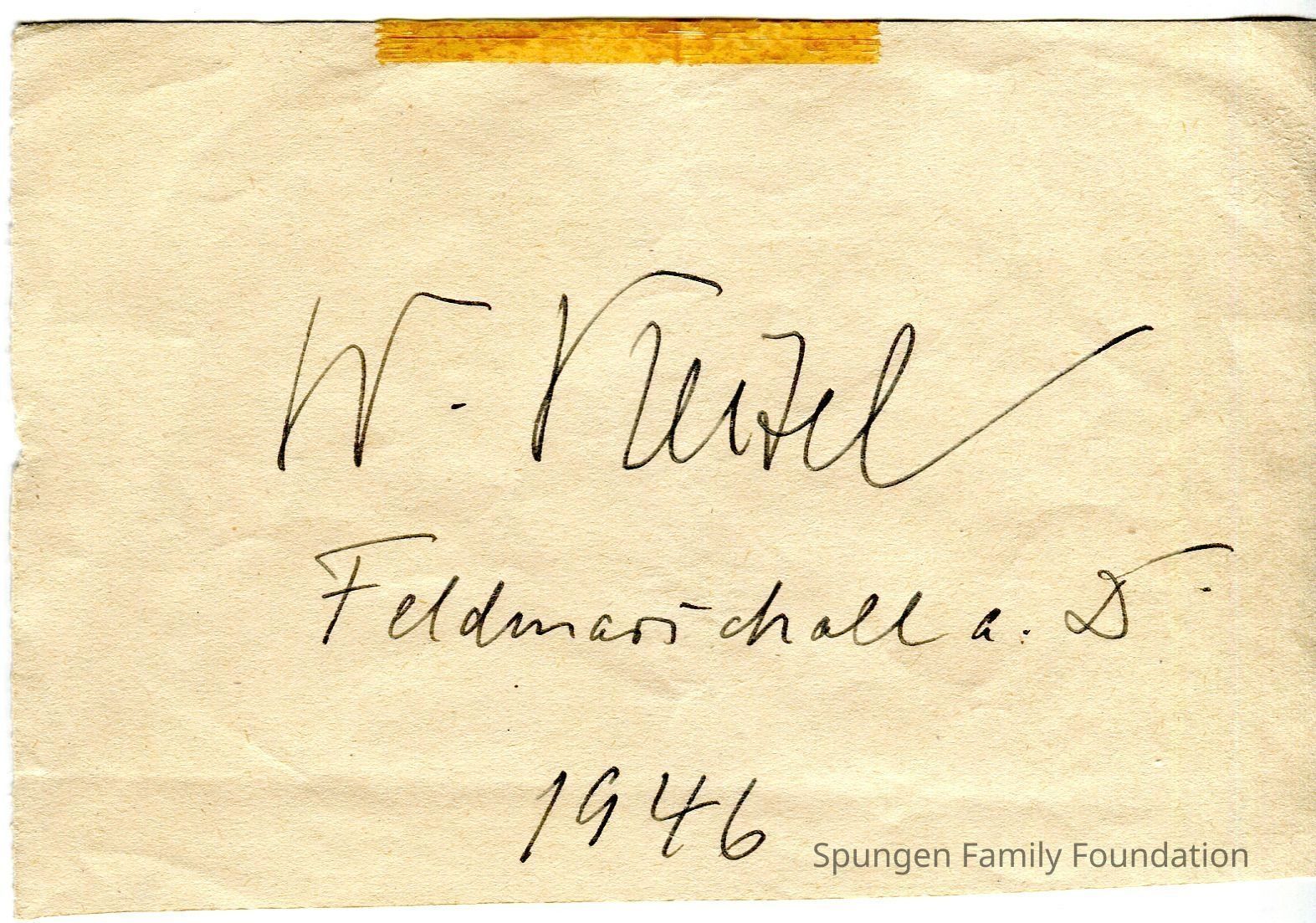
1946, Front side - Note card with Wilhelm Keitel signature from the Palace of Justice in Nuremberg, Germany.
Tan note card with cursive signature and printed handwriting in German using black ink.
Name/Title
Wilhelm KeitelEntry/Object ID
2026.7.10Scope and Content
1946, note card with Wilhelm Keitel signature from the Palace of Justice in Nuremberg, Germany.Context
Acting as a Field Marshal for nearly the entirety of World War II, Wilhelm Bodewin Johann Gustav Keitel was a notable figure of the Nazi party. An eventual promotion to Chief of the Wehrmacht reflected Keitel’s military expertise. Keitel’s relationship with Adolf Hitler was complicated. Initially Hitler viewed Keitel as a hard-working and decent man. Keitel was extremely devout to Hitler and referred to as a “stupid follower” and “blindingly loyal toady” by other Nazi officials. Many Nazi leaders did not feel Keitel had the skill or knowledge to possess such a role as Chief of the Wehrmacht. They believe he was subordinate and idiotic. Keitel played a pivotal role in World War II. Keitel aided in the planning of Operation Barbarossa, the invasion of the Soviet Union. When considering Nazi Germany’s struggles in the war, the winter of 1941 is a massive failure. Unprepared and undersupplied, Nazi forces marched into the Soviet Union. Ahead of the invasion, Adolf Hitler suggested Georg Thomas, a Nazi general, study the economic factors. After discussing the concerns, Keitel dismissed Thomas, assuring him that Hitler would not have interest in learning about these concerns. Ultimately, Thomas recommended the invasion regardless of his findings. At some fault for the hardships faced by the soldiers on the Eastern Front, Keitel continued to be a lackluster general, positioning troops in troubling places. The most successful thing Keitel did during the war was sign the German Instrument of Surrender. Additionally, Keitel issued an order stating the execution of 50-100 communists was reasonable for the loss of just one German soldier. This philosophy further radicalized the Wehrmacht, and a similar field of thought was practiced with the Holocaust and extermination of Jews. Keitel was not outwardly antisemitic but certainly did not oppose the Final Solution. He believed the evacuation of Jews from homes and towns needed to be done thoroughly and carefully without causing trouble later on. At the Nuremberg trials, Keitel was indicted on four counts including conspiracy to commit crimes against peace, waging wars of aggression, war crimes, and crimes against humanity. Keitel was executed by hanging on October 16, 1946.Collection
Nazi Party SignaturesCategory
Note
Philatelic Material