F06_P07: Łódź (Litzmannstadt) Jewish Ghetto, Routing to Ghetto
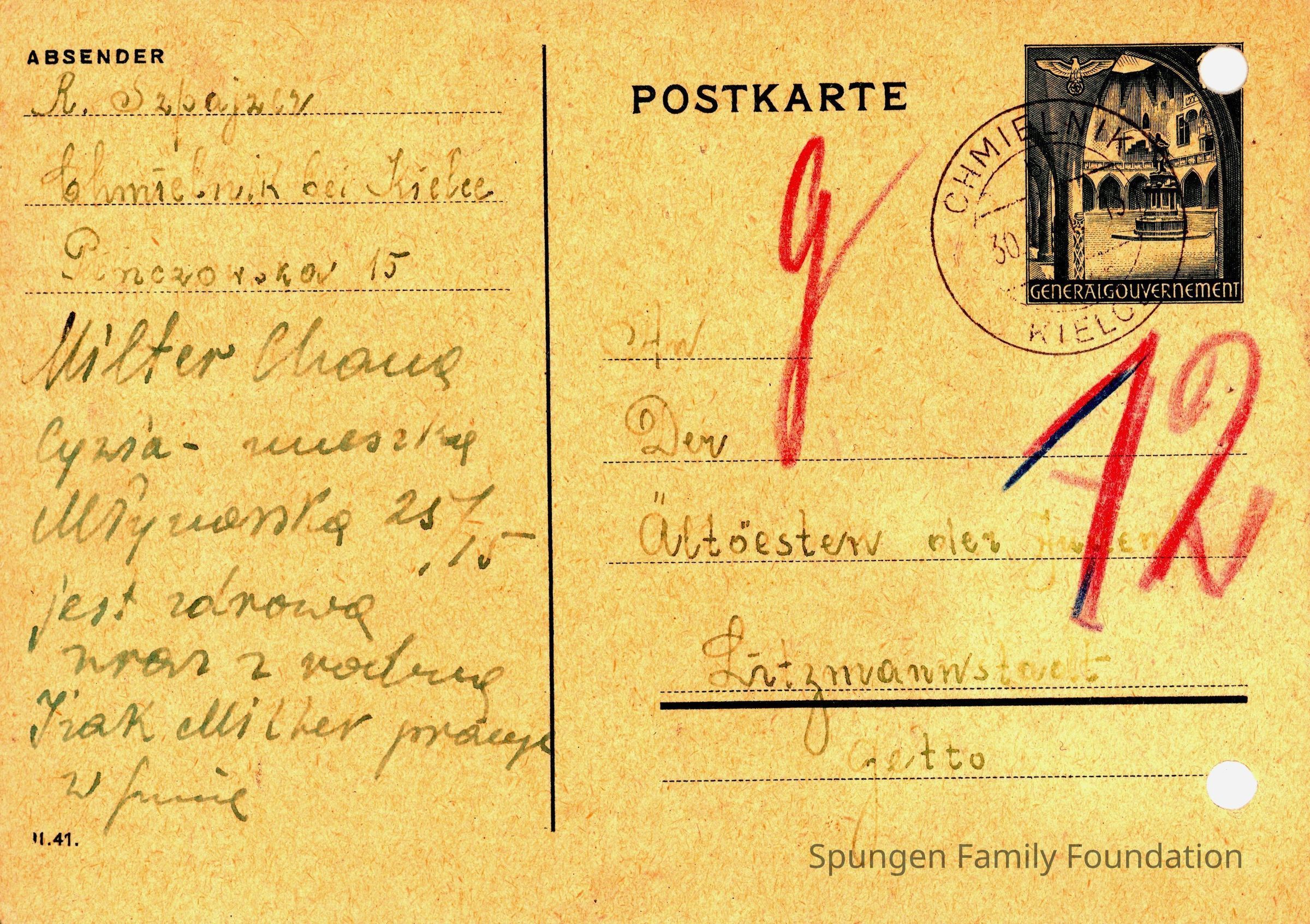
1941 June 30, Front side - Post card from Chmielnik to Jewish Elders Council of Litzmannstadt (Łódź).
Tan post card (appears yellow via scan) with printed text and outline in German using black ink. Cursive handwriting in black ink is present overall. At the top right corner is an imprint stamp of the courtyard of the Jagiellonian University in Krakow with the Reichsadler in the top left corner. Overtop is a black ink overprint cancellation dated June 30, 1941. At the center are two markings the letter "g" and number "12" in red crayon/pencil. The foundation is promptly working to update this scan.
Name/Title
F06_P07: Łódź (Litzmannstadt) Jewish Ghetto, Routing to GhettoEntry/Object ID
2007.6.7.aScope and Content
1941 June 30, post card from Chmielnik to Jewish Elders Council of Litzmannstadt (Łódź).Context
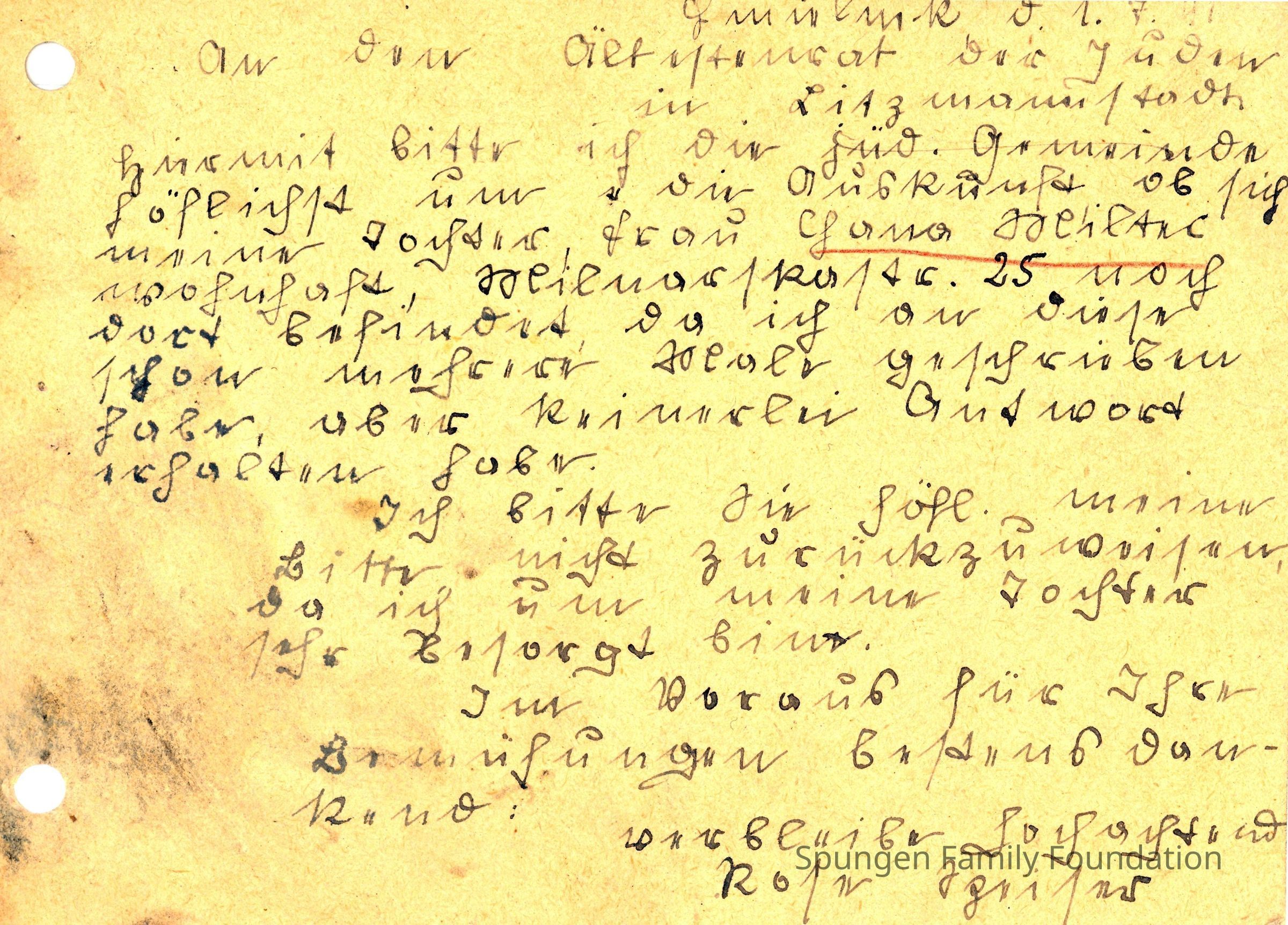
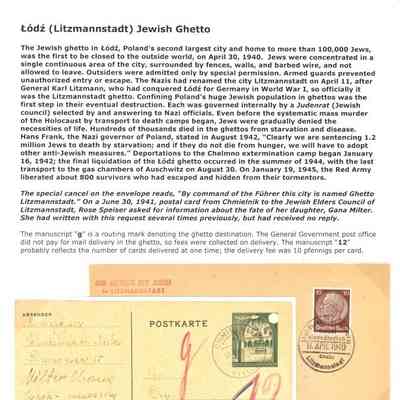
The Jewish ghetto in Łódź, Poland's second largest city and home to more than 100,000 Jews, was the first to be closed to the outside world, on April 30, 1940. Jews were concentrated in a single continuous area of the city, surrounded by fences, walls, and barbed wire, and not allowed to leave. Outsiders were admitted only by special permission. Armed guards prevented unauthorized entry or escape. The Nazis had renamed the city Litzmannstadt on April 11, after General Karl Litzmann, who had conquered Łódź for Germany in World War I, so officially it was the Litzmannstadt ghetto. Confining Poland's huge Jewish population in ghettos was the first step in their eventual destruction. Each was governed internally by a Judenrat (Jewish council) selected by and answering to Nazi officials. Even before the systematic mass murder of the Holocaust by transport to death camps began, Jews were gradually denied the necessities of life. Hundreds of thousands died in the ghettos from starvation and disease. Hans Frank, the Nazi governor of Poland, stated in August 1942, "Clearly we are sentencing 1.2 million Jews to death by starvation; and if they do not die from hunger, we will have to adopt other anti-Jewish measures." Deportations to the Chelmno extermination camp began January 16, 1942; the final liquidation of the Łódź ghetto occurred in the summer of 1944, with the last transport to the gas chambers of Auschwitz on August 30. On January 19, 1945, the Red Army liberated about 800 survivors who had escaped and hidden from their tormentors. The special cancel on the envelope reads, "By command of the Führer this city is named Ghetto Litzmannstadt." On a June 30, 1941, postal card from Chmielnik to the Jewish Elders Council of Litzmannstadt, Rose Speiser asked for information about the fate of her daughter, Gana Milter. She had written with this request several times previously, but had received no reply. The manuscript “g" is a routing mark denoting the ghetto destination. The General Government post office did not pay for mail delivery in the ghetto, so fees were collected on delivery. The manuscript "12" probably reflects the number of cards delivered at one time; the delivery fee was 10 pfennigs per card.Collection
Nazi Scourge I: Primary ExhibitionCategory
Post Card
Philatelic Material