Research Type
ResearcherNotes
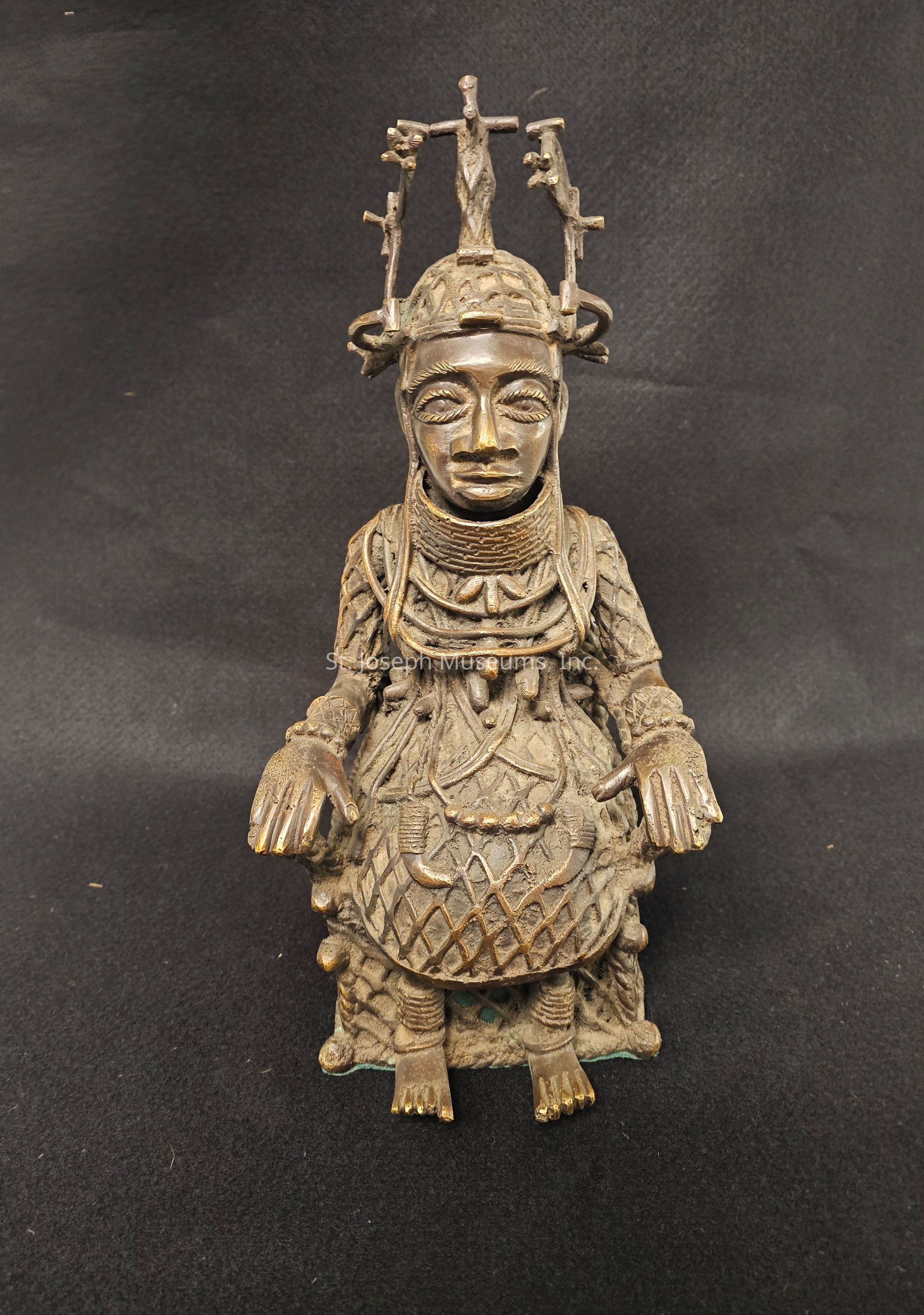
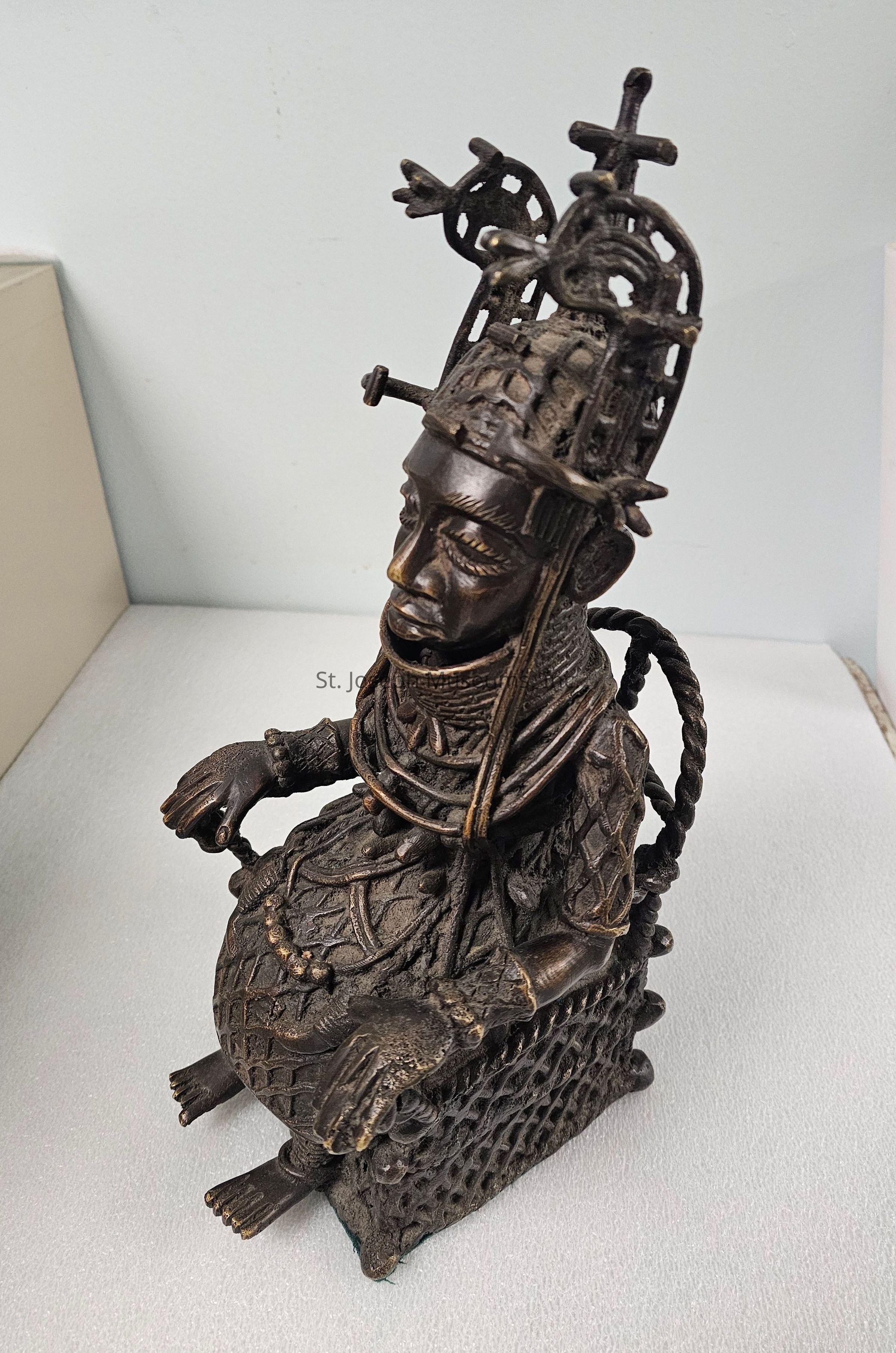
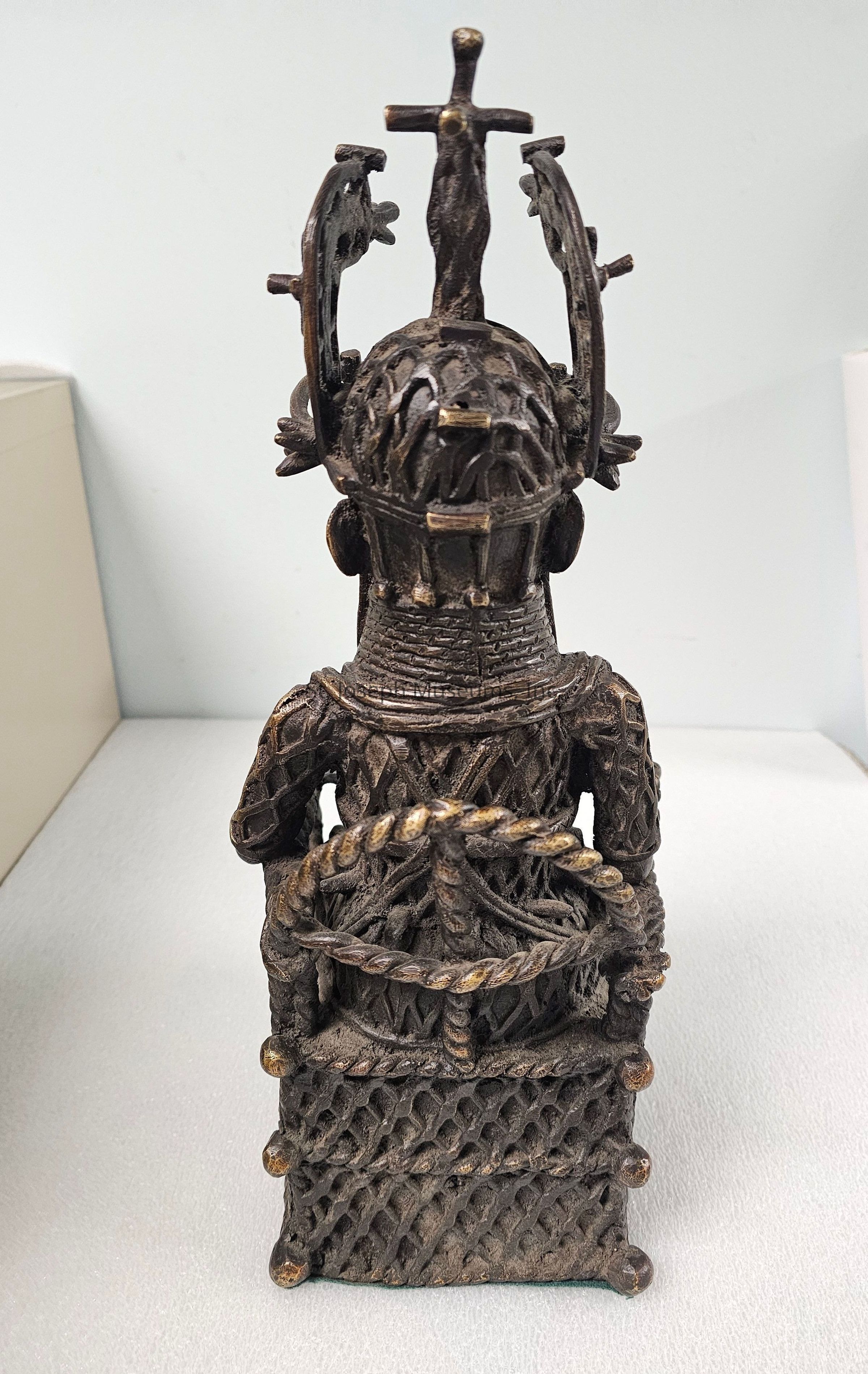
Statue of a seated Oba, or king, of the Benin Empire. The Benin Empire was particularly noted for these types of bronze casts. Statues like this one would have been created using a method called lost-wax casting, which has been practiced on the African continent for centuries. The process begins by carving a mold of wax, which would mirror exactly what the desired final product would be. Layers of clay are then applied - the first layer capturing the finer details and the later layers adding strength. The entire thing is then fired, which would cause the original wax to melt away leaving a hollow clay mold. Liquid metal is poured into the empty mold and left to cool and harden, after which the clay shell would be broken open, reveling the finished metal object underneath. Because the original template (the wax) and the mold (the clay) are both destroyed during this process, it guarantees that every piece of art created using this method is unique.
This particular seated statue features a face that displays generalized and highly stylized features. These are characteristic of the Benin royal court, where clothing, jewelry, and other accoutrements were more indicative of social status and identity (and thus more important to be depicted in art) than what a person looked like. Each statue could feature different emphasized facial features - the artist creating the sculpture would over emphasize whatever facial feature(s) of the person being depicted that they were drawn to. On this statue, the eyelashes and eyebrows are the most over emphasized.
These free standing sculptures were often created specifically for altars dedicated to past Obas and Queen Mothers (another venerated position in the Benin royal court). These type of statues were also created to empower new Obas. The multilayered collar around the neck is a hallmark of Benin royal regalia. The lattice style decorations likely represent woven coral beads. Coral was of particular significance to the Benin people and was considered an extreme sign of wealth. The Oba controlled all coral objects and the use of coral as decoration was limited to the Oba and to important chiefs.
The intricate details of this statue indicate that it was created at a later date - the amount of detail indicates that the artisans stopped being worried about bronze shortages affecting their art.
In Benin City, artisans were organized into societies called guilds. The guild organization ensured that masters were responsible for creating pieces but there was always a system of support in place to and guide new artisans. There were guilds dedicated to each of the crafts, like ivory carvers, wood carvers, leather workers, weavers, blacksmiths, etc. The guild for bronze casters was extremely elite however - they were only allowed to work for the Oba.