Name/Title
Bibliography from a George A. Dorsey publicationEntry/Object ID
Q1430.634.465BDescription
Seven- page Bibliography from George A. Dorsey's "Indians of the Southwest". The chapters are numbered and include titles with authors and publication information. Undated.
Vol I pg. 465B
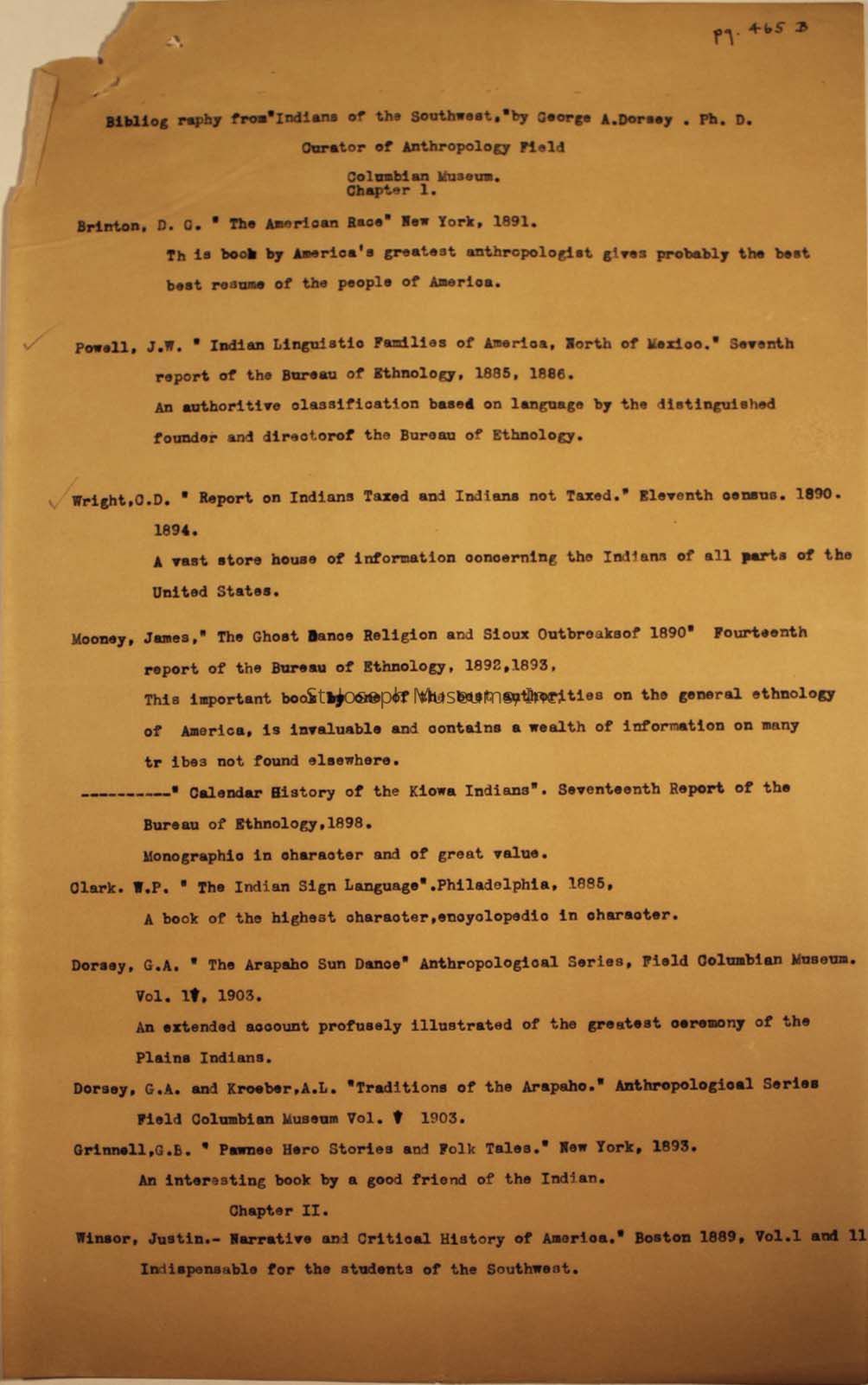
Bibliography from 'Indians of the Southwest,'" by George A. Dorsey, Ph.D., who is identified as the Curator of Anthropology Field at the Columbian Museum .
Chapter I. It lists various works related to Native American studies, including "The American Race" by D.G. Brinton from 1891, noted as a significant anthropological book. It also mentions "Indian Linguistic Families of America, North of Mexico" by J.W. Powell, and several reports from the Bureau of Ethnology. Other entries include "The Ghost Dance Religion and Sioux Outbreak of 1890" by James Mooney, highlighting its importance in ethnology, and works on the Kiowa Indians, Indian Sign Language, and the Arapaho Sun Dance by G.A. Dorsey and A.L. Kroeber. The page concludes with references to Pawnee Hero Stories and Folk Tales by G.B. Grinnell
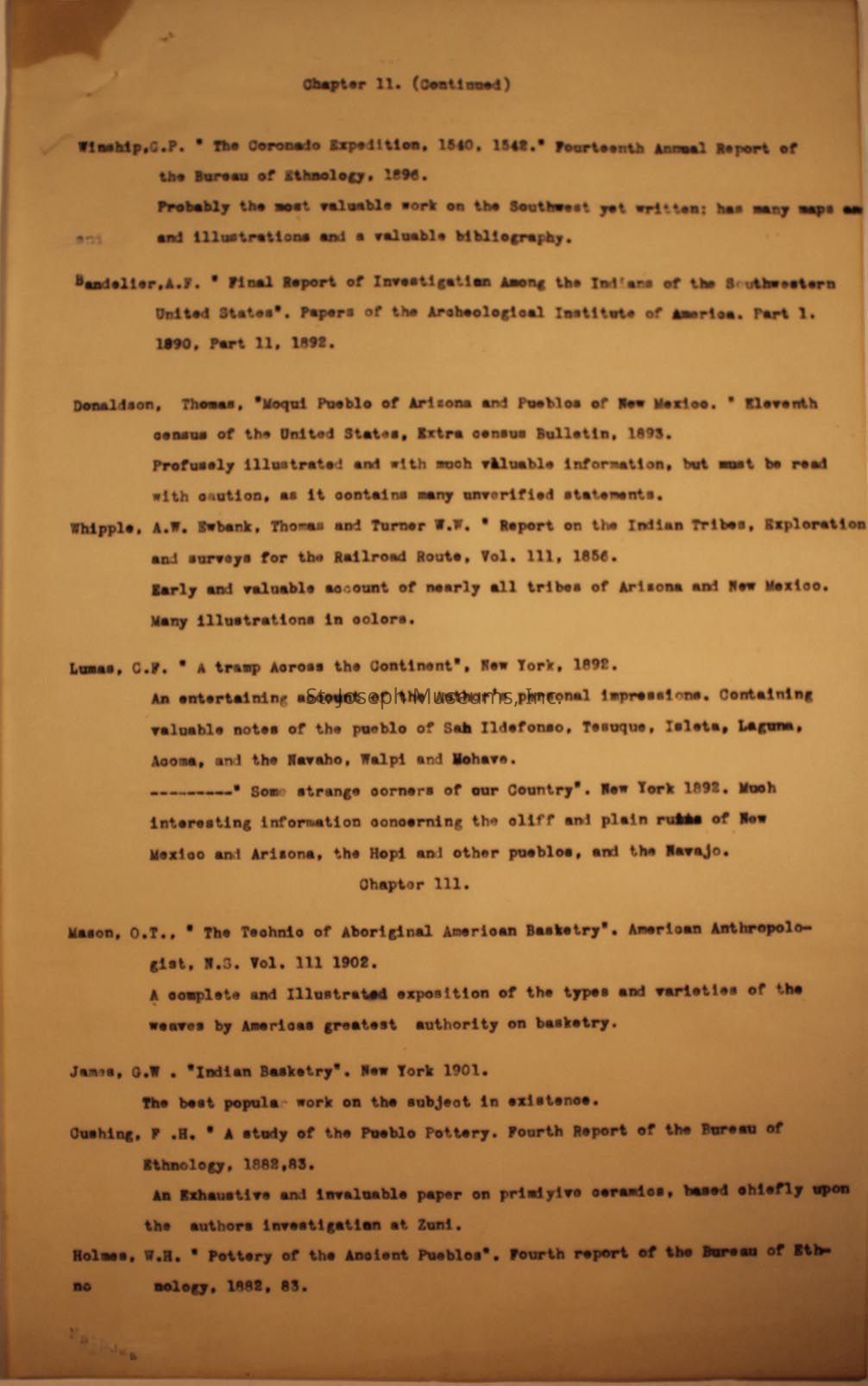
Chapter II. features annotated references to various works on Southwestern American history and anthropology. It includes citations for "The Coronado Expedition, 1540, 1542" by G.P. Winship, "Final Report of Investigation Among the Indians of the Southwestern United States" by A.F. Bandolier, and other reports and books such as Thomas Donaldson's "Moqui Pueblo of Arizona and Pueblo of New Mexico" and "Indian Basketry" by G.W. James. The document emphasizes exploration, archaeology, and ethnology, mentioning tribes and regions, with comments on illustrations, bibliographies, and the validity of statements within these works.
Chapter III. This chapter details text The Technic of Aboriginal American Basketry," among others. Each entry provides the author's name, publication details, and a brief description.
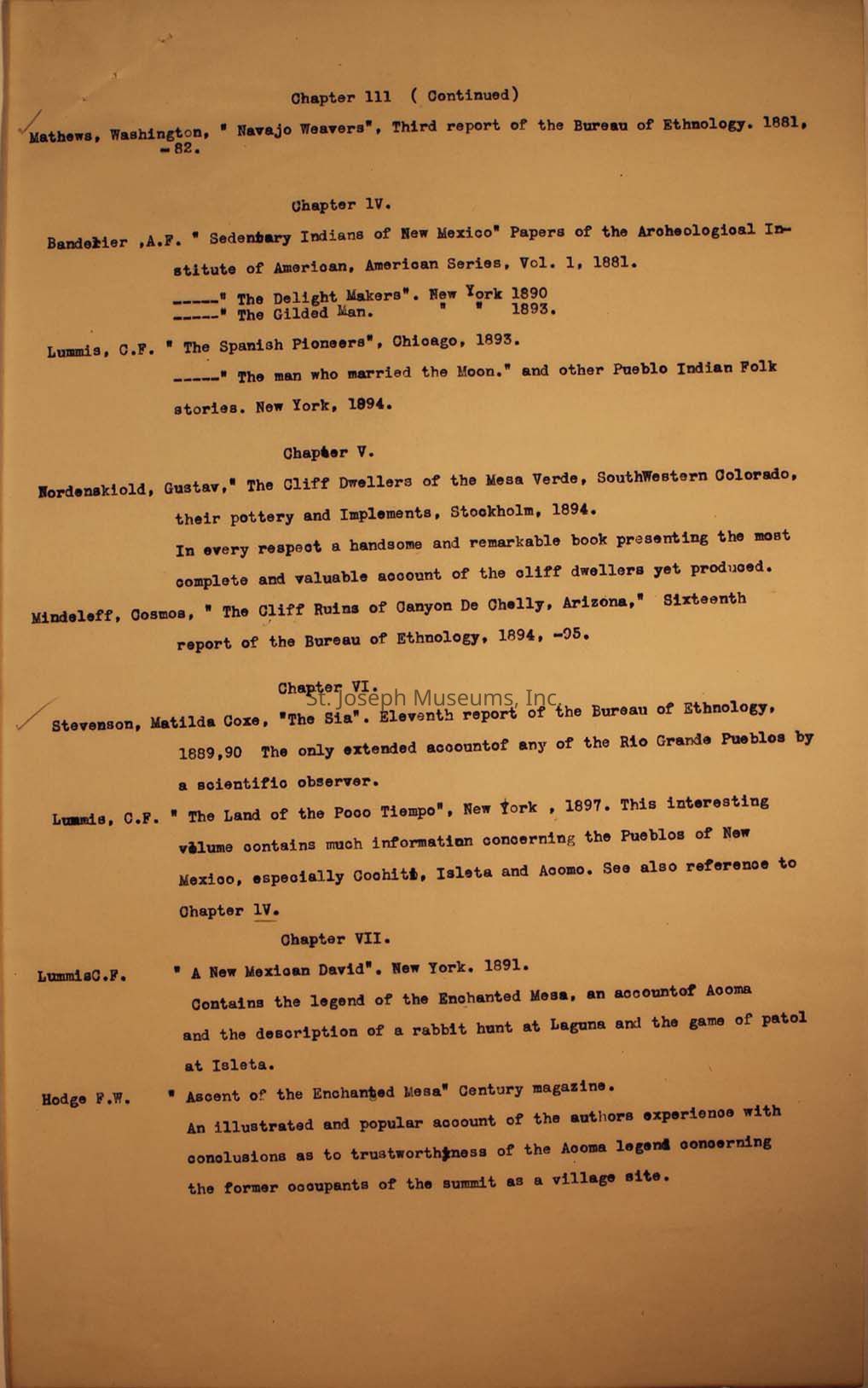
related to ethnology, archaeology, and anthropology. It includes "Navajo Weavers" by Mathews, from the third report of the Bureau of Ethnology in 1881.
Chapter IV. includes titles from Bandelier, such as "The Delight Makers" and "The Gilded Man," along with works by Lummis like "The Spanish Pioneers" and stories about Pueblo Indian folk tales.
Chapter V. discusses "The Cliff Dwellers of the Mesa Verde" by Nordenskiold and Mindeleff's "The Cliff Ruins of Canyon De Chelly."
Chapter VI. covers Stevenson’s "The Sia" and Lummis' "The Land of the Poco Tiempo," focused on Pueblo cultures and A.F. Bandelier’s work on the Sedennary Indians of New Mexico, among others.
Chapter VII. features works by Lummis and Hodge about "A New Mexican David" and the "Ascent of the Enchanted Mesa," respectively, detailing legends and archaeological accounts.
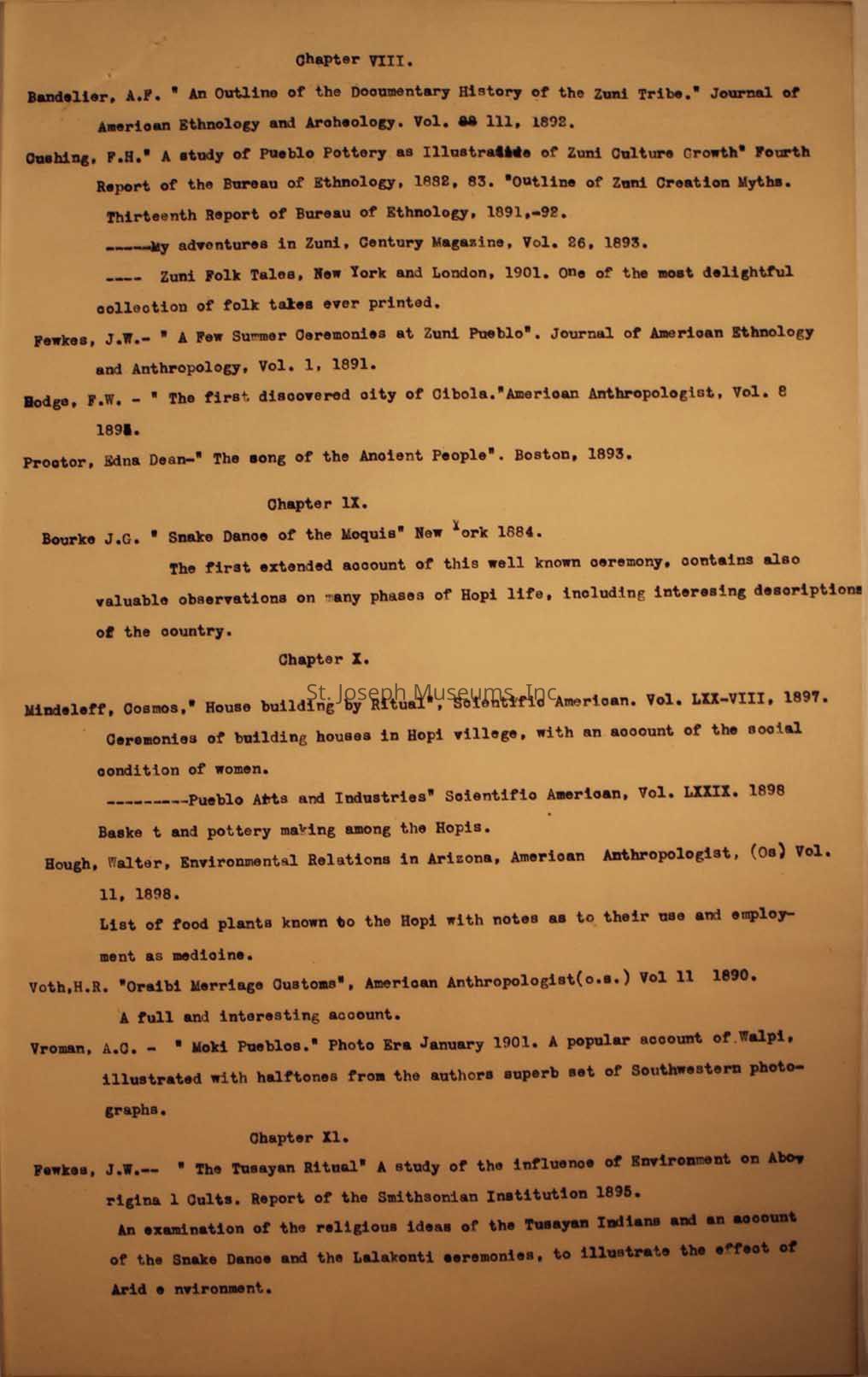
Divided into chapters VIII, IX, X, and XI, with each section providing titles and publication details of pertinent works by different authors.
Chapter VIII discusses works on the Zuni tribe, Pueblo pottery, Zuni ceremonial practices, and related folklore.
Chapter IX includes Bourke's observations on the Snake Dance of the Moquis from 1884, providing insights into Hopi life and offering descriptions of the country's culture. T
Chapter X delves into Hopi rituals, food plants, and Oraibi marriage customs, including house-building ceremonies, Pueblo arts, environmental relations, and food plants.
Chapter XI examines the Tusayan Rituals and the influence of environment on aboriginal cults, emphasizing religious ceremonies and Southwestern cultural practices.
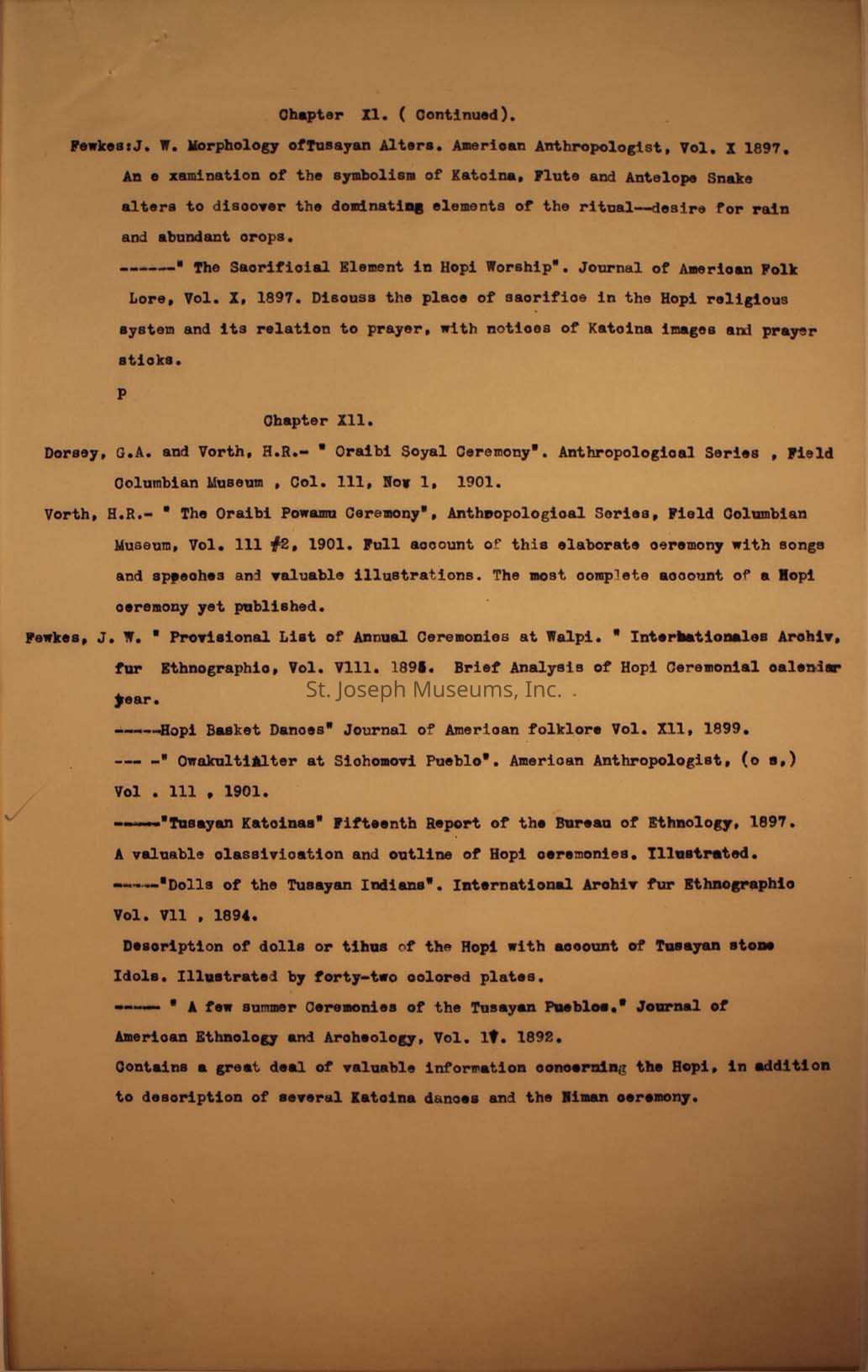
Chapter XII references works by authors such as J.W. Fewkes, G.A. Dorsey, and H.R. Vorth. The text examines elements like the symbolism of Katcina, sacrificial elements in Hopi worship, and ceremonies such as the Orabi Soyal and Powamu ceremonies. It mentions journals and volumes from the late 19th and early 20th centuries, providing insights into the Hopi rituals and their significance, including descriptions of dances, idols, and ceremonial practices.
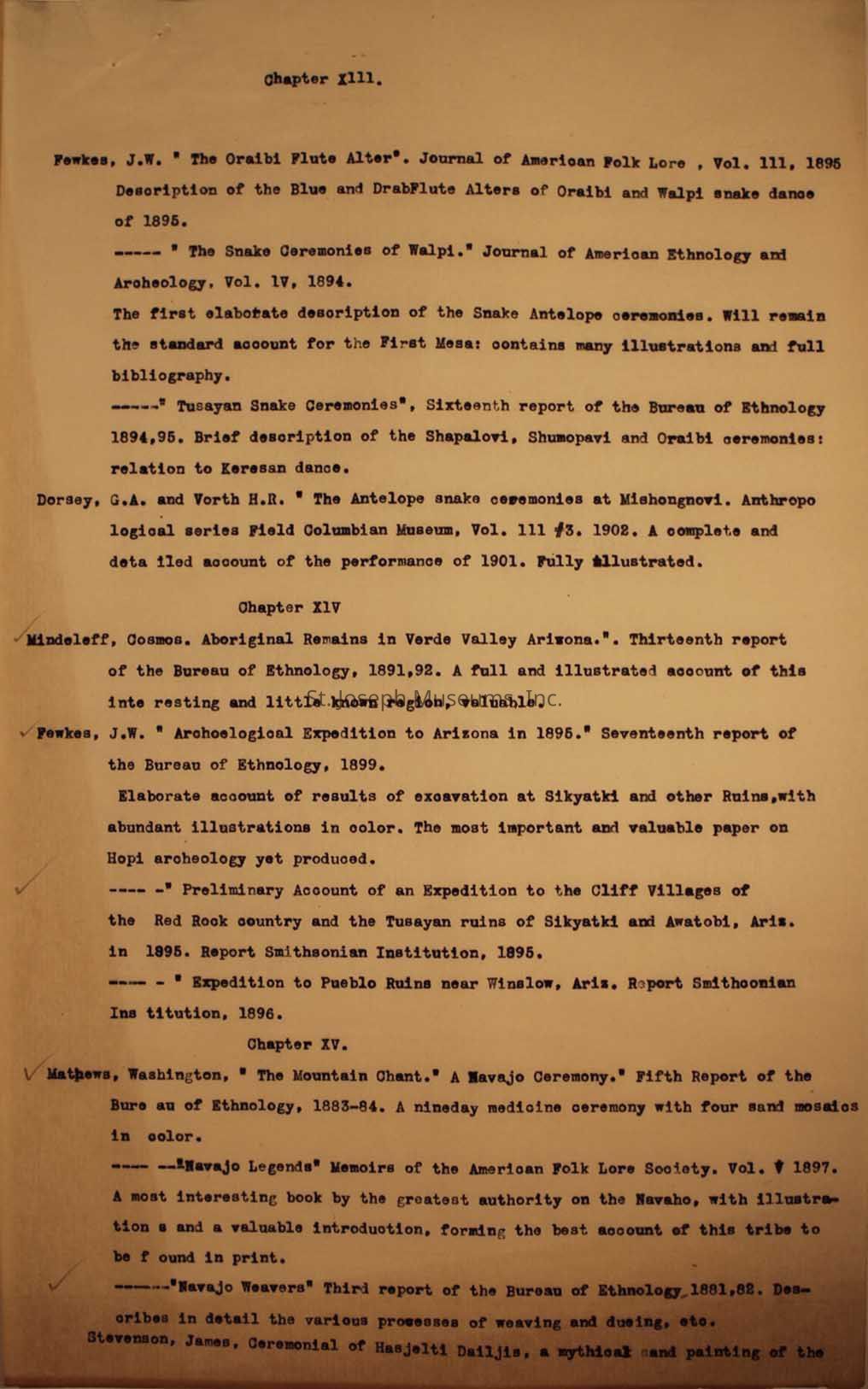
Chapter XIII includes works by Fewkes and Dorsey, detailing observations on Hopi snake dances and related ceremonies.
Chapter XIV focuses on Mindeleff's research on aboriginal remains in Arizona, with a mention of Fewkes' archaeological expedition.
Chapter XV features Matthews’ work on Navajo ceremonies, providing insights into their cultural practices. The document emphasizes detailed descriptions and illustrations, contributing valuable information to the field of ethnology.
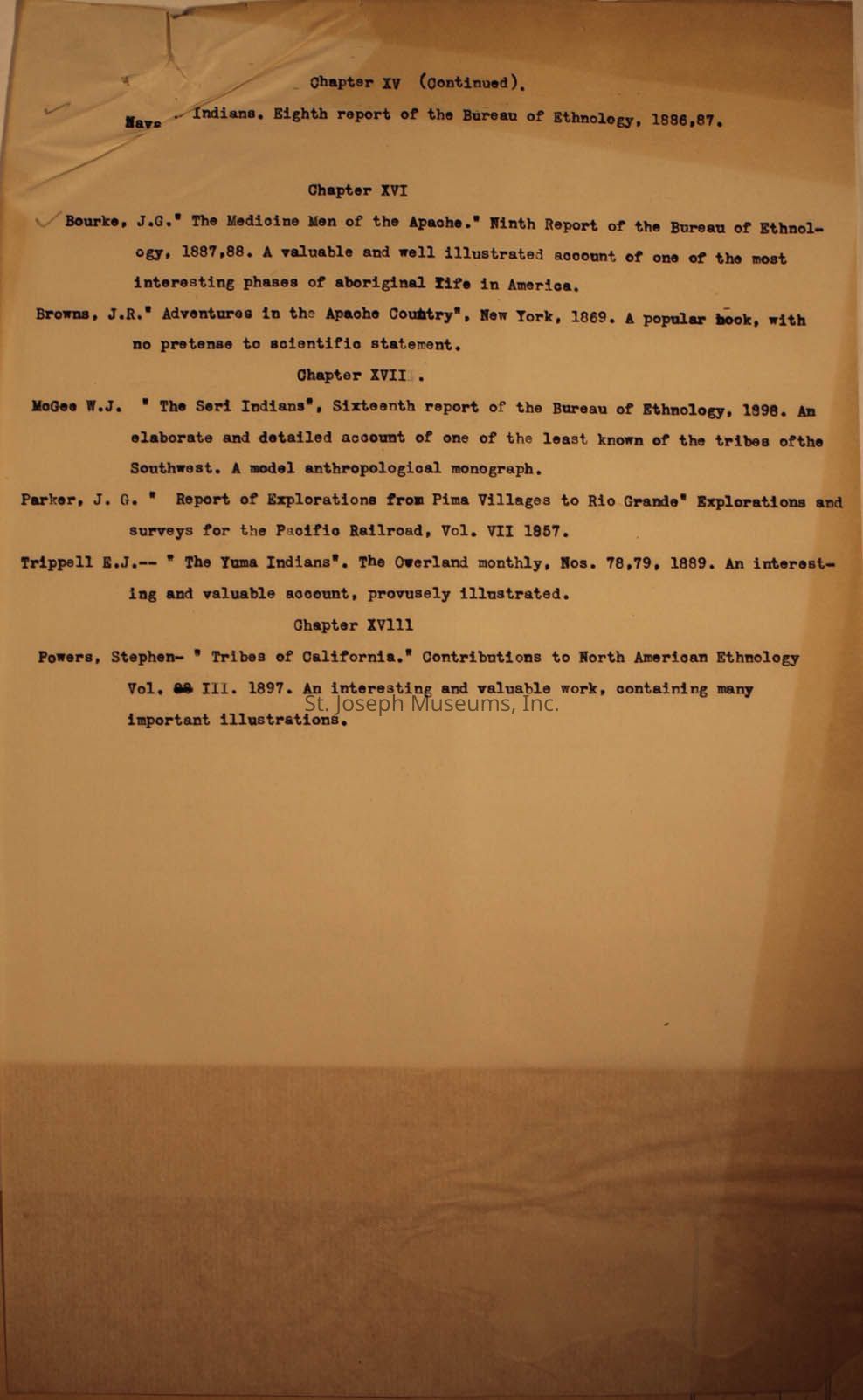
Chapter XVI includes a work titled "The Medicine Men of the Apache" by Bourke, noted as a valuable illustrated account of aboriginal life in America. It also mentions "Adventures in the Apache Country" by Browns, described as a popular book without scientific pretensions.
Chapter XVII covers "The Seri Indians," a detailed account by McGee, described as a model anthropological monograph, and Parker's report on explorations from Pima Villages to the Rio Grande. It includes an overview of "The Yuma Indians" by Trippell.
Chapter XVIII discusses "Tribes of California" by Powers, highlighting its valuable illustrations.Subject
George A. Dorsey
Field Columbian MuseumSubject Person/Organization
Harry L. George Collection