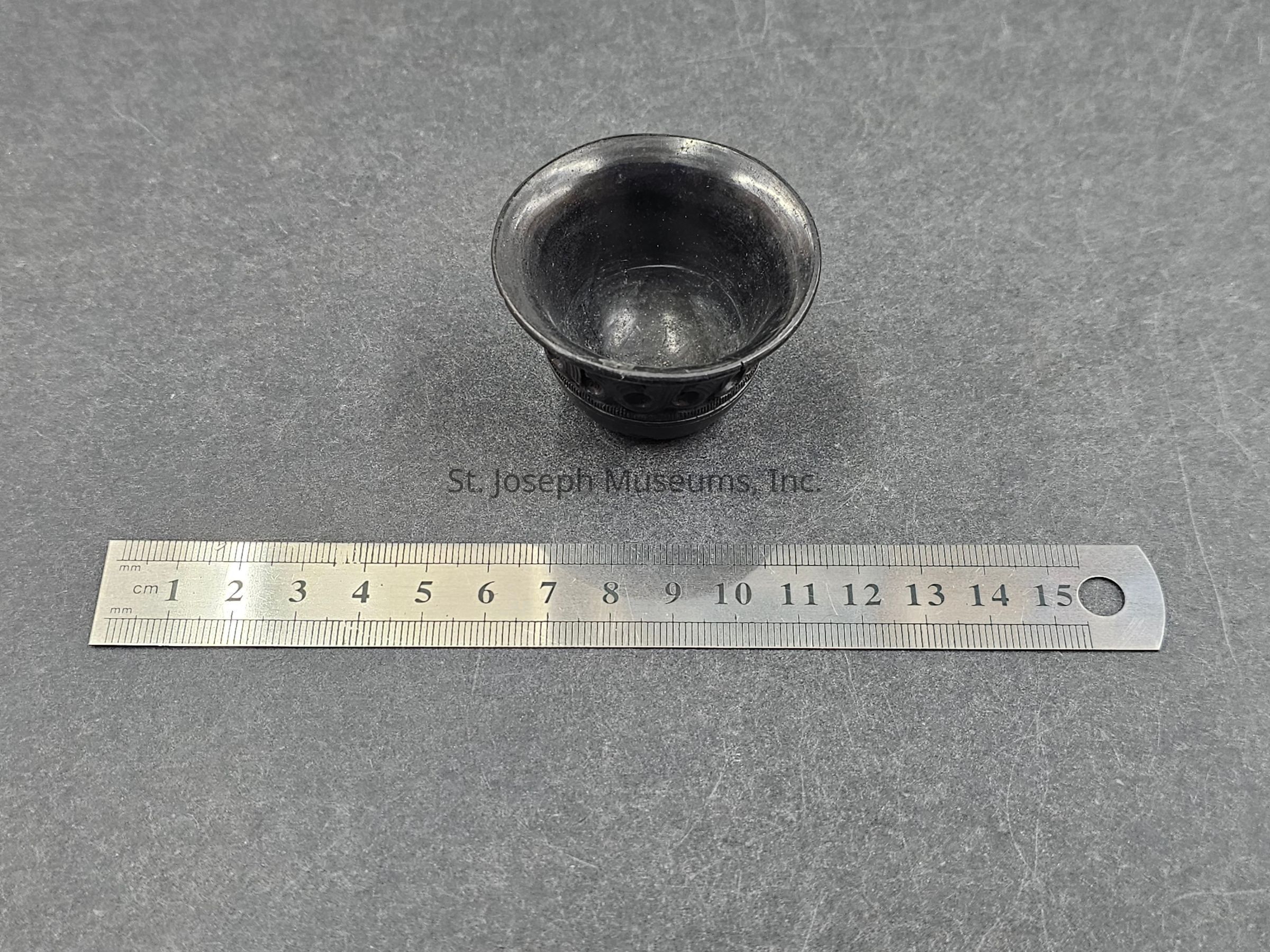
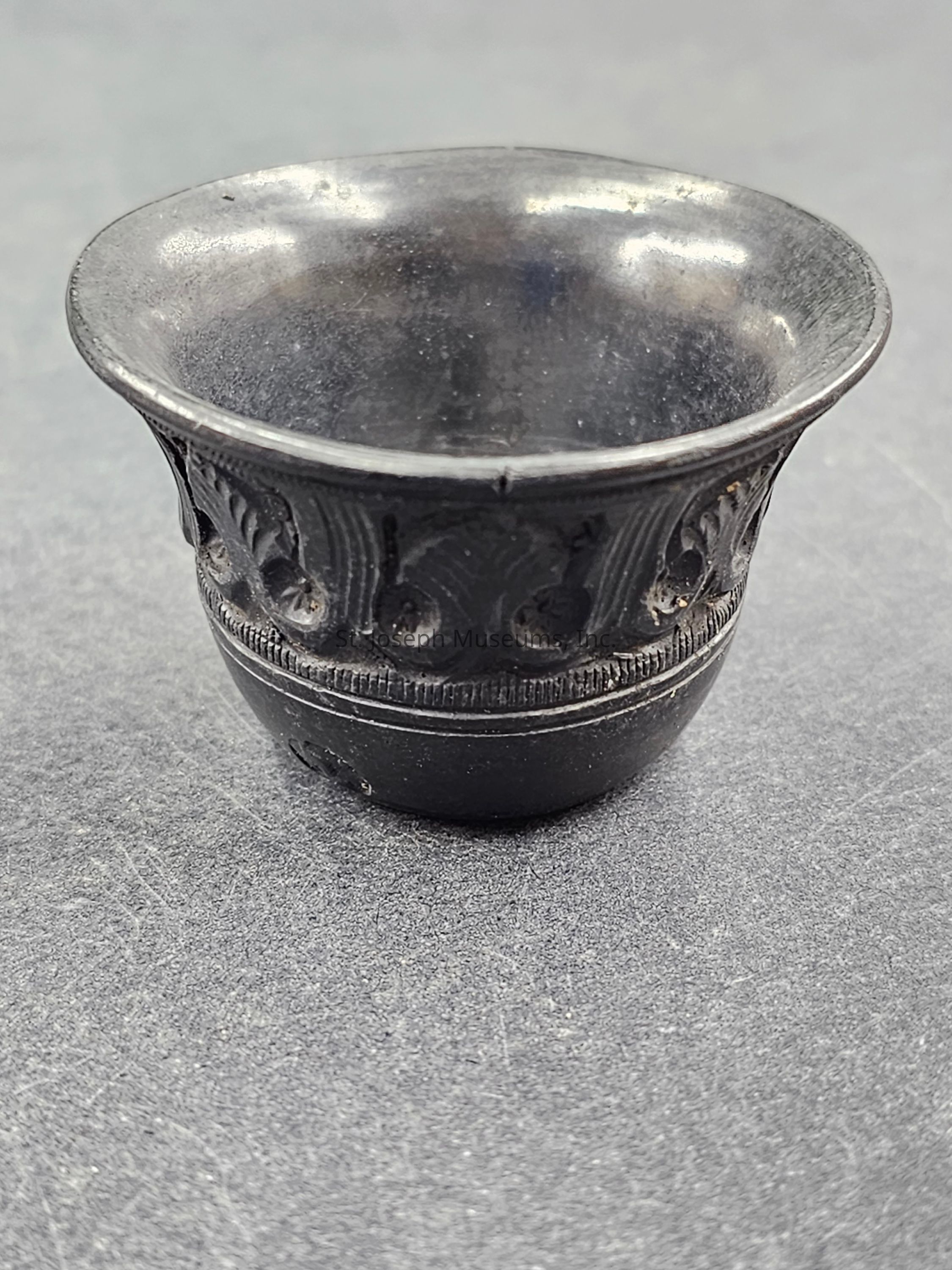
BOWL

Object/Artifact

-

St. Joseph Museums

Name/Title

BOWL

Entry/Object ID

Q2024.6.10

Description

CARVED FLORAL DES/"1513 JERUSALEM" - LABEL

Collection

ETHNOGRAPHIC/ISRAEL

Made/Created

Date made

1513

Place

Continent

Asia

Ethnography

Cultural Region

City

Jerusalem

Country

Israel

Culture/Tribe

Israeli

Lexicon

Nomenclature 4.0

Nomenclature Secondary Object Term

Bowl

Nomenclature Primary Object Term

Vessel

Nomenclature Class

Containers

Nomenclature Category

Category 07: Distribution & Transportation Objects

Parts

Count

1

Material

Wood

Condition

Overall Condition

Good

Interpretative Labels

Label Type

Cultural/Historical Context

Label

The modern country of Israel did not exist until 1948. The region has always been a center of turmoil, primarily as a result of the importance of this location to three of the world’s major religions: Judaism, Christianity, and Islam. Most of what is known about Israel’s earliest history comes from the Christian Bible and archaeological excavations. This area was originally referred to as Canaan. Around 1000 BCE, King David ruled the area. His son, King Solomon, is credited with building the first holy temple in ancient Jerusalem. Around 722 BCE, the Assyrians invaded and caused major destruction to the area called Israel. In 568 BCE, the area was conquered again, this time by the Babylonians, who destroyed King Solomon’s temple and replaced it with their own in 516 BCE. Over the next several hundred years, this area was conquered and ruled by various groups, including the Persians, Greeks, Romans, Seljuk Turks, Fatimids, several groups of Crusaders, Egyptians, Islamists, and others. From 1517 to 1917 the area was ruled by the Ottoman Empire, until World War I ended the Ottoman Empire for good. The area still experiences considerable violence and turmoil due to a long history of violence between groups occupying the same land and continued arguments whether Israel should be recognized as an independent country at all.
Research Notes

Person

Tori Zieger

Notes

In 1513, when this artifact was created, Israel was undergoing massive societal shifts. In 1492, Jewish people were expelled from Spain. In 1497, Jewish people (and Muslims) in Portugal experienced severe persecution at the hands of Manuel I. After this widespread anti-Jewish actions in Europe, there was a migration of Jewish people eastward, with a large percentage settling in the modern area of Israel. In the 16th century, this area was part of Palestine and Syria, but the entire area was a part of the Ottoman Empire. A small cup like this would have been used for beverages, like tea or wine, and would have been a regular part of life as a way for friends or business partners to gather and share a drink in friendship.