Name/Title
Bowl, PipeEntry/Object ID
2018.3.111Description
Property C2: Pipe Bowl
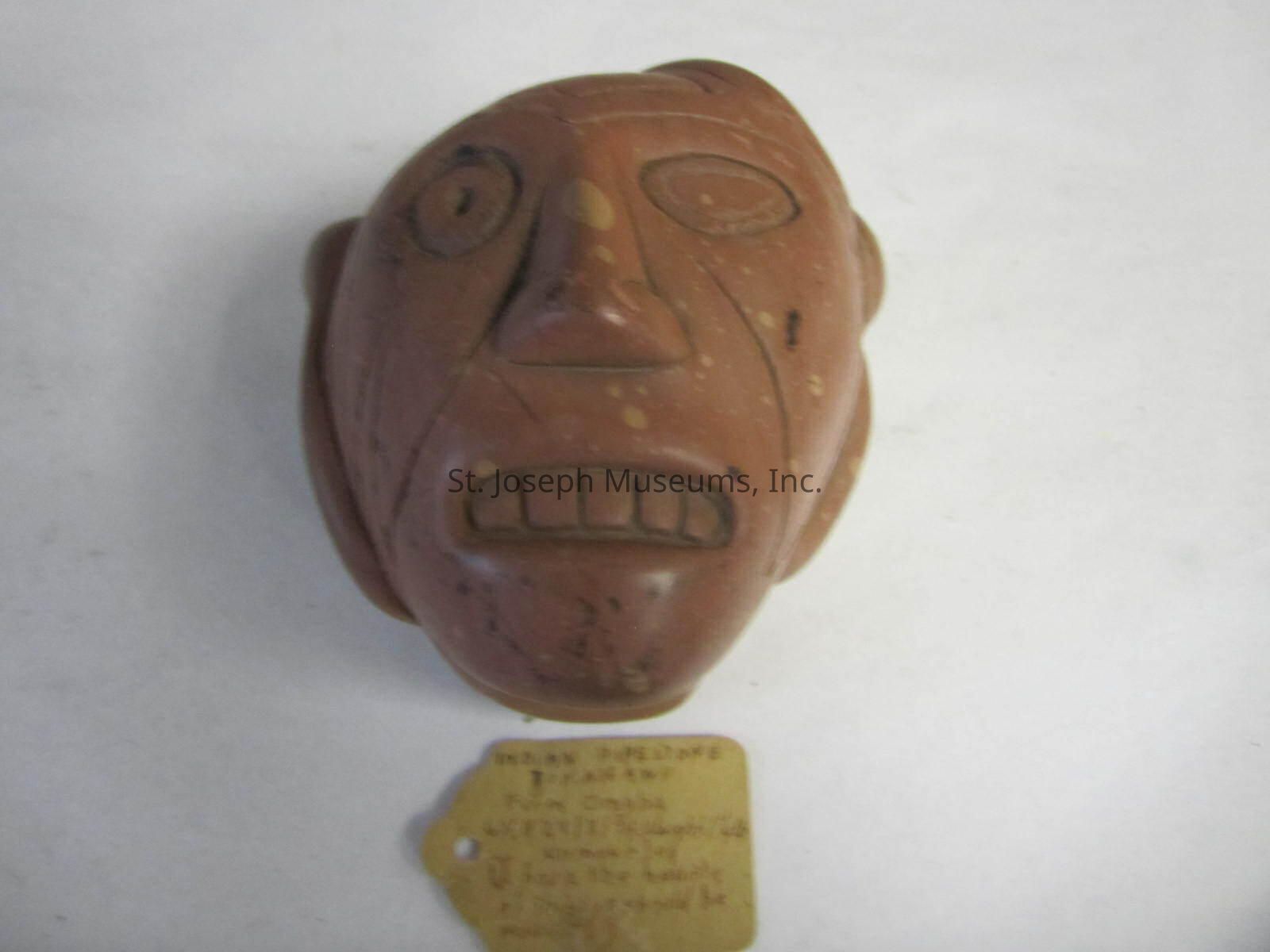
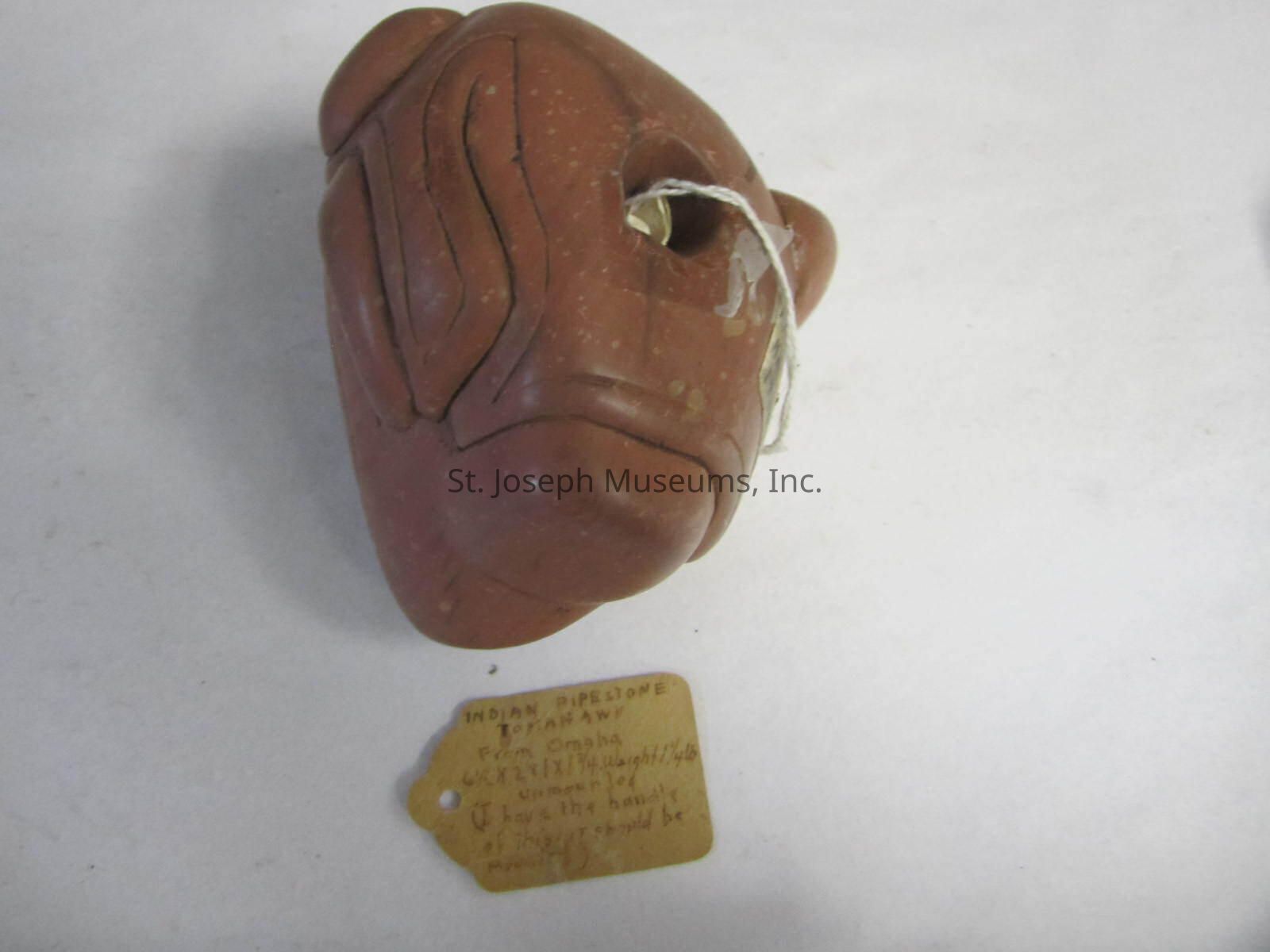
Object: ceremonial pipe bowl, Artist/Maker: Cherokee, Title/Model: Human Head Effigy Pipe Bowl, Date/Region: ca. 1920, Southern Plains, Medium/Technique: catlinite, hand carved, Edition/Series: unique, 1 of 1, Size: 4" H x 4" W x 3.15" D, Condition: good, Signature/Inscriptions: n/a, Exhibitions/Literature: n/a, Description/Notes: A hand carved catlinite (pipestone) pipe bowl depicting a grotesque face, with irregular lip, is large by comparison to other comparable properties. Tobacco has been used by Native American people throughout history. Used principally for ceremonial use, European contact introduced the practice of smoking tobacco for pleasure. Tobacco is used in nearly all ceremonies to appease the spirit, or into a body of water to calm a storm) or smoked in order to send the smoke upwards to connect with great spirits. The act of smoking has been used to foster community spirit and to solidify a group's intensions. Uses include: marriage negotiations, recruiting warriors, war rallies and declarations, peace negotiations, ritual dances, and healing ceremonies. Red catlinite, the names coined by Native American artist George Catlin, has other names to describe it including pipestone, claystone, red claystone and pipeclay. Cherokee pipe makers, carving effigies of human heads on pipe bowls or human and animal arrangements on pipe stems in red catlinite, continued the earlier traditions of Hopewell animal effigy platform pipes. A paper tape reads "Head Pipe, Hall, 1920, A Coll" an auction tags reads "#33", and tag with "#210".Collection
NATIVE AMERICANLexicon
Nomenclature 4.0
Nomenclature Primary Object Term
Bowl, PipeNomenclature Sub-Class
Smoking & Recreational Drug EquipmentNomenclature Class
Personal GearNomenclature Category
Category 03: Personal Objects