Research Type
ResearcherNotes
The use of ivory for ornamentation was a sign of a relatively high degree of wealth. Throughout Africa, ivory was a controlled resource as elephants were seen to represent power and prestige. In the Kingdom of Benin, for example, for every elephant killed for its ivory - one tusk was allowed to be kept by the individual who slew the elephant, but the other had to be given to the king so that he maintained a large amount of ivory wealth. Physical ornamentation in several African cultures was incredibly important. Different materials, colors, designs, etc held deep and very specific symbolism. These could represent anything from the level of wealth of the family, the marital status, age, occupation, or belief system of the individual, or for special ceremonies of life milestones.
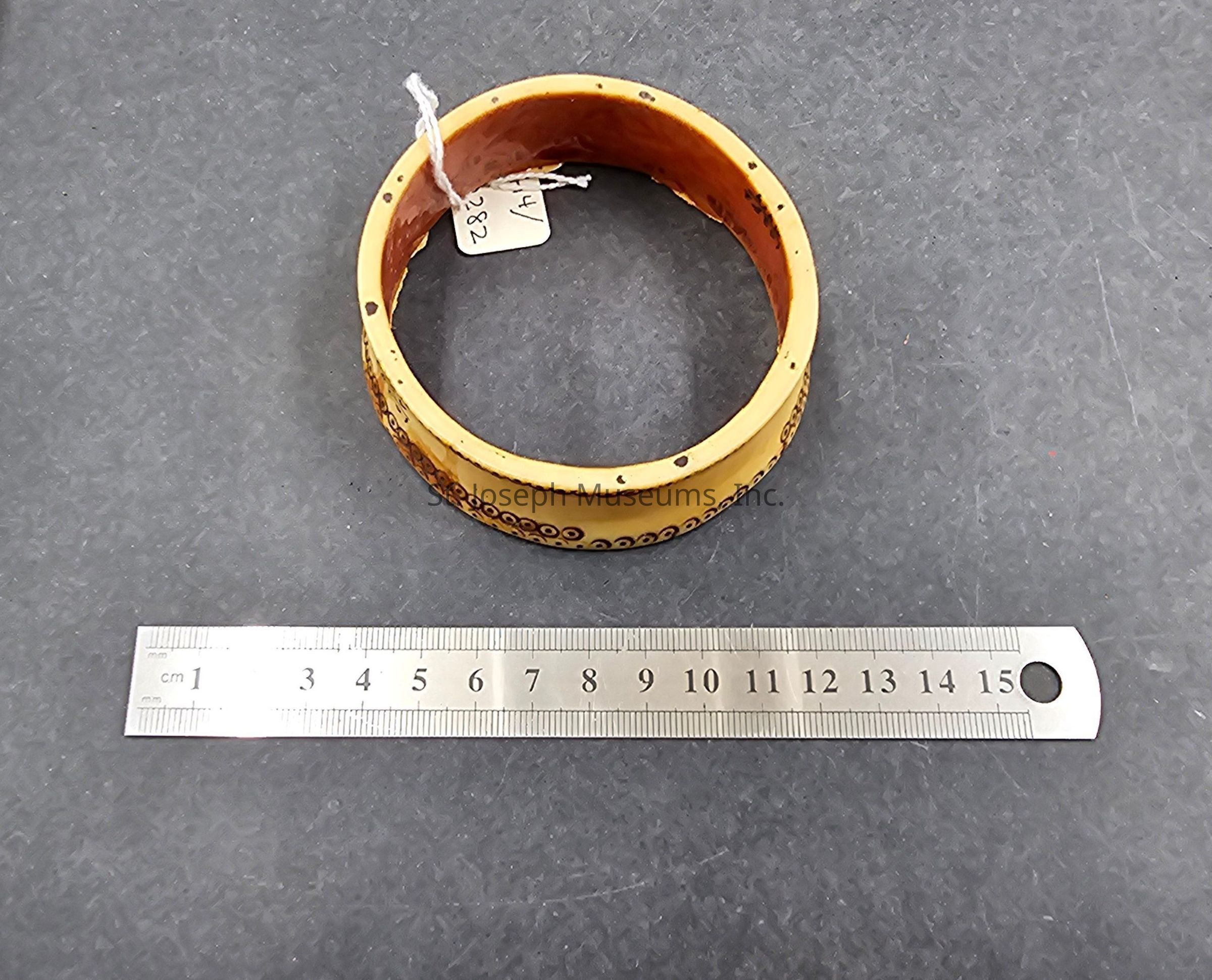
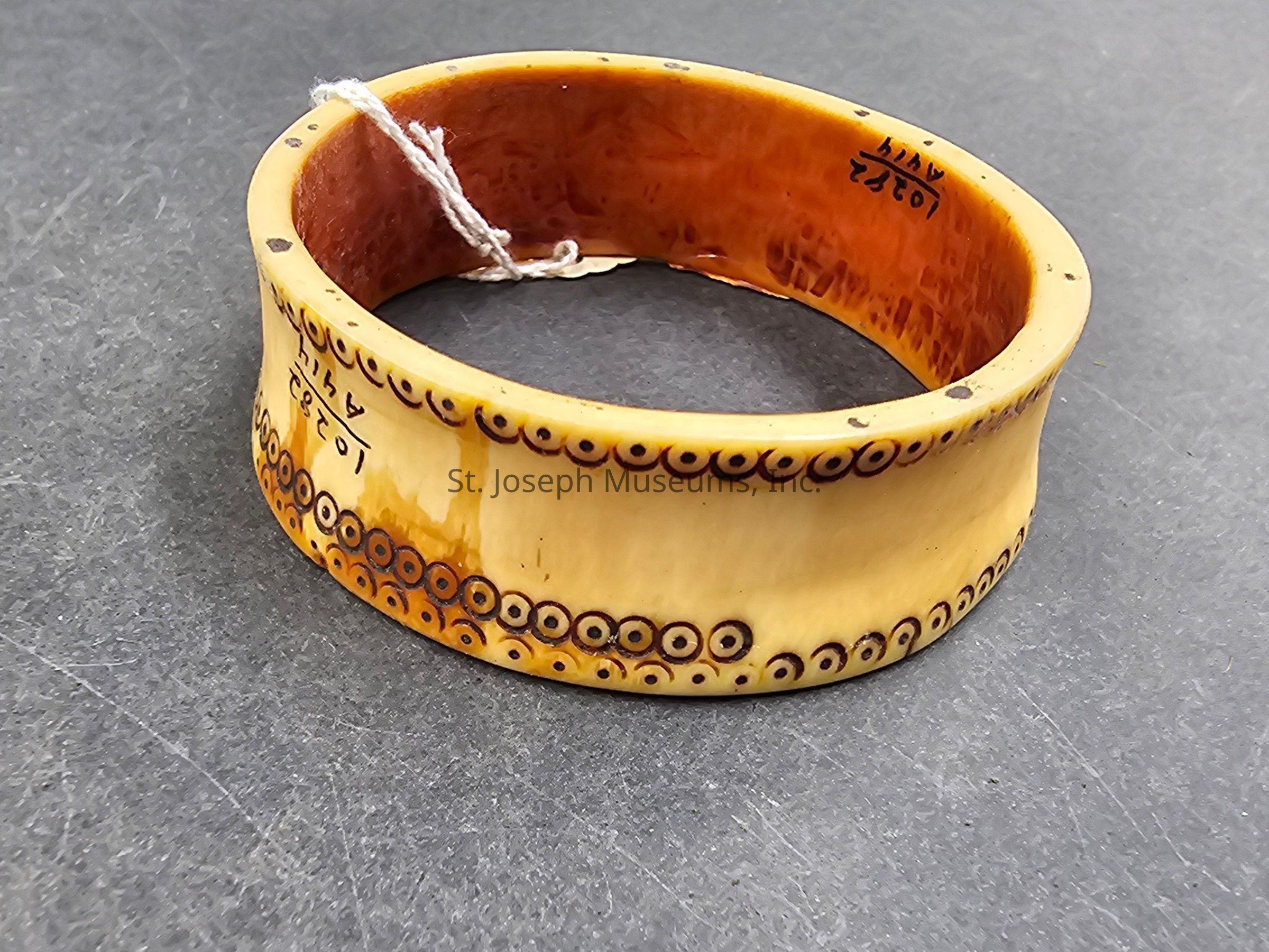
This circle and dot motif is an incredibly common design - this design is seen in almost every culture around the world in some degree. This design is easily recreated using simple tools. Some researchers belief that this motif represents a ward against the evil eye (or some other magical significance). When combined in this form, this design is called a circumpunct. When the circle and dot are together like this, it often symbolizes the combination of the divine or spiritual world and the physical world. In Cameroon, the use of ivory is (usually) restricted to royalty - the prestige of the material combined with the symbolic meaning of the circle/dot ties directly to the role of the Fon (king) as a living connection between the spiritual and physical world.