Brule´ the Sioux People of the Rosebud
Name/Title
Brule´ the Sioux People of the RosebudEntry/Object ID
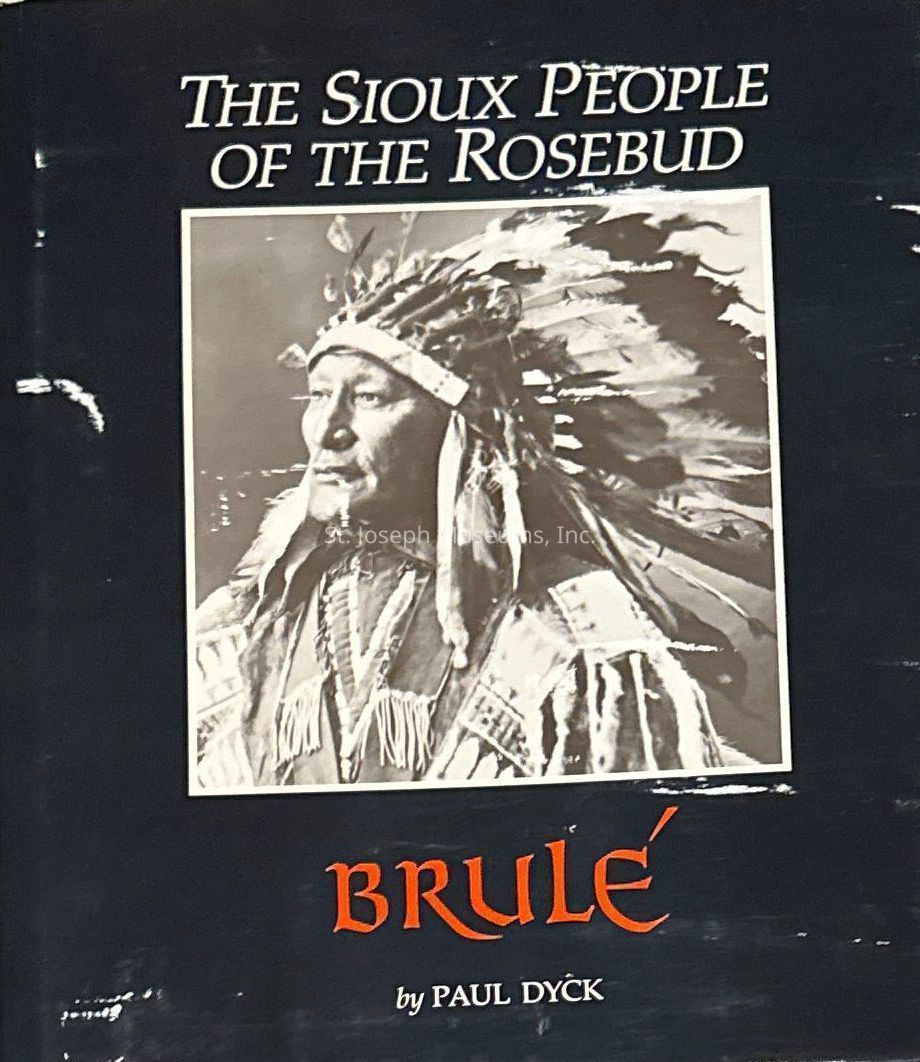
L2019.13.118Description
Brule´ the Sioux People of the Rosebud. Photographs, taken by John Anderson, of the Sioux Indians in the late nineteenth and early twentieth centuries. The photographs were the product of forty-two years of close association with the Sioux, picturing religious beliefs, tribal politics, family life, and conflict with the white man's ways. Hugh Lewis research notation: Page 7: Louis Roubideaux's house. "A gathering of the People at the old Jordan Trading Post for a council in 1889. Wagons were taken along in expectation of rations to be issued by the government." Page 9: Louis Roubideaux's House. "Indians and United State Commissioners holding a council at Rosebud Agency, May 4, 1889. The council, headed by General Crook was held in front of the log house of Louis Roubideaux, the interpreter, who was half French and half Indian. His house adjoining the Jordan Trading Post. Page 21: "A special occasion preceding a celebration on pay day at the Jordan Trading Post." Page 27: Louis Roubideaux's House Rear Left. "The horse carriage of U. S. Indian Agent, James G. Wright, 1890. He was very proud of this outfit and was an expert with four-in-hand driving. The buffalo coat on the man next to the carriage was typical winter clothing in the Dakotas." Page 53: Louis Roubideaux "All the important Brule´ leaders on the Rosebud Reservation attending the council of the Sioux Land Commission in May, 1889. The Commission, headed by General Crook, forced the Sioux to sign away nine million acres of their land. At the extreme left is Louis Roubideaux, the official interpreter who was of French and Indian blook." Page 115: Louis Roubideaux is possibly visible standing behind the woman holding the child. The Roubideaux house is visible in the backgrounds. "Picket Pin, with his family and house. His wife, on the left, is wearing a sacred porcupine-quilled buffalo robe. These were worn only by vary virtuous and honored people." Page 169: Louis Roubideaux's house located back right. "The change of living- from the tipi to the log house- took a long time. The People still preferred the tipi, even in the severe Dakota winters, since the log houses caused them to sicken and die." Page 171: Possible Louis Roubideaux house in the back left. " To visit with friends and relatives was, and still is, one of the great joys of all the People." Page 185: Louis Roubideaux house, back side/right rear. "Louis Roubideaux with his wife and mother-in-law. He was the official interpreter for the agency." Page 191: Louis Roubideaux's house. "A prosperous home showing the women preparing the day's meal. This home was most likely the house of a man employed by the agency as a teamster or laborer." Page 197: Front of Louis Roubideaux's house. "Meeting between Agent J. G. Wright and a group of Indians, taken in 1896." Page 205: Louis Roubideaux in the middle. "We have heard the white man's buffalo is here. We shall wait." Page 312: Louis Roubideaux on left. "The camp crier, named Follows the Woman, announcing the dances. The three-bladed war club in his hand is an heirloom- a type seldom seen as this time in the possession of the old warriors." Page 317: Louis Roubideaux possibly sitting front right. "Ceremonial Sun Dance Dog Feast. The dog waiting to be killed will be cooked by the ancient method. Heated stones will be thrown into a water-filled container made from the stomach of a cow. When the water boils the dog is killed and put in to cook. The center pole is covered with the People's many offerings to God." Page 321: Louis Roubideaux house located back right. "Five young men singled out for honors by the People. The Southwestern Navajo Chief's blankets, quite expensive at the time, were gifts to the men from their relatives." Page 347: Louis Roubideaux's house. "Resting dancers, ready for the next round, in front of Louis Roubideaux's big house." Page 349: Louis Roubideaux and his family sitting in front. "Grass Dancers in full regalia, mostly young men. Several have Dog Soldier Society collars with mirrors- a mark of warriors." 365/Hardcover/Black/Jacket pictures a Indian with headdress/PhotographsCollection
Robidoux Collection by Hugh LewisLexicon
Nomenclature 4.0
Nomenclature Primary Object Term
BookNomenclature Sub-Class
Other DocumentsNomenclature Class
Documentary ObjectsNomenclature Category
Category 08: Communication ObjectsLOC Thesaurus for Graphic Materials
Indian agentsSearch Terms
Rosebud Reservation, Sioux, Indian Interaction, Robidoux, Louis, Robidoux FamilyEthnography
Culture/Tribe
Oceti Sakowin
Native American