Research Type
CuratorNotes
From the Museum of Ceramics:
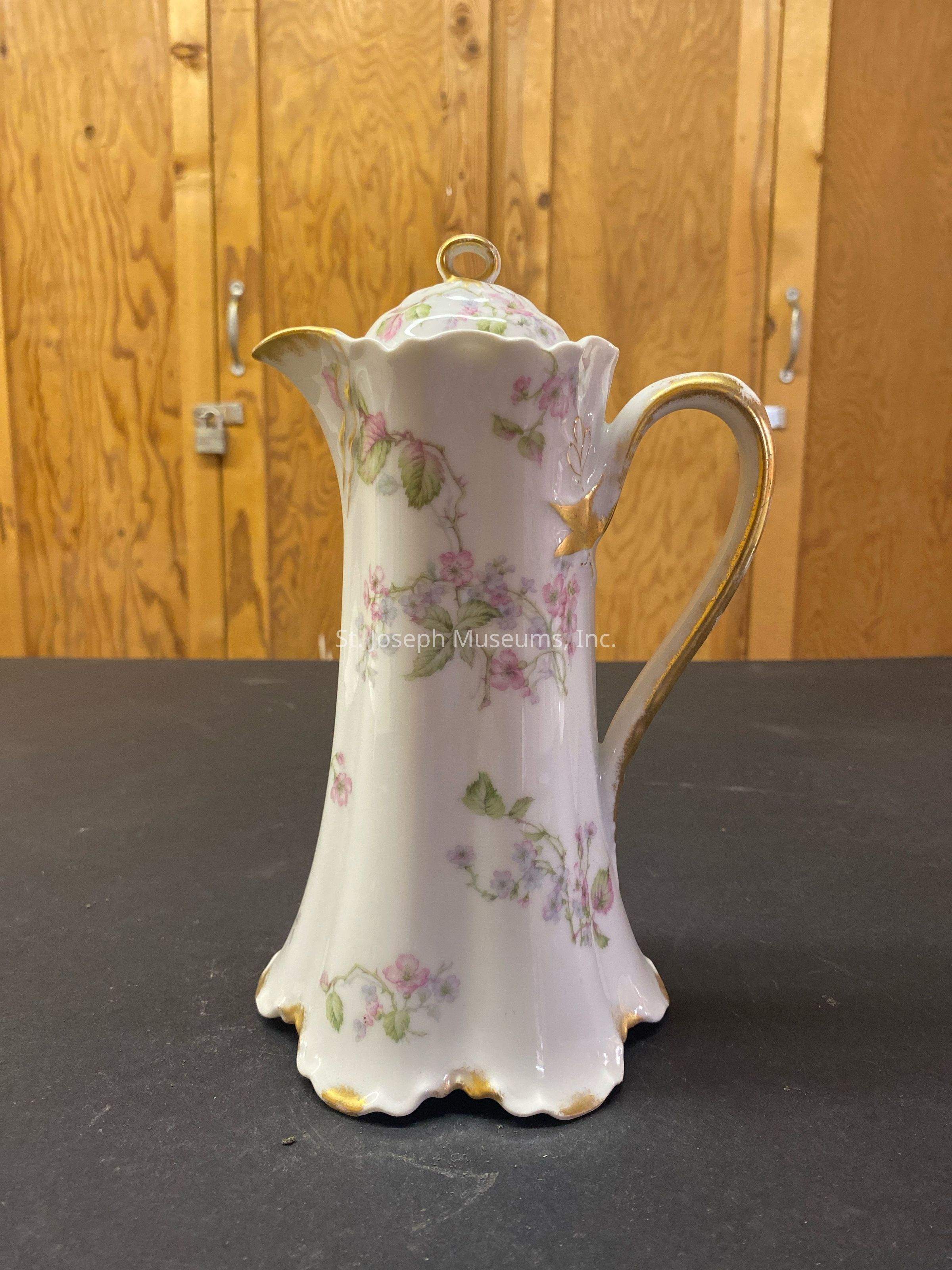
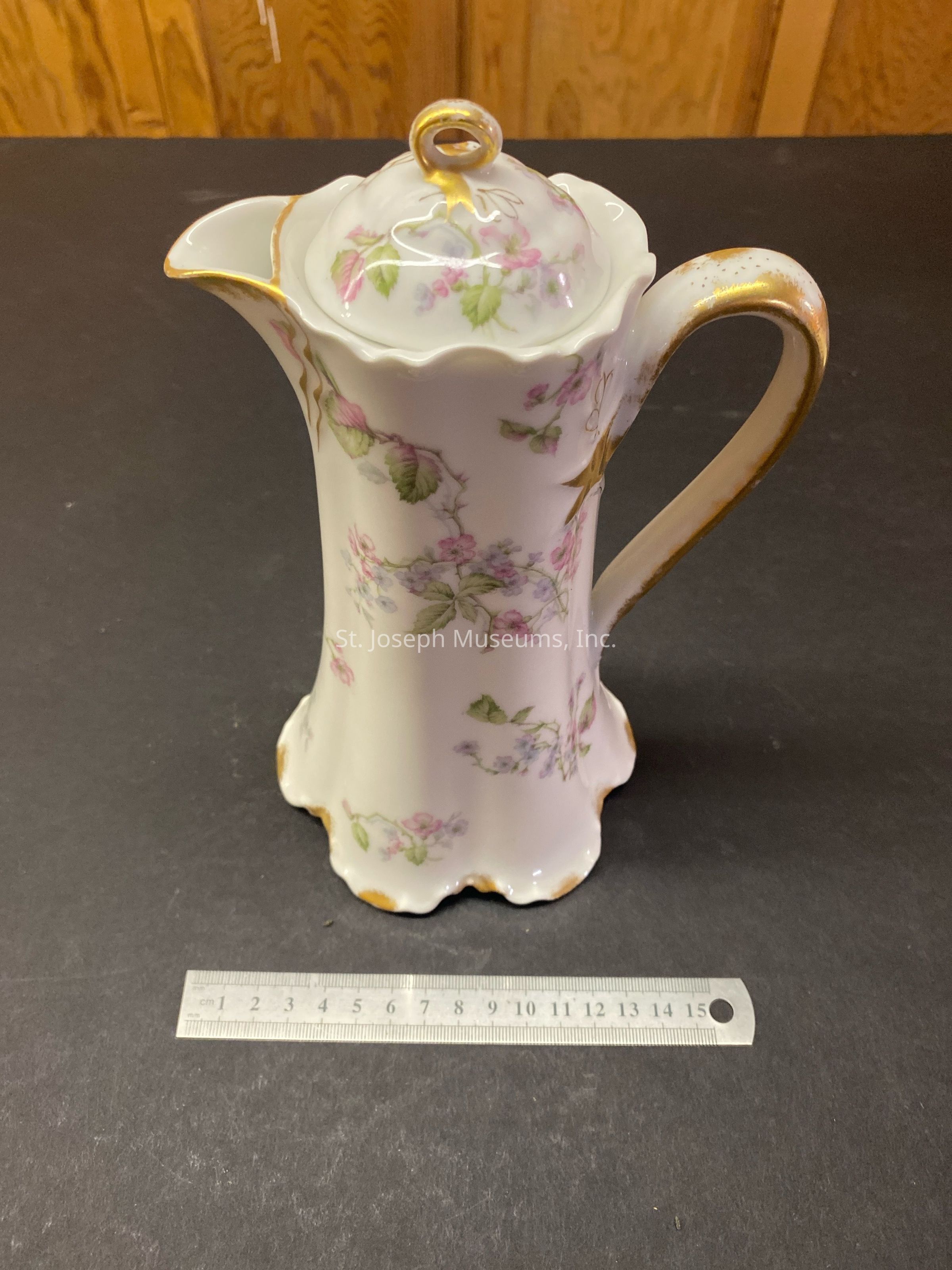
Chocolate Pots are tall, somewhat slender with a small spout at the top. The cap on the top of the pot is wide enough to allow a wood frothier (or frother) to emulsify the chocolate, release its full aroma, and create froth. The spout at the top is wider than that of a teapot or coffee pot so that the froth will pour out unobstructed.
Early chocolate pots had an opening in the lid so that a stirring stick called a molinet could be inserted to stir the chocolate that tended to settle. Making hot chocolate was a laborious endeavor that included scraping shavings from the cacao beans, melting them in hot water, adding sugar, milk, and spices, and then continuously stirring the mixture with the molinet. By the time East Liverpool potteries were in operation, making hot chocolate was not so different than the process used today. It was no longer necessary to have the molinet hole in the lid. A recipe from Housekeeping in Old Virginia, 1879, explains the chocolate process with this recipe: “Scrape fine one square of Baker’s chocolate (which will be an ounce). Put it in a pint of boiling water and milk, mixed in equal parts. Boil ten minutes, and during this time mill it or whip it with a Dover egg-whip (one with a wheel), which will make it foam beautifully. Sweeten to the taste, at table.”