Name/Title
Cockle Burs (Xanthium strumarium)Entry/Object ID
2021.1.26 BScope and Content
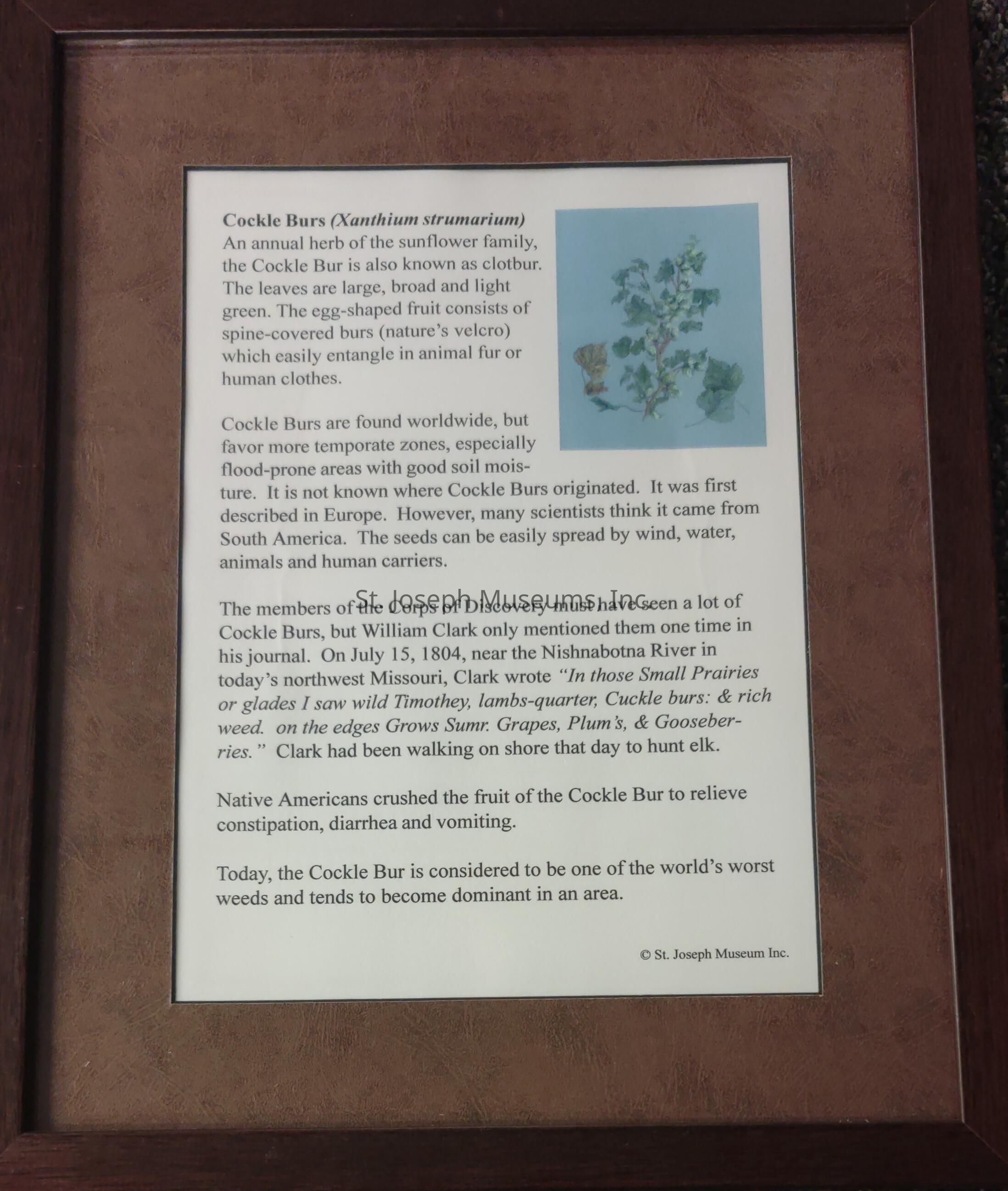
Cockle Burs (Xanthium strumarium) plant description, framed.
An annual herb of the sunflower family, the Cockle Bur is also known as Clotbur. The leaves are large, broad and light green. The egg-shaped fruit consists of spine-covered burs (nature's Velcro) which easily entangle in animal fur or human clothes.
Cockle Burs are found worldwide, but favor more temperate zones, especially flood-prone areas with good soil moisture. It is not known where Cockle Burs originated. It was first described in Europe. However, many scientists think it came from South America. The seeds can be easily spread by wind, water, animals and human carriers.
The members of the Corps of Discovery must have seen a lot of Cockle Burs, but William Clark only mentioned them one time in his Journal. On July 15, 1804, near the Nishnabotna River in today's northwest Missouri, Clark wrote "In those Small Prairies or glades I saw wild Timothey, lambs-quarter, Cuckle burs; & rich weed. on the edges Grows Sumr. Grapes, Plum's & Gooseberries." Clark had been walking on shore that day to hunt elk.
Native Americans crushed the fruit of the Cockle Bur to relieve constipation, diarrhea and vomiting.
Today, the Cockle Bur is considered to be one of the world's worst weeds and tend sto become dominant in an area.Context
Originally designed by the St. Joseph Museum in the fall of 2004. Titled "Botanical Wonders of the Uncharted West. The Recorded Flora of the Lewis & Clark Expedition."Collection
Lewis and ClarkLexicon
LOC Thesaurus for Graphic Materials
Botanical drawings, Expeditions & surveysArchive Items Details
Title
Cockle Burs (Xanthium strumarium)Creator
Mary L. FletcherDate(s) of Creation
2004Subjects
Plants, Watercolor paintingsParts
Count
2Parts
Watercolor of plant and descriptive label, both framed.Condition
Overall Condition
Very GoodProvenance
Notes
"Botanical Wonders of the Uncharted West" visually depicts how well Lewis followed Jefferson's instructions. In recognition of this achievement, The S. Joseph Museums, Inc. commissioned accomplished artist Mary Fletcher to create fifty (50) selected paintings of flora documented by the Corps during their Journey. These framed watercolor originals are accompanied by similarly framed labels, generated by former Head of Research Jackie Lewin, which describe the corresponding plants with appropriate quotations from the Journals. This collection makes available for study and appreciation plants that were new to Lewis and Clark, but which Native Peoples already recognized as valuable sources of food, medicine, and tools. Some of these still remain a mystery to many, but all will enjoy their beauty, their diverse uses, and their accomplished renderings.