Research Type
ResearcherNotes
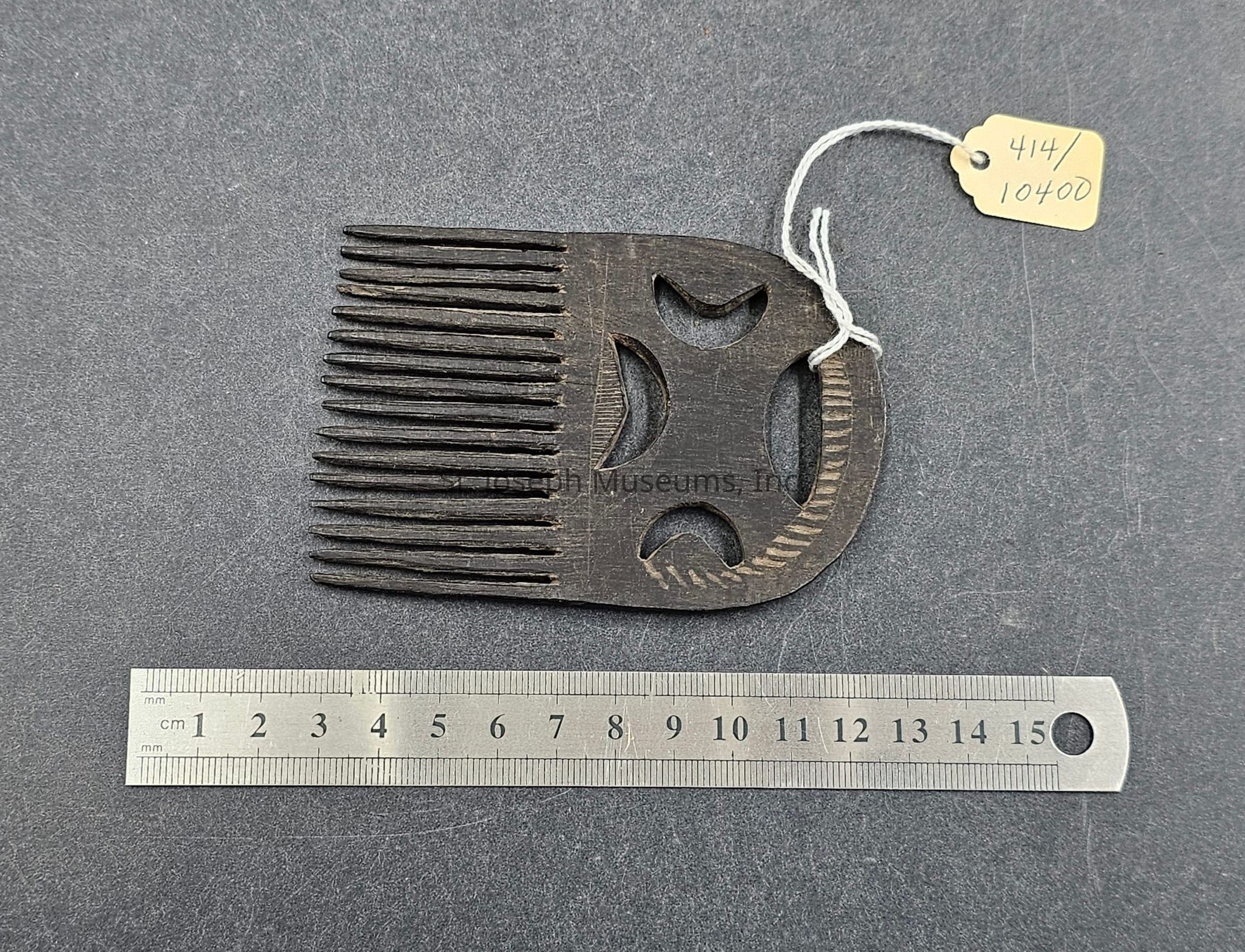
Combs are found across Africa and have been around for over 6,000 years. The earliest combs in Africa were found in Egypt and Sudan in tombs. As hairstyles and hair types changed, combs evolved as well. Beyond being a personal grooming tool, combs were often traded, stolen, and gifted items. Combs contain symbolism that varies depending on culture. The Akan people gave combs to suitors or exchanged combs at marriage ceremonies. The Yoruba, meanwhile, sent combs to people they were ending relationships with. As tourists came into Africa, combs were a sought after souvenir.
In the late 20th century, combs specifically for African-type hair re-emerged in the United States. Afro-picks became a recognizable symbol of Black culture in the 1970s in response to the ongoing civil rights battles and social unrest. Black inventors Samuel H. Bundles and Henry M. Childrey submitted the first-known patented Afro-pick comb design in the form of a rake comb in 1969. The "Black Fist" comb, created by Anthony R. Romani in1972, might be the most recognizable comb.
In both ancient and modern African societies, combs are more than just utilitarian tools. They symbolize status, group affiliation, religious belief, and are often encoded with ritual properties. Handles of combs are often highly decorative with specific meanings.