Name/Title
Newspaper article from the Seattle Sunday TimesEntry/Object ID
Q1430.634.458ADescription
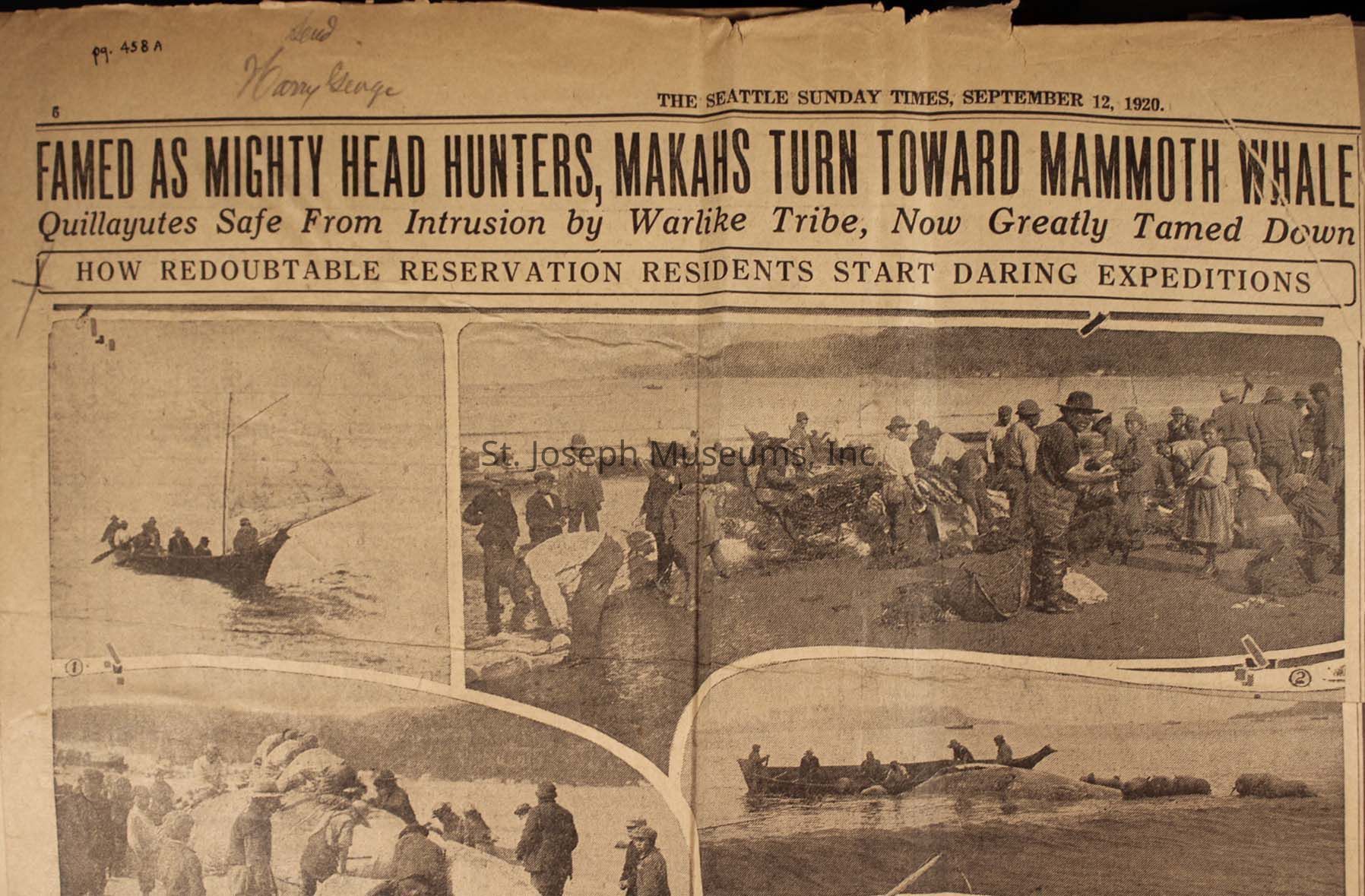
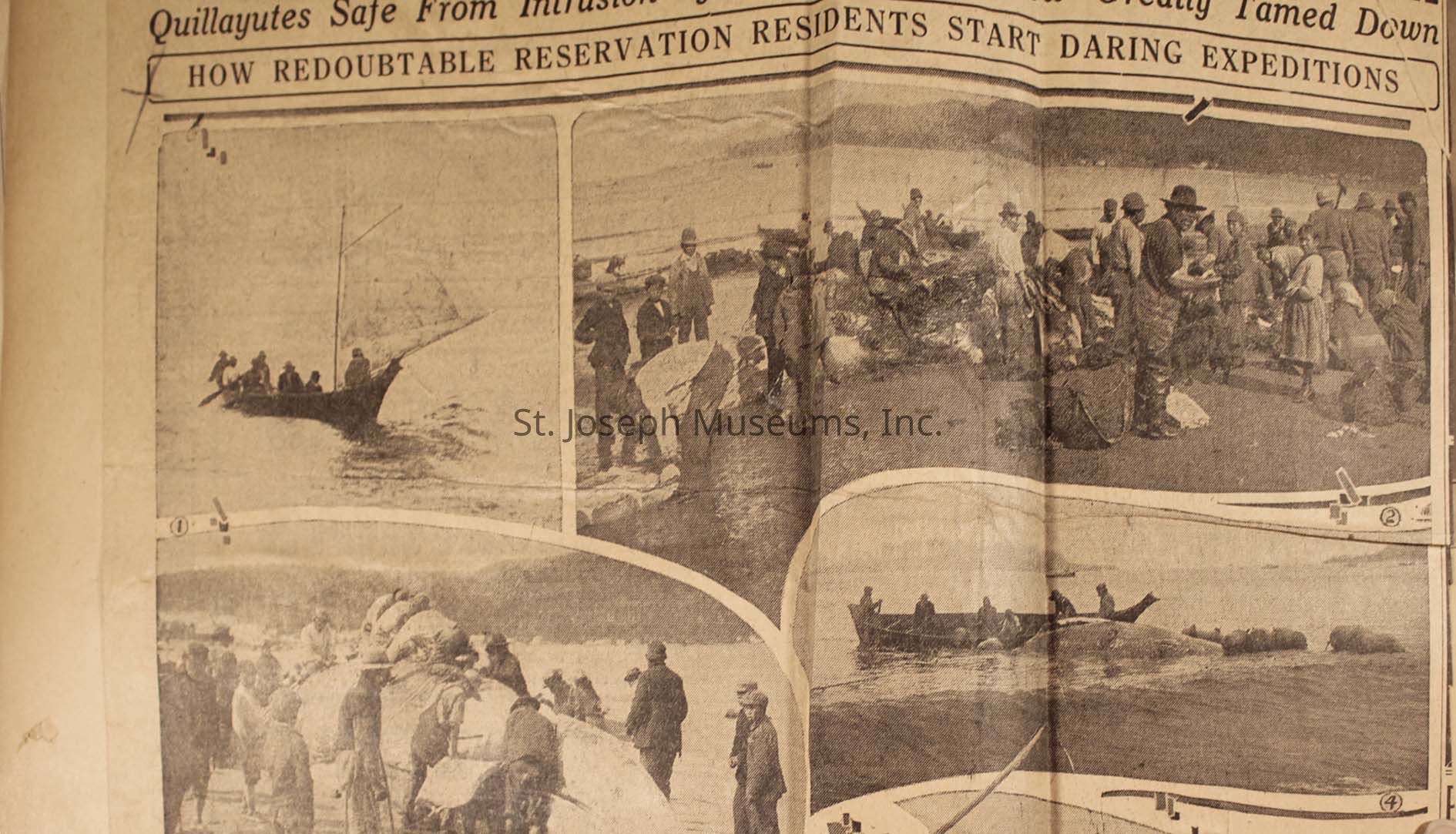
Newspaper article from the Seattle Sunday Times entitled "Famed As Mighty Head Hunters, Makahs Turn Toward Mammoth Whale." Vol I pg. 458A, 1-6
1.) The headline reads, "Famed As Mighty Head Hunters, Makahs Turn Toward Mammoth Whale," and underneath, "Quillayutes Safe From Intrusion by Warlike Tribe, Now Greatly Tamed Down" It continues "How Redoubtable Reservation Residents Start Daring Expeditions".
2.) Describes the pictures on the front page: In the upper left photograph, a group of individuals are seen sailing in a traditional canoe on the water; the upper right image captures a gathering of people on shore; the images below show a group of people handling supplies on the beach; the bottom right shows additional canoes visible by the water's edge.
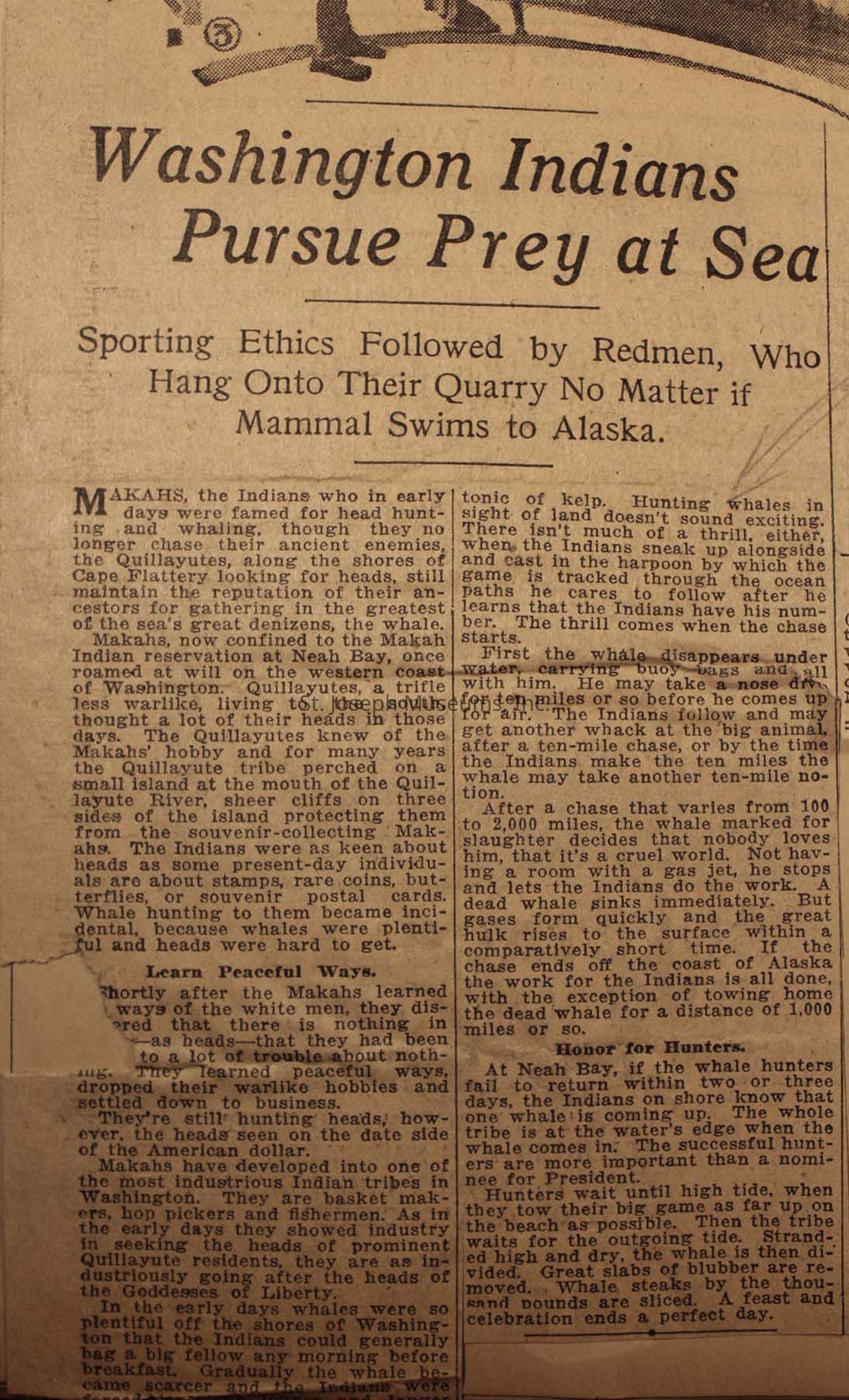
3.) "Washington Indians Pursue Prey at Sea". The article discusses the tribe's historical transition from headhunting and whaling to adopting more peaceful pursuits while still maintaining a significant cultural connection to whaling. The Makah, previously residing on their reservation in Neah Bay, embraced whaling when other animal products became scarce. The article describes their skilled hunting strategies where they pursue whales across vast distances, even as far as Alaska and highlights the thrill and challenge involved in hunting whales, with the use of traditional hunting methods like harpoons.
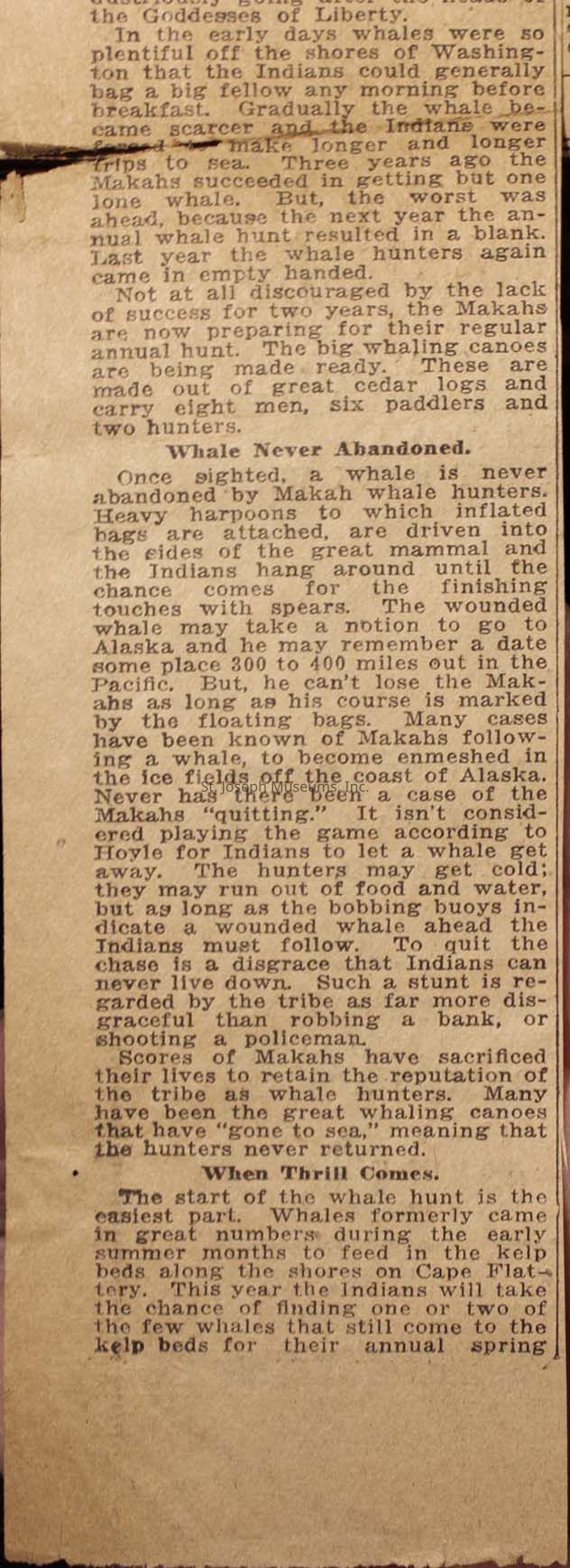
4.) The article continues ti recount the challenges and traditions of the Makah tribe's whale hunting practices in Washington. As whales became scarcer, hunters had to journey further out to sea. Despite recent unsuccessful hunts and the challenges they face, including harsh conditions and the possibility of chasing whales as far as Alaska, the Makah remain committed to their hunting traditions.
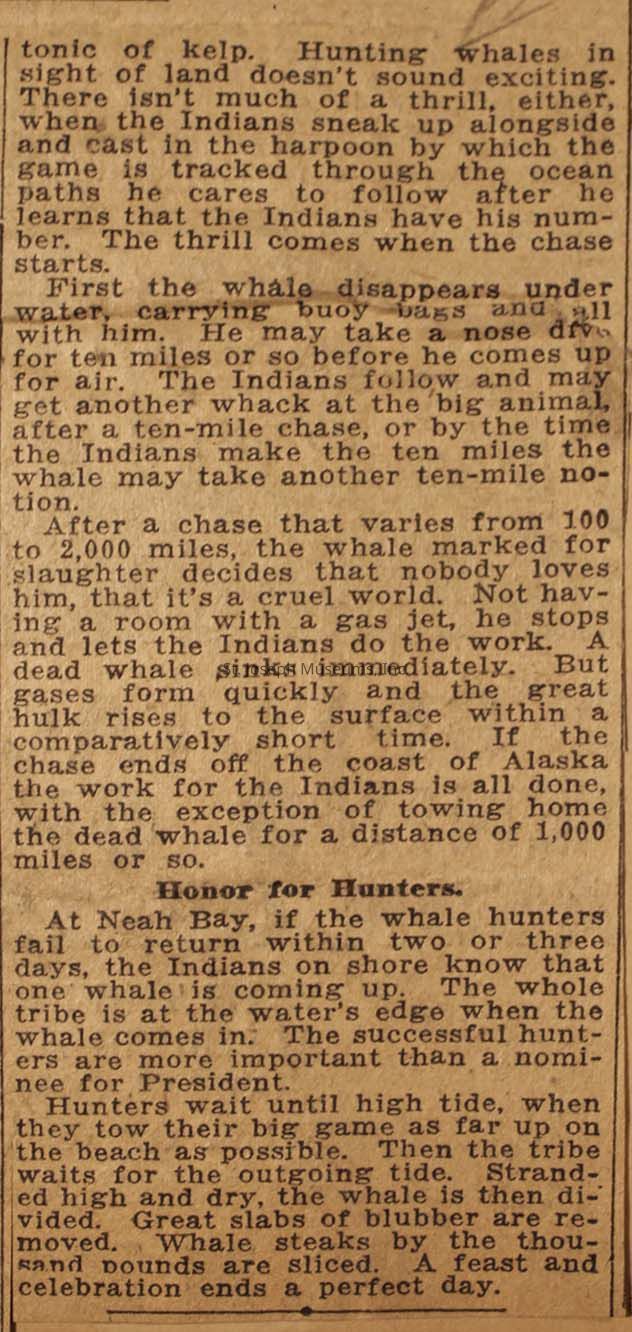
5.) The article describes the thrilling process of whale hunting near land, focusing on the method by which Native Americans approach and harpoon whales. The chase, which can last from 100 to 2,000 miles, concludes with the eventual capture and subsequent sinking of the whale. The return of hunters is met with community celebration as the tribe awaits high tide to divide the whale and prepare a feast, marking the importance and honor of successful hunters in the community.
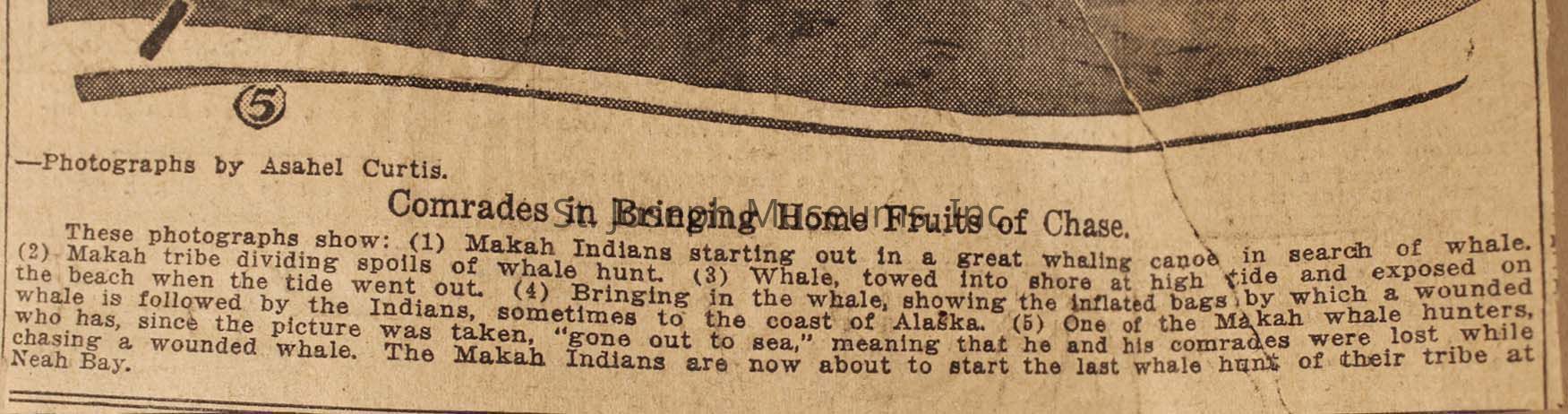
6.) The image features a newspaper clipping with a caption titled “Comrades in Bringing Home Fruits of Chase,” accompanied by photographs by Asahel Curtis. It depicts various scenes associated with the Makah tribe's whaling activities. It includes descriptions of the images such as Makah Indians setting out in a whaling canoe, the tribe dividing the spoils of a whale hunt, and a whale that has been towed to shore and exposed on the beach. Additionally, it shows the process of bringing in a whale, and mentions Makah whale hunters who went to sea while pursuing a wounded whale. It also notes that the Makah are preparing for their last whale hunt at Neah Bay.Subject
Seattle Sunday Times
Seattle, Washington
Makah
WhalesSubject Person/Organization
Harry L. George Collection